
Variegated Alocasia Types: 11 Stunning Varieties Explained
Alocasias that are variegated are rare, hard to forecast, and need a lot more light than green Alocasias. They’re not a type of plant; they’re a group of mutations. Each plant has its unique pattern, cream ratio, and level of marbling, from big patches to tiny specks. These plants are suitable for sunny indoor settings, sunrooms, or growers who use extra light and can give them regular care because every leaf is distinct and stability is never assured.
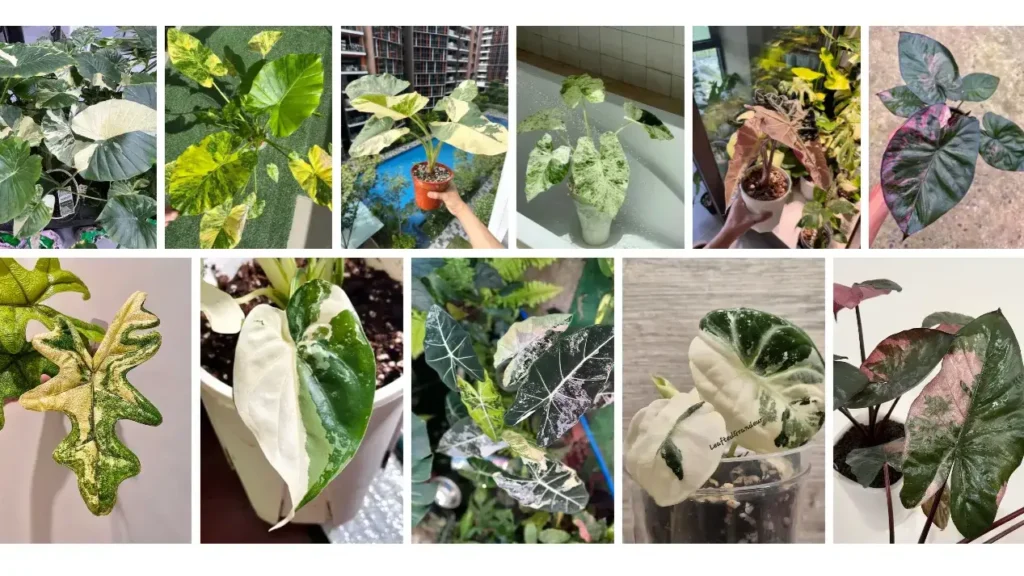
What Counts as a “Variegated” Alocasia?
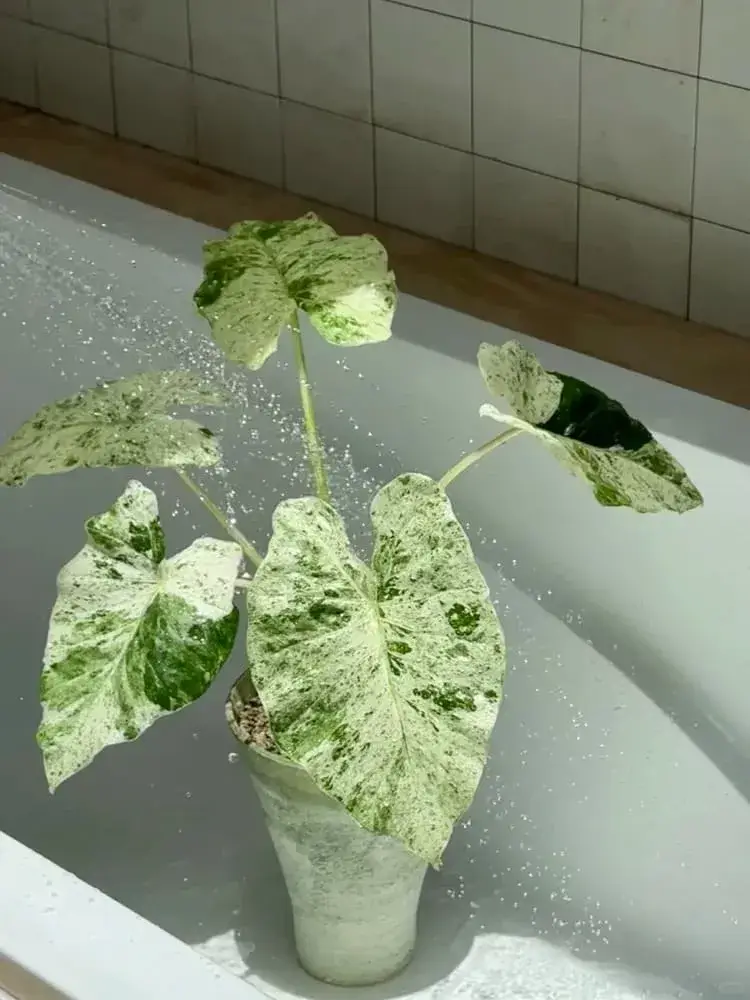
A variegated Alocasia isn’t a separate species or cultivar type — it’s a mutation that causes varying levels of chlorophyll loss. Because the mutation is unstable, every plant (and every leaf) expresses its own pattern and degree of cream or white.
Variegated Alocasias typically show:
- Different levels of chlorophyll loss, ranging from light marbling to large cream sectors
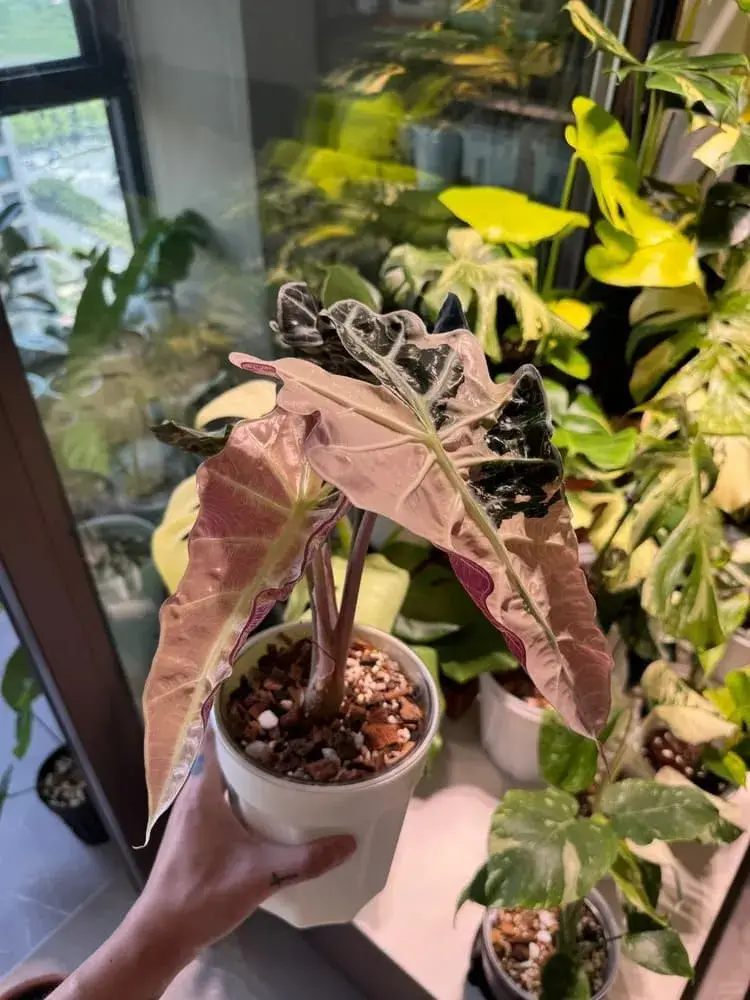
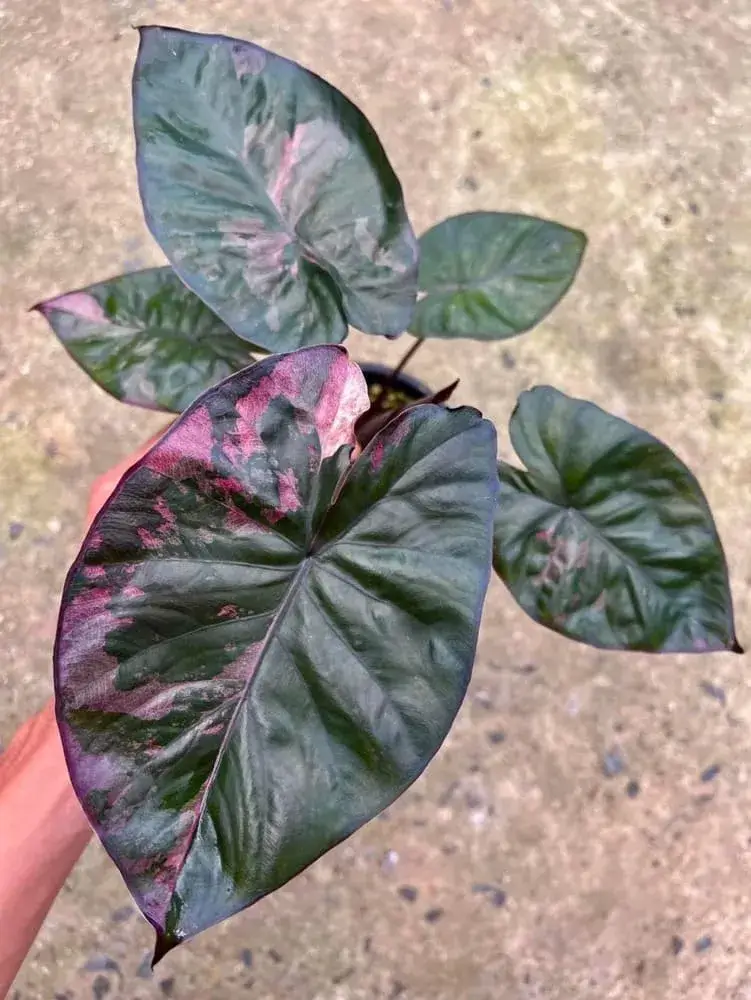
- Multiple pattern types, including marbled, mottled, sectoral, and occasional half-moon leaves
- Unpredictable new growth, with pattern shifting based on light, heat, and overall plant health
- More stable coloration under strong, bright light, especially with supplemental grow lights
- Higher sensitivity, including leaf burn, weak new leaves, reversion (turning green), and stretching in low light
Variegated = mutation, not a formal variety.
Each plant will express its pattern differently, and no two leaves grow exactly the same.
Quick Comparison Table
| Variety | Variegation Type | Stability | Light Needs | Difficulty |
|---|---|---|---|---|
| Frydek Variegated | Marbled + sectoral | Low | Very high | ★★★★★ |
| Macrorrhiza Variegata | Sectoral + blocky cream | Medium | High | ★★★★☆ |
| Odora Variegata / Batik | Mottled + patterned | Medium | High | ★★★★☆ |
| Jacklyn Variegated | Marbled speckling | Low | High | ★★★★★ |
| Alocasia ‘Dawn’ | Marbled + grey/cream layers | Low | Very high | ★★★★★ |
| Serendipity Variegated | Speckled + mottled | Low | High | ★★★★★ |
| Ninja Variegated | Marbled cream-on-green | Low-medium | High | ★★★★☆ |
| Cucullata Variegated | Speckled / mottled | Medium-high | Medium | ★★★☆☆ |
| Polly Variegated | Light marbling | Medium | Medium-high | ★★★☆☆ |
| Yucatan Princess Variegated | Sectoral + mottled | Medium | High | ★★★★☆ |
| Gageana Aurea | Yellow variegation | Medium-high | Medium-high | ★★★☆☆ |
Core Variegated Alocasia Types

Alocasia Frydek Variegated
Cream-to-white marbling with dramatic contrast, but highly unstable and sensitive to humidity, watering timing, and light intensity.
Alocasia Macrorrhiza Variegata
Large, bold leaves with creamy sectoral patches; more stable than Frydek but still demands strong, consistent light to hold its color.
Alocasia Odora Variegata (Batik)
Mottled, patterned variegation with a soft glow in bright light; moderately stable but still somewhat prone to light stress indoors.
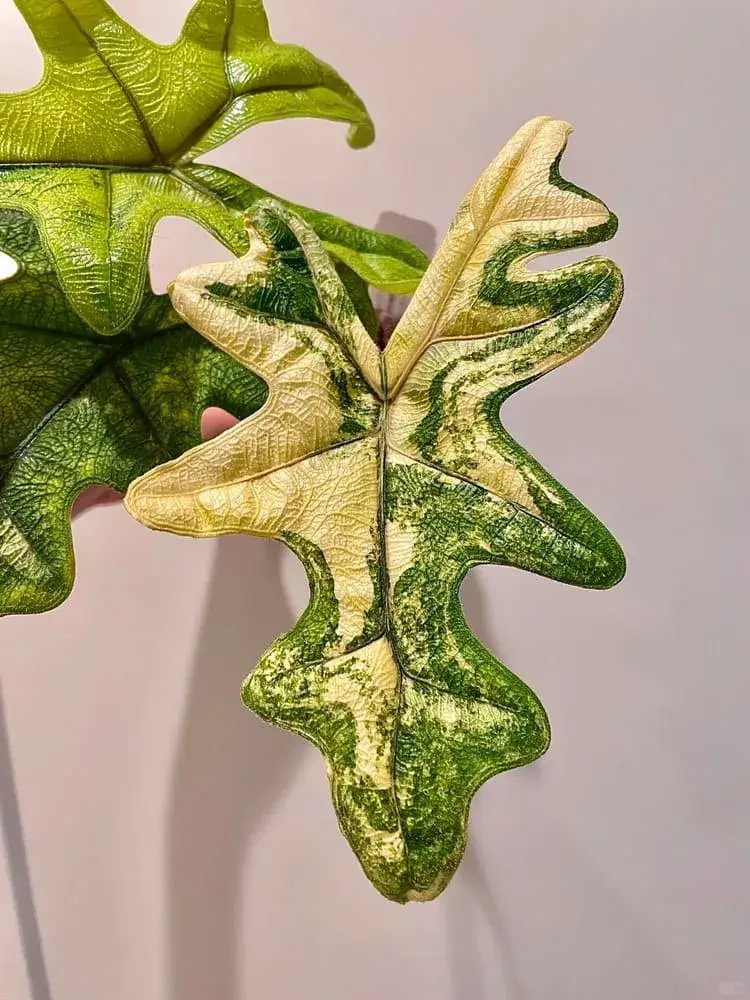
Alocasia Jacklyn Variegated
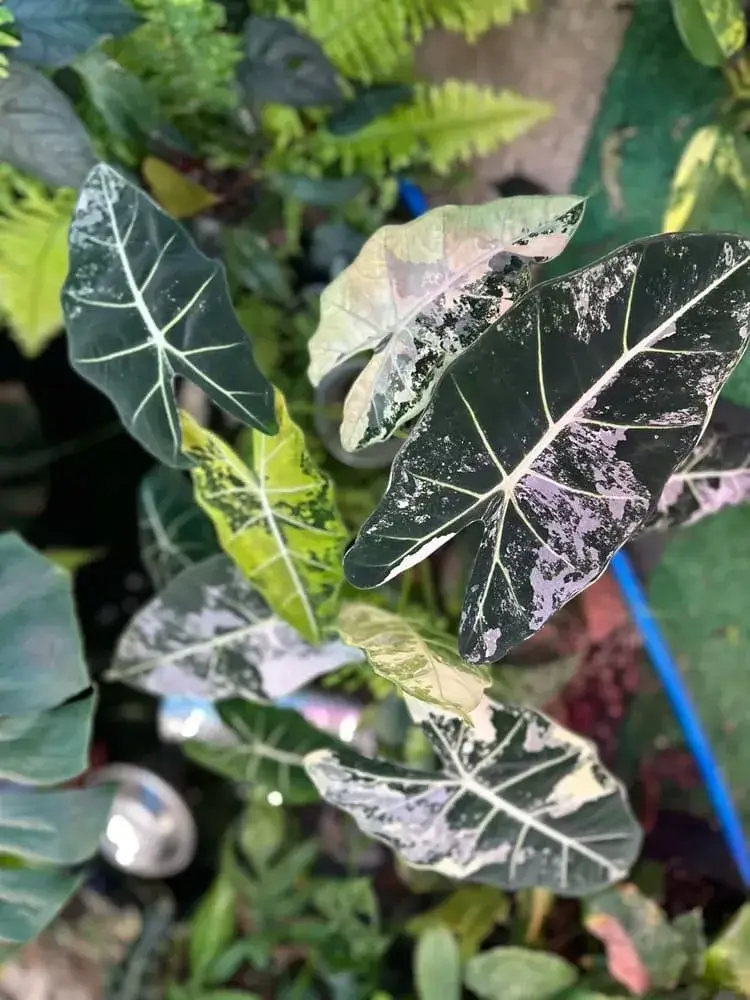
Marbled speckling over its iconic antler leaves; visually striking but extremely sensitive to watering shifts and low humidity.
Alocasia ‘Dawn’
Layered grey, cream, and olive marbling with a misty appearance; rare, unpredictable, and requires very bright light to stay variegated.
Alocasia Serendipity Variegated
Fine speckles and shifting cream ratios with every leaf; beautiful but highly unstable and prone to reversion without strong supplemental light.
Alocasia Ninja Variegated
Compact plant with cream-on-green marbling; patterns brighten in high light but can fade quite quickly in naturally darker rooms.
Alocasia Cucullata Variegated
One of the most stable variegated types, with soft speckling that holds even in moderate light—great for beginners exploring variegation.
Alocasia Polly Variegated
Light marbling on a compact form; more stable than most variegated Alocasias and easier to maintain indoors with bright indirect light.
Alocasia Yucatan Princess Variegated
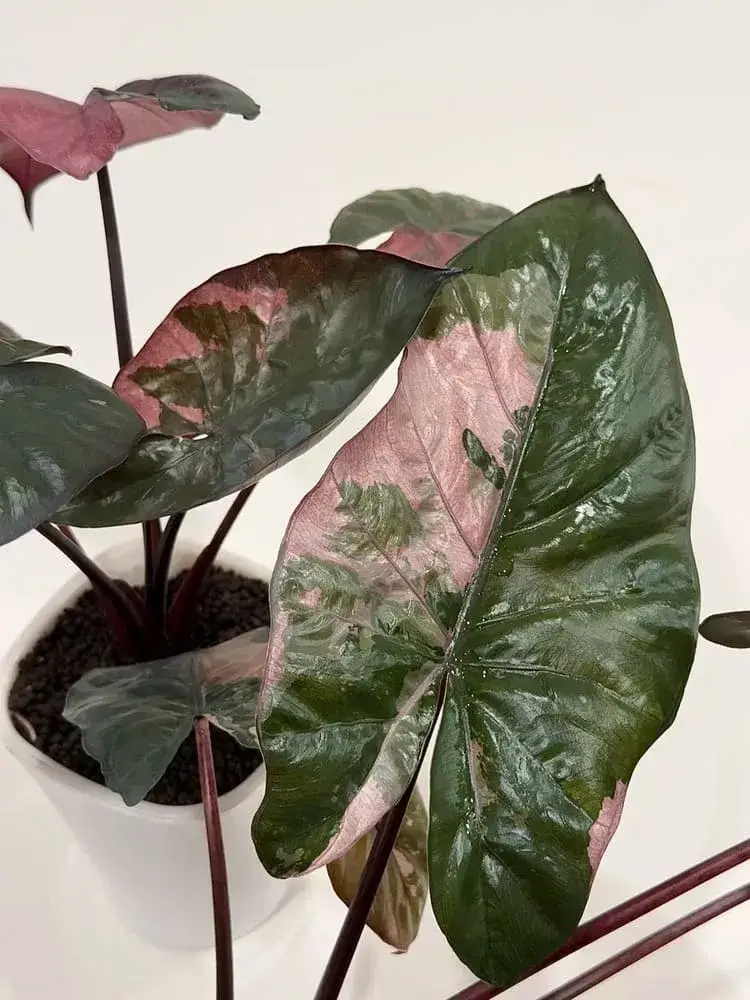
Large, paddle-shaped leaves with bold sectoral patches; holds color well in strong light but becomes unstable in low-light rooms.
Alocasia Gageana ‘Aurea’
Yellow-tinted variegation on a medium-large frame; easier and more forgiving than most giants, especially in warm, bright conditions.
Variegation Patterns Explained
Every variegated Alocasia expresses its mutation differently. Even plants from the same mother stock won’t show identical patterns. Light, temperature, and overall plant health all influence how much cream appears and how stable the variegation stays over time.
Here are the major pattern types:
• Marbled Variegation
Fine, blended white-to-green patches across the leaf surface.
Most stable and easiest for beginners; tends to hold pattern even if conditions fluctuate.
• Speckled / Mottled Variegation
Tiny dots or scattered splashes of cream.
Often medium stability, but can fade in low light; returns quickly with strong light.
• Sectoral Variegation
Large, block-like patches of cream or white.
Higher contrast but less stable — sectors may shrink or revert if light is insufficient.
• Half-Moon Variegation
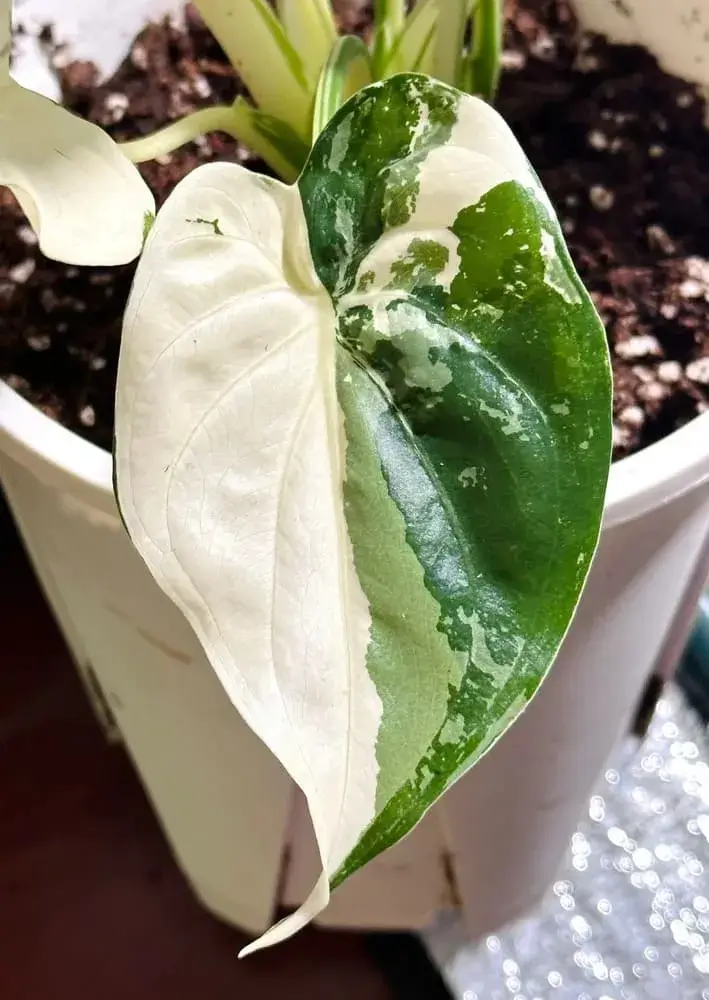
One side of the leaf is green, the other is fully cream or white.
Rare and expensive but highly unstable; requires excellent light to avoid reversion or weak growth.
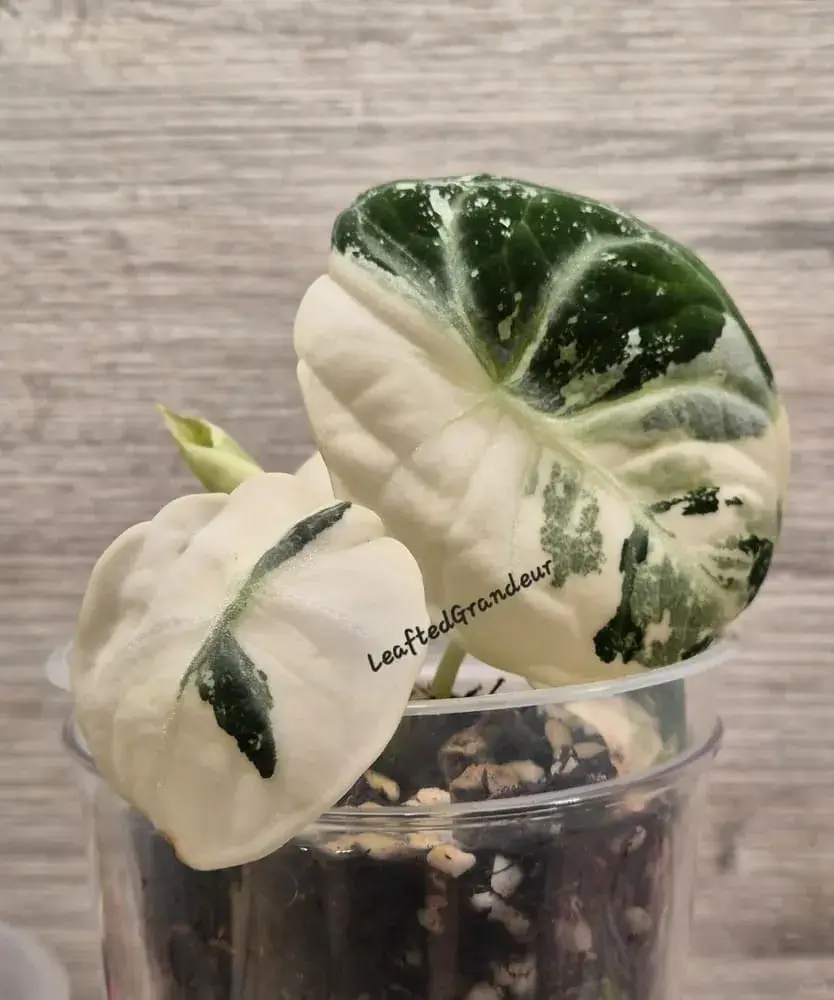
• Full Cream Sectors
Entire leaf sections with zero chlorophyll.
Visually striking but not recommended for beginners — these areas can’t photosynthesize and often produce weaker, thinner leaves.
Stability Summary (Most → Least)
Marbled → Speckled → Sectoral → Half-Moon → Full Cream
Price Trend (Lowest → Highest)
Speckled → Marbled → Sectoral → Half-Moon / Full Cream
Light Requirements for Maintaining Variegation
Keeping variegation stable comes down to one thing: consistent, strong light. Because cream and white areas can’t photosynthesize, variegated Alocasias need more light than their green forms just to maintain normal growth.
Here’s what actually works:
- Bright, indirect light is the baseline.
Without it, cream patches shrink and new leaves turn greener. - Grow lights dramatically improve stability.
Even 4–6 hours of supplemental light can prevent reversion and strengthen new leaves. - South- or east-facing windows are ideal.
They offer long, bright exposure without the harsh afternoon intensity of west-facing windows. - Avoid direct sun on white areas.
Cream sectors burn quickly, especially during summer. - Low light = reversion + weak leaves.
Plants compensate by producing greener, thinner, smaller foliage. - Stronger light = cleaner, sharper variegation.
High-quality cream tones and marbling appear more consistently under bright conditions.
Watering & Soil Notes for Variegated Alocasias
- Variegated leaves have less chlorophyll, so they photosynthesize poorly and react faster to stress.
- Watering should be lighter and more consistent, avoiding big swings between wet and dry.
- They are especially sensitive to cold, wet soil, which leads to weak or yellow new leaves.
- Use a lighter, airier mix (chunky aroid base with extra perlite or pumice).
- Avoid oversized pots — excess soil stays wet too long and increases the risk of rot.
Best Picks for Beginners
Not all variegated Alocasias behave the same. Some hold their pattern well and tolerate small mistakes; others revert, burn, or collapse after one bad watering.
Use this section to choose the right starting point based on your comfort level.
Easiest Variegated Types (Best for First-Time Growers)
These are the most stable, forgiving, and least reactive.
- Cucullata Variegated — soft speckling, surprisingly stable, great for normal indoor light.
- Gageana ‘Aurea’ — yellow-toned variegation that holds well in bright rooms.
- Polly Variegated — compact, steady grower, easier to maintain than most variegated forms.
Moderate Difficulty (Needs Bright Light & Steady Care)
Best for growers who already manage humidity and not overwatering.
- Macrorrhiza Variegata — strong light needed, but more predictable than Frydek types.
- Odora Variegata / Batik — mottled pattern; can revert if kept in low light too long.
High Difficulty / Not Recommended for Beginners
Unstable patterns, weaker growth, and high sensitivity to moisture swings.
- Frydek Variegated — beautiful but very unstable; prone to weak, floppy white leaves.
- Jacklyn Variegated — moisture-sensitive and reacts quickly to watering mistakes.
- Alocasia ‘Dawn’ — rare, unpredictable, and requires strong light to avoid reversion.
- Ninja Variegated — compact but patterns fade fast without excellent lighting.
- Serendipity Variegated — highly unstable speckling; reverts easily in typical homes.
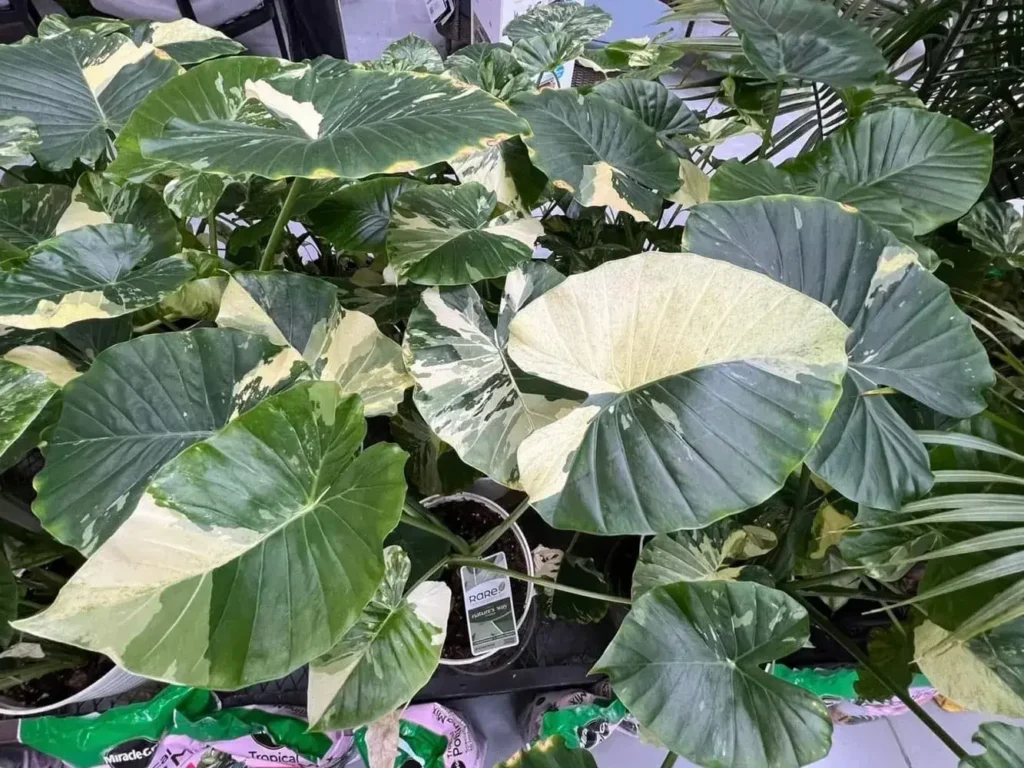
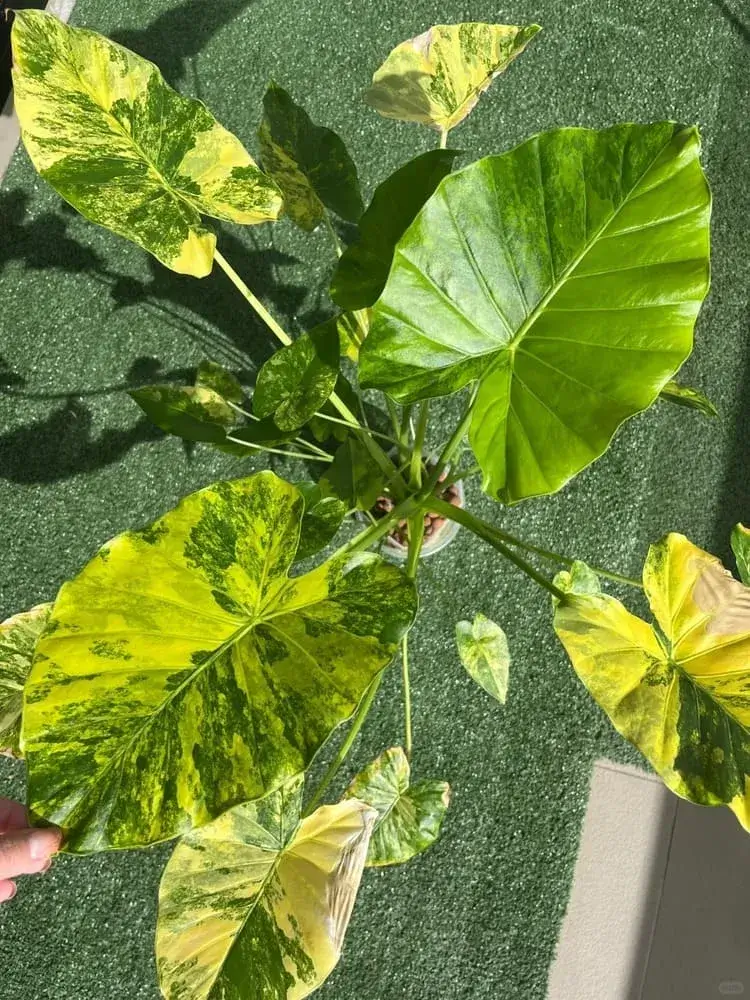
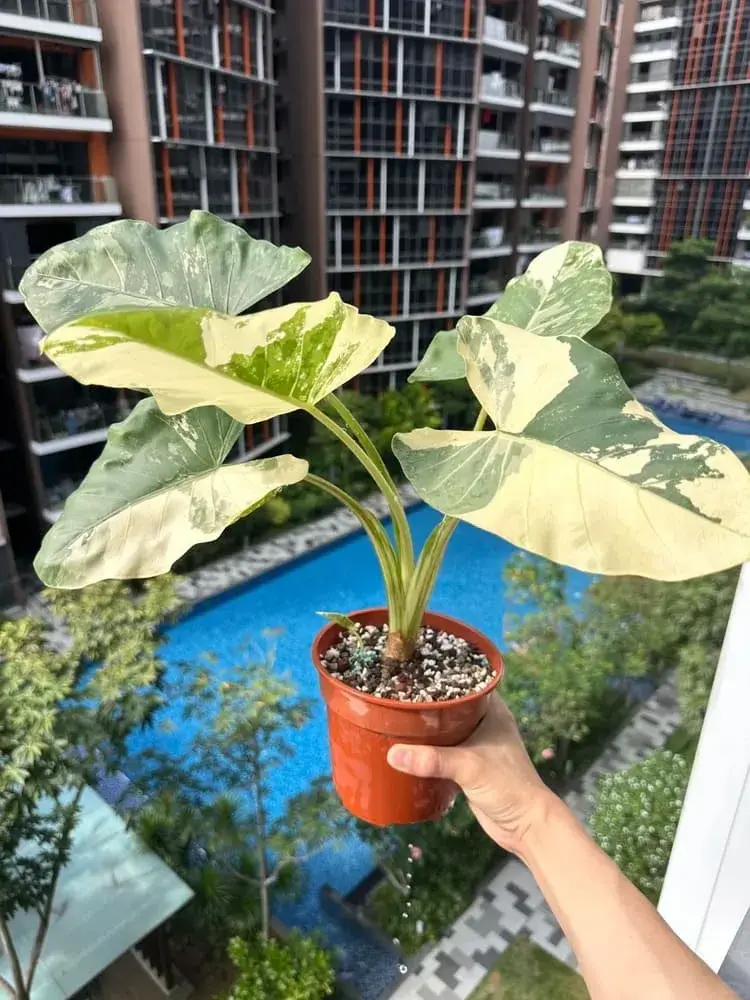
Gallery
FAQ
Quick answers to the questions growers ask most about variegated Alocasias.