
Elephant Ear Alocasias: The Best 11 Large-Leaf & Landscape Types
Elephant Ear–type Alocasias are the big, architectural statement plants of the genus. They grow faster, wider, and far more dramatic than the small “table-top” varieties most people keep indoors. These are the plants that fill corners, anchor patios, and instantly create a tropical mood.
They’re ideal for:
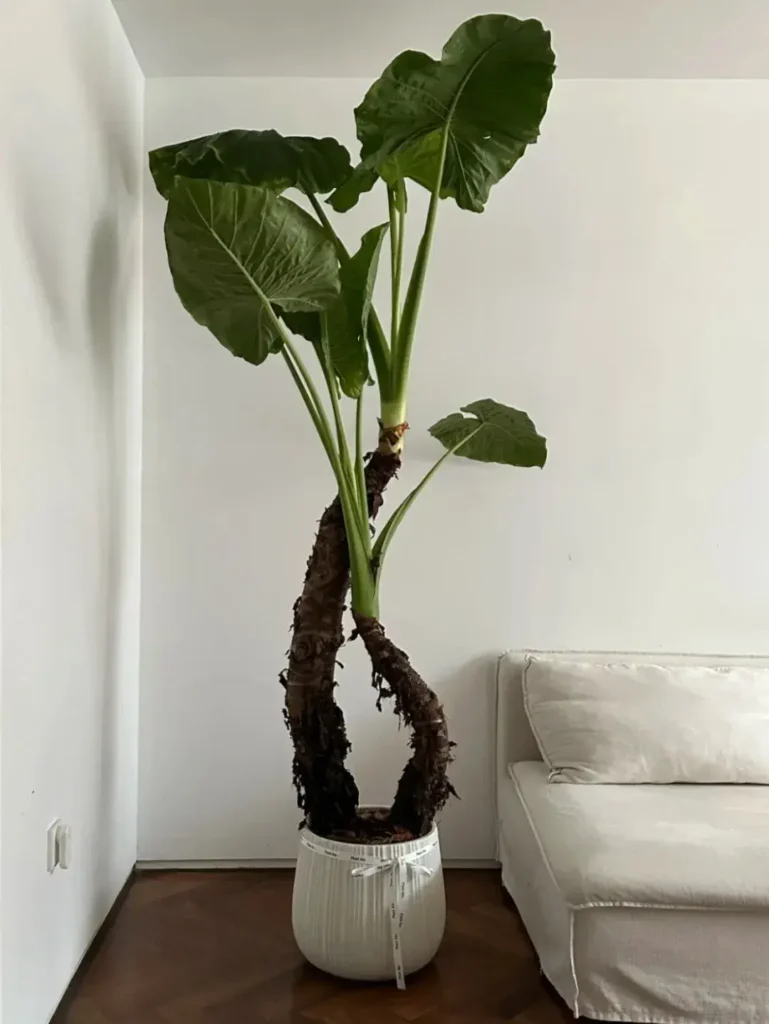
• spacious indoor corners
• patios and porches
• sunrooms with bright light
• backyard tropical-style planting
And unlike Jewel Alocasias with their compact, textured leaves, these are the bold, upright giants designed to catch wind, light, and attention.
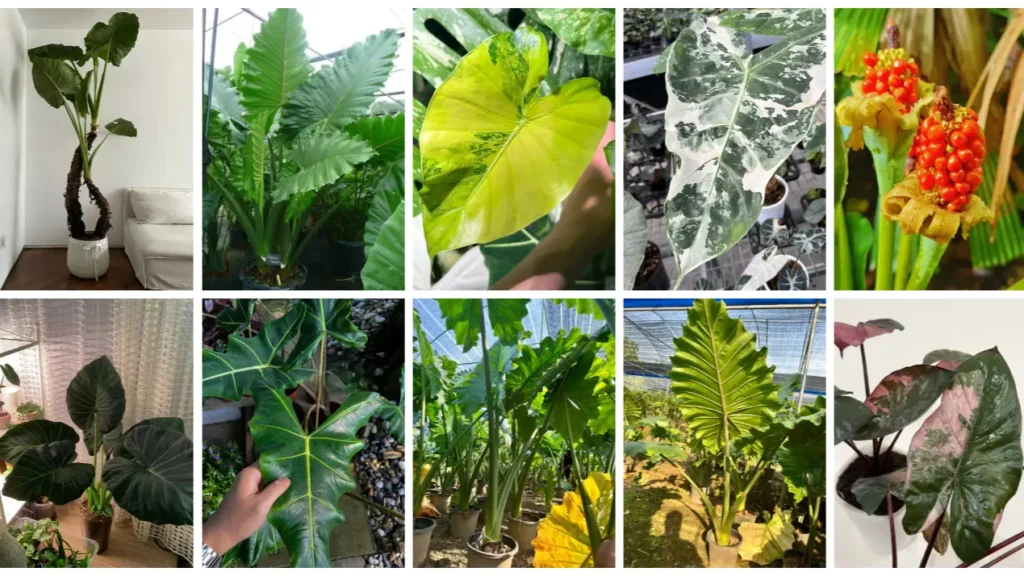
What Defines an “Elephant Ear” Alocasia?
“Elephant Ear” isn’t an official botanical category — it’s a practical way to group the Alocasias that grow large, fast, and make a strong visual impact. These plants share several traits that separate them from compact indoor types and from look-alike genera such as Colocasia and Xanthosoma.
Elephant Ear Alocasias typically have:
- Large to massive mature size, often reaching several feet tall
- Fan-shaped or upright leaves that hold their form above the plant
- Fast growth during warm months, especially outdoors
- Higher tolerance for outdoor conditions, including airflow and temperature swings
- Strong landscape presence, making them ideal as statement plants
- A bigger root system, requiring large pots or even ground planting
They may resemble Colocasia or Xanthosoma at first glance, but Elephant Ear Alocasias stay more upright, maintain firmer leaf posture, and behave differently in indoor and landscape settings.
Quick Comparison Table
| Variety | Mature Size | Leaf Shape | Growth Speed | Indoor Difficulty | Outdoor Performance |
|---|---|---|---|---|---|
| Macrorrhiza | Very large | Upright, fan-shaped | Fast | Medium | Excellent |
| Odora | Large | Broad, upright | Fast | Easy-medium | Excellent |
| Gageana | Medium-large | Rounded, upright | Fast | Easy | Very good |
| Calidora | Medium-large | Semi-upright, broad | Medium-fast | Medium | Very good |
| Portora / Portodora | Large | Sculpted, ruffled edges | Fast | Medium | Excellent |
| Borneo Giant | Massive | Broad, spreading | Very fast | Hard | Outstanding |
| Yucatan Princess | Large | Dark, glossy, upright | Fast | Medium | Excellent |
| Regal Shield | Medium-large | Dark, shield-shaped | Medium | Easy-medium | Very good |
| Sarian | Large | Narrow with pinnate edges | Medium | Medium-hard | Very good |
| Lauterbachiana | Medium | Long, narrow, upright | Medium | Easy-medium | Good |
| Longiloba | Medium | Long, arrow-shaped | Medium | Medium | Good |
Core Elephant Ear Varieties
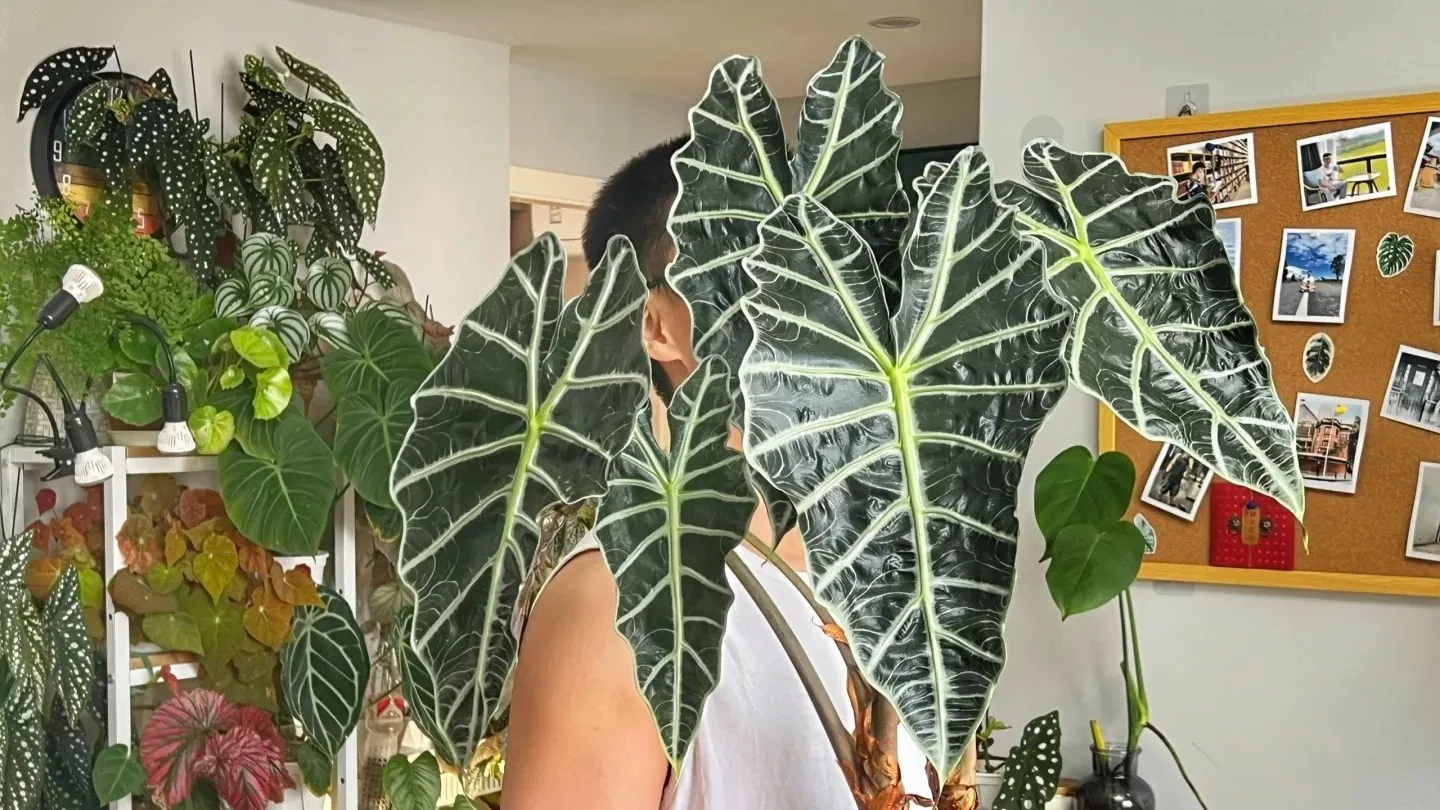
Alocasia Polly
Compact hybrid with striking arrow-shaped leaves; ideal for bright indoor spots and small spaces.
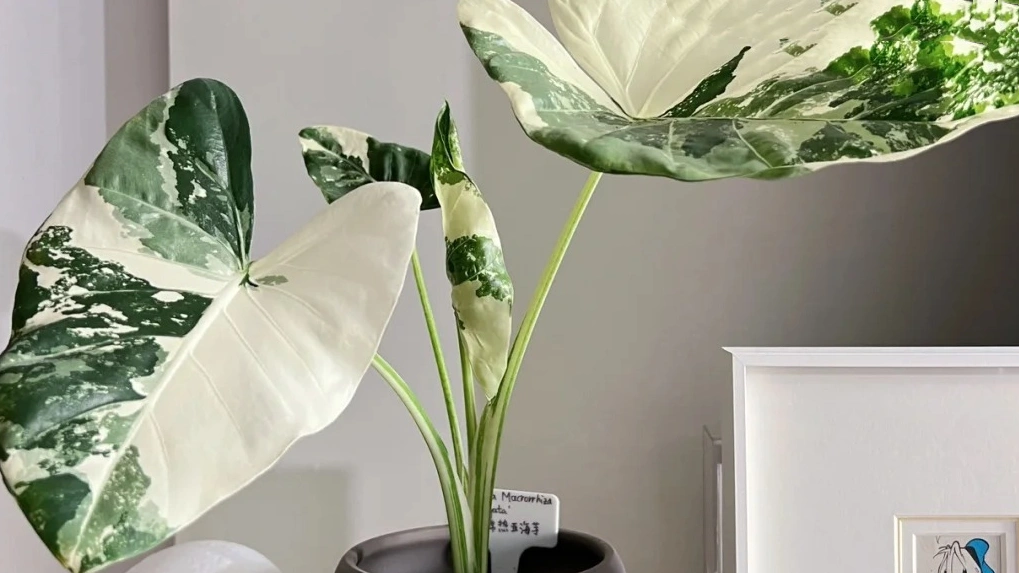
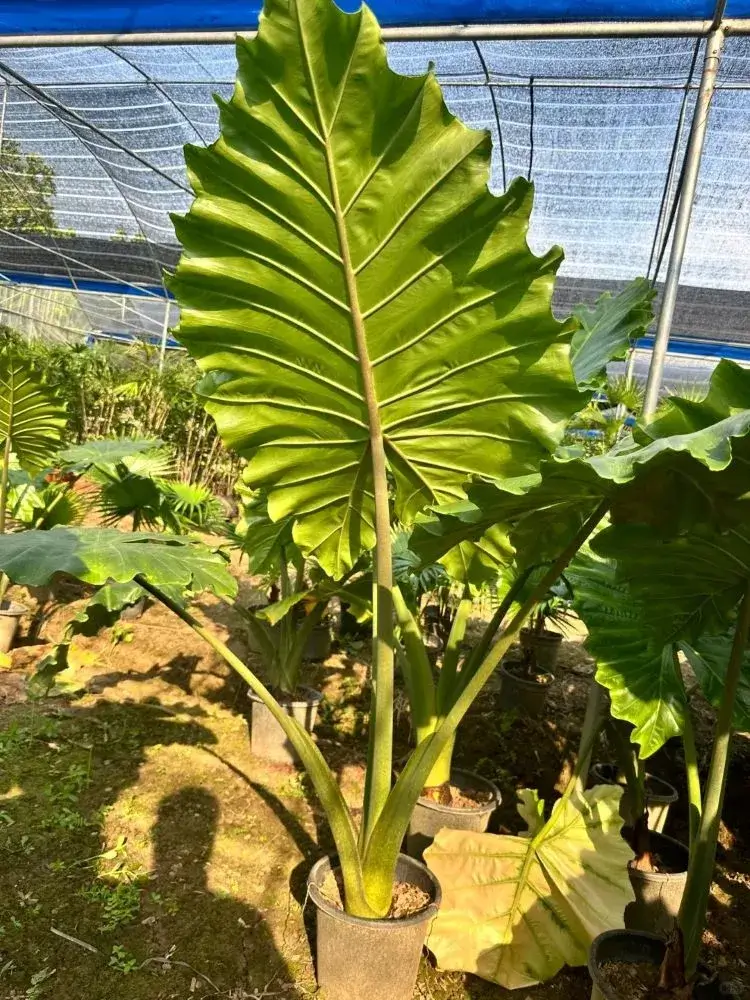
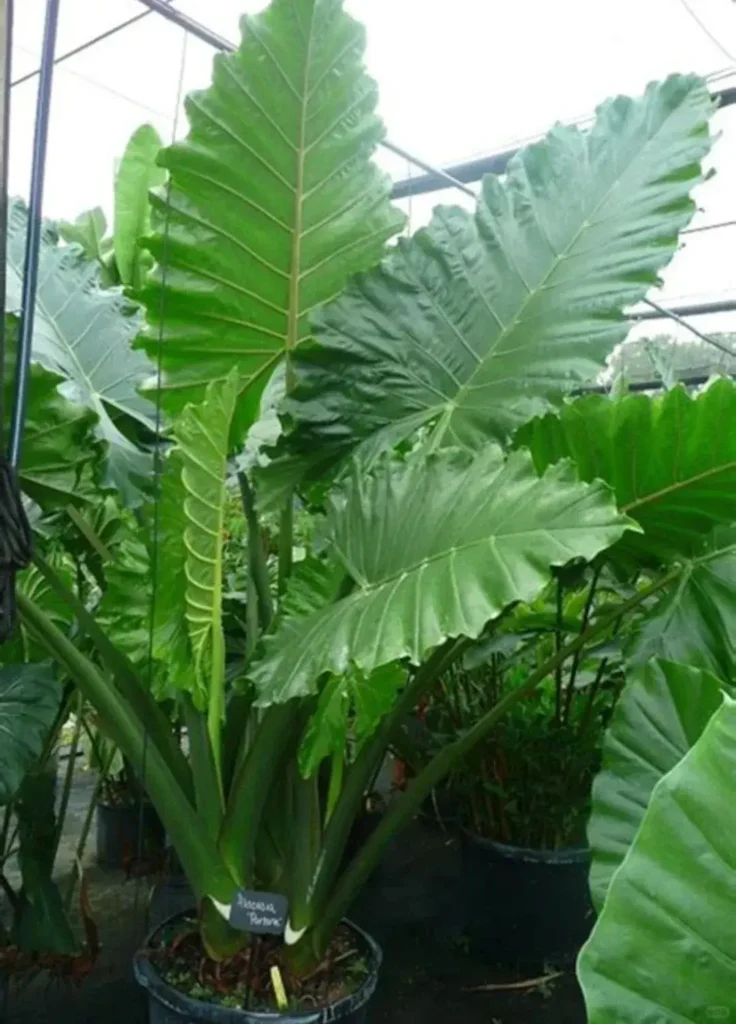
Alocasia Macrorrhiza
Huge upright leaves and very fast warm-season growth; perfect for patios, porches, and backyard tropical planting.
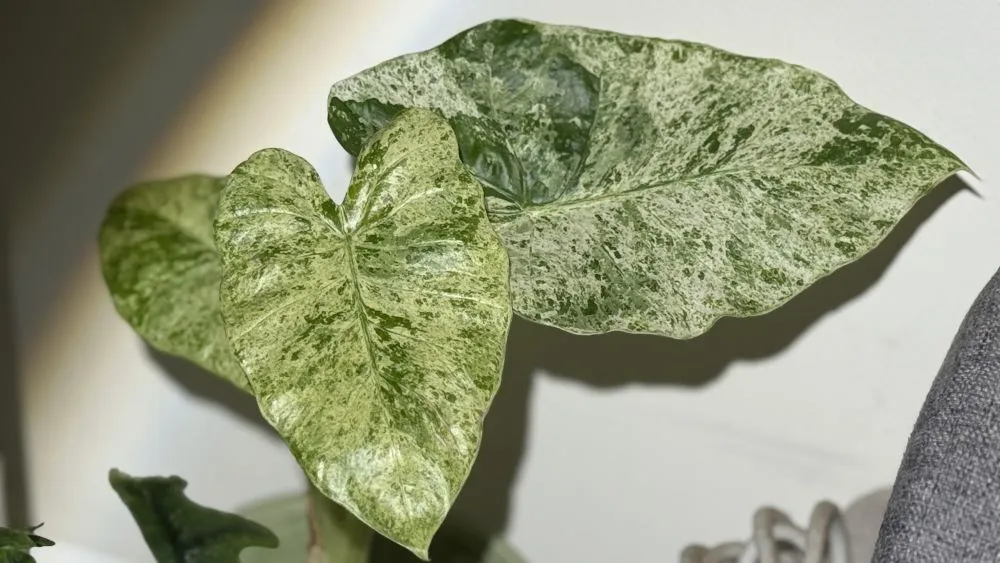
Alocasia Odora
Broad upright leaves, shade-tolerant, and one of the most wind- and weather-resistant big Alocasias outdoors.
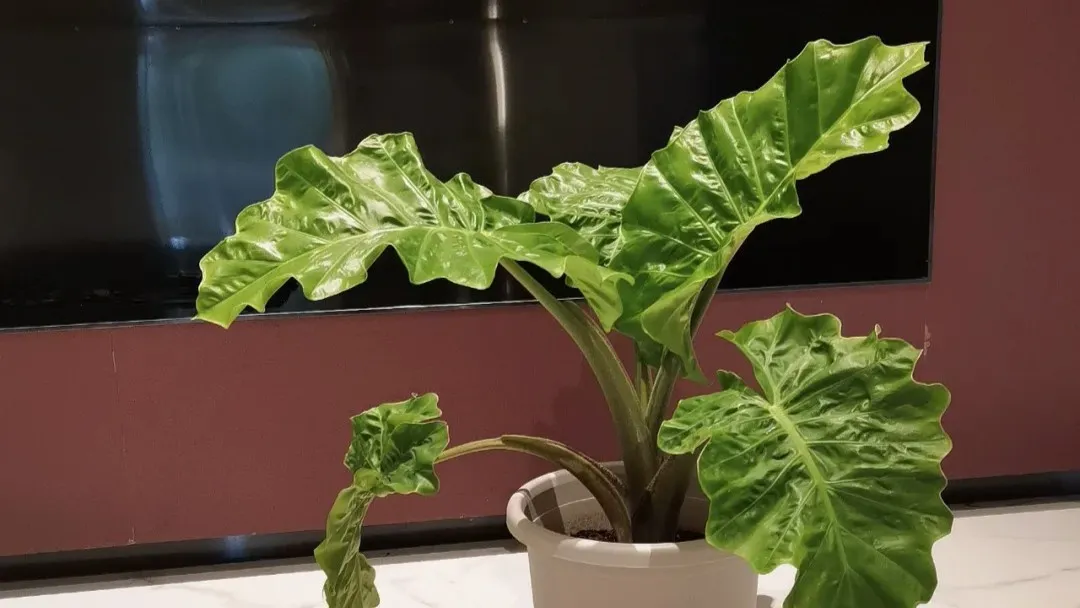
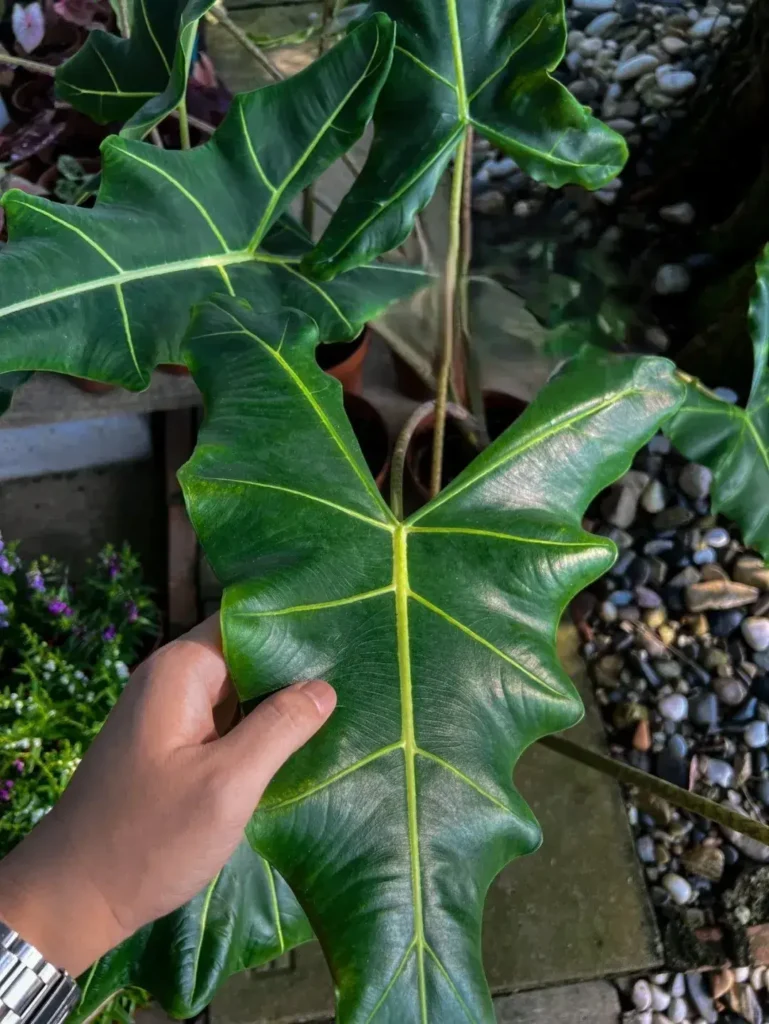
Alocasia Portora
Large, ruffled leaves built for airflow and dramatic silhouettes; exceptionally strong outdoor performance.
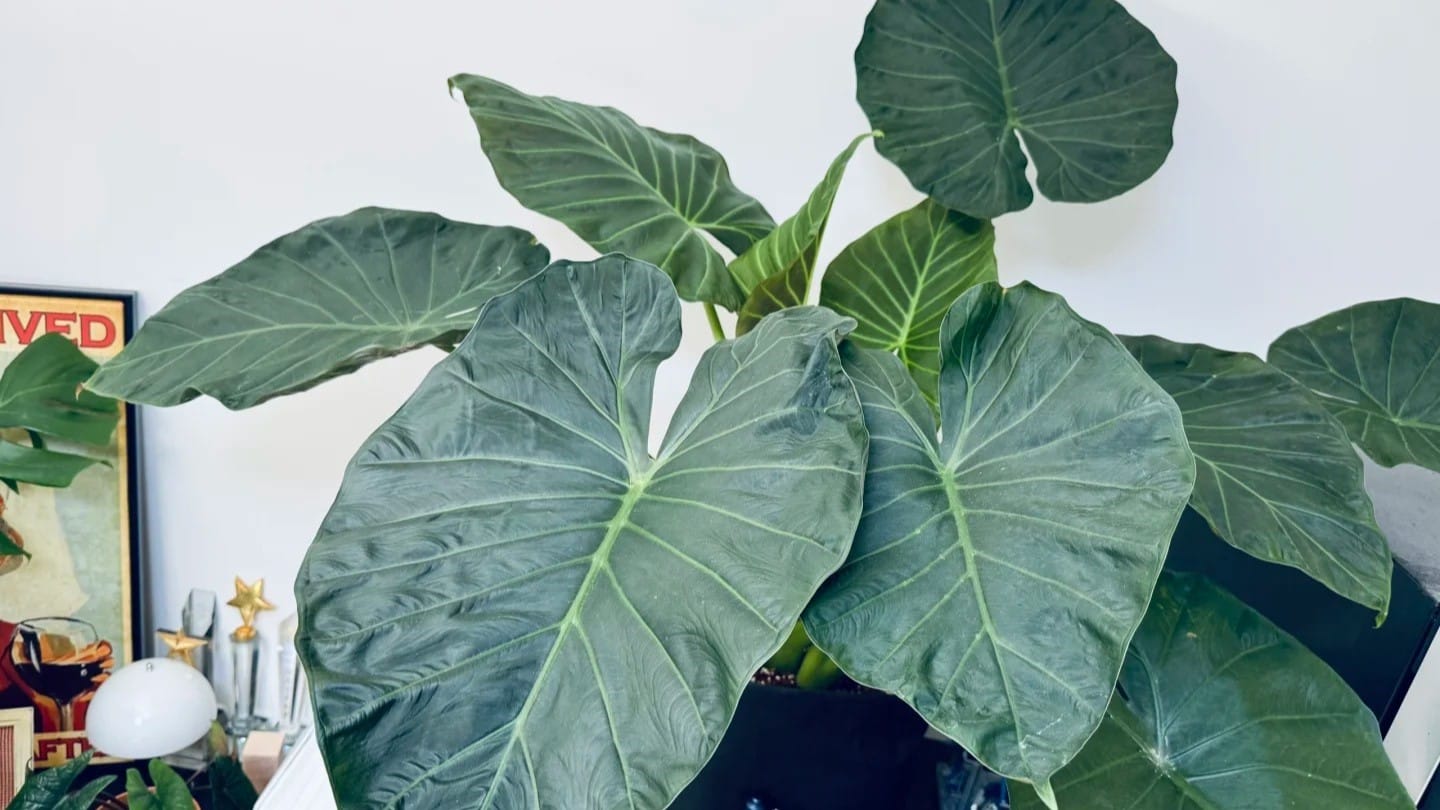
Alocasia Regal Shield
Dark, matte shield-shaped leaves and excellent indoor tolerance; ideal for large interior corners.
Indoor vs. Outdoor Behavior
Large Elephant Ear–type Alocasias behave very differently depending on where you grow them. Indoors, they act like slow, steady foliage plants. Outdoors, especially in warm months, they switch into full “tropical landscape mode” and grow with surprising speed.
Indoors
- Slower, more controlled growth
- Needs bright, consistent light to stay upright
- Higher humidity helps prevent crisping
- Can outgrow pots quickly due to large root systems
Outdoors
- Explosive warm-season growth, especially in full summer heat
- Handles wind and airflow better than smaller Alocasia types
- More tolerant of mild temperature swings
- Ideal for creating bold, tropical-style structure in gardens or patios
Light, Water & Soil Basics
Light:
Bright shade to filtered sun outdoors; bright indirect light indoors keeps leaves upright and prevents scorching.
Water:
Maintain even moisture; outdoor plants dry out faster and may need more frequent watering in summer.
Soil:
Use a chunky, fast-draining aroid mix that supports large roots without holding excess water.
Temperature:
These varieties grow best above 60°F (15°C) and slow down noticeably in cooler conditions.
Wind:
Larger Elephant Ear types tolerate wind well, especially compared with Jewel Alocasias, and often develop stronger stems outdoors.
Want everything in one place? My full Alocasia care guide covers all the essentials.
Photo Gallery
FAQ
Learn what to expect when caring for large Elephant Ear Alocasias — from light and watering to outdoor performance and winter care.