Alocasia Portora is not the kind of Alocasia people grow for compact size or delicate collector appeal. It is a large, vigorous hybrid grown for impact — huge wavy leaves, strong upright growth, and a much tougher overall nature than many smaller ornamental Alocasias. If what you want is a plant that feels bold, tropical, and visually dramatic without being overly fussy, Portora makes a lot of sense.
What I like most about this plant is how forgiving it is once you understand its basic rhythm. It handles a wider range of conditions than many Alocasias, gives clear signals when something is off, and feels much more approachable than many smaller, fussier types. If you are still learning the genus overall, my full Alocasia care guide covers the basic patterns I use across different types.
That is also why I think this plant is worth writing about. A lot of Alocasia articles focus on smaller, fussier types, but Portora belongs in a different category. It is a large garden-style Alocasia that can become genuinely impressive with time, and in my experience, it is one of the more practical choices for growers who want the Alocasia look without the constant anxiety.
Quick Plant Profile
Botanical name: Alocasia ‘Portora’
Common name: Alocasia Portora / Giant Upright Elephant Ear
Plant type: Large hybrid Alocasia
Parentage: A horticultural hybrid between split-leaf Alocasia and Alocasia odora
Growth habit: Upright, vigorous, and large-growing
Main appeal: Huge wavy leaves, strong growth, and better cold tolerance than many smaller Alocasias
Difficulty: Easy
Best for: Growers who want a dramatic large plant indoors or outdoors
Mature size: Can reach around 2–3 m in the ground
What Makes Alocasia Portora Different From Smaller Alocasias?
Large, Dramatic, Deeply Wavy Leaves
The first thing that sets Alocasia Portora apart is its scale. This is not a compact Alocasia that disappears into a shelf display or looks best only in close-up. As it matures, the leaves become large, upright, and heavily waved along the edges, giving the plant a much more dramatic presence than most smaller hybrids.
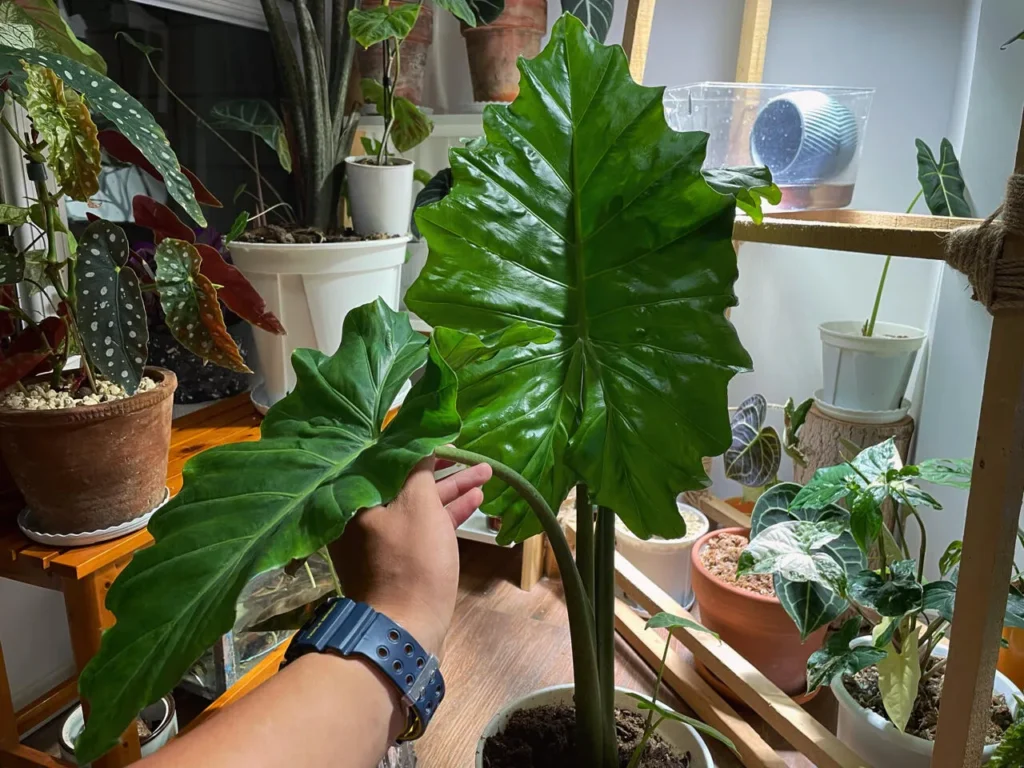
That strong leaf shape is a big part of its appeal. The surface does not rely on intricate texture or velvety detail to stand out. Instead, Portora makes an impression through size, movement, and structure. The broad leaves and deep waves give it a bold tropical look that reads clearly even from across a garden or room. Once it reaches a decent size, it feels much more architectural than delicate.
Much Tougher and Less Fussy Than Many Compact Hybrids
The second major difference is its overall character. Compared with many smaller ornamental Alocasias such as Black Velvet, Portora feels less fragile, less temperamental, and generally easier to live with. It has more of a strong garden-hybrid attitude than a collector-plant personality.
That toughness shows up in the way people actually grow it. It adapts well to both indoor and outdoor settings, handles a wider range of conditions than many compact hybrids, and usually does not give the same constant sense of tension that some smaller Alocasias do. It is still an Alocasia, of course, but it behaves more like a robust landscape-style plant than a picky showpiece. That is a big reason why I think it makes sense for beginners who want something impressive without starting with one of the more sensitive types.
How Big Does Alocasia Portora Get?
Size is one of the first things worth understanding before buying Alocasia Portora, because this is not a small-space Alocasia in the long term. Once established in the ground, a mature plant can reach roughly 2–3 meters tall, especially in warm conditions where it has room to root and grow freely. If you like larger Alocasias in general, you may also want to compare it with Alocasia Regal Shield. That large scale is part of the appeal, but it also means this is not the kind of plant that stays politely tucked into a corner forever.
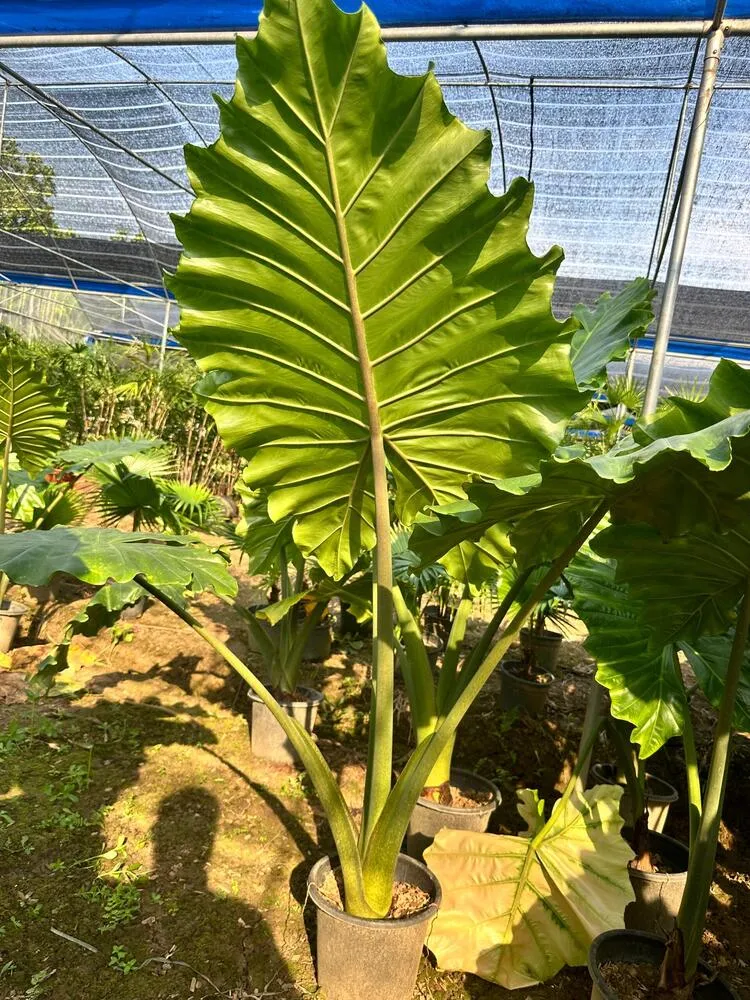
In pots, the plant usually stays much smaller than it would in the ground, which is one reason container growing makes sense if you want the look of Portora without letting it become enormous. It can still get impressively large in a container, but the overall size is easier to manage, especially if you do not give it more root space than it needs.
That is also why pot size matters so much with this plant. If you want Portora to reach its full dramatic potential, planting it in the ground or giving it a large container will help. If you would rather control the height, keeping it in a slightly smaller pot is one of the simplest and most practical ways to do that. With Portora, container size is one of the simplest ways to influence the final size.
Is Alocasia Portora Easy to Grow?
Yes — especially compared with many other Alocasias, I do think Alocasia Portora belongs on the easier side. It is not the kind of plant that feels constantly tense or fragile. In my experience, it behaves more like a strong, large-growing landscape Alocasia than a sensitive collector type, and that difference shows up in the way it responds to everyday conditions.
One reason it feels easier is that it is not overly picky about where it lives. Portora can work indoors or outdoors as long as the light is reasonable and the plant is not being pushed into harsh direct sun all day. It adapts more broadly than many smaller Alocasias, which makes it much more approachable for growers who do not want to fine-tune every detail.
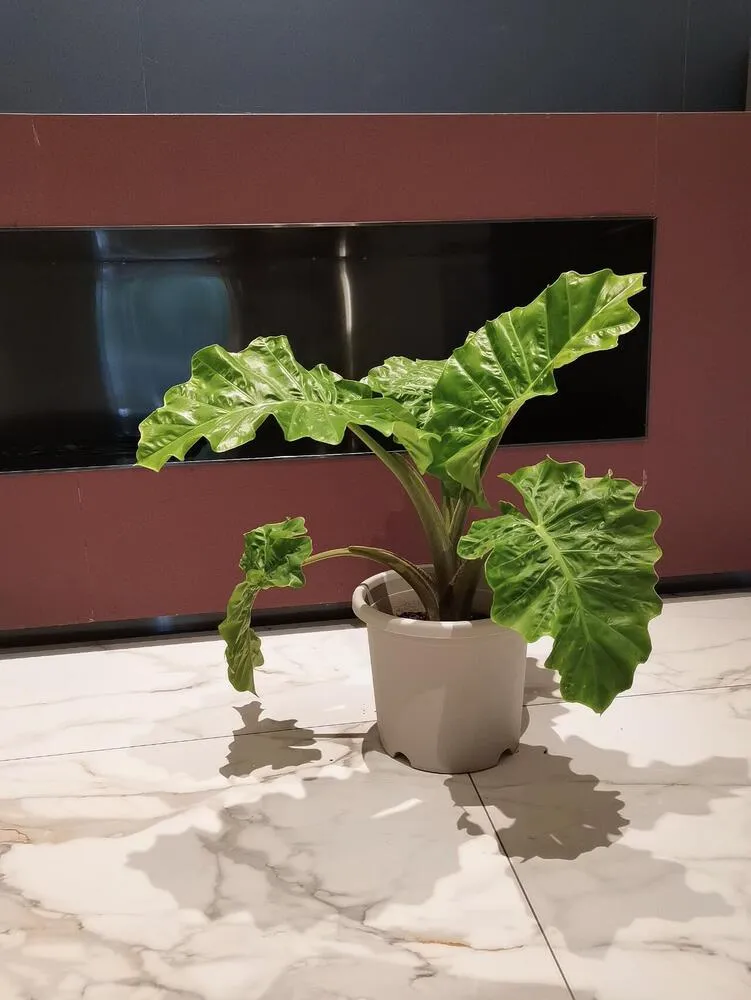
It is also a plant that gives clear signals. When mine gets too dry, the leaves droop in a way that is easy to notice, and once it is watered, it recovers quickly. I actually think that matters a lot. Some Alocasias decline in ways that are subtle or confusing, but Portora tends to be more readable. That makes it easier to correct small mistakes before they turn into bigger ones.
Another reason I would call it beginner-friendly is the way it handles winter. In colder weather, the foliage may die back, especially outdoors, but that does not automatically mean the plant itself is gone. Like Alocasia odora, it can lose leaves and still return again when temperatures rise. That makes it feel much more like a hardy, large garden-type Alocasia than a plant that falls apart from one imperfect season.
So no, I would not describe Portora as difficult. The bigger question is usually not whether you can keep it alive, but whether you have enough room for it once it starts doing well.
How I Care for My Alocasia Portora
Light
Alocasia Portora does well in bright light. Outdoors, bright shade or gentle sun works well, and indoors I would keep it near a strong light source rather than in a dim corner. The main thing I avoid is harsh direct midday sun, especially in hotter weather. As long as it is not being scorched, this is not a difficult plant to place. If you are unsure what “bright light” really means for Alocasias indoors, see my guide to Alocasia light requirements.
Watering
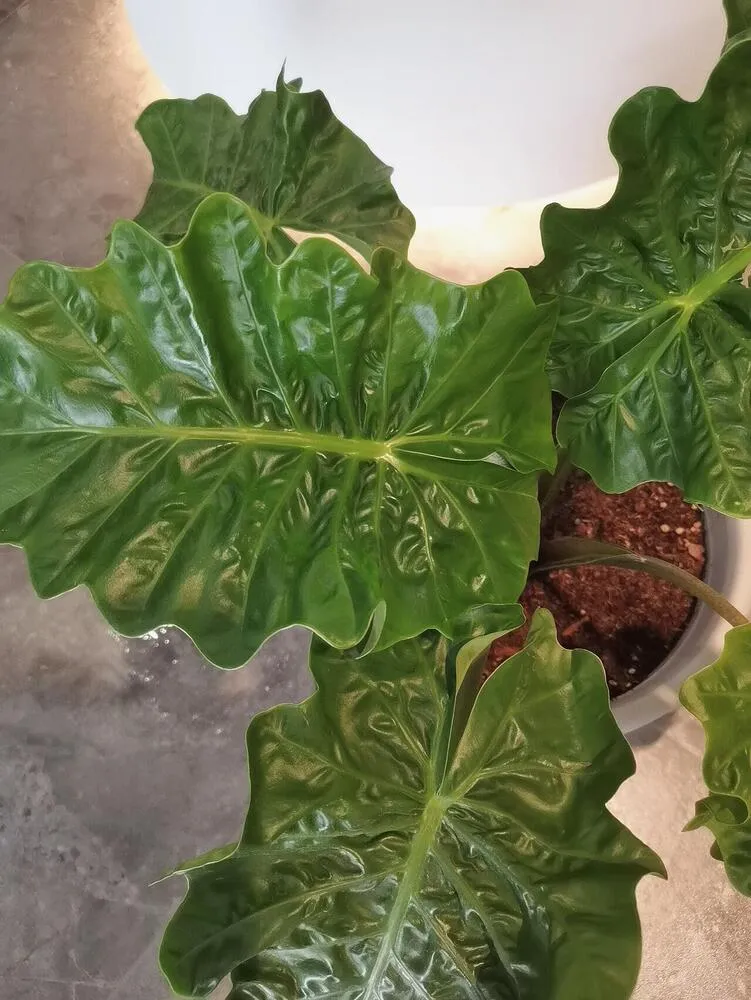
This is a plant that gives clear signals when it is thirsty. When mine gets too dry, the leaves droop noticeably, and after watering, they recover quickly. That makes it much easier to read than many fussier Alocasias. I still would not keep it sitting wet for long periods, though. It likes moisture, but not stagnant soil. If you tend to second-guess timing, I explain my usual rhythm in more detail in this guide on how often to water Alocasia.
Soil
I would grow Portora in a loose, draining mix, but I do not think it needs the same level of precision as a small jewel Alocasia. It is a bigger, tougher plant and handles ordinary well-draining potting setups more easily. I break down the kind of setup I prefer in my full guide to the best soil mix for Alocasia. It also performs well in the ground or in large containers as long as the soil does not stay heavy and waterlogged.
What Happens in Winter?
Winter is probably the stage that confuses people most with Alocasia Portora, especially if they are used to judging plant health by the leaves alone. With this plant, cold weather can knock the foliage back hard. Leaves may collapse, yellow, or disappear altogether after frost or low temperatures, and that can look dramatic if you are not expecting it.
But leaf loss in winter does not automatically mean the whole plant is dead. That is the key point. With Portora, what matters more is whether the base and underground part of the plant are still alive. A mature plant can lose all of its top growth in cold weather and still return when temperatures rise again in spring. In that sense, winter dieback is often a seasonal response, not a final outcome. If you are trying to tell the difference between seasonal dieback and real decline, my guide to Alocasia dormancy in winter goes deeper into that.
That is why I do not panic if the leaves are gone after cold weather. I pay much more attention to the base than to the foliage. New growers often make the mistake of assuming “no leaves” means “dead plant,” but with Portora, that is often the wrong conclusion. If the base is still viable, spring can bring a full restart.
Common Things That Confuse New Growers
One thing that often confuses new growers is the way Alocasia Portora cycles its leaves. When a new leaf comes in, an older one may decline and die off. I explain that pattern in more detail in my article on Alocasia losing old leaves. That does not automatically mean the plant is in trouble. On a large, fast-growing Alocasia like this, some leaf turnover is part of the normal rhythm.
Another easy thing to misread is drooping from thirst. Portora can look dramatic when it needs water, but in many cases it is simply a clear dehydration signal and the leaves recover quickly after watering.
Winter leaf loss is another big one. With Portora, foliage damage in cold weather often reflects seasonal dieback rather than total loss, and new growth can still return from the base in spring.
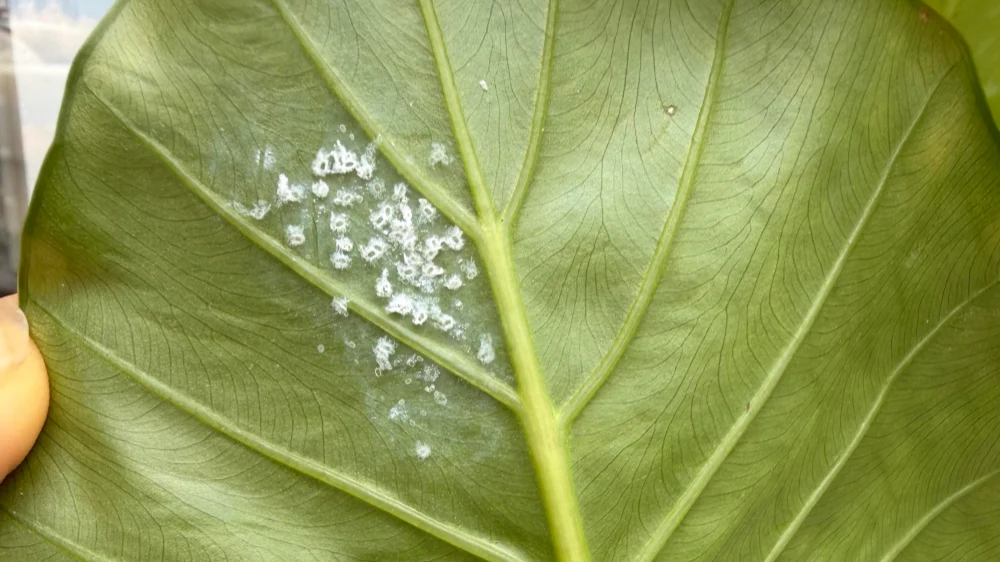
The last common issue is spider mites. On large mature leaves, they can become a recurring nuisance if the plant is stressed or left unchecked for too long. That does not make Portora unusually fragile, but it does mean the foliage should be checked regularly, especially when the plant is growing strongly and building size.
My overall view of Alocasia Portora is very straightforward: this is a beginner-friendly large Alocasia. The real question is usually not whether it is too difficult, but whether you have enough space for it. If you want a plant with strong presence and a sturdier nature than many smaller Alocasias, it is absolutely worth growing.
FAQ
Love discovering new Alocasias?
Explore more velvet, variegated, and large-leaf varieties in our Alocasia Varieties Hub.
Go to Varieties Hub →