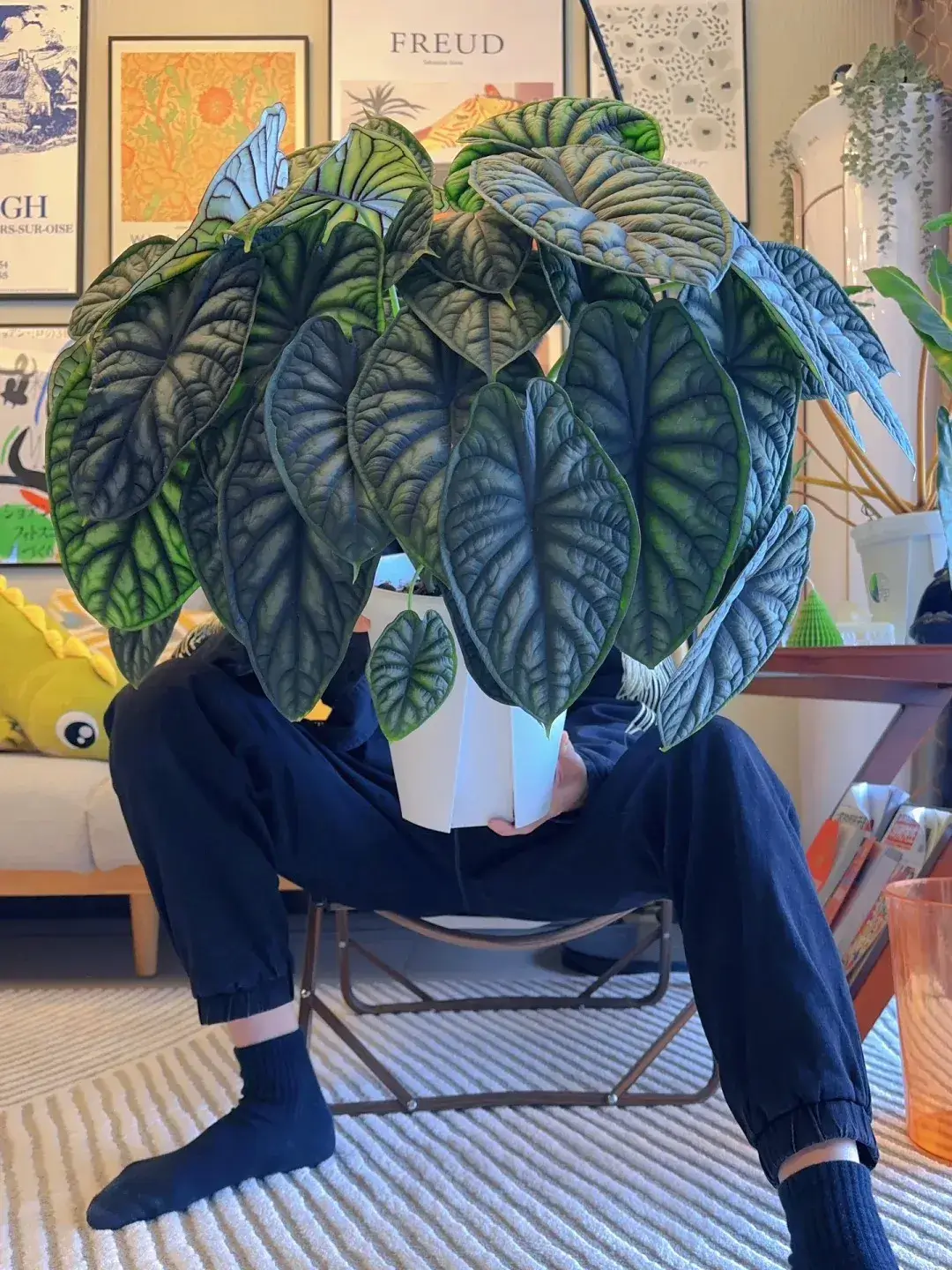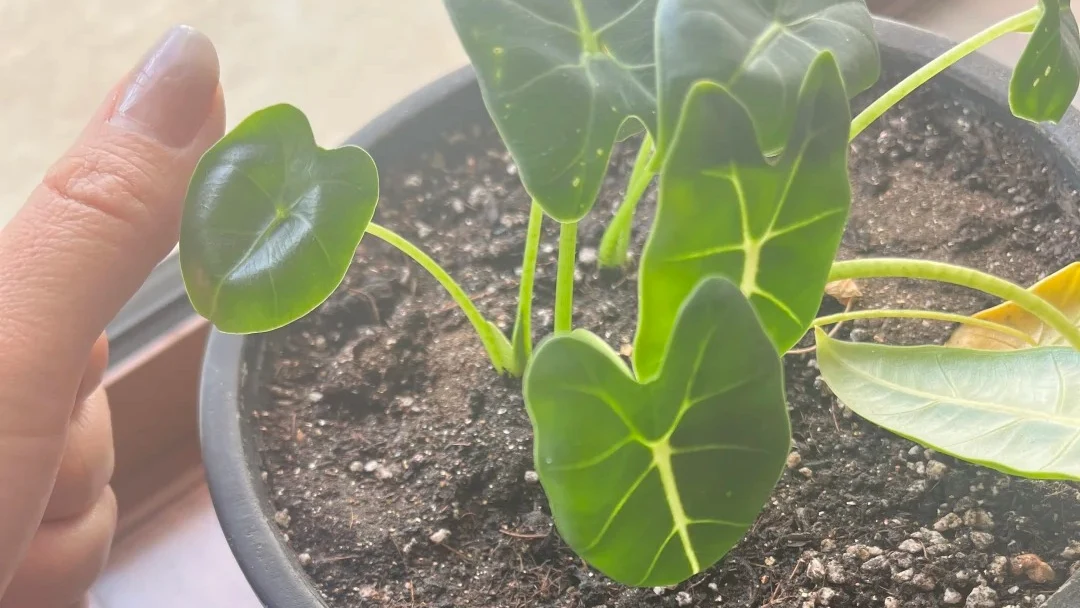
I do not think every Alocasia needs a grow light. If a plant is sitting near a bright window, pushing normal-sized leaves, and drying its soil at a steady pace, I usually leave it alone.
I start thinking about grow lights when the plant looks alive but not really growing — smaller new leaves, leaning stems, slow soil drying, or that familiar winter stall that happens indoors. For Alocasia, weak light is not only a leaf problem. It can also affect how fast the pot dries and how confidently the plant supports new growth.
This guide is not a full light-requirements article. If you are still trying to understand how much light Alocasia need in general, start with my Alocasia light requirements guide first. Here, I’m focusing on the actual setup I would buy for a dark room, a shelf, a window corner, or a larger upright Alocasia.
This section contains affiliate links. If you buy through these links, I may earn a small commission at no extra cost to you.
Quick Answer: Which Grow Light Setup Fits Your Alocasia?
I would choose a grow light setup by plant size and placement, not just by the Alocasia name. A small jewel Alocasia on a shelf does not need the same light as a tall Sarian or Regal Shield sitting in a dark corner.
For compact plants, I would keep the setup simple and controlled. For medium plants near a window, I would use the light as winter backup. For large Alocasia, I would focus more on wide coverage than placing a tiny lamp very close to one leaf.
| Your Alocasia Situation | Best Setup | What I Would Buy |
|---|---|---|
| Small jewel Alocasia on a shelf | Small shelf setup | Full-spectrum shelf light, small LED panel, or clip-on light |
| Medium Alocasia near a window | Window backup setup | Grow bulb, floor lamp, or adjustable standing grow light |
| Large upright Alocasia in a darker spot | Wide coverage setup | Taller standing light or wider LED panel |
| Not sure if the room is too dark | Testing setup | Phone light meter app first; basic light meter only if needed |
My simple rule is: small Alocasia need control, medium Alocasia need backup, and large Alocasia need coverage.
When I Would Actually Buy a Grow Light for Alocasia
I would not buy a grow light for every Alocasia. If the plant is growing normal-sized leaves near a bright window, holding itself well, and drying its soil at a steady pace, I usually leave the setup alone.
I start considering a grow light when the plant is alive but clearly slowing down. Smaller new leaves, leaning stems, slow soil drying, or winter stalling usually tell me the room may not be giving the plant enough usable light. In that case, adding a simple grow light often makes more sense than constantly changing the watering schedule.
I would consider a grow light when:
- A large Alocasia sits too far from a bright window.
- New leaves keep coming out smaller.
- Stems lean strongly toward the window.
- Soil stays wet much longer in winter.
- The plant looks green but stops growing.
Setup 1 — Small Shelf Grow Light for Jewel Alocasia
For small jewel Alocasia, I would use a simple shelf setup. This works best for compact plants like Black Velvet, Silver Dragon, Dragon Scale, Melo, Maharani, and Cuprea, especially if they sit on a plant shelf, desk, cabinet, or windowsill that becomes dim in winter.
For this setup, I would choose a small LED shelf light, a slim light bar, or a clip-on grow light that can be adjusted easily. The goal is not to push fast growth. It is to give the plant steady support so it does not sit in weak indoor light for months.
I would avoid using a very strong light too close to these plants. Many jewel Alocasia have thick, textured, or velvety leaves, and they can look stressed if the light is too intense at close range. I would rather start gently and move the light closer only if the plant responds well.

Small Shelf Light for Jewel Alocasia
Best for: compact jewel Alocasia, small shelves, desks, and winter backup.
I would use this type of light when I want gentle, controlled support for smaller Alocasia. I would start farther from thick or velvety leaves and only move it closer if the plant responds well.
Setup 2 — Window Backup Light for Medium Alocasia
For medium Alocasia, I usually think of a grow light as backup light, not a full replacement for the window. This setup fits plants like Frydek, Polly, Jacklyn, Zebrina, Longiloba, and Lauterbachiana that may grow well near a bright window in summer but slow down when winter light gets weak.
A grow bulb in a floor lamp, a small standing grow light, or an adjustable lamp near the window can work well here. The plant still receives natural light, but the grow light helps fill in the weak hours and keeps growth from stalling as badly indoors.
This setup is useful when the plant is not in a terrible spot, but the window alone is not enough year-round. I would not move the plant suddenly or try to replace all natural light at once. I would use the grow light as steady support and watch the next new leaf to see if the plant is responding.
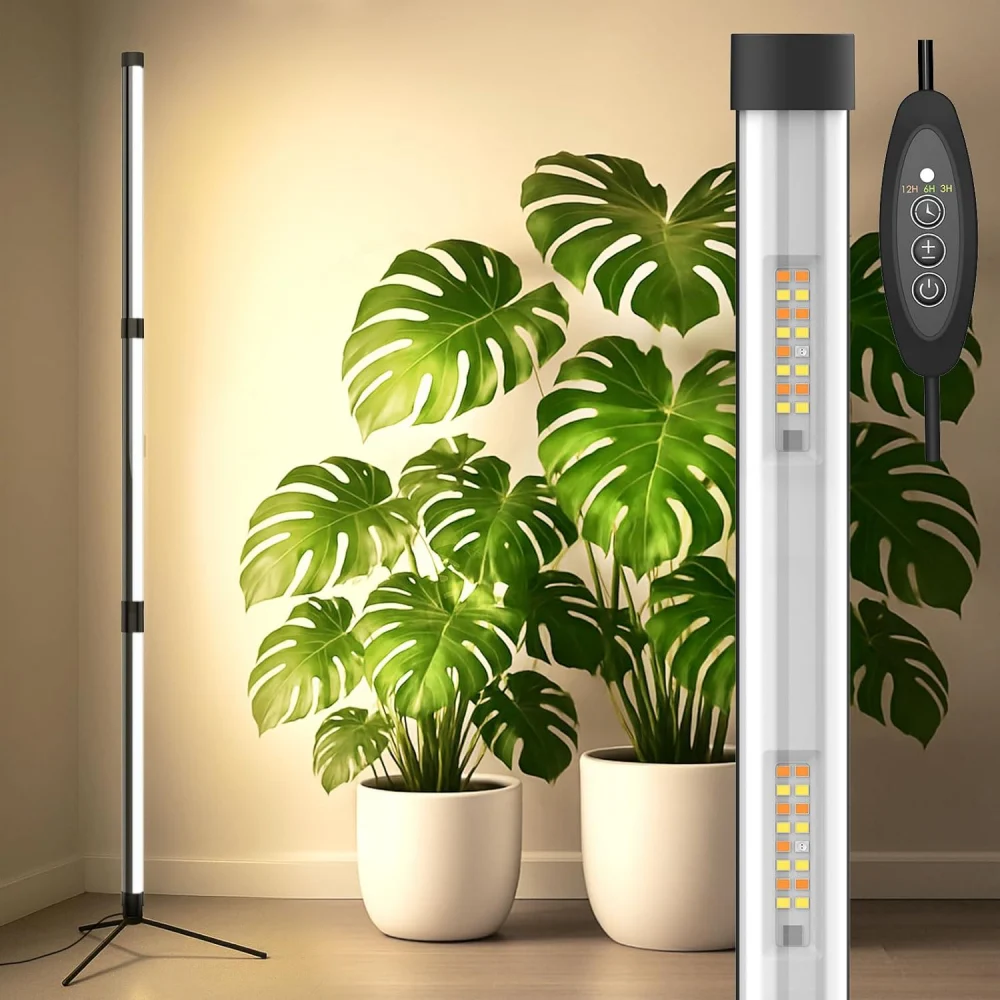
A Simple Window-Backup Option
For a medium Alocasia that already sits near a bright window, I would consider a slim standing or vertical light as seasonal backup rather than a full replacement for natural light.
Best for: medium Alocasia, winter light loss, bright-window backup.
Setup 3 — Wide Coverage Light for Large Alocasia
Large elephant ear Alocasia need a different kind of setup. For plants like Sarian, Regal Shield, Portora, Macrorrhizos, Yucatan Princess, and Odora, I would not rely on a tiny clip-on light placed close to one leaf. These plants are tall, wide, and often unevenly shaped indoors, so one small beam usually does not do much.
For large Alocasia, I would choose a taller standing grow light, a wider LED panel, or a light that can cover more of the plant from a reasonable distance. The goal is not to place the lamp as close as possible. The goal is to give the whole plant usable light.
This is where Alocasia care feels different from many smaller houseplants. A large Sarian or Regal Shield may need light across several leaves and stems, not just one bright spot on the top leaf. If the light only reaches one side, the plant may still lean or grow unevenly.
I would use this setup for large Alocasia sitting away from the brightest window, especially in a darker room corner. A small decorative plant light may look nice, but for a large upright Alocasia, coverage matters much more.

SANSI 45W 3-Head Grow Light
Best for: one large floor Alocasia or a small plant corner.
I like this style for taller Alocasia because the adjustable height and multiple heads make it easier to spread light across more than one leaf. I would still start at a moderate distance rather than place it close to the foliage.
For Several Alocasia: Wider-Coverage Light
If several Alocasia share the same plant corner, I would consider a wider and stronger light rather than adding several tiny lamps. For one plant, this would usually be more than I need.
Best for: grouped Alocasia and wider plant corners.
What I Look for — and What I’d Avoid
When choosing a grow light for Alocasia, I care less about buying the strongest lamp and more about whether the light is easy to place, safe near leaves, and realistic to use every day.
| I Look For | I Avoid |
|---|---|
| Full-spectrum white LED | Purple or red-blue lights that make the room hard to live in |
| Adjustable height | Fixed low lamps that the plant can quickly outgrow |
| Wide enough coverage | Tiny decorative lights that only shine on one leaf |
| Low heat | Hot lamps placed close to Alocasia leaves |
| Timer compatibility | Unstable clip lights or lights I have to remember manually |
For me, a good Alocasia grow light should fit the plant and the room. A small shelf plant needs control. A larger plant needs coverage. And no matter which setup I use, I prefer a light I can keep on a steady schedule without constantly moving the plant around.
How Far I’d Place the Light
I use these distances only as a starting point. Different grow lights have different strengths, so I would always watch the plant for one to two weeks and adjust from there.
These are only rough starting points for moderate household grow lights. A stronger lamp may need to sit farther away, so I would always follow the light manufacturer’s guidance and watch the leaves for stress.
| Alocasia Type | Starting Distance |
|---|---|
| Small jewel Alocasia, like Black Velvet, Silver Dragon, Dragon Scale, Melo, or Maharani | 12–18 inches |
| Medium Alocasia, like Frydek, Polly, Jacklyn, Zebrina, Longiloba, or Lauterbachiana | 14–24 inches |
| Large Alocasia, like Sarian, Regal Shield, Portora, Macrorrhizos, Yucatan Princess, or Odora | 18–30 inches |
| Weak-root, newly shipped, or recently repotted Alocasia | Start farther away and keep the light gentle |
If the leaves look dull, yellowed, dry at the edges, or stressed after adding the light, I would move the light farther away before changing everything else.
How Long I’d Run a Grow Light
I usually start with 8–10 hours a day. In winter, I may increase to 10–12 hours if the plant is healthy and responding well.
I would not start with very long light periods on weak-root, recently shipped, or newly repotted Alocasia. A timer is more useful than trying to remember the schedule manually, because Alocasia usually respond better to steady conditions than random bursts of strong light.
Is a Light Meter Worth Buying?
For most beginners, I would not buy a light meter right away. A phone light meter app is usually enough to compare different spots in the room and see whether a shelf, window corner, or dark room is much dimmer than expected.
A real light meter makes more sense if you grow many Alocasia, use several grow lights, or want to fine-tune shelf setups. For one or two plants, I would rather spend the money on a better light or a timer first.
What a Grow Light Will Not Fix
A grow light can help when weak indoor light is part of the problem, but it will not fix every struggling Alocasia.
A grow light will not fix:
- Root rot
- Compact wet soil
- A pot that is too large
- Cold drafts
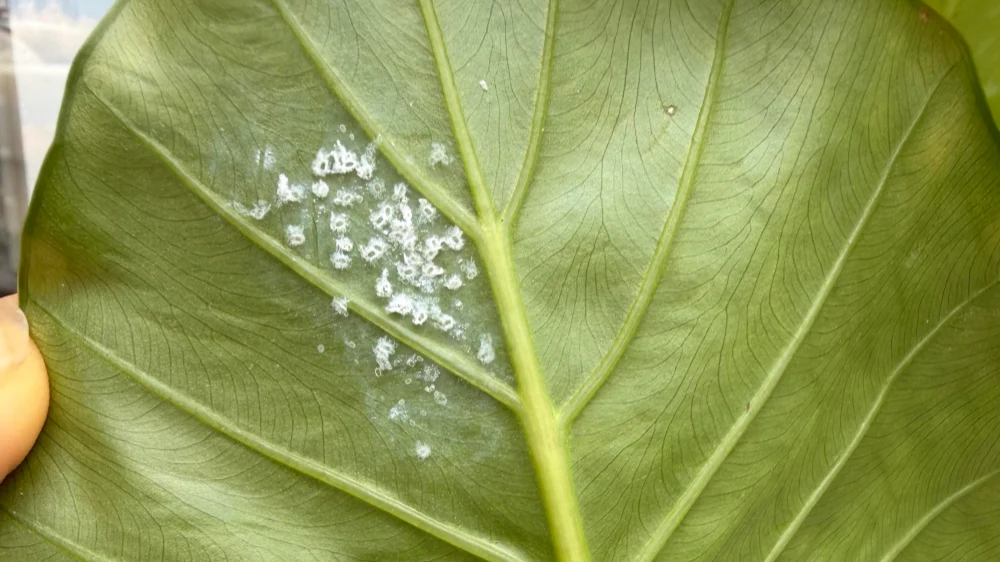
- Spider mites on Alocasia or thrips
- Recent shipping shock
- Overwatering from a fixed schedule
If the roots are damaged, the soil stays wet for too long, or the plant is sitting in a cold spot, I would fix those problems first. A grow light works best when the plant is basically healthy but not getting enough usable light indoors.
How I Adjust Watering After Adding a Grow Light
After adding a grow light, I do not immediately start watering more. I watch how fast the pot dries and how the next new leaf responds.
If the plant starts growing more actively and the soil dries a little faster, I may adjust watering slowly. But if the soil still stays wet for too long, I do not blame the light or keep adding water. That usually tells me to check the pot size, soil mix, roots, or room temperature first.
My Rule: Match the Light to the Plant, Not the Trend
I do not think every Alocasia needs a grow light, and I definitely would not buy the strongest one just because it looks impressive. The setup has to match the plant in front of me.
For a small jewel Alocasia, I want control. For a medium plant near a window, I want backup light. For a large upright Alocasia, I want wider coverage. That simple difference matters more than chasing the most powerful lamp.
If the roots are healthy and the room is just too dim, a grow light can make indoor care feel much steadier. I would start gently, keep the schedule consistent, and watch the next new leaf before changing everything else.