
10 Jewel Alocasia Varieties: Full Comparison & Care Guide
Jewel Alocasias are small, slow-growing, deeply textured Alocasias with some of the most striking foliage in the genus.
They stay compact, shine under bright indoor light, and offer collectors a wide range of leaf textures — from metallic to velvety to sculpted.
This guide covers the most popular varieties and helps you choose the right gem for your collection.
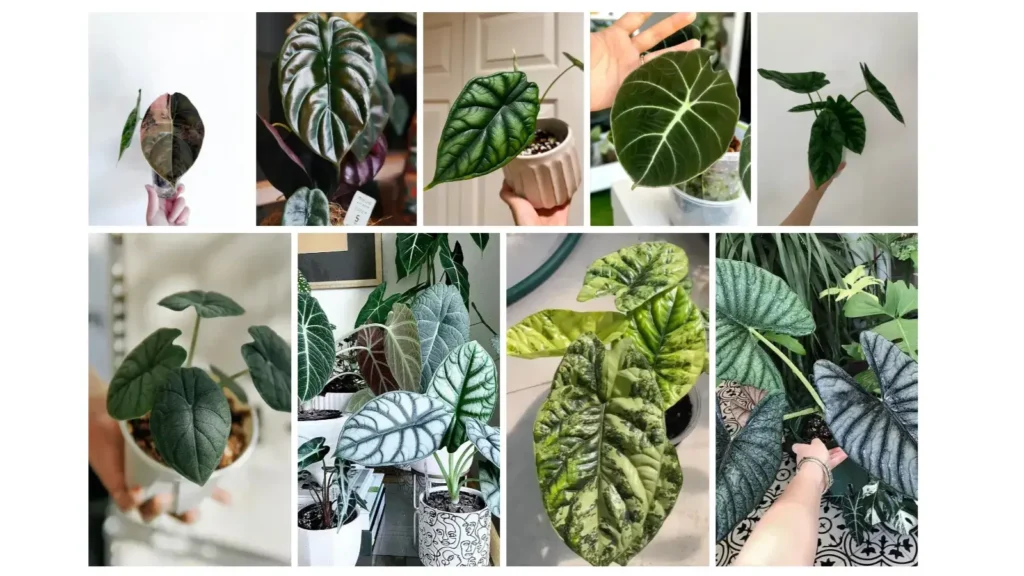
What Makes a “Jewel Alocasia”?
“Jewel Alocasia” isn’t a botanical category—it’s a collector term used to describe a group of small, slow-growing Alocasias known for their highly detailed, sculpted foliage.
They stay compact indoors, develop rich textures and colors, and are often prized as statement plants in small spaces.
Common traits shared by Jewel Alocasias:
- Compact mature size — perfect for apartments or limited shelf space.
- Thick, sculpted, or textured leaves — often metallic, armored, quilted, or velvety.
- Slow but steady growth — they don’t get large or fast, making them manageable.
- More humidity-sensitive than standard Alocasias — they prefer stable moisture and air.
- Premium collector appeal — uncommon shapes and finishes that stand out in any plant collection.
Quick Comparison Table
A fast side-by-side look at the most popular Jewel Alocasias — perfect if you’re choosing your first one or comparing difficulty levels.
| Variety | Size | Leaf Texture | Difficulty | Notes |
|---|---|---|---|---|
| Dragon Scale | Medium-small | Armored, sculpted | ★★★★☆ | Stunning but humidity-sensitive |
| Silver Dragon | Small | Powdery silver | ★★★☆☆ | Good entry-level Jewel |
| Melo | Small | Thick, stone-like | ★★★★★ | Highly rot-prone |
| Maharani | Small | Matte, leathery | ★★★☆☆ | Compact and forgiving |
| Black Velvet | Small | Velvet dark | ★★★★☆ | Beautiful but easy to overwater |
| Cuprea | Small-medium | Metallic red/bronze | ★★★☆☆ | Prefers warmth and consistency |
| Azlanii | Small | Pinkish metallic | ★★★★☆ | Gorgeous but sensitive |
| Sinuata | Small | Quilted, glossy | ★★★☆☆ | Rare but manageable |
| Nebula | Small | Soft metallic grey | ★★★★☆ | Sensitive roots, benefits from humidity |
The Core Jewel Alocasias
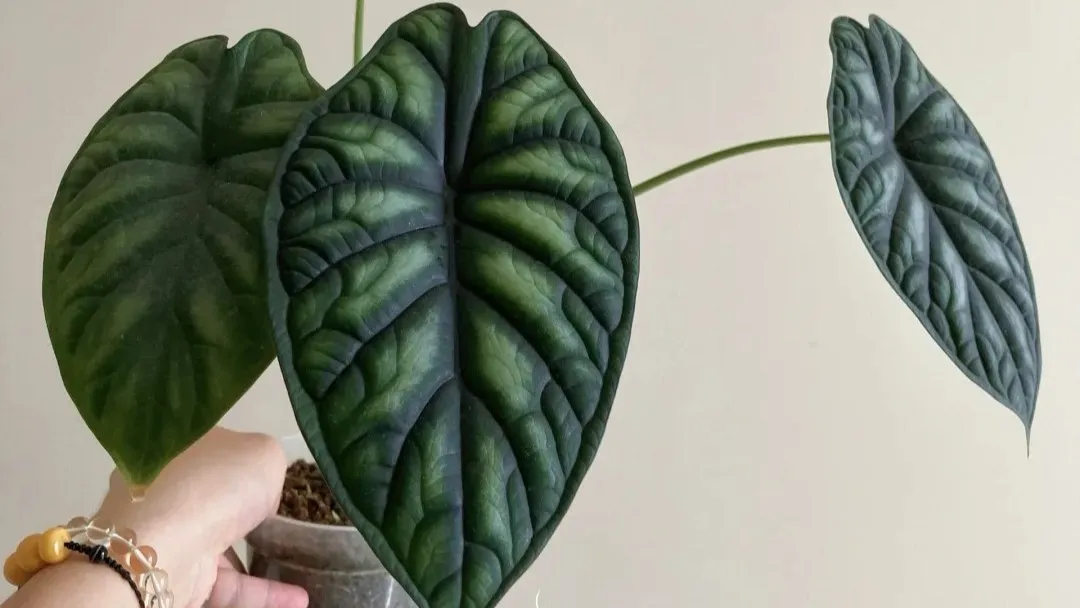
Alocasia Dragon Scale
Sculpted, armored leaves with dramatic depth and texture. Striking but sensitive to humidity and moisture swings.
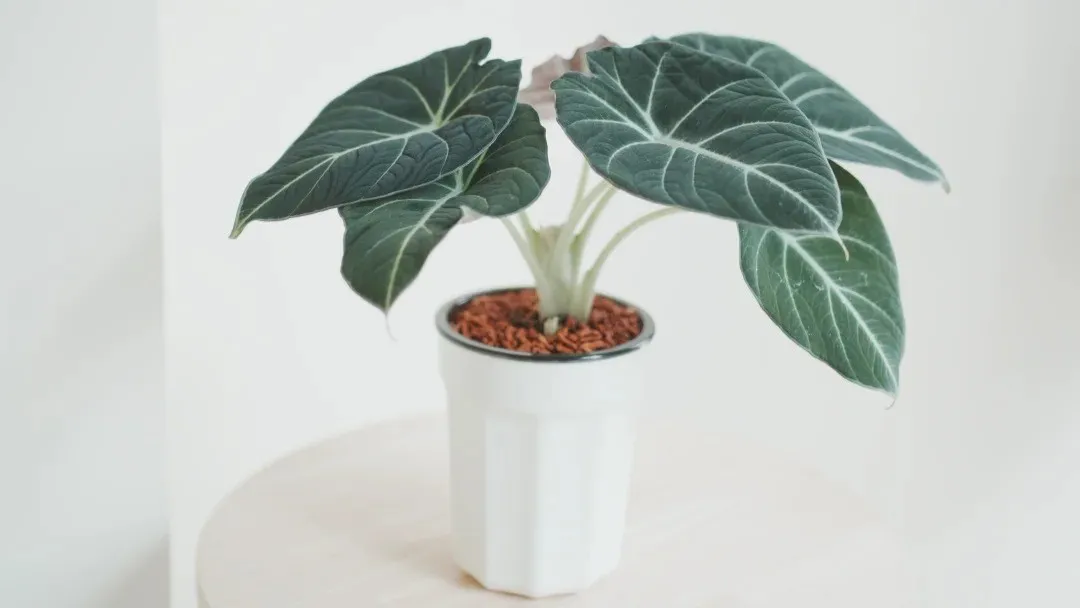
Alocasia Black Velvet (Reginula)
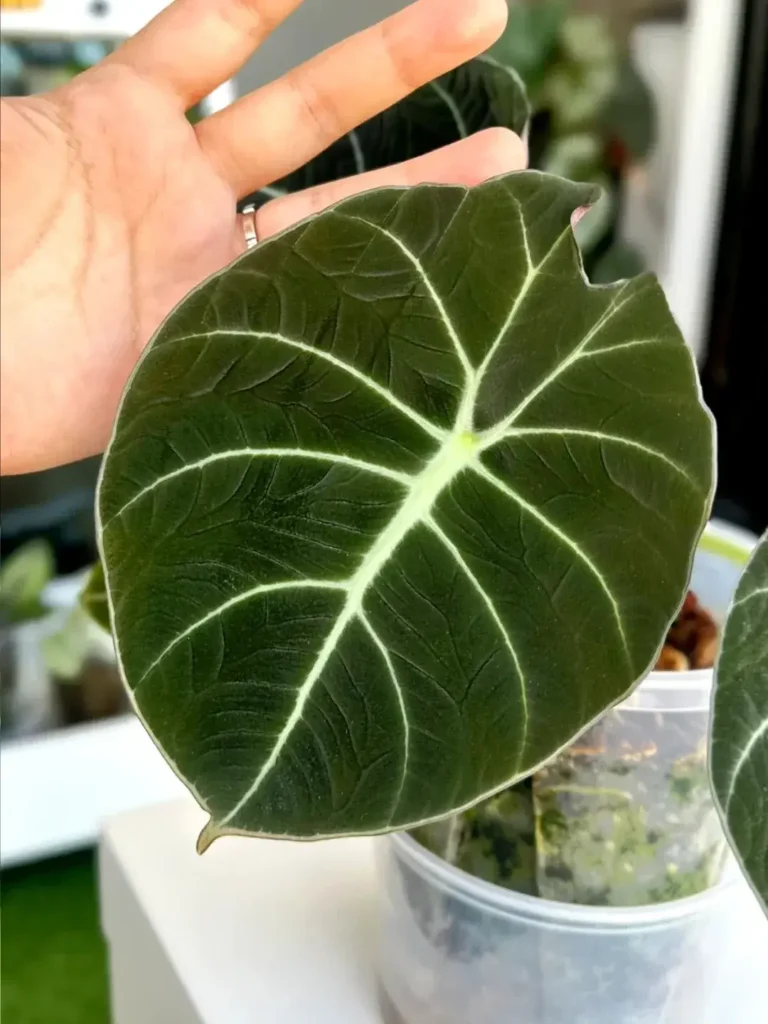
Small, velvety dark leaves with bright veins. Beautiful but easy to overwater if soil stays too wet.
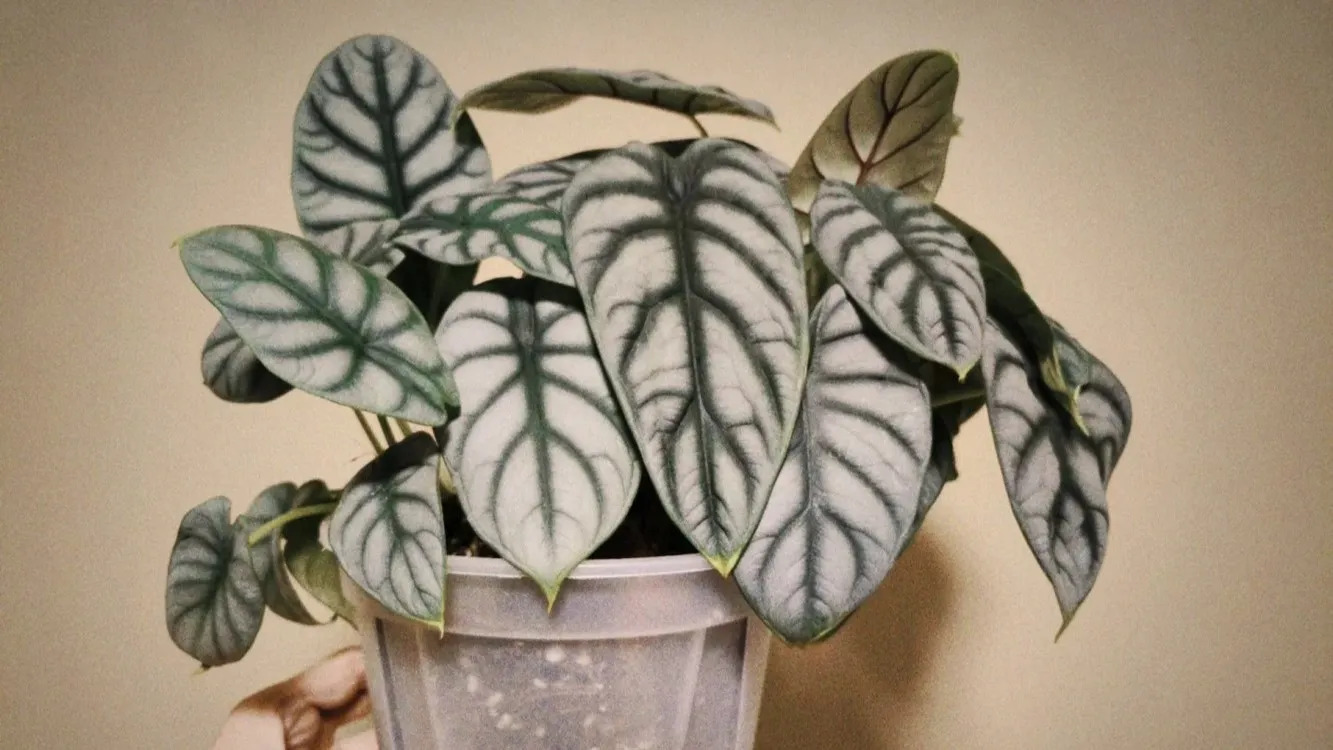
Alocasia Silver Dragon
Compact silver foliage with soft, powdery texture. One of the most beginner-friendly Jewel varieties.
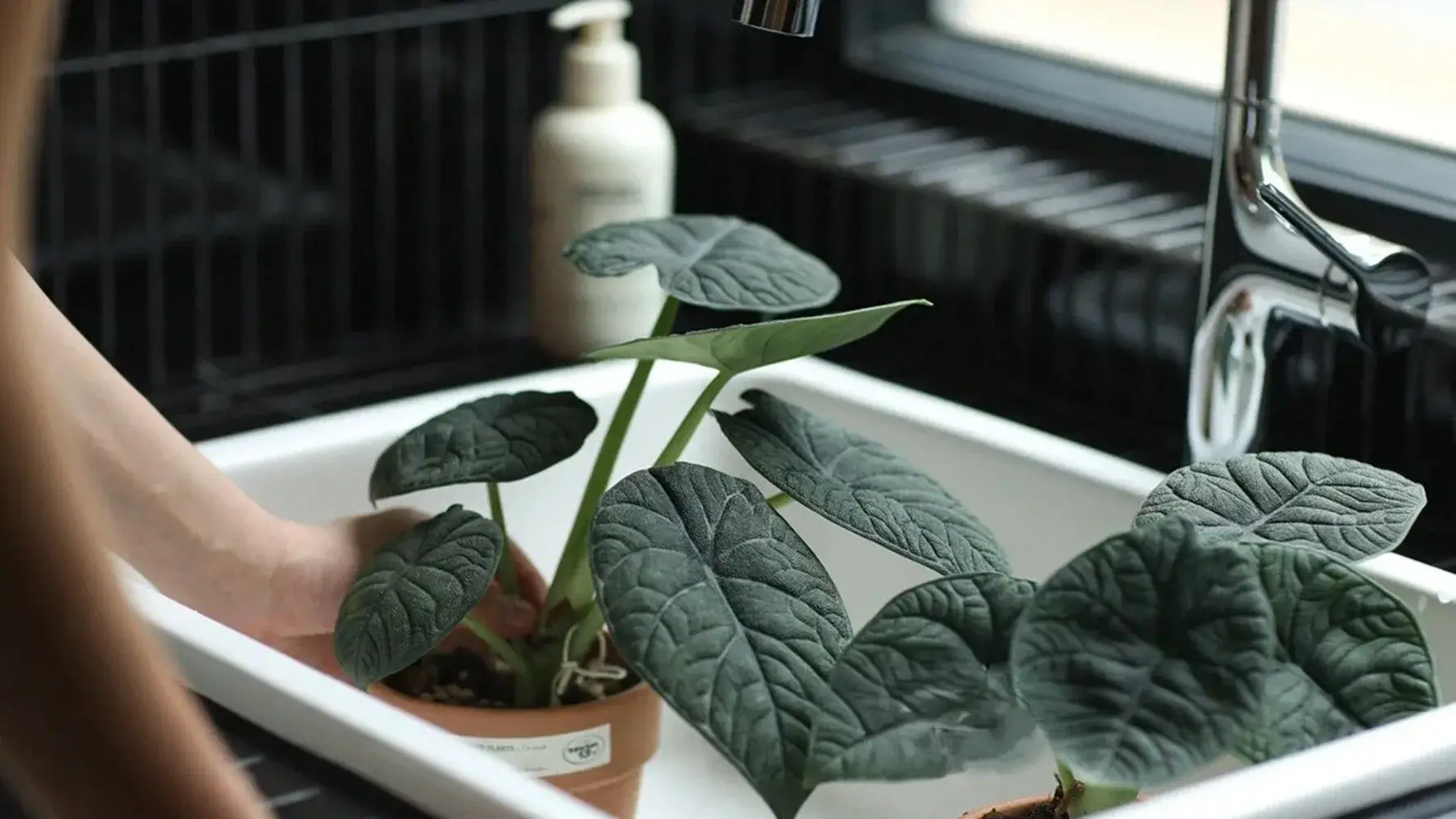
Alocasia Melo (Rugosa)
Thick, stone-like leaves unlike any other Alocasia. Beautiful but extremely prone to root rot.
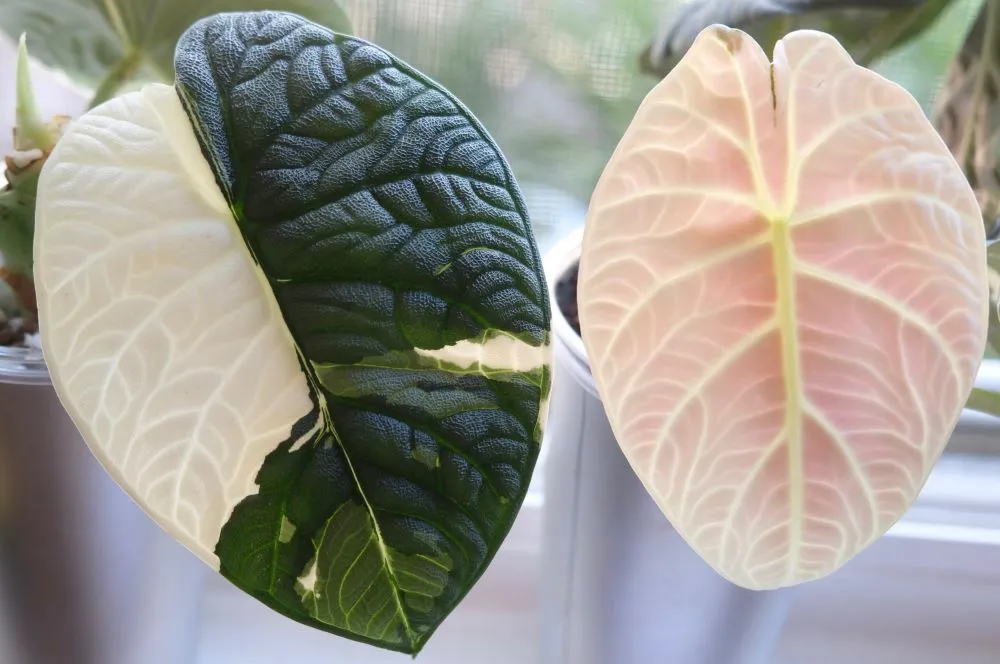
Alocasia Maharani
Matte, leathery foliage and tidy compact growth. Forgiving and stable—an excellent entry-level Jewel.
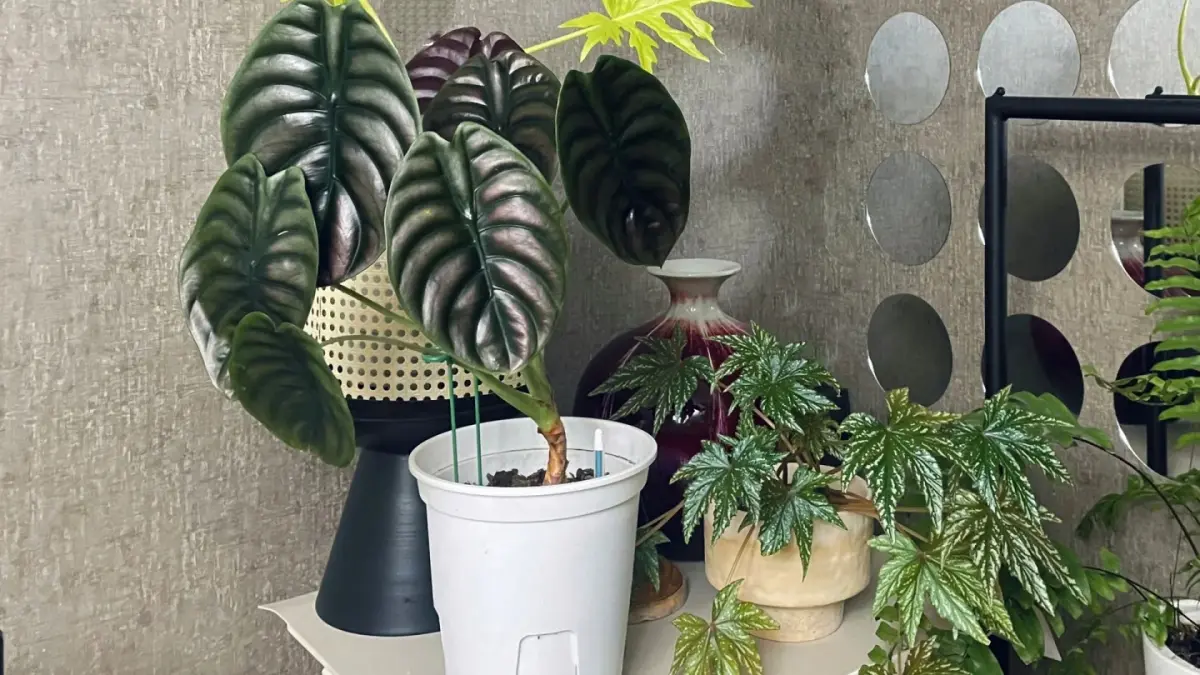
Alocasia Cuprea
Metallic, shield-like leaves with a dramatic shine. Beautiful but prone to wobbling if the base is weak.
Care Requirements for Jewel Alocasias
Jewel Alocasias share similar needs, but they’re generally more sensitive than standard Alocasia varieties. Here’s a simple overview before you dive into the individual care guides:
Light
Bright, indirect light is ideal; harsh sun will scorch their textured leaves.
Watering
Keep soil lightly moist but never wet — most Jewels react quickly to overwatering.
Humidity
They perform best with 55–70% humidity and grow noticeably better with stability.
Soil
Use a loose, airy mix that drains fast but retains slight moisture (aroid mix recommended).
Temperature
Aim for 68–80°F (20–27°C); cold drafts can stall growth or cause leaf collapse.
Repotting Frequency
Repot only every 12–18 months, and size up gradually to avoid soggy soil in oversized pots.
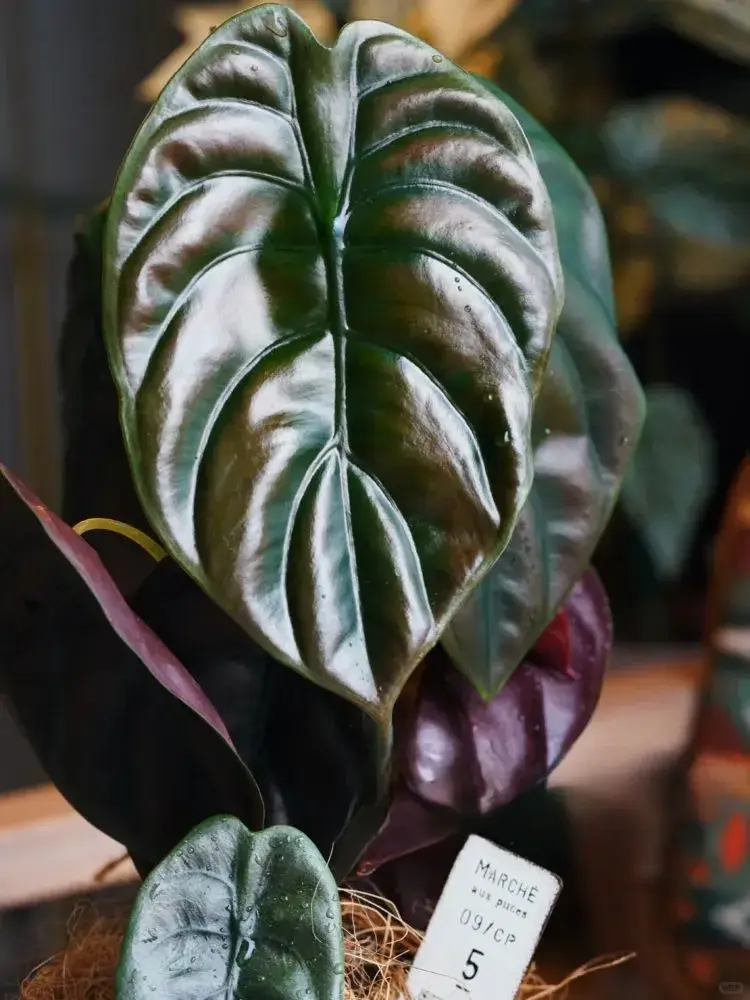
Gallery: Texture, Color, and Size Differences
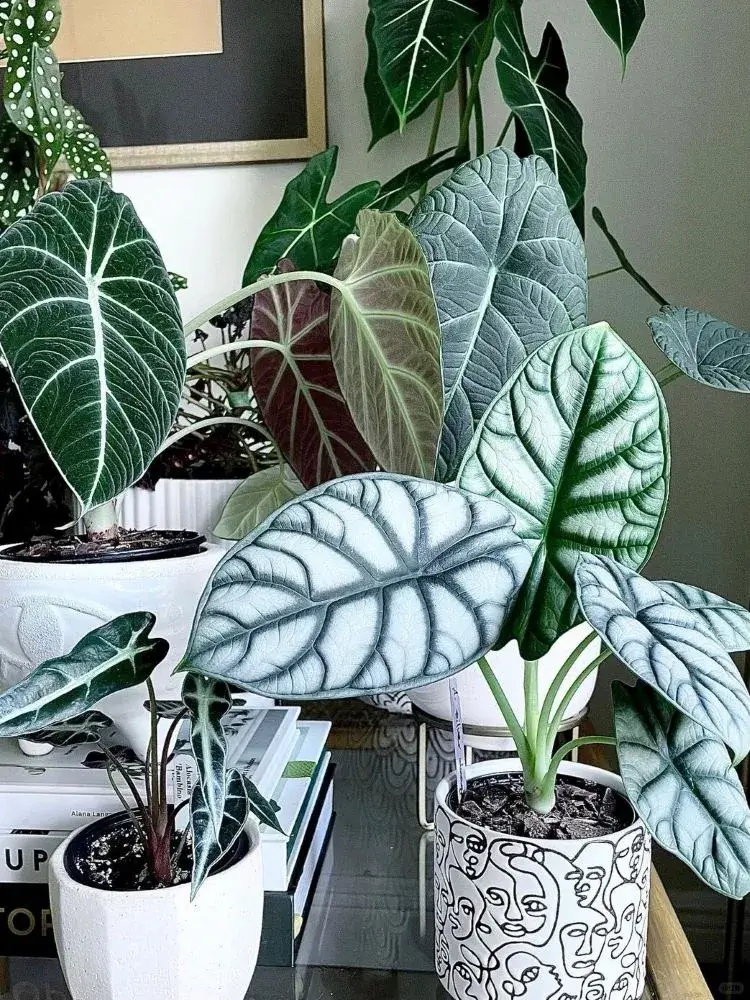
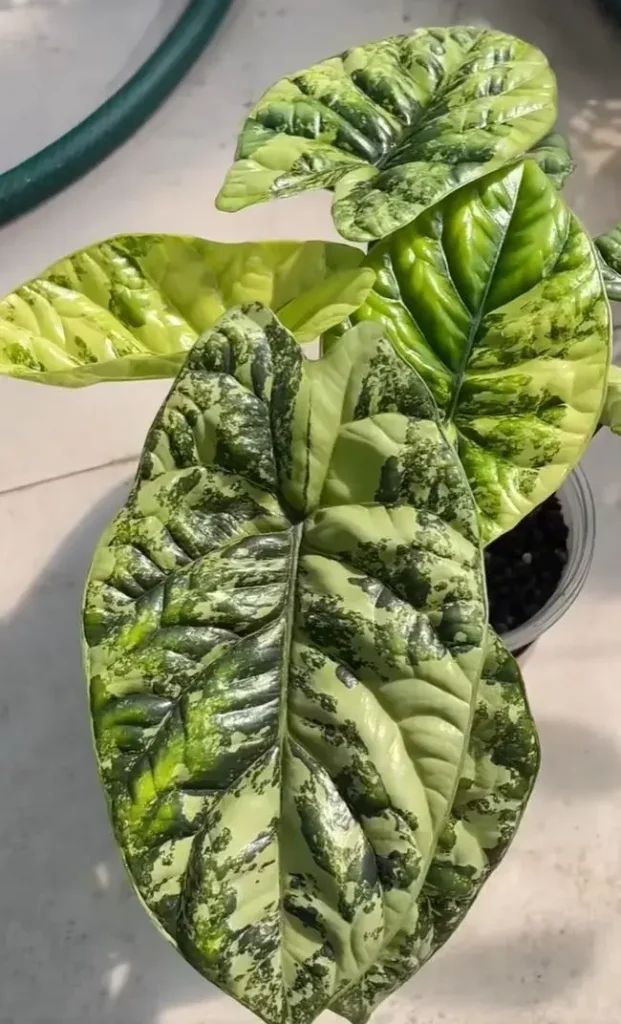
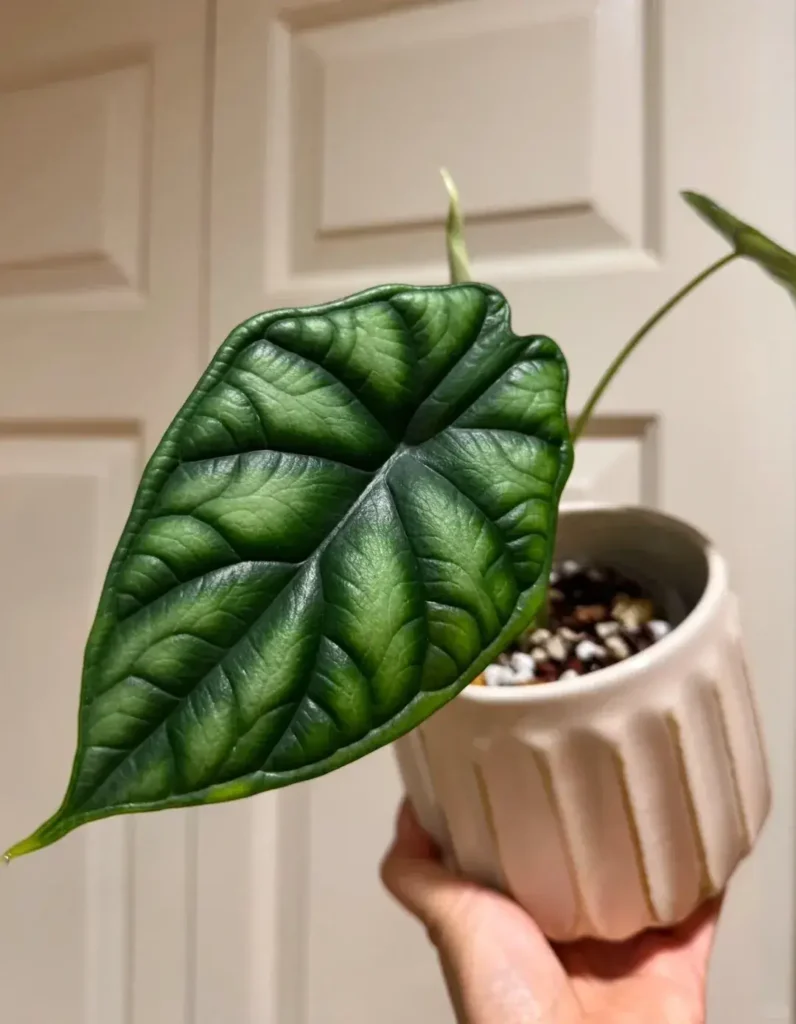
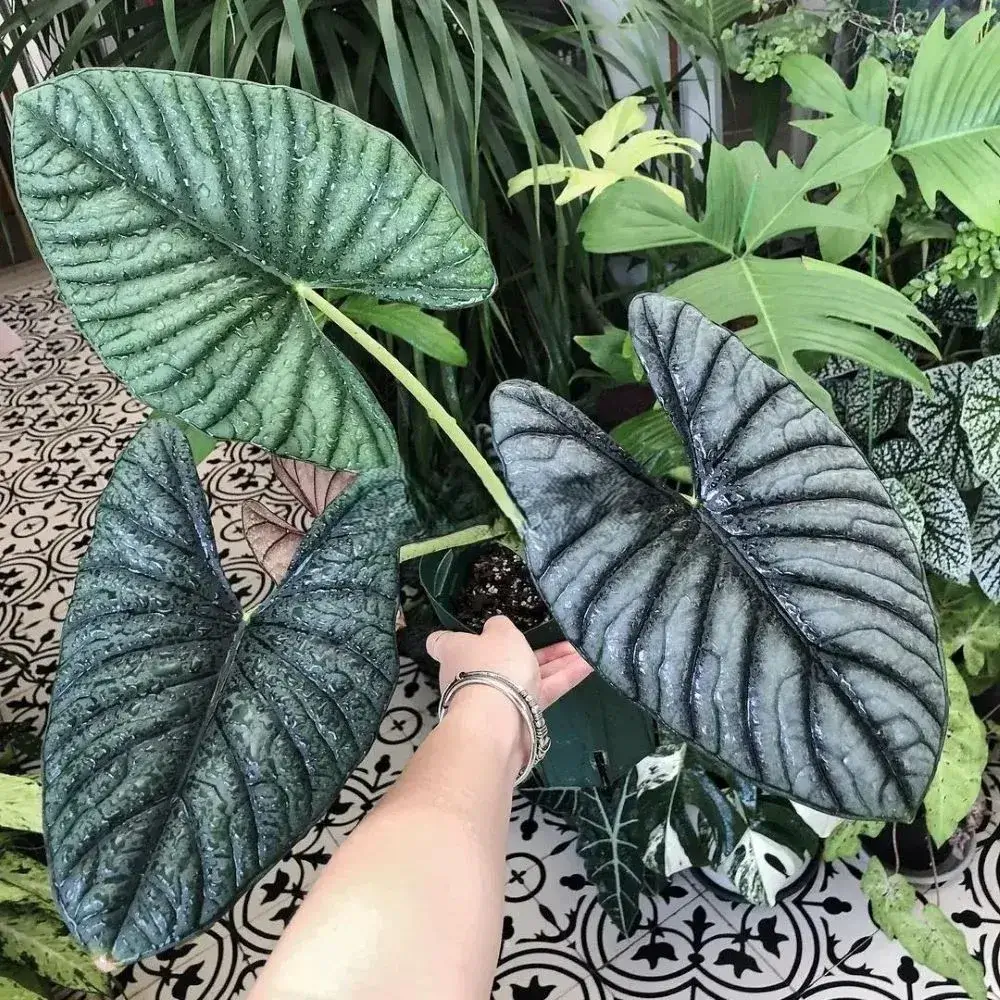
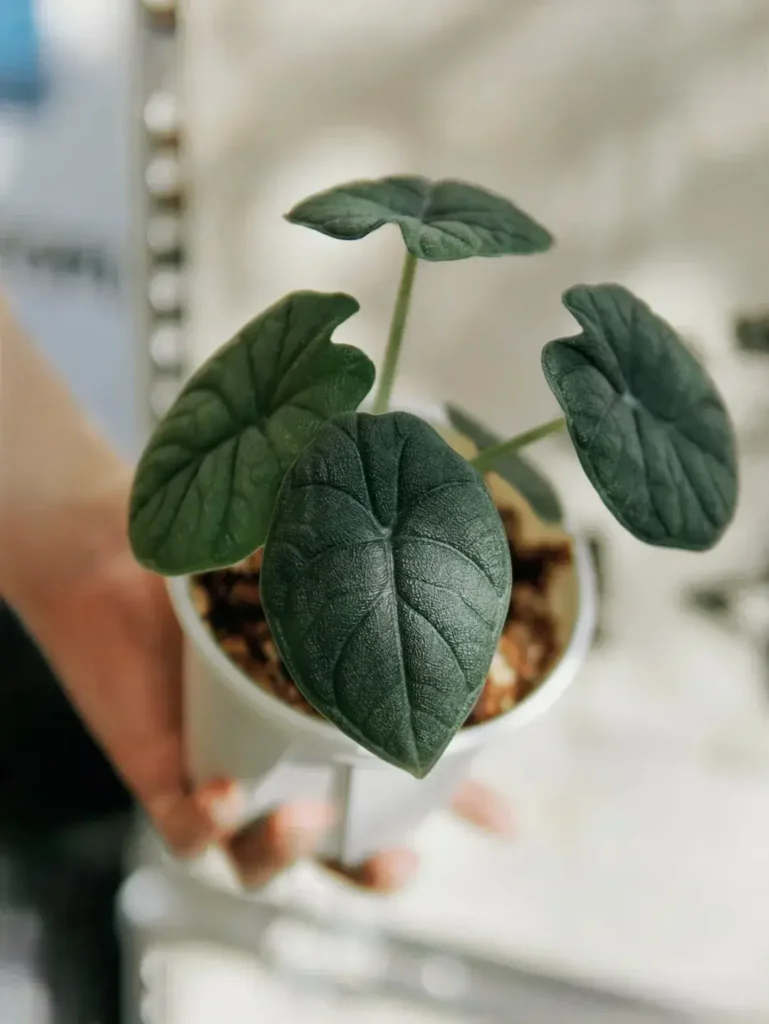
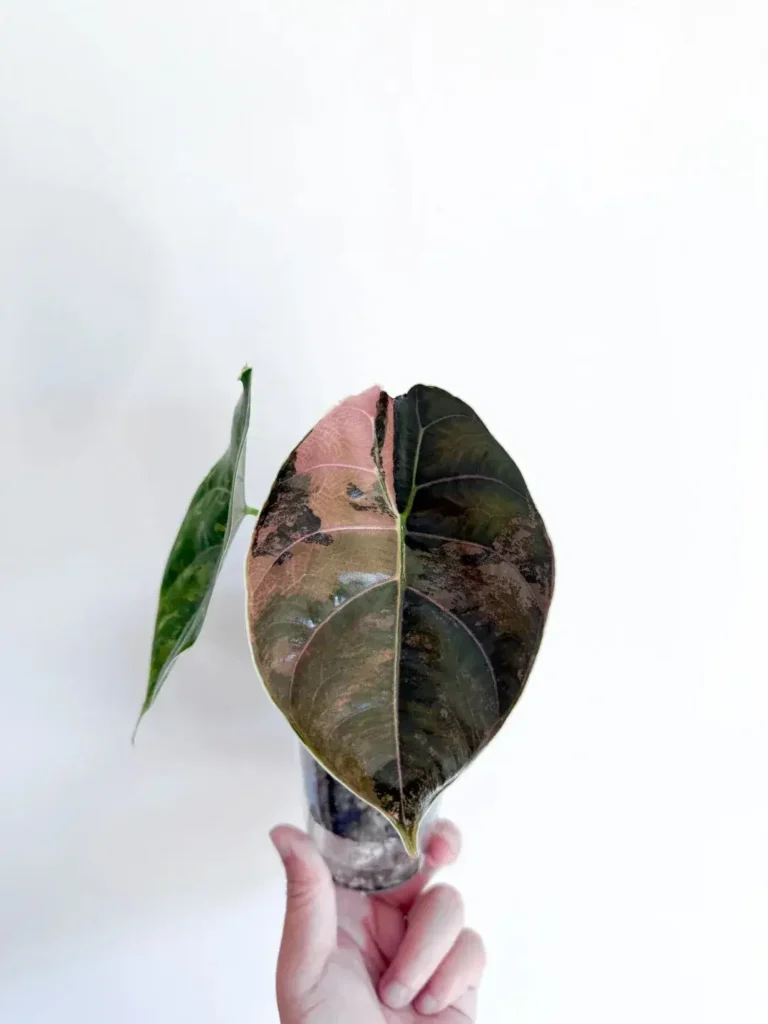
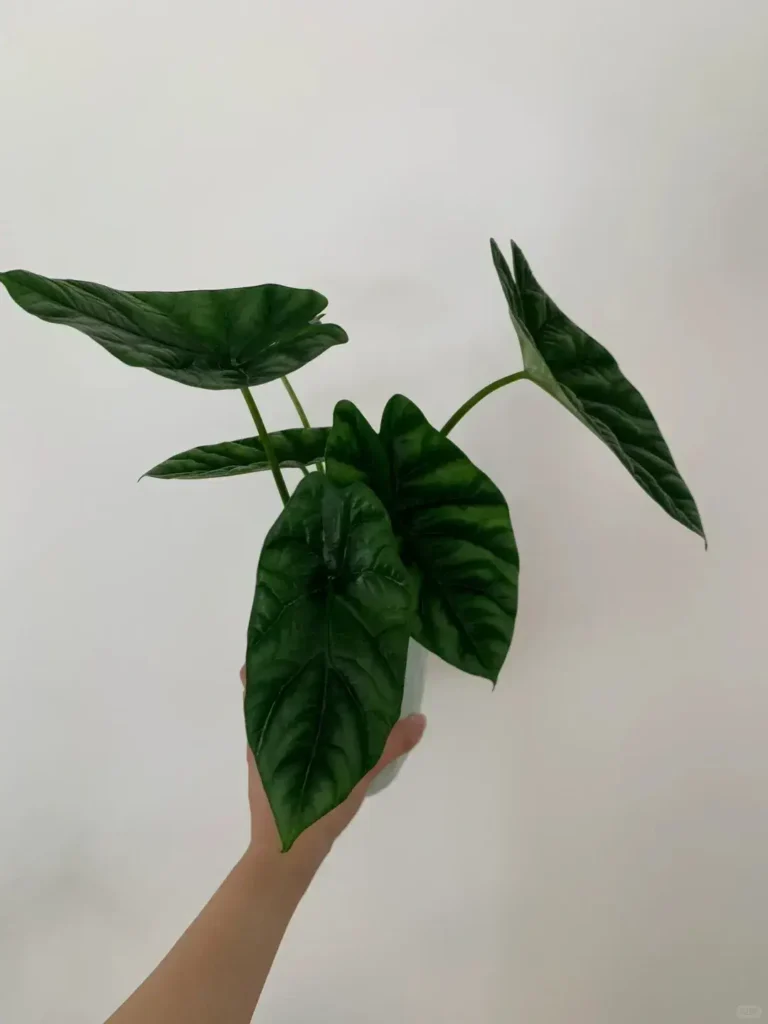
One of the best parts of growing Jewel Alocasias is seeing how dramatically their leaves differ in texture, color, and structure. This gallery highlights the unique traits that photos capture far better than words:
FAQ
Find clear answers to the most common questions beginners have when growing Alocasia indoors.
But varieties like Silver Dragon and Maharani are very manageable for beginners.
Dragon Scale, Azlanii, and Nebula benefit the most from added humidity.
They tolerate lower humidity and handle watering mistakes better than other Jewels.
A stable routine usually clears up new growth.
Expect only a few new leaves per season — this is normal.
Dense soil increases the risk of rot.