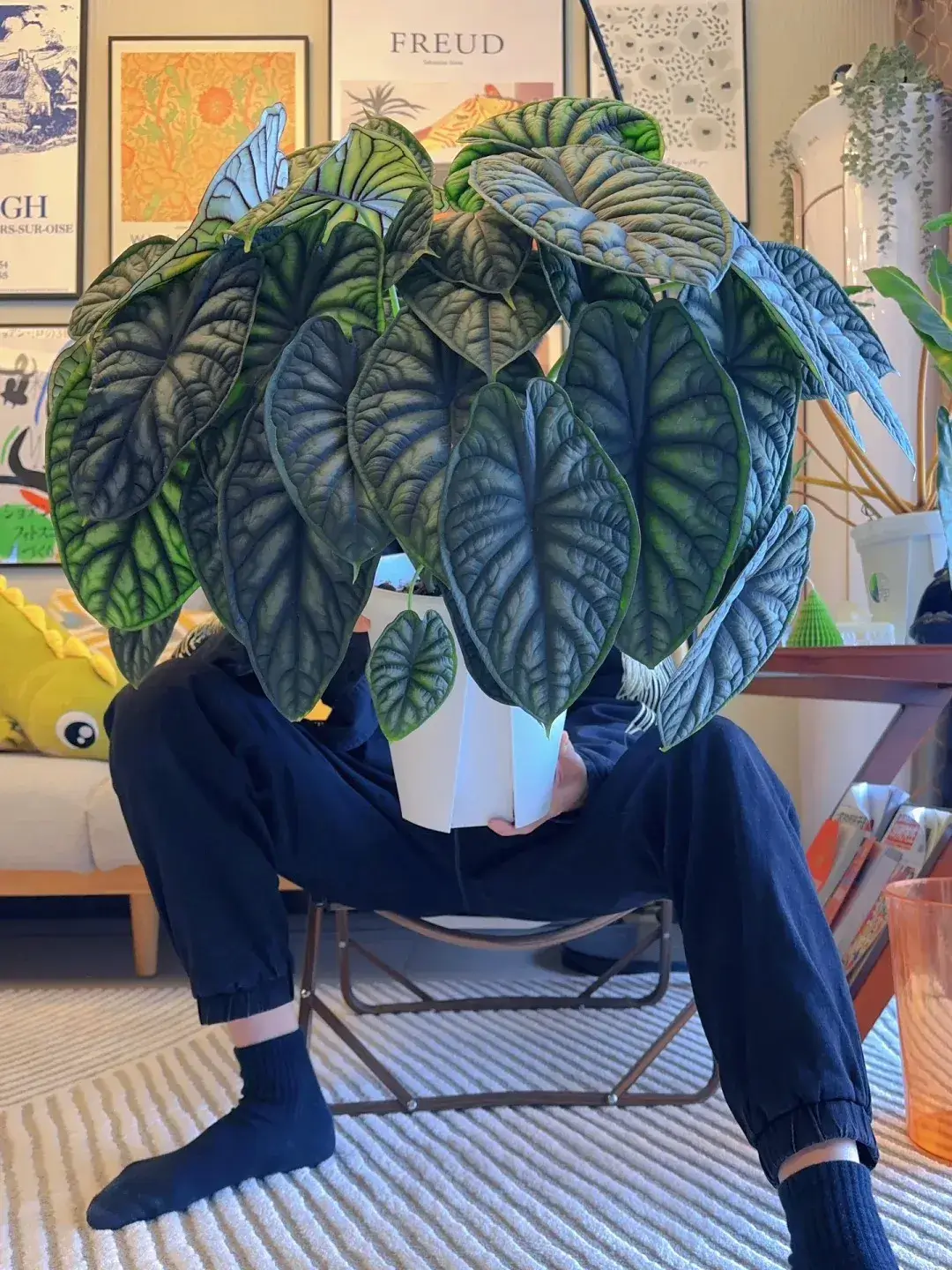
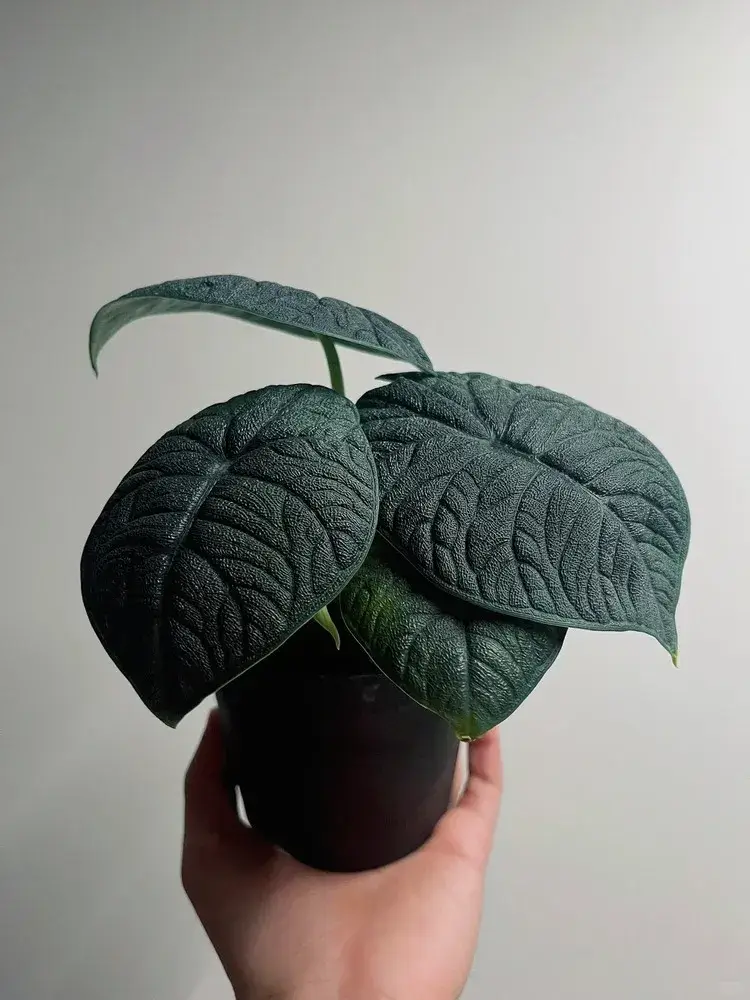
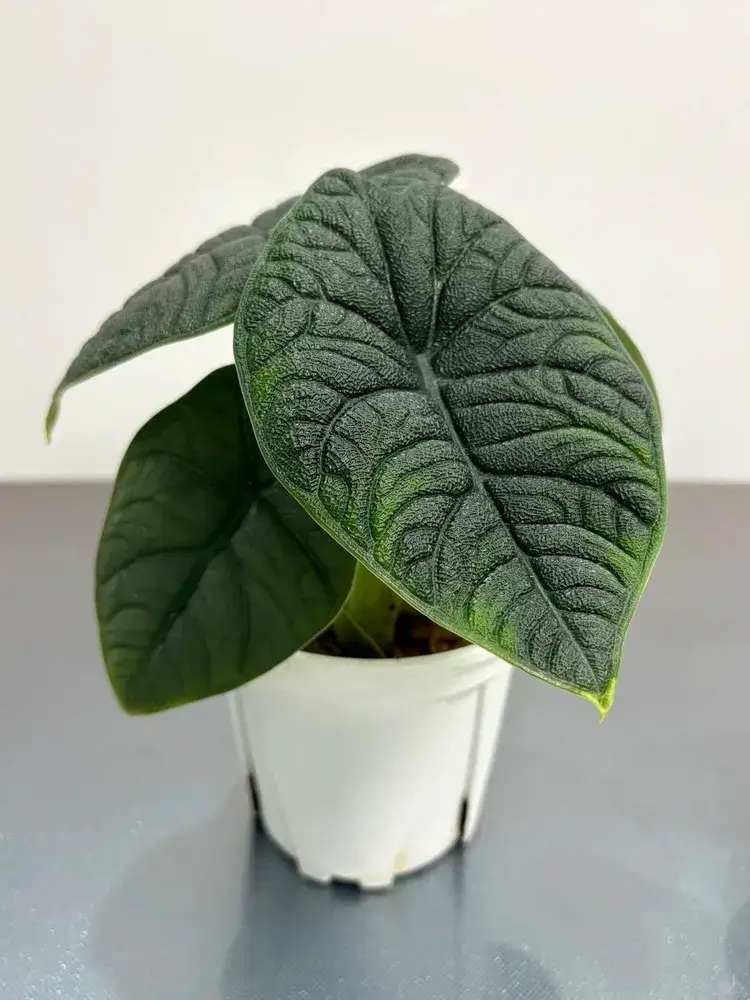
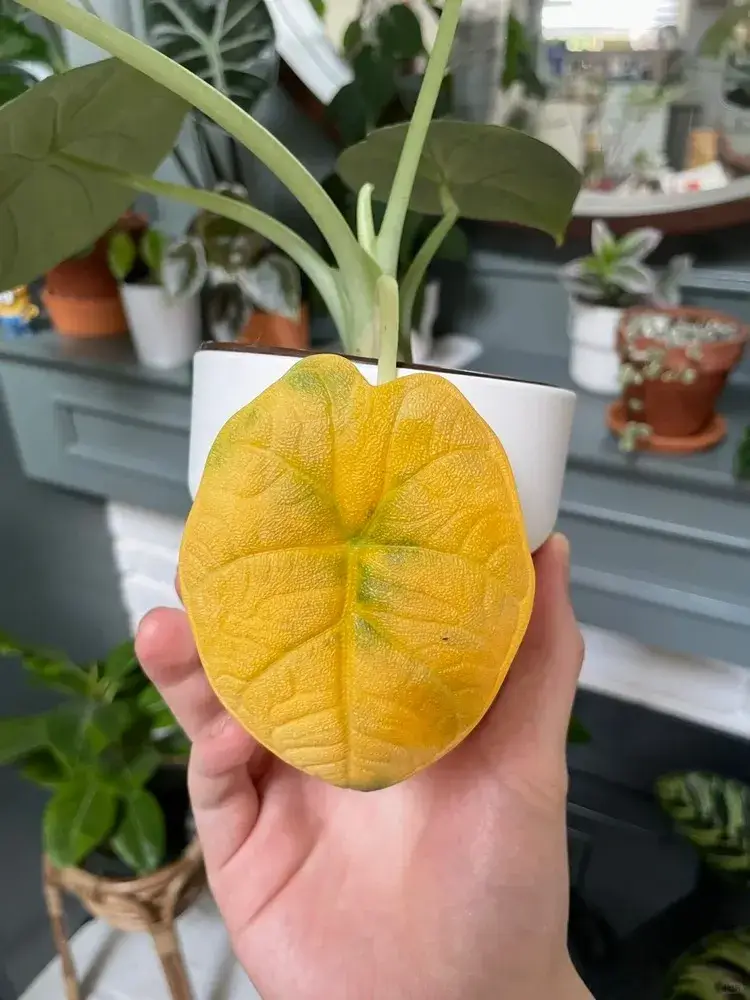
When I opened the shipping box, my first thought was that the seller had sent me a fake plant.
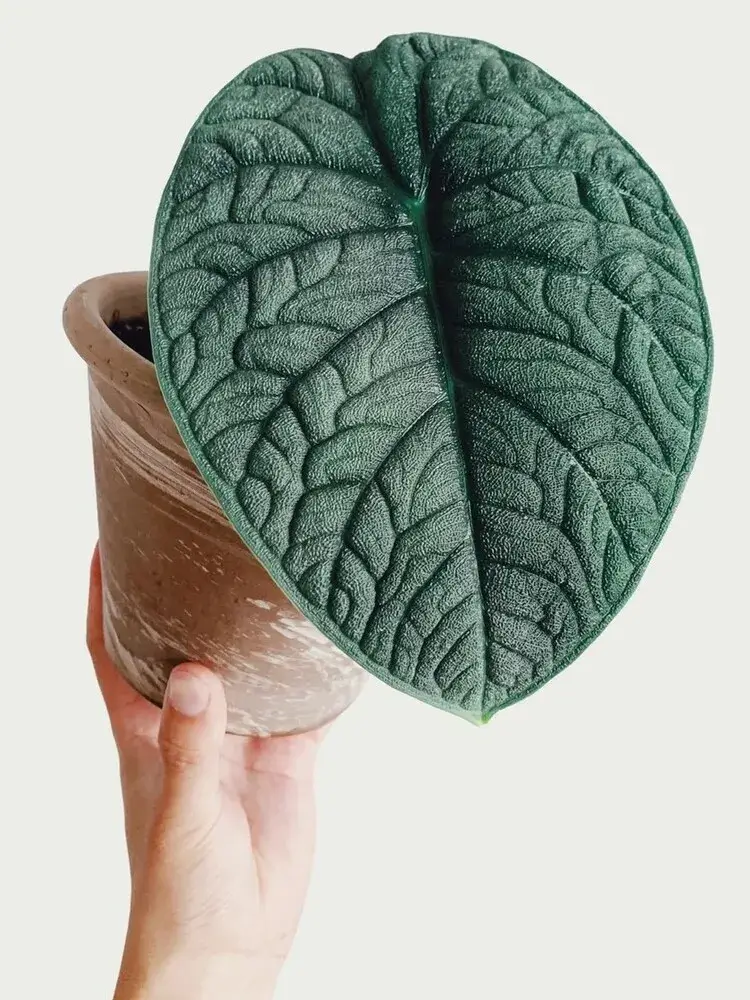
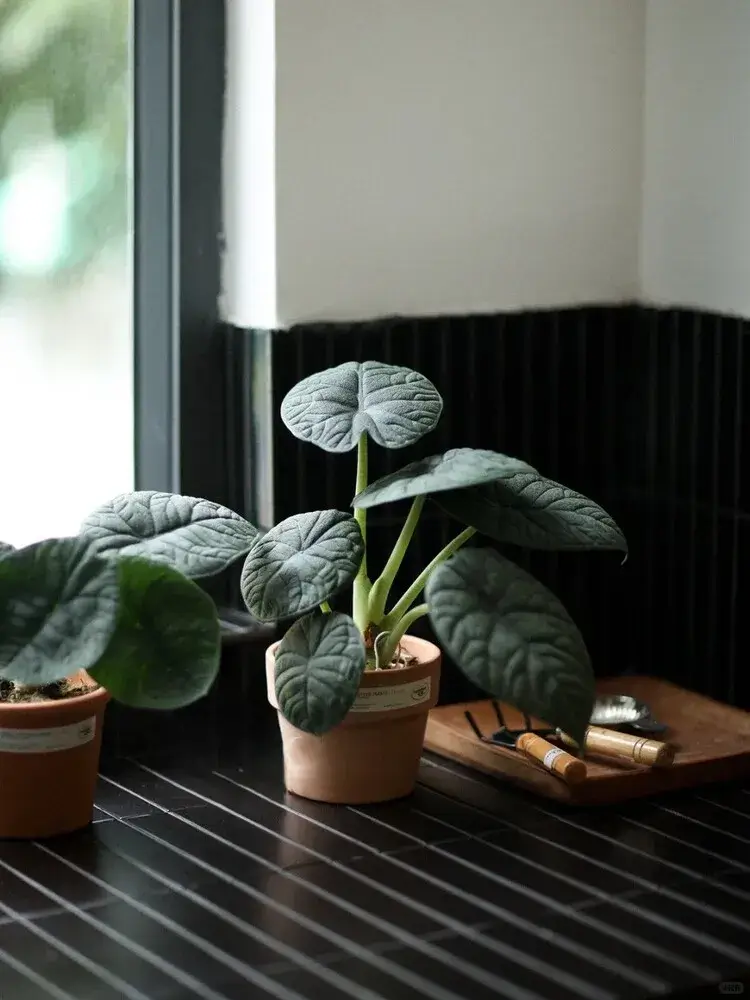
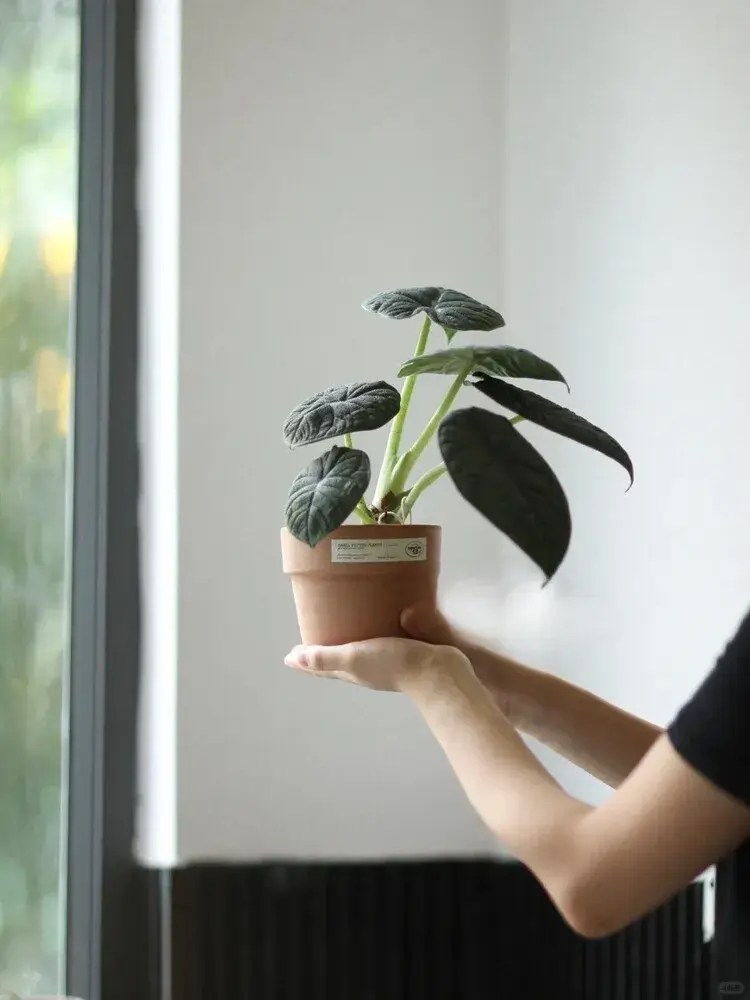
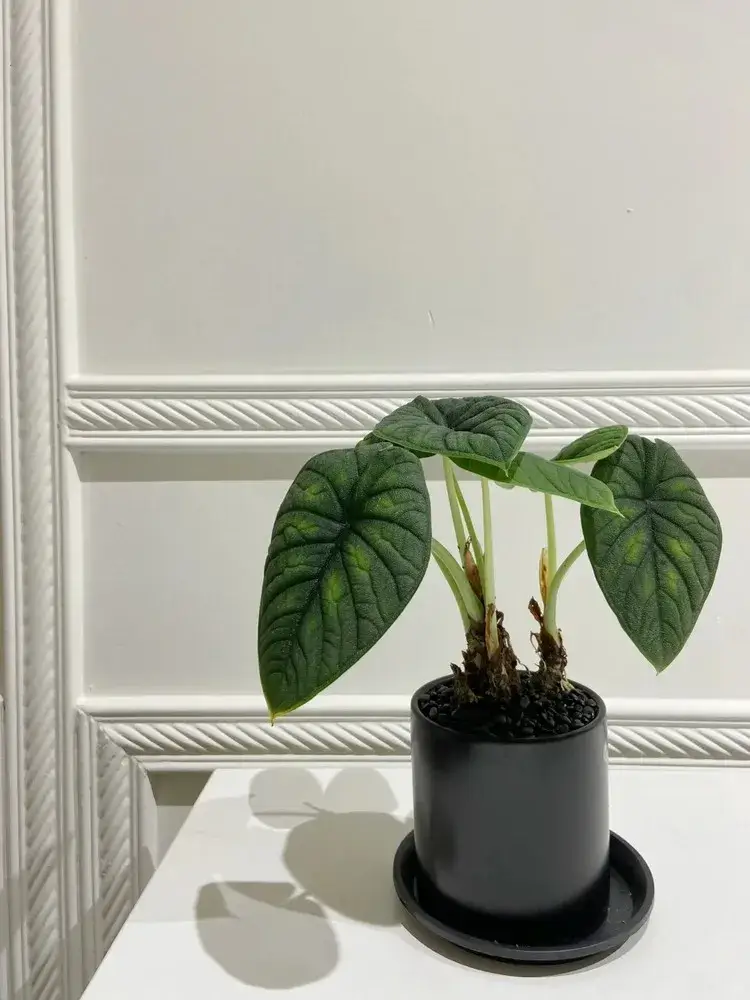
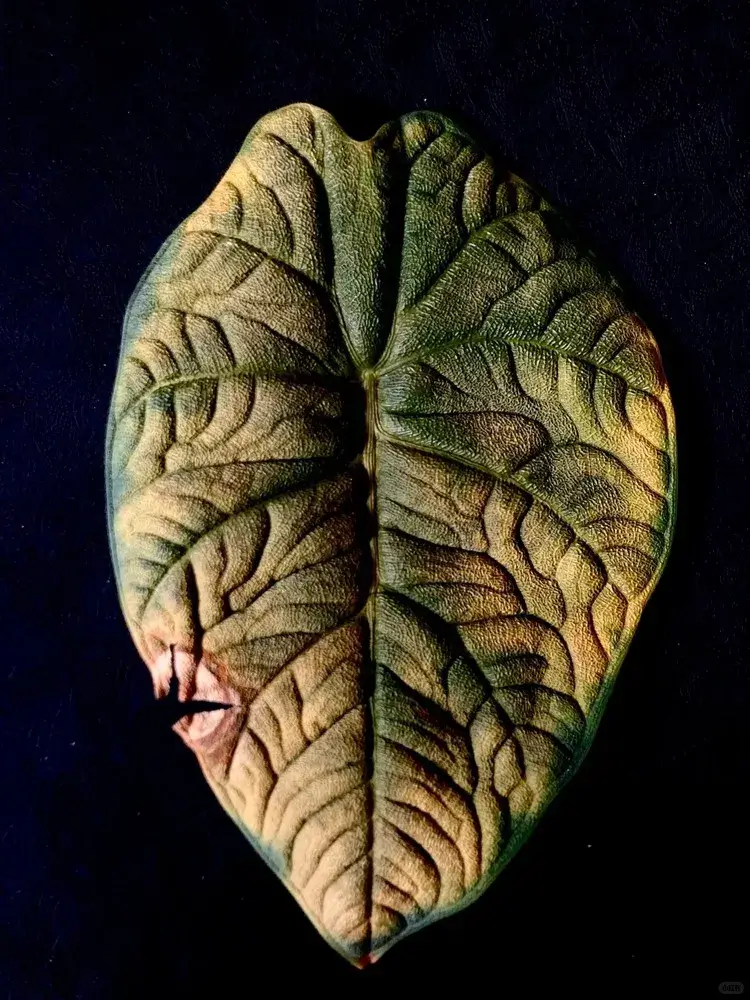
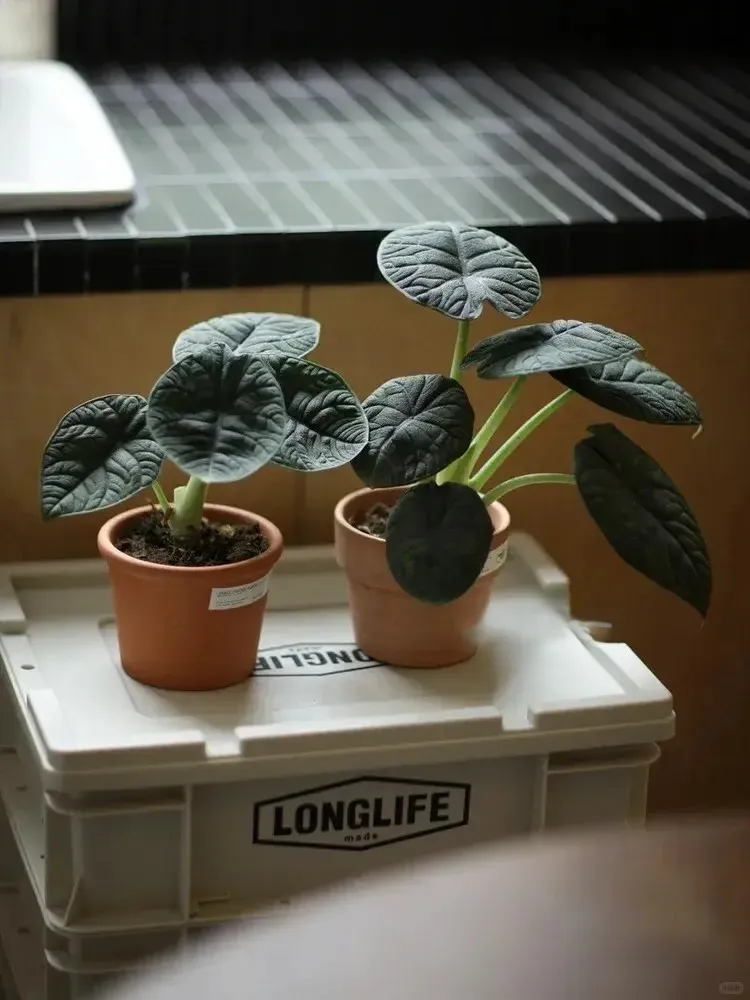
The leaves didn’t feel real at all, even under what I’d consider normal indoor light conditions. They were unusually thick, almost leathery, with a deep, dark green color and heavy, sculpted veins. Instead of looking soft or fresh like most houseplants, it felt solid—more like a decorative object than something alive.
What struck me wasn’t beauty, but strangeness.
It reminded me of something from a prehistoric rainforest, or a plant you’d expect to see on Pandora rather than in a living room. The texture, the weight, the surface—it didn’t match my mental image of what a “plant” is supposed to be.
And yet, that unsettling first impression is exactly what pulled me in.
Over time, this same plant became my favorite Alocasia. Not because it’s flashy or delicate, but because it feels grounded and substantial in a way most plants don’t. Looking back, that moment of confusion at the unboxing was the first sign that this one was going to be different.
Alocasia Melo, Rugosa, Rhino Skin: What These Names Actually Mean
If you’ve searched for this plant before, you’ve probably seen three different names used interchangeably. Here’s what they actually mean—without overcomplicating it.
Alocasia melo
This is the formal scientific name and the one I use consistently in the title and throughout the article. If you want clarity and accuracy, this is the name to stick with.
Rugosa
This name shows up a lot among sellers and plant hobbyists. It’s descriptive rather than taxonomic, referring to the rough, uneven, almost wrinkled texture of the leaf surface. Think of it as a trade or hobby name, not a separate species.
Rhino Skin
This is the English nickname. It comes from the leaf texture—thick, cracked, and leathery, like rhino skin or aged leather. It’s informal, but very intuitive once you see the plant in person.
In real-world growing and trading, these three names usually point to the same plant. Different names, same Alocasia. They’re not three separate varieties—just different ways people refer to the same one.
Once you understand this, the confusion disappears—and you can focus on the plant itself instead of the label.
Why I Ended Up Loving Alocasia Melo
What surprised me wasn’t how striking Alocasia Melo looked at first — it was how well that impression held up over time.
Living with it for a while, I realized the appeal wasn’t just visual shock. The leaves didn’t soften into something ordinary. They stayed thick, rigid, almost leather-like. The deep, sculpted veins didn’t fade into the background either. Instead of feeling decorative, the plant felt deliberate — more like a specimen than a typical houseplant.
It doesn’t rely on color to stand out. There’s no bright variegation, no dramatic contrast. Its presence comes from texture and weight. You don’t “glance” at it — you notice it.
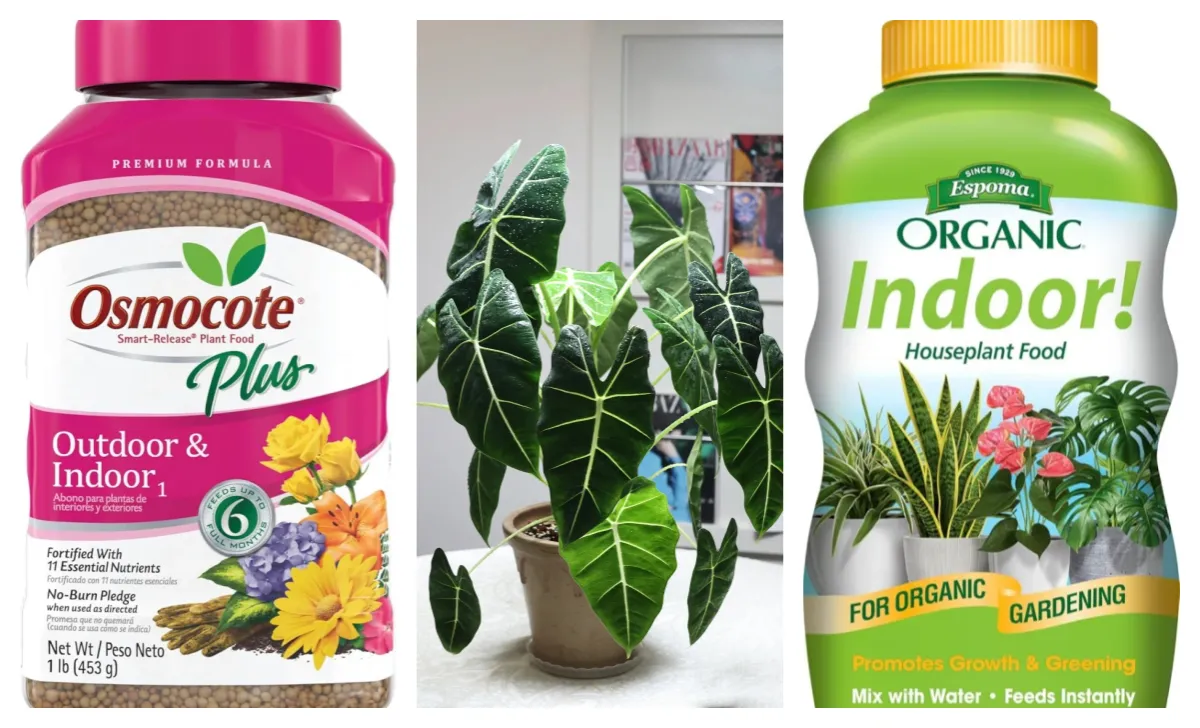
What really sealed it for me, though, was how it behaves. Spider mites barely touch it. The root system is solid and far less prone to rot than most Alocasias I’ve owned. It doesn’t demand constant adjustments or collapse the moment conditions aren’t perfect. It holds itself together.
I grow a lot of plants, and I enjoy many of them. But Alocasia Melo is the one I trust. It doesn’t need to be babied to stay impressive. It doesn’t perform fragility to earn attention.
I don’t love it because it’s easy.
I love it because it’s solid.
Three Real Problems I’ve Seen (And What Actually Helped)
This is the part where Alocasia Melo quietly tricks people.
Not because it’s dramatic — but because the symptoms often point you in the wrong direction. I’ve seen the same misunderstandings repeat, both in my own plants and in conversations with friends.
Problem 1: New leaves keep growing, but old leaves turn yellow — with strange horizontal marks on the petioles
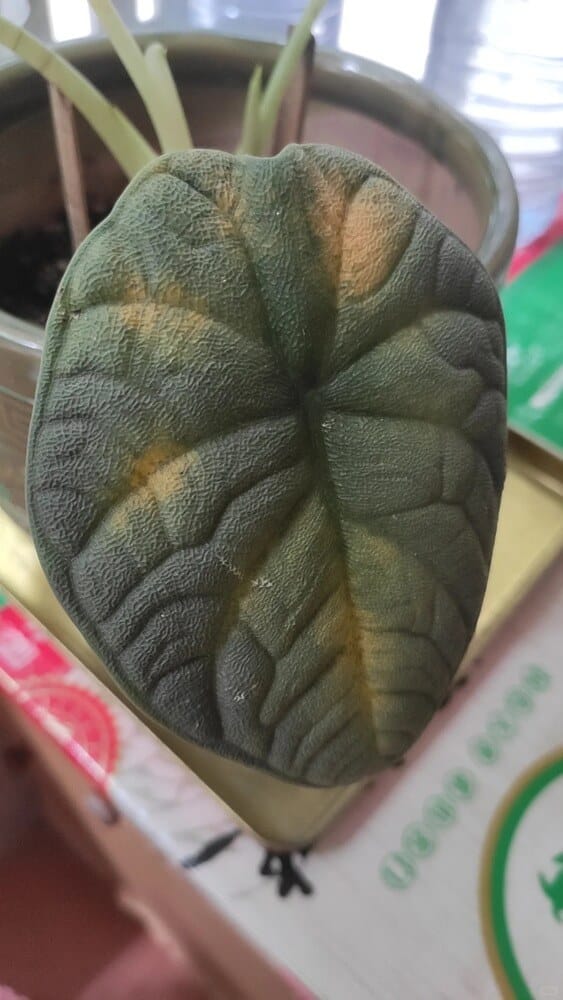
This one is commonly blamed on dry air or low humidity. The leaf texture makes it feel like dehydration must be the issue.
In my experience, it usually isn’t.
Alocasia Melo has very thick, moisture-retentive leaves. When older leaves start yellowing while new growth continues, it’s often a sign that water has been too abundant, not too scarce. The plant can hold water in its foliage longer than most Alocasias, so excess moisture shows up slowly — and confusingly.
What actually helped was doing less, not more:
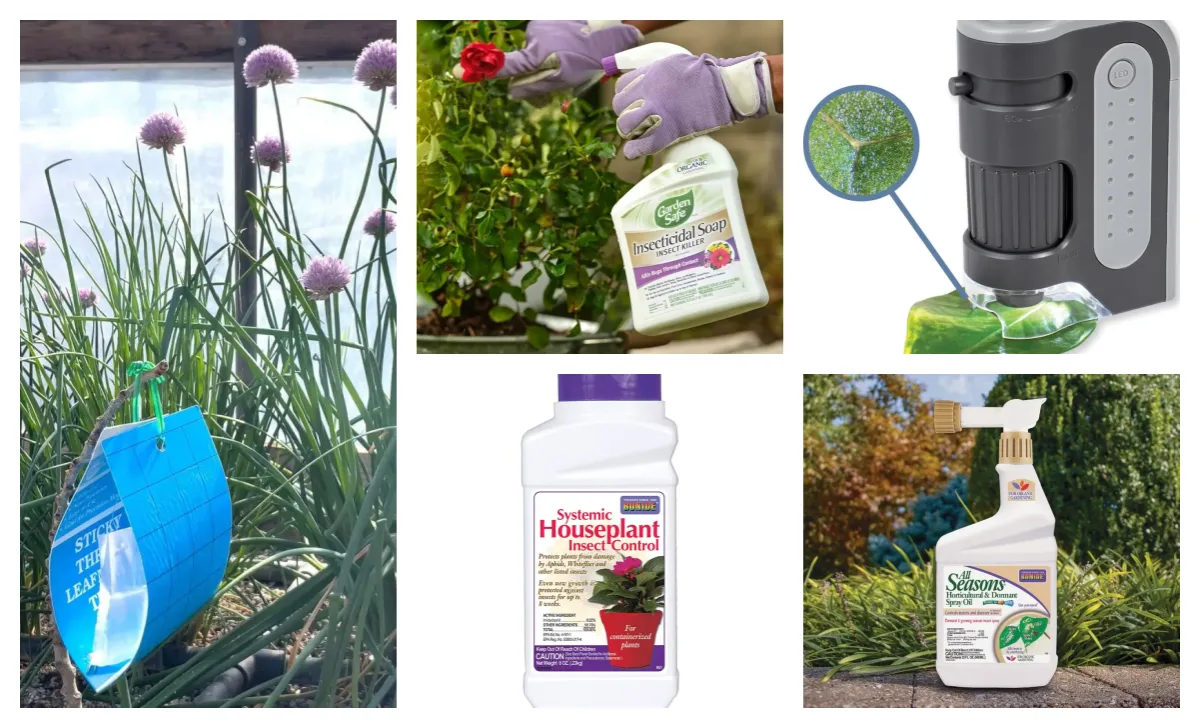
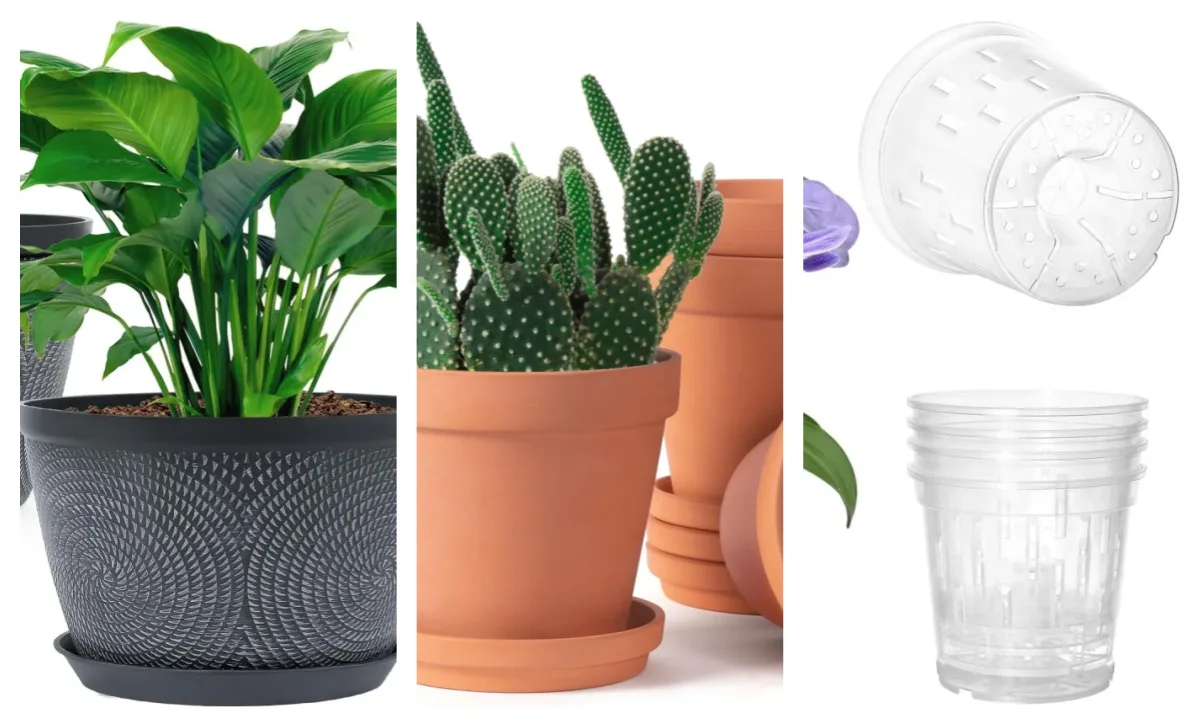
- Switching to a smaller pot
- Using a chunkier, more breathable mix
- Letting the soil cycle properly instead of “adjusting” constantly
The plant didn’t need extra humidity or intervention. It needed room to dry and breathe.
Problem 2: Newly bought plant curls up the next day
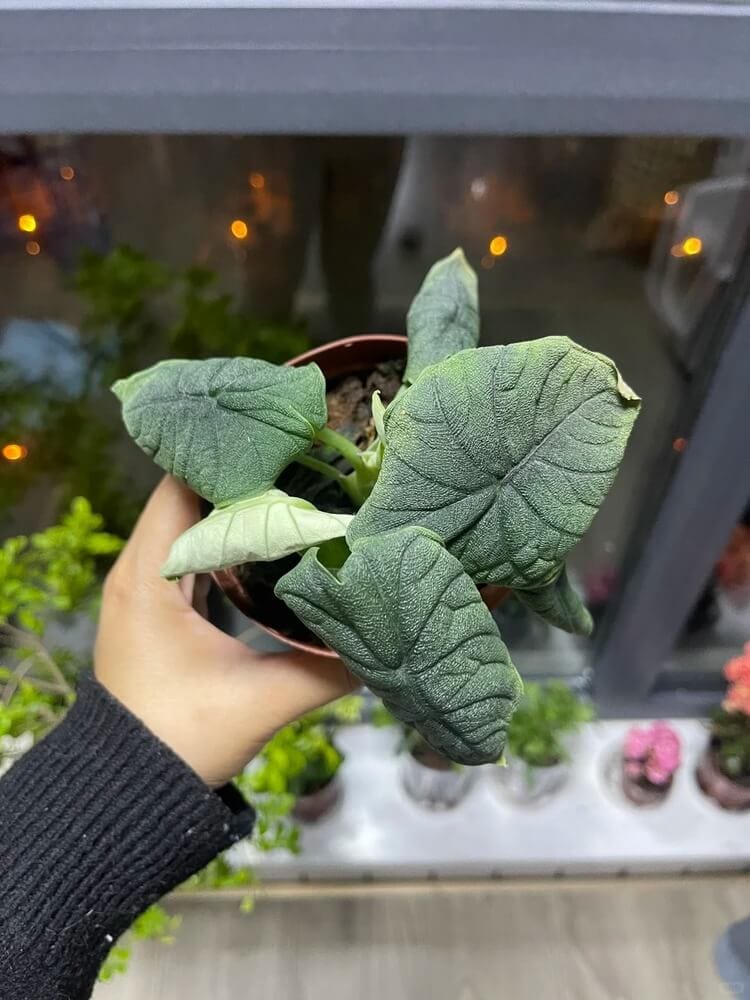
It looked like dehydration, but the real cause was cold shock during transport.
In winter, watering too soon often makes things worse rather than helping.
This one looks exactly like underwatering. Tight curls, stiff leaves, a sudden collapse — it feels urgent.
But timing matters.
When this happens shortly after purchase, especially in colder months, the cause is often cold shock, not thirst. A sudden temperature drop during shipping or placement is enough to trigger leaf curl in Melo. Adding water at this stage usually makes things worse.
What helped most:
- Watering less, not more, and letting the soil fully reset between watering cycles.
- Letting the plant warm up gradually
- In some cases, placing it in a warm, humid bathroom for short periods helped it recover from the shock
In winter, Melo reacts slowly. Trying to “fix” it quickly often pushes it further into stress.
Problem 3: Winter indoor care, leaf edges yellowing despite careful control
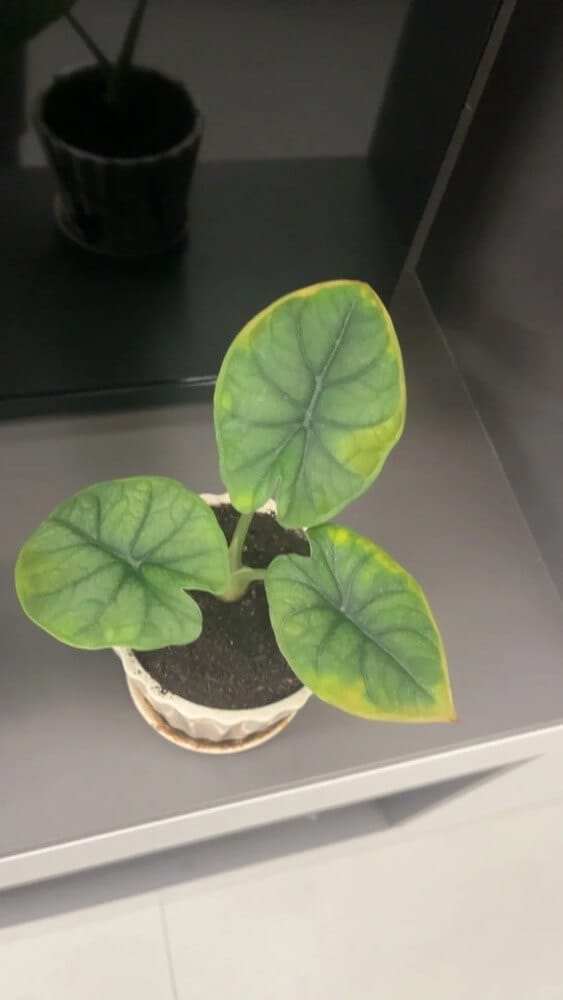
The real issue here wasn’t care routine — it was soil that was too dense and a pot that couldn’t breathe.
Root oxygen loss leads to slow decline long before obvious rot appears.
This is the most frustrating one — because it feels like you’re doing everything right.
Watering is reduced. The plant gets sunlight. There’s airflow. And still, the leaf edges yellow.
In these cases, the real issue is often the soil and the pot, not the routine.
If the mix is too fine or the pot doesn’t breathe, roots lose oxygen. In winter, when metabolism is already slow, that lack of airflow leads to root stress and eventual rot — even if the soil doesn’t look wet.
What actually made a difference wasn’t technique, but structure:
- Switching to a proper aroid mix with better airflow and drainage
- Improving pot airflow
- Accepting that winter care is about preventing damage, not pushing growth
Once the roots could breathe again, the symptoms stopped escalating.
What This Plant Changed for Me
Alocasia Melo didn’t teach me how to do more.
It taught me how to stop at the right moment.
It isn’t fragile — it’s honest. When the environment shifts, it shows it immediately. Especially in winter, doing less matters more than doing many things “correctly.” Stability beats precision every time.
Most problems I’ve seen with Melo weren’t caused overnight. They were accumulated slowly, through small interruptions, repeated adjustments, and well-meant care applied at the wrong time.
Some Alocasias aren’t killed by neglect.
They wear themselves out in the process of being carefully looked after.
Once I understood that, this plant stopped feeling difficult — and started feeling clear.
FAQ
Alocasia melo is the accepted scientific name. “Rugosa” is a common trade or descriptive name referring to the rough, textured leaf surface, while “Rhino Skin” is an English nickname based on the thick, cracked leather-like look of the leaves. Different names — same plant.
Alocasia Melo has thick leaves that store moisture well. When roots are already stressed or damaged, the plant sheds older leaves to reduce water loss, even while pushing new growth.
In winter, temperature drops during shipping or placement near cold windows can stress the plant quickly. Adding water at this stage often makes things worse. Warmth, time, and minimal watering are usually safer.
In soil, this means a chunky, well-aerated mix. In water or semi-hydro setups, clean water and oxygen exchange matter more than frequent adjustments. Many people succeed with water culture because it reduces accidental overwatering.
Fine, compact soil and non-breathable pots trap moisture, leading to slow root suffocation. Improving airflow around the roots — rather than increasing care routines — is usually the real fix.
Alocasia Melo is less prone to pests and root rot than many Alocasias, but it’s unforgiving of frequent interference. It does best with growers who can observe, wait, and avoid reacting too quickly. If you tend to over-correct, it may feel difficult. If you value stability, it’s one of the most reliable Alocasias you can grow.
Love discovering new Alocasias?
Explore more velvet, variegated, and large-leaf varieties in our Alocasia Varieties Hub.
Go to Varieties Hub →