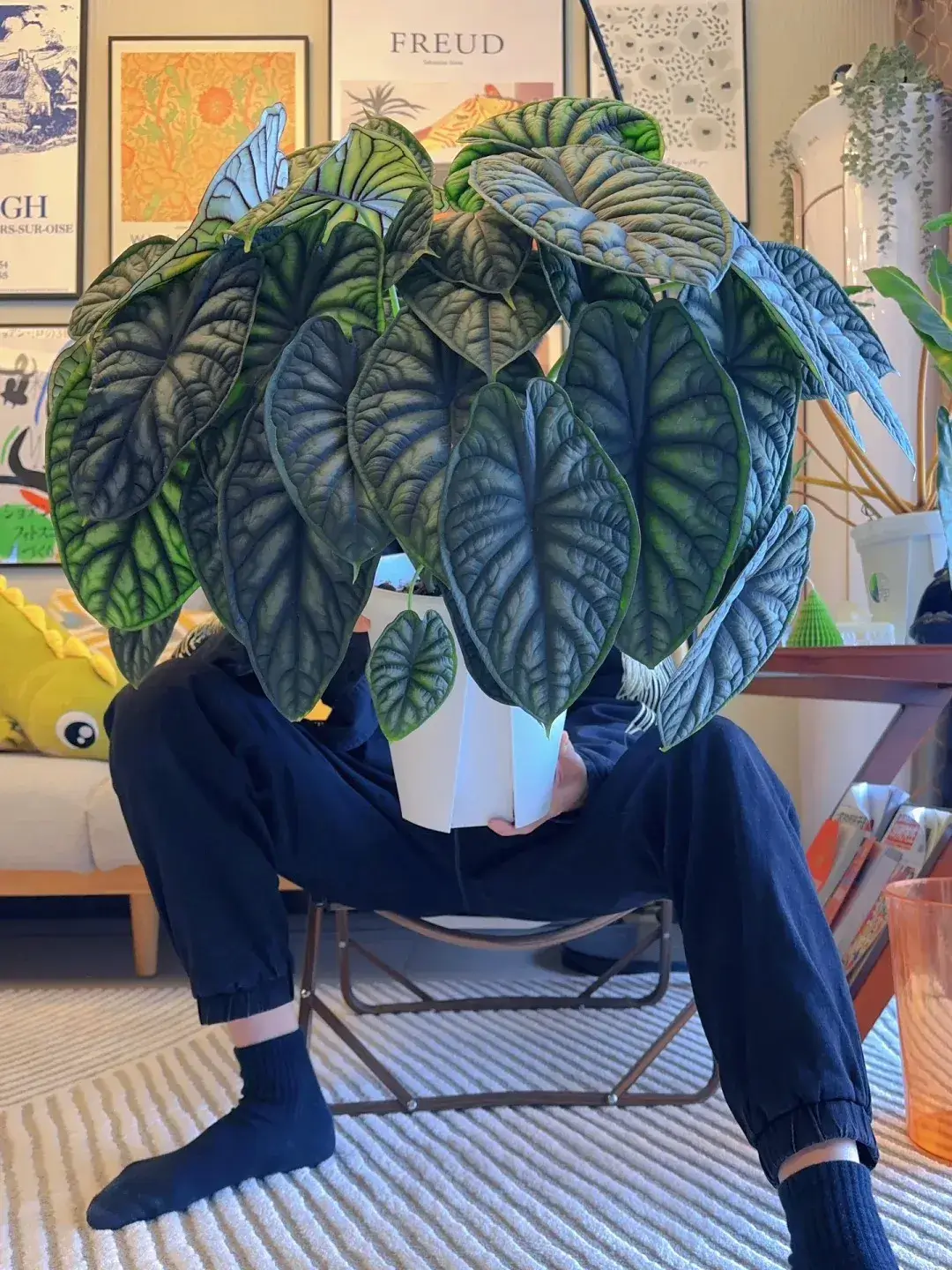
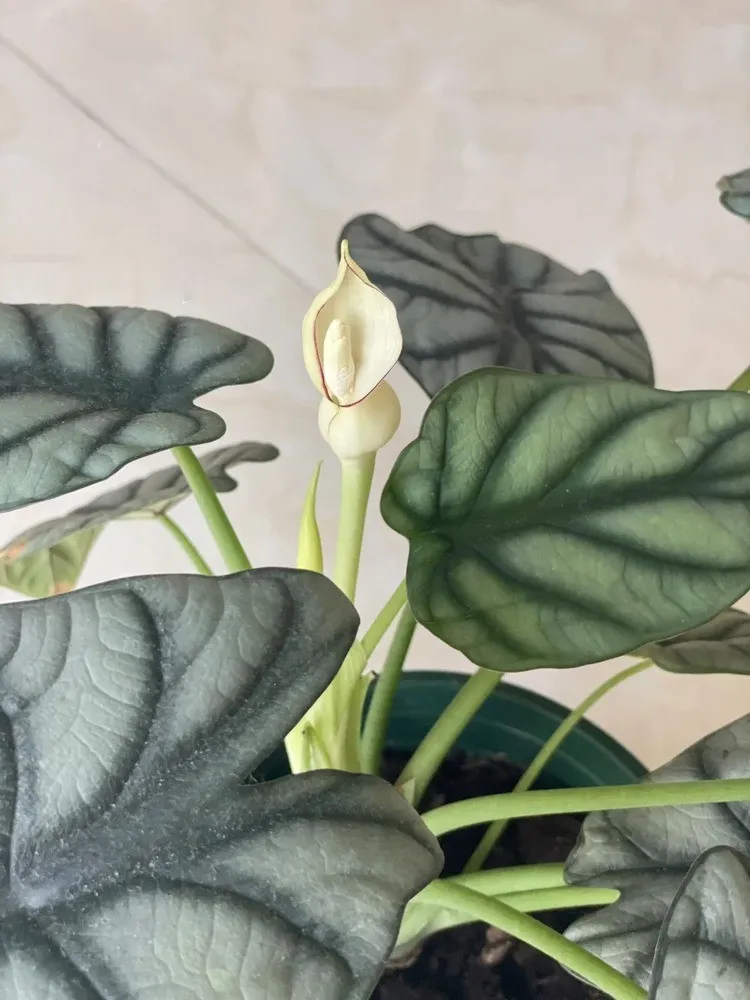
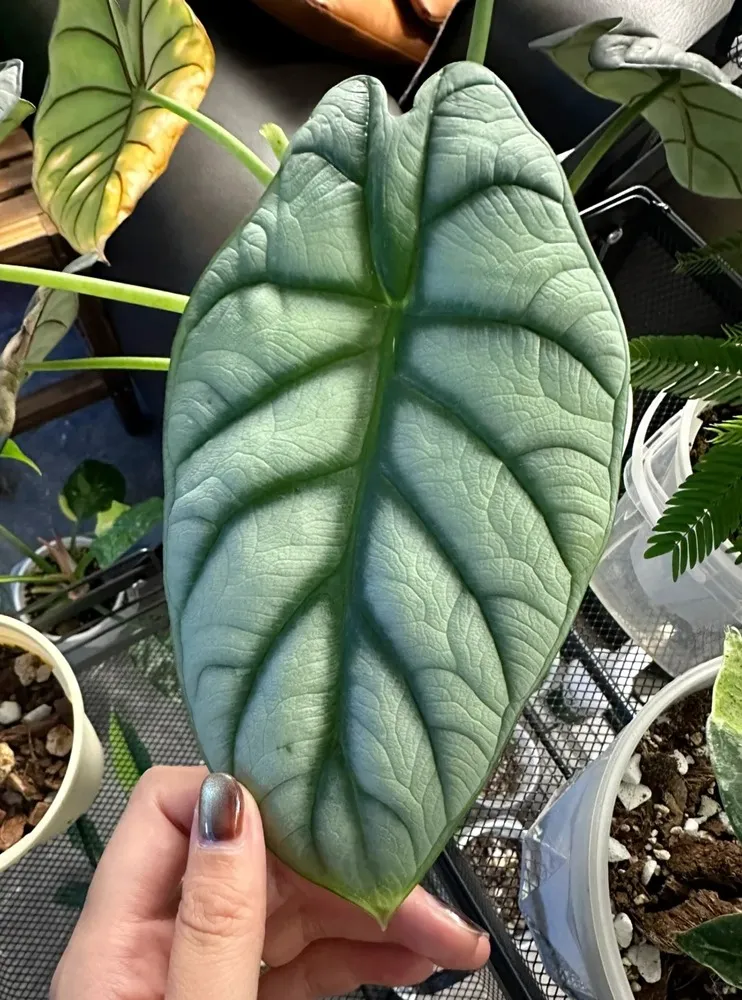
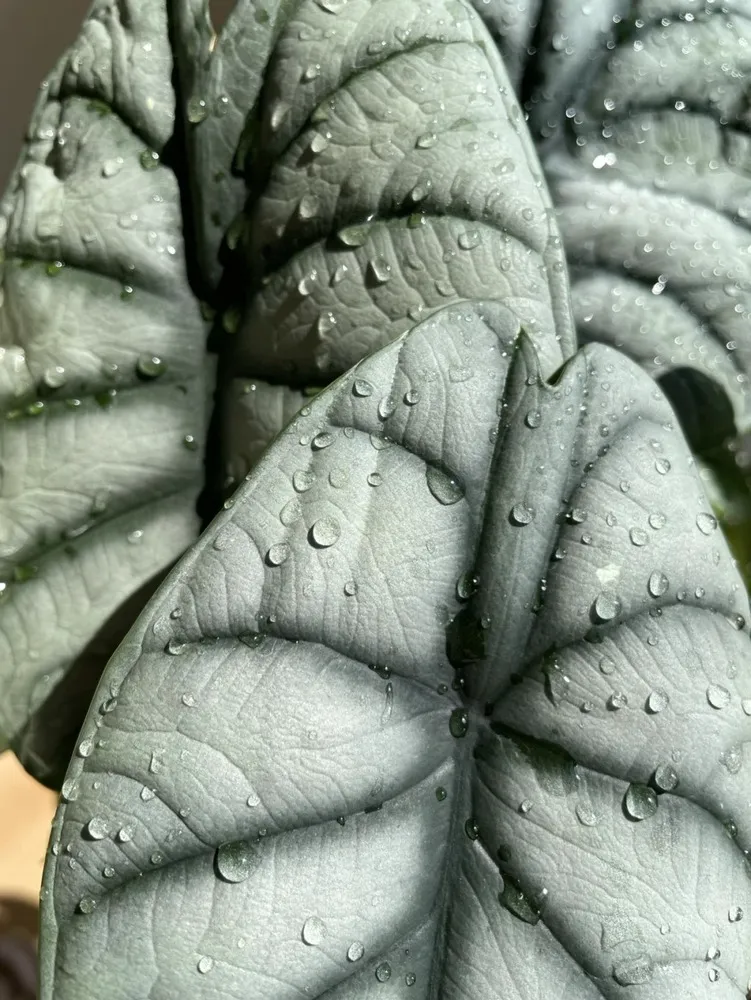
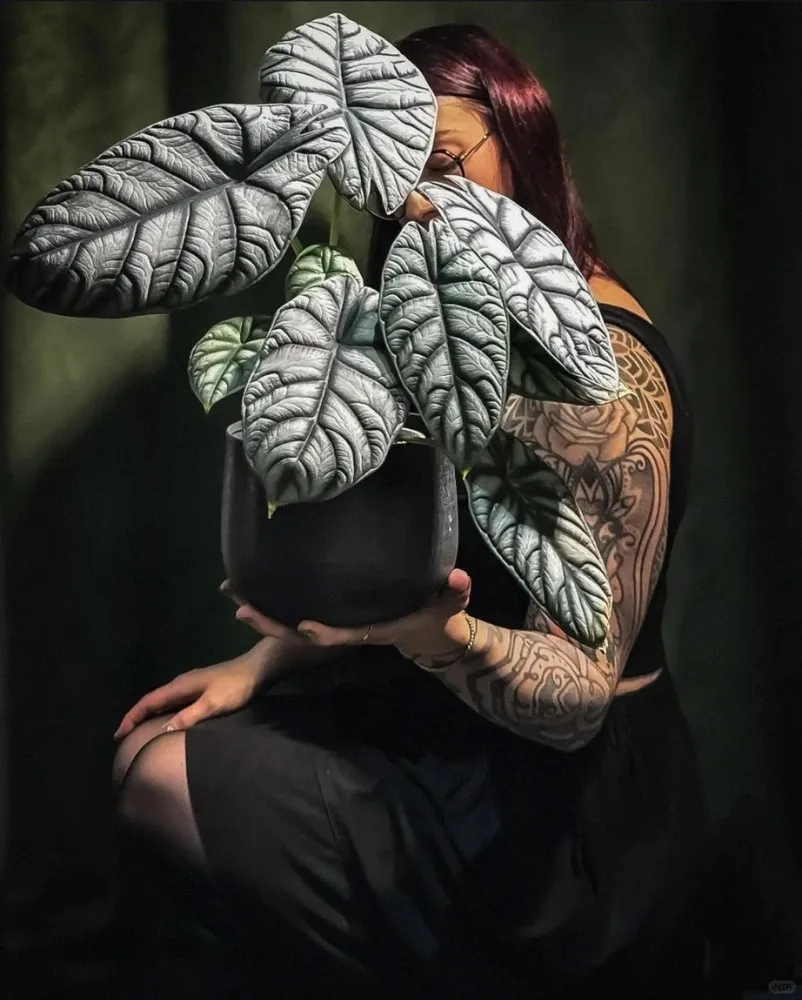
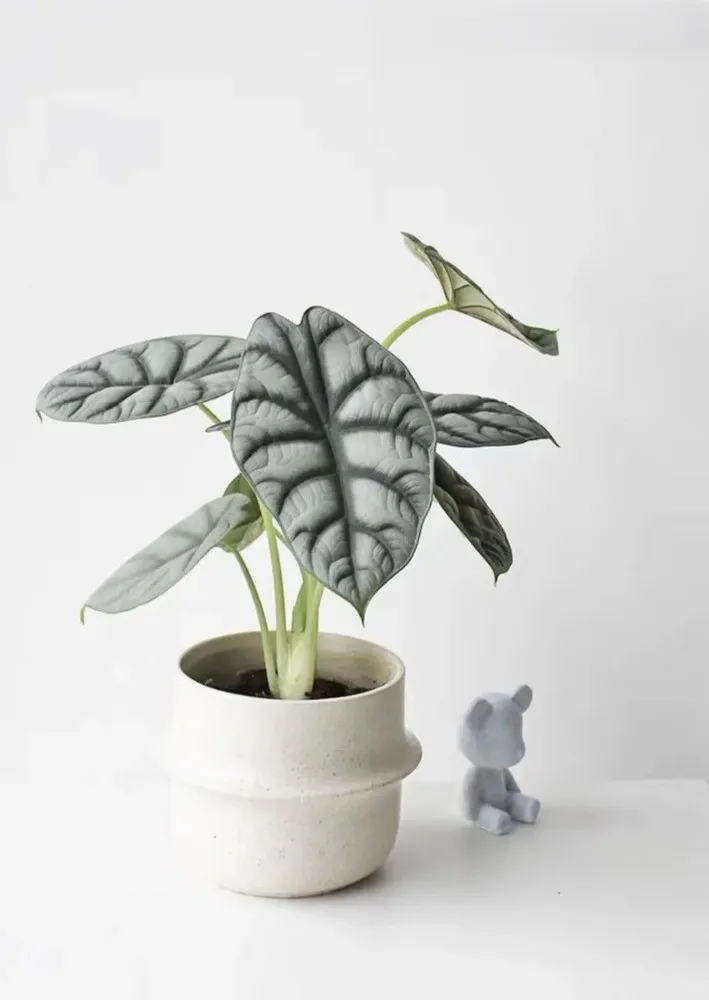
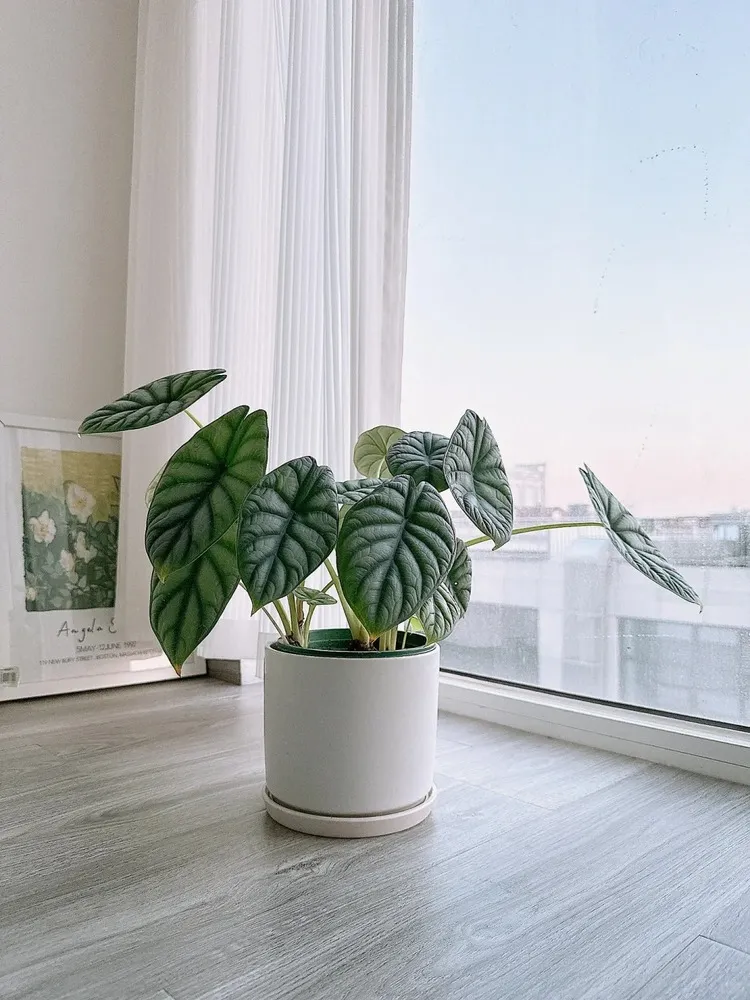
For me, Alocasia Silver Dragon was never a “beginner plant.” I bought my first one back in 2021, right after I got into houseplants, mostly because I was drawn to its texture and color. It didn’t take long to realize this was a plant that reacts strongly to cold and needs the same basics as any other Alocasia care guide. When conditions are right, though, it’s absolutely worth it.
I’ve gone through more than one cycle with Silver Dragon. I’ve lost it, learned from it, and brought it back again. This year, I revived it once more—and with prices now much more reasonable, it feels like the right time to grow it with a clearer understanding of what it actually needs.
Silver Dragon isn’t a plant you can force into submission. It doesn’t respond well to aggressive care or constant adjustments. It’s a plant that rewards patience and observation. Once I stopped trying to “do more” and started trying to understand it, everything changed.
The Only Conditions That Actually Keep It Stable
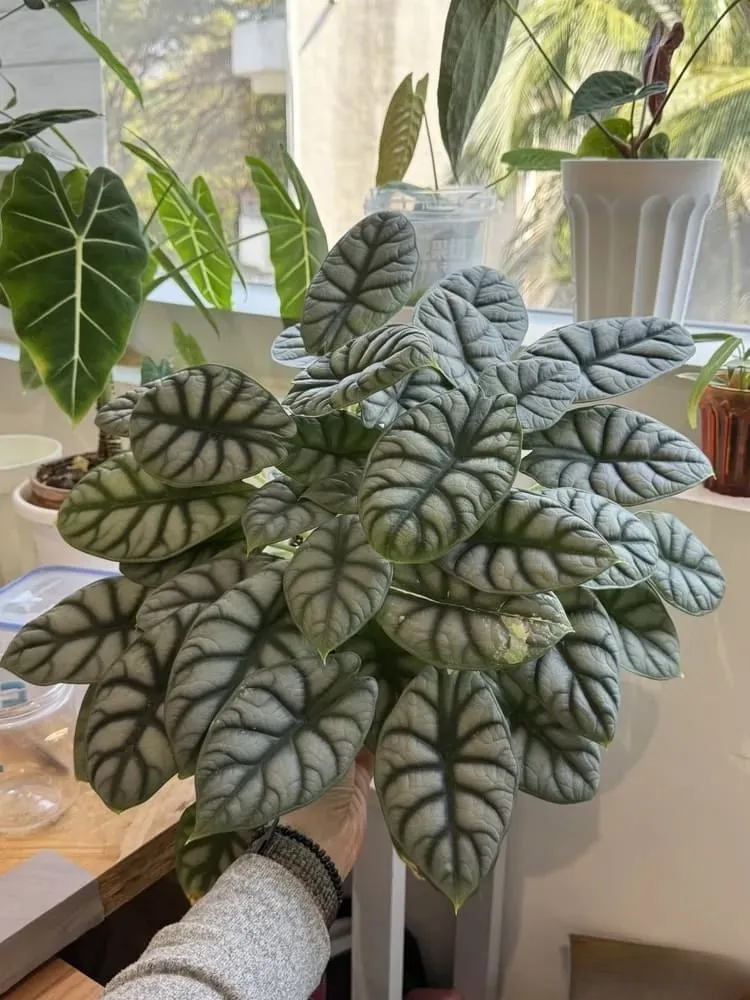
Over time, I realized Silver Dragon doesn’t respond to detailed schedules or constant adjustments. What it needs is a small set of conditions that stay within a safe range. Once those are in place, the plant tends to hold itself together.
Temperature
For me, 15–40°C has been the safest range.
As soon as temperatures drop below 15°C, I start seeing instability. When it gets close to 10°C, the risk of root rot and tissue collapse increases sharply. This is a plant that reacts quickly to cold, even if everything else seems “correct.”
Light
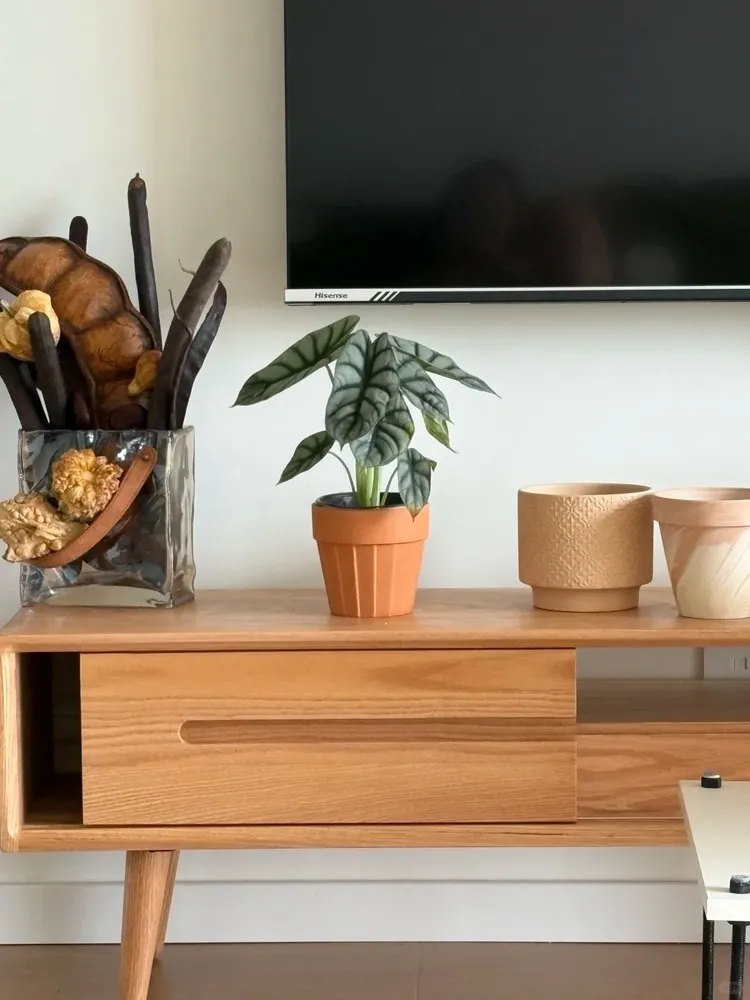
I keep my Silver Dragon in bright, indirect light (this is the same logic I use for my Alocasia light requirements setup), close to a window but out of direct sun. It’s not a low-light plant — it’s simply sun-sensitive. Too little light slows everything down, while direct sun damages the leaves. The sweet spot matters more than intensity alone.
Water
Watering is where most people, including me, get into trouble. In summer, I water when the top inch dries out — basically my personal version of how often to water Alocasia without using a fixed schedule. Once temperatures fall below 15°C, I reduce watering significantly. My safest method is watering around the edge of the pot, keeping the soil lightly moist but never wet.
Repeated soaking or winter bottom-watering has consistently caused problems for me.
Fertilizer
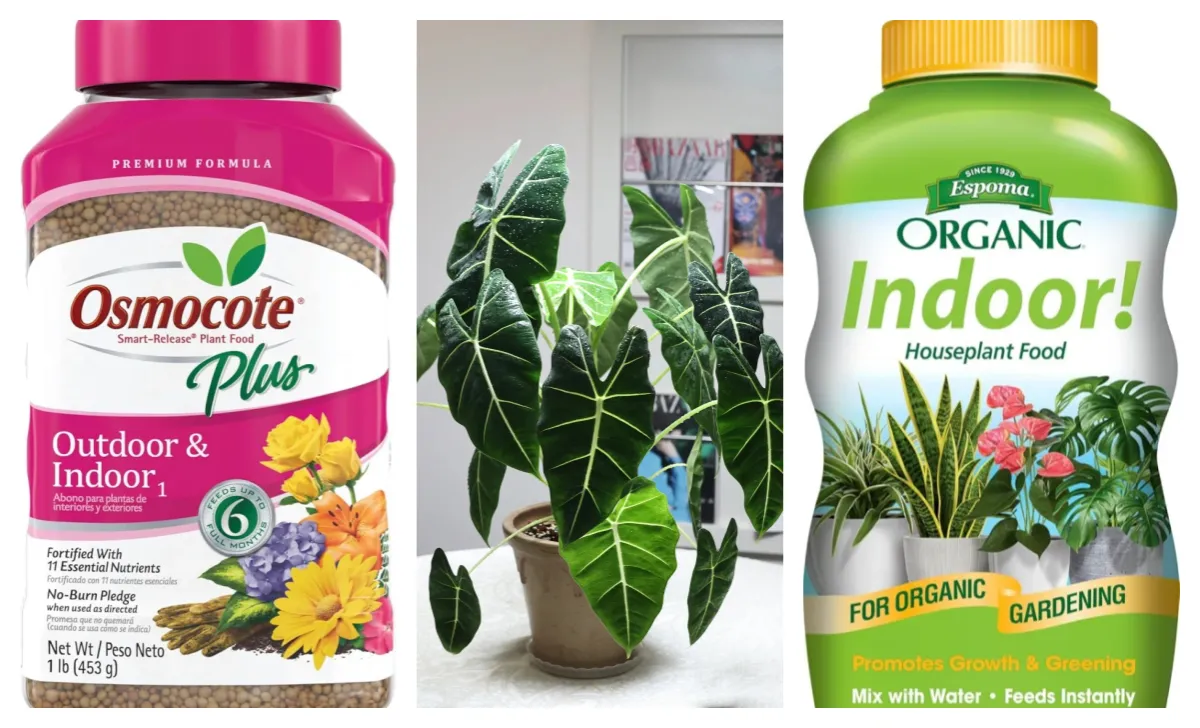
I keep feeding minimal. During the growing season, I fertilize once a month with either a diluted liquid fertilizer or a slow-release option. When temperatures drop and growth slows, I stop completely. Feeding a cold, inactive Silver Dragon has never helped — it only adds stress.
These conditions aren’t about pushing growth. They’re about keeping the plant stable enough to survive. Once stability is there, growth usually follows on its own.
Two Mistakes That Kill Alocasia Silver Dragon the Fastest
These two mistakes caused more damage than anything else I tried. They look harmless on the surface, but once you understand how Silver Dragon reacts, you realize how unforgiving they are.
1️⃣ Disturbing the Roots During Repotting
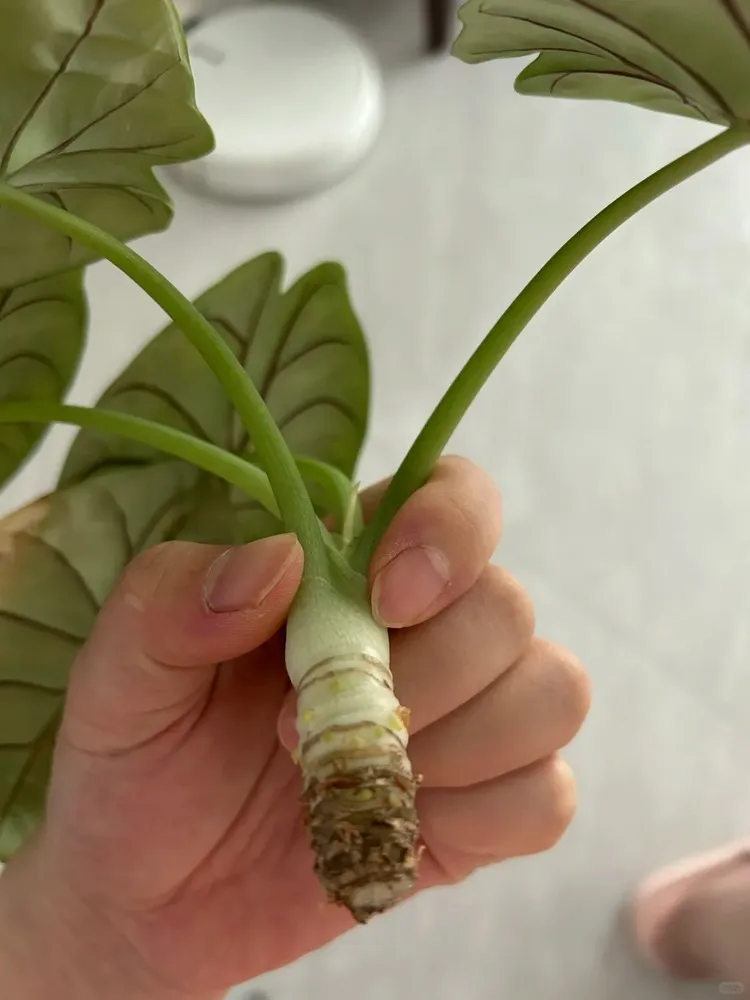
I learned this the hard way: don’t break the root ball.
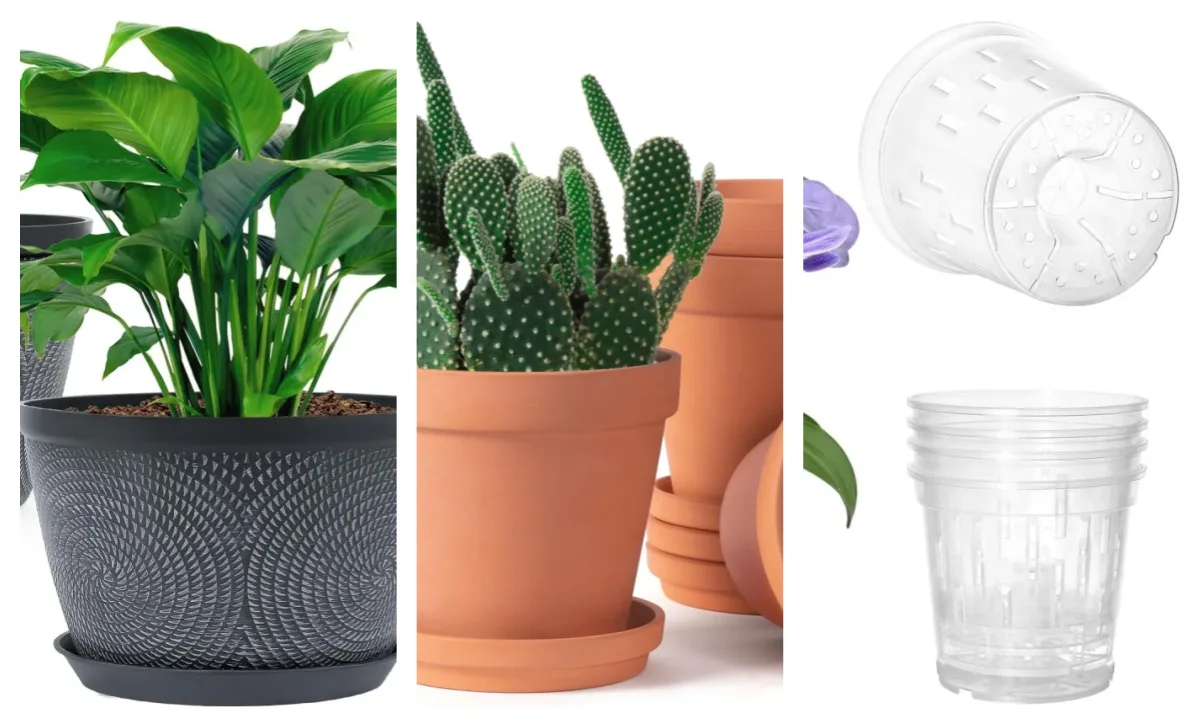
Silver Dragon hates root disturbance. Once the roots are damaged, rot often follows — and if you’re unsure what you’re seeing, my Alocasia root rot fix page will help you confirm it fast. And when roots rot, the plant has no choice but to restart root growth from scratch.
During that process, the plant protects itself by sacrificing leaves. This isn’t drama—it’s survival. Leaves transpire water, and a damaged root system simply can’t keep up. So when leaves start dropping after repotting, it’s usually not because of underwatering, but because the roots are already compromised.
👉 If you see leaf loss, don’t immediately reach for water. Check the roots first.
2️⃣ “Being Nice” With Water in Winter
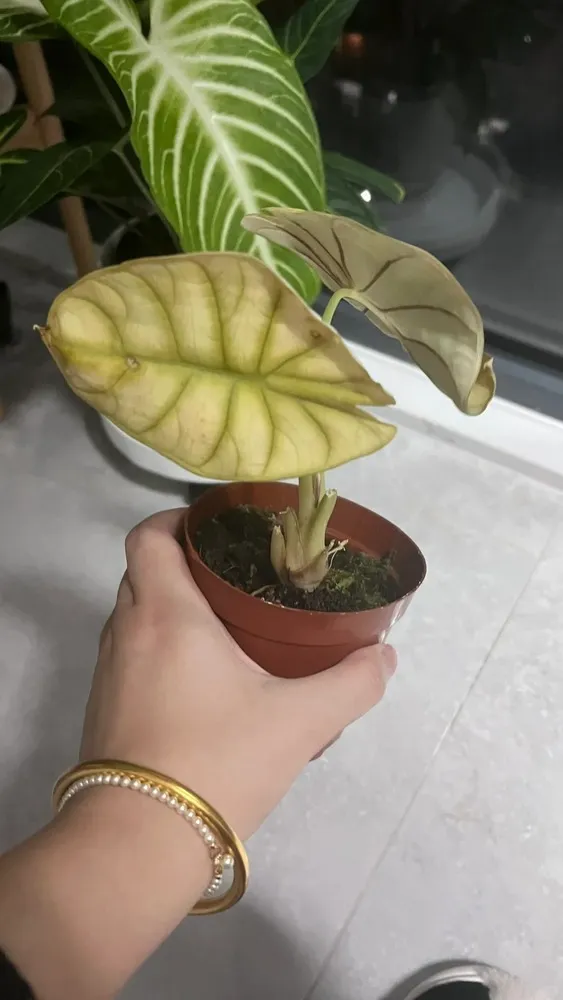
Low temperature slows absorption, water sits around the corm, and rot starts quietly from the base.
This one is deceptively common. Silver Dragon does not like wet soil, especially in winter. When temperatures drop, its metabolism slows down, and roots absorb water much more slowly. The water you give it doesn’t disappear — it just sits there, which is exactly why watering Alocasia in winter needs a different rhythm.
Repeated soaking or bottom watering in cold conditions is especially risky. Low temperature + saturated soil = tissue collapse and rot. I’ve seen plants go from “okay” to unrecoverable in days this way.
What works far better is a clear dry–wet cycle. Slight dryness is safer than constant moisture. Keeping the soil lightly damp may sound gentle, but for Silver Dragon in winter, it’s often the faster way to lose it.
These two mistakes taught me the same lesson: Silver Dragon doesn’t die from lack of care—it dies from care applied at the wrong time.
Two Common Problems I See Again and Again
These aren’t theoretical issues. They’re patterns I keep seeing among friends who grow Silver Dragon—and I’ve made the same misjudgments myself. What matters isn’t just the symptoms, but how easy they are to misread.
Case 1: Old Leaves Keep Browning, New Leaves Look Fine
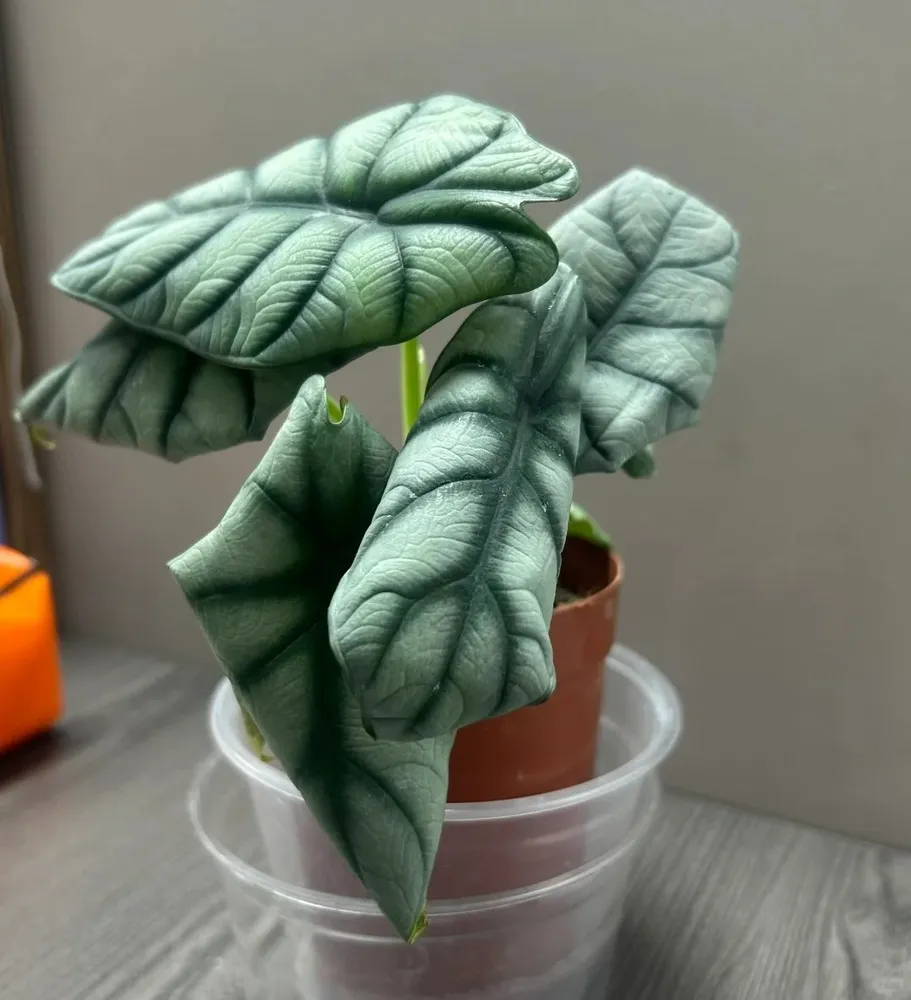
What it looks like:
Older leaves develop crispy edges and gradually decline — it often looks like a simple leaf issue, but it overlaps a lot with what people call Alocasia leaves turning yellow. New leaves come out looking normal. The soil doesn’t seem wet, and the pot feels light, so it’s tempting to rule out watering as the problem.
What’s actually happening:
This usually traces back to earlier overwatering. The roots were damaged before, and even if watering is reduced later, the root system can no longer absorb enough water. The plant responds by letting older leaves yellow and die to reduce transpiration and conserve what little water it can move.
How I deal with it:
I don’t try to “balance” watering at this stage. I unpot and check the roots. If damage is present, I trim compromised roots and weak leaves, then move the plant into a smaller pot and focus on stability — the same approach I use when I see Alocasia leaves drooping after stress.. The goal isn’t leaf recovery—it’s rebuilding a functional root system with a clear dry–wet cycle. Everything else can wait.
Case 2: Newly Bought, Quickly Declining—and Getting Worse With Help
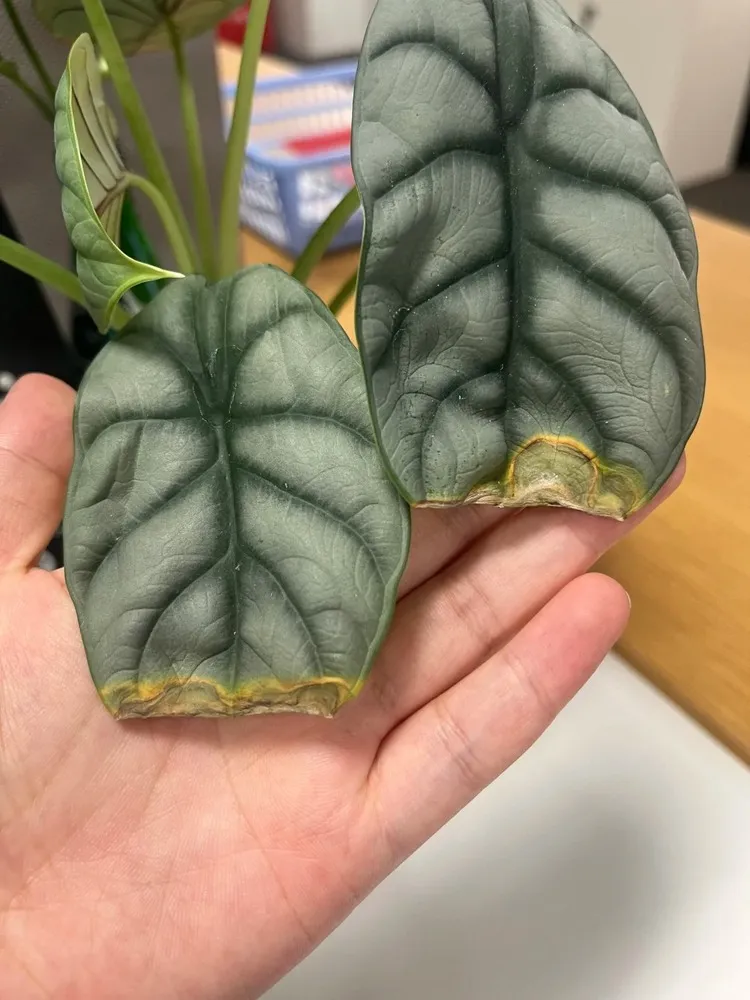
What it looks like:
A fresh purchase goes into a new home or office. Within days, leaves start curling tightly — and if you’re trying to diagnose it, this Alocasia curling causes and fixes breakdown can save you a lot of wrong moves. It looks like dehydration, so soaking feels like the obvious fix. Meanwhile, temperatures are quietly sitting below 15°C.
What’s actually happening:
This is a combination of sudden temperature drop and excess water. In cold conditions, Silver Dragon reacts slowly—both to stress and to recovery. When roots are cold, they can’t take up water efficiently. So soaking doesn’t help; it just overwhelms the roots. Repeated interventions only speed up failure.
How I deal with it:
I don’t recommend buying Silver Dragon in winter if you can avoid it. If you already have one, I keep the soil lightly moist, never soaked, and give the plant time to adapt. No emergency moves, no repeated fixes. In cold conditions, less intervention is almost always safer.
Both of these cases taught me the same thing: Silver Dragon problems rarely start where you’re looking. By the time leaves show distress, the real issue has usually been unfolding quietly in the roots.
What This Plant Actually Taught Me
Alocasia Silver Dragon isn’t a difficult plant. It’s a plant that reacts strongly to cold, haste, and constant interference. Most of the problems I’ve seen didn’t start in the moment they became visible—they were built up quietly over time.
Once I stopped rushing it, stopped trying to correct every pause, and started respecting its rhythm, the plant stabilized on its own. Growth became slower, but steadier. Fewer surprises, fewer emergencies.
Some Alocasias aren’t killed by neglect.
They wear down slowly in the process of being carefully looked after.
That’s the lesson Silver Dragon left me with—and it’s one I now carry into every plant I grow.
FAQ
Love discovering new Alocasias?
Explore more velvet, variegated, and large-leaf varieties in our Alocasia Varieties Hub.
Go to Varieties Hub →