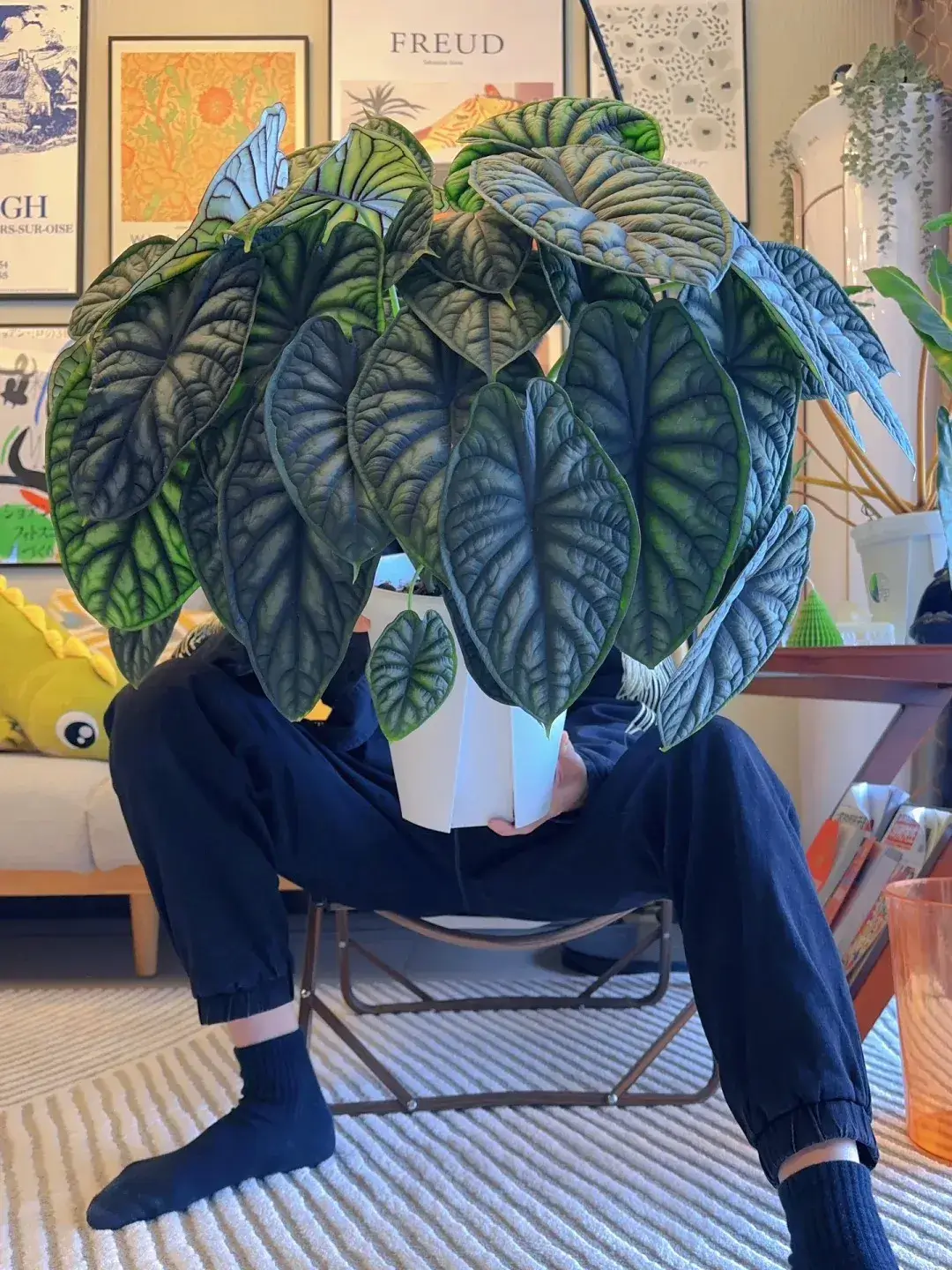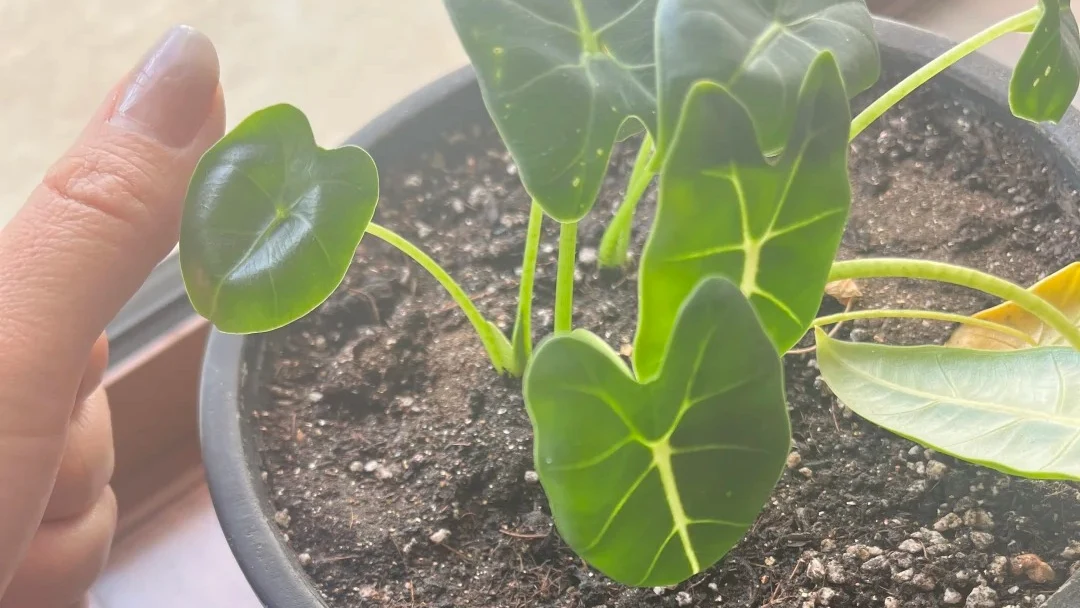
Don’t worry if your Alocasia curling; it’s not necessarily a sign that they need attention. Sometimes the plant is just getting used to the new environment, much how we bring our shoulders up when we walk into a cold room.
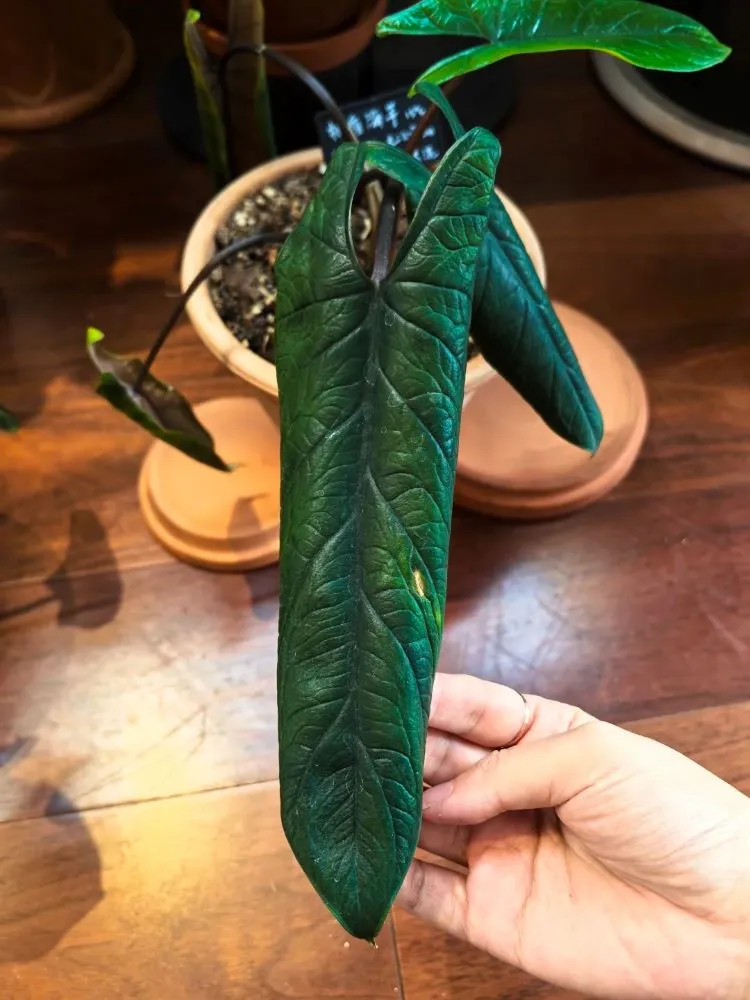
I still remember the first time my own Alocasia in Portland curled its edges. I thought I had completely messed up—too much water? Not enough? Is the dirt bad? The fact was considerably simpler: the plant was talking. It was its way of expressing, “Hey, something’s not right.” Listen up.
I’ve learnt throughout the years that Alocasias don’t curl for just one reason. When the air is dry, the light is too bright, the roots are stressed, or occasionally just when a new leaf is growing, they curl. So, curling isn’t really a “problem”; it’s more like a signal system—a language you can learn to interpret.
In this article, I’ll show you what different forms of curling truly imply, how to find the most prevalent causes, and the remedies that have worked for my plants during Portland’s wet winters and dry summers. By the conclusion, you’ll know what your Alocasia is trying to say and, more significantly, how to help it get better and respond.
Quick Diagnosis: Why Your Alocasia Might Be Curling
| Curling Pattern | Most Likely Cause | What I Usually Check First |
|---|---|---|
| Edges curling inward | Low humidity / underwatering | I touch the soil and check humidity — anything under ~45% makes my Alocasia curl. |
| Whole leaf folding upward | Too much direct sun | I look at the light angle. Afternoon sun from west-facing windows almost always triggers this. |
| Soft leaves curling + dull color | Overwatering / root stress | I lift the pot slightly. If it feels heavier than usual, the mix is probably staying too wet. |
| New leaves curling or twisting | Normal growth process | I wait 2–3 days. New Alocasia leaves often look awkward before they flatten. |
| Random curling on older leaves | Temperature swings or drafts | I check for cold air leaks — Portland winter drafts are sneaky. |
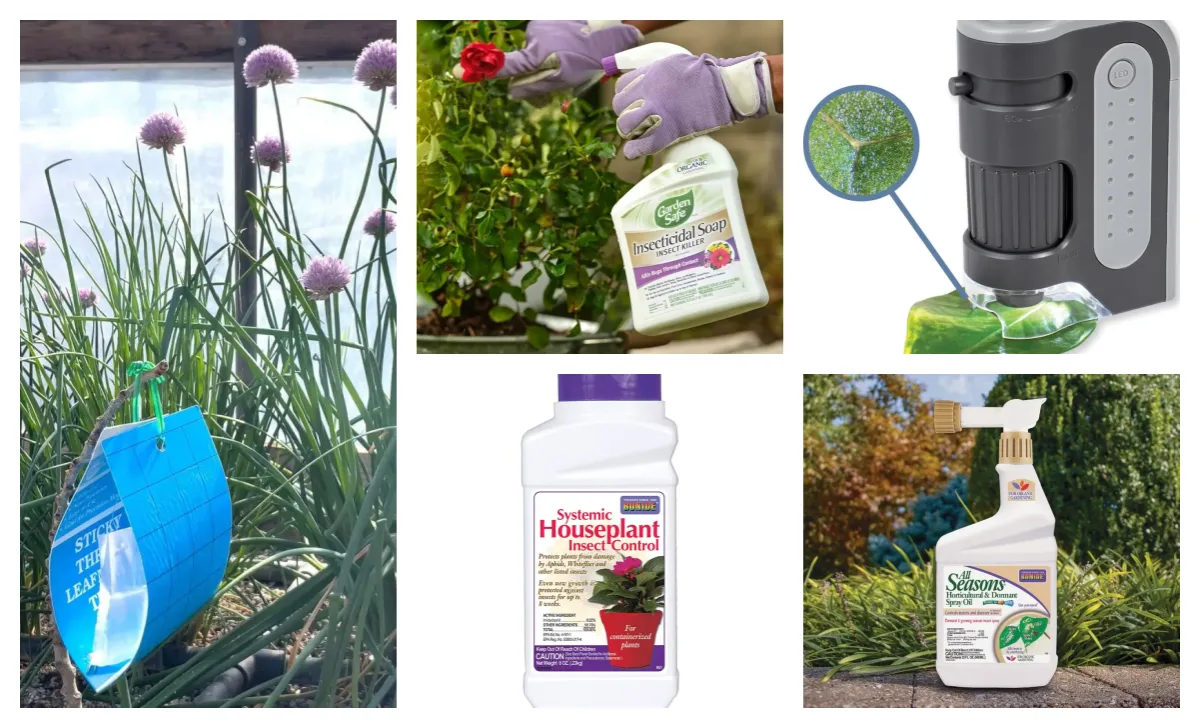
| Tiny curls + speckling | Spider mites / pests | I inspect the undersides with a flashlight. If dusty or speckled, it’s usually mites. |
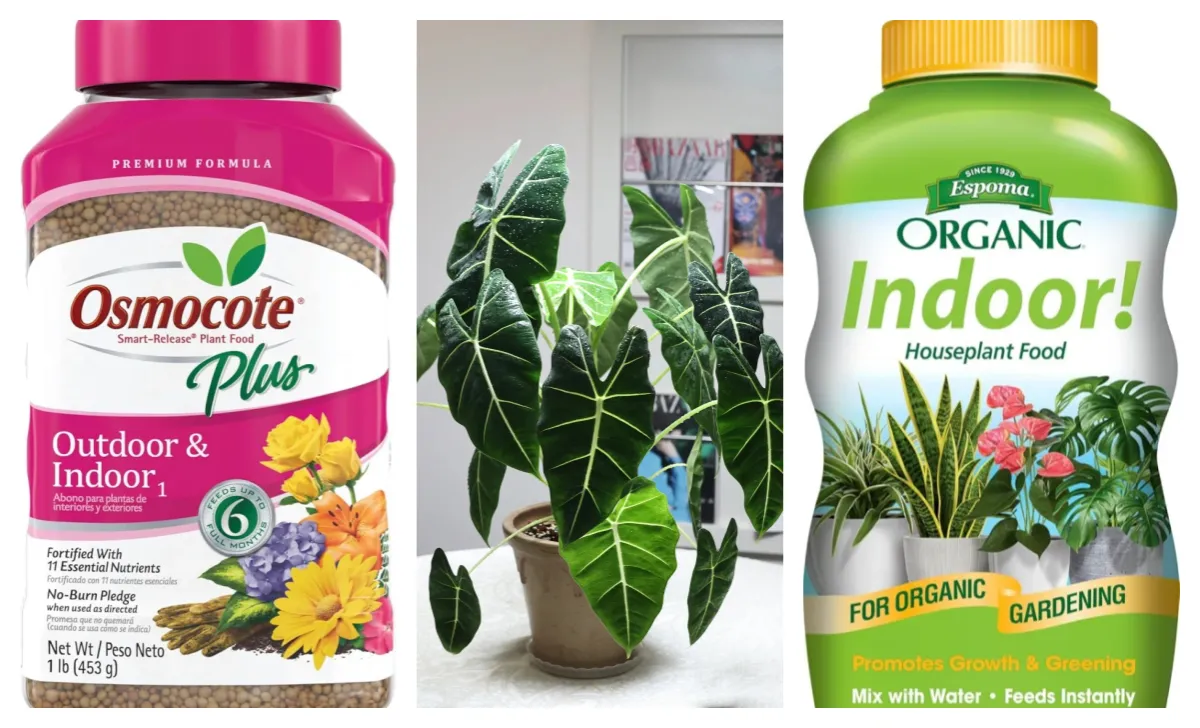
| Leaf tips curling after feeding | Fertilizer burn | I dilute the next feed to half strength. Alocasias are sensitive compared to Philodendrons. |
Reading the Signs: What Curling Really Means
One thing I wish someone had told me early on: Alocasia curling isn’t a single diagnosis. It’s more like the plant tightening a muscle, shielding itself, or adjusting to something unexpected. Curling is a response, not a verdict—your plant trying to protect moisture, manage light, or stabilize itself when something in the environment shifts.
Alocasia leaves curl in several distinct patterns, and each one hints at a different kind of stress. Learning to read these shapes is the closest we get to understanding “plant language.”
1. Inward Curling (Edges Pulling Toward the Center)
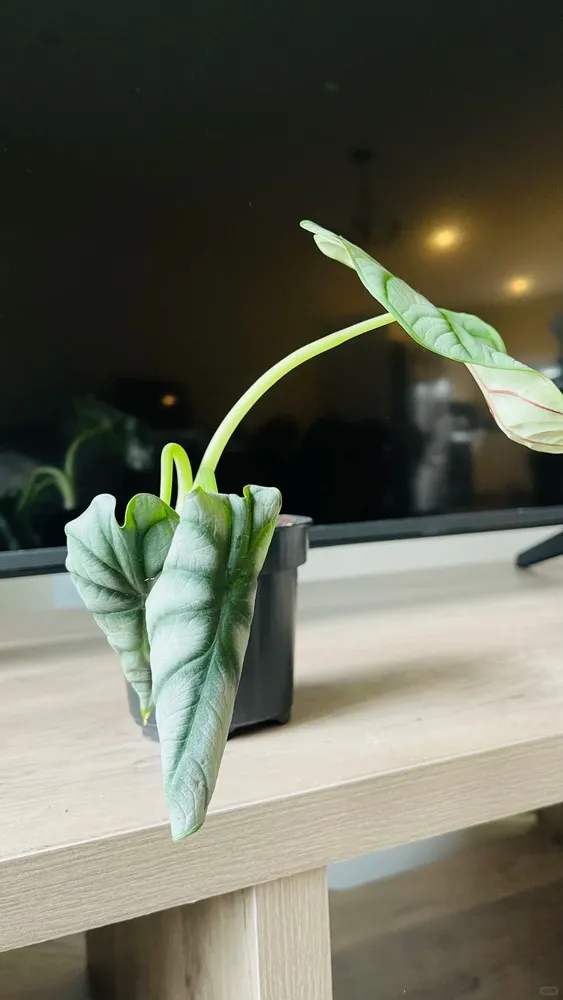
This is the classic “I’m drying out” signal. The leaf pulls its edges inward to reduce surface area and slow down moisture loss.
- Most common in low humidity, underwatering, or warm indoor air.
- You’ll often notice slightly crispy edges or thinner leaf texture.
Real-world note: My Alocasia Amazonica does this every September when indoor humidity drops in Portland—even if I’m watering perfectly.
2. Upward Curling (Leaf Cupping Toward the Light)
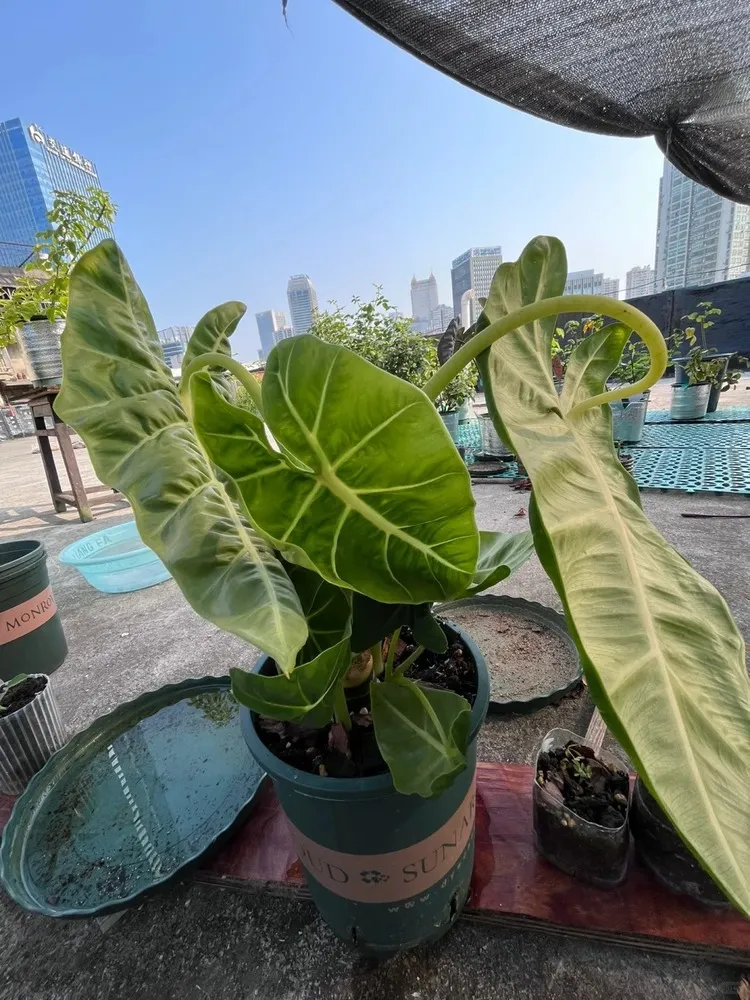
When a leaf curves upward or forms a shallow “cup,” it’s usually trying to shield itself from too much light or heat.
- Happens often in bright south- or west-facing windows.
- The leaf surface might feel warm to the touch.
- Sometimes the green looks a bit dull or flat.
This is the plant’s built-in sun visor—an instinctive reaction to reduce light exposure.
3. Edge Rolling (Only the Leaf Margins Curling)
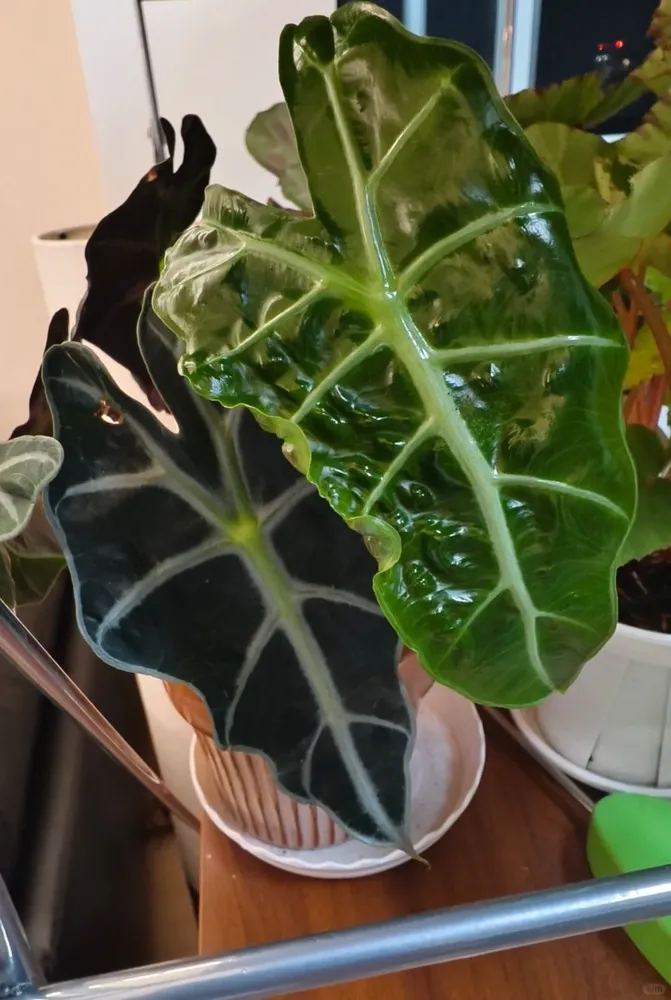
This pattern is more subtle: just the outer margin rolls up or down while the main leaf surface stays relatively flat.
- Often related to light fluctuations, mild temperature swings, or inconsistent watering.
- I see this most often after a sudden cold night or if I forget to empty the saucer under the pot.
Think of it as the plant fine-tuning its comfort level rather than sounding an alarm.
4. Half-Curl in New Leaves (Normal Growth Stage)
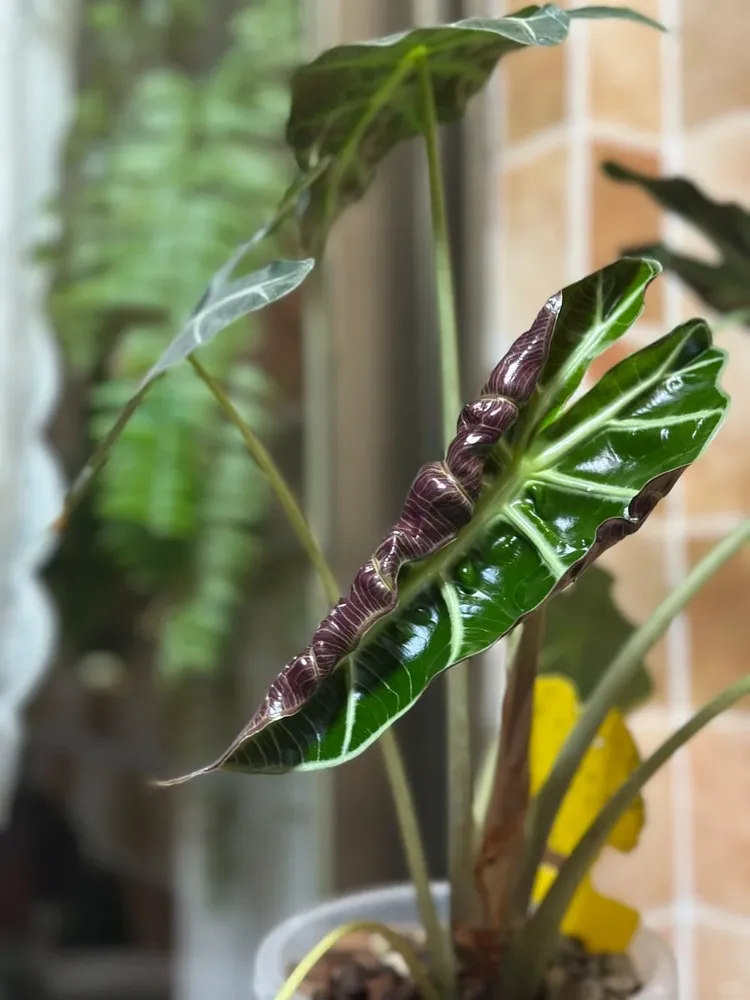
This is the harmless one that tricks many beginners—including me.
When a new Alocasia leaf emerges, it typically arrives:
- rolled like a tube,
- partially twisted,
- or half-curled for a few days.
This isn’t stress—it’s simply the plant unwrapping itself at its own pace.
If the plant is healthy, the leaf will flatten out 48–72 hours after fully emerging.
Tip: A new leaf that stays curled for too long often points back to humidity or water imbalance, not disease.
⭐ Why These Shapes Matter
Each curling style tells a different story. If you can identify the shape first, you narrow the possible causes from ten to two or three.
This is why I always recommend starting with the curl pattern, not the watering can.
Common Causes of Curling
After growing Alocasias through Portland’s dry summers, wet winters, and the occasional drafty apartment window, I’ve learned that curling almost always comes back to a few predictable triggers. Here’s the ranked list based on how often I see each one—both in my own plants and in those I’ve helped troubleshoot for friends.
1️⃣ Underwatering or Low Humidity (Most Common)
If you only remember one cause from this entire guide, let it be this one.
Alocasia leaves curl far more often from dryness than from anything else.
How it shows up:
- edges pulling inward
- papery or thinner leaf texture
- leaf tips turning slightly crisp
What I check:
- Humidity: anything below ~45% in my Portland apartment makes my Alocasia Polly curl within a day
- Soil: if the top 2 inches are dry and the pot feels unusually light
- Leaf color: slightly duller green
Personal note:
If I skip misting or forget to fill the humidifier for a couple of days, my Alocasia Polly curls its tips almost immediately. It’s like the plant keeps receipts.
2️⃣ Overwatering & Root Stress
Curling from too much water looks different from underwatering—it comes with a softer, “tired” texture.
Signs include:
- whole leaf drooping + curling
- yellowing that starts at the edges
- soil that stays wet for too long
- a pot that feels heavy even days after watering
Why it happens:
When roots sit in soggy soil, they lose oxygen and stress builds up. Curling is the leaf’s way of slowing down transpiration to protect the root system.
What I do:
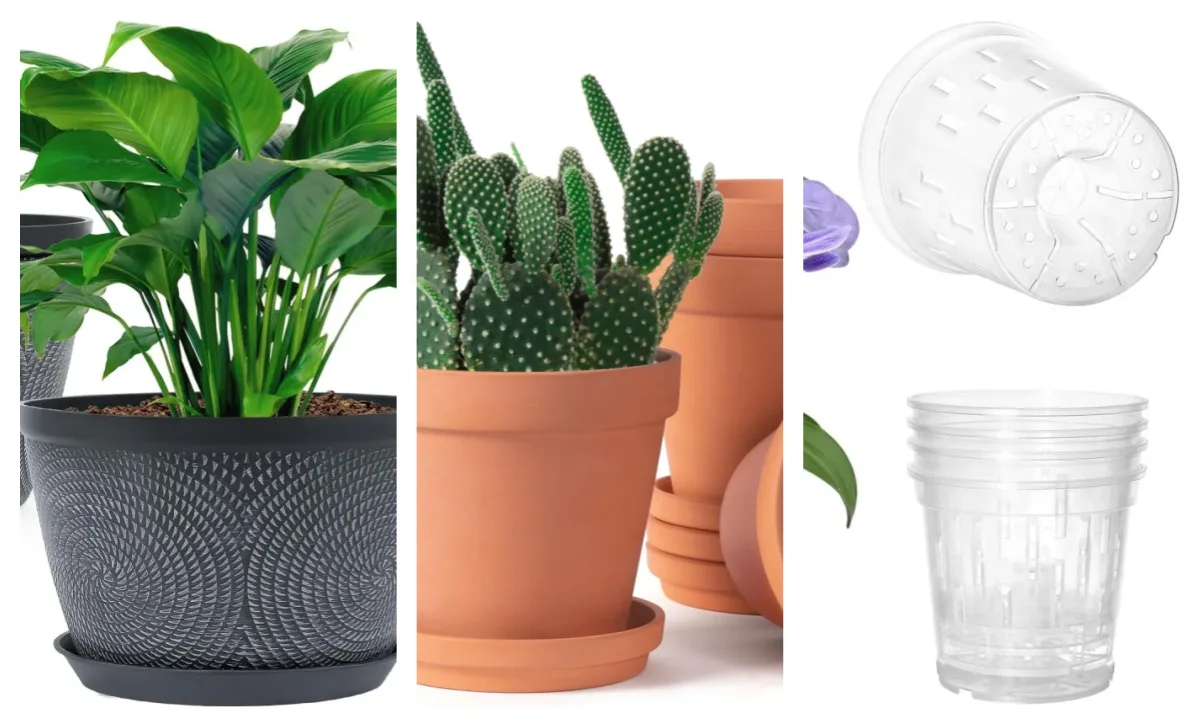
I lift the pot. If it feels heavier than normal, I know the mix isn’t draining quickly enough. Switching to a more aerated soil (bark + perlite) saved several of my plants.
3️⃣ Temperature Drops or Cold Drafts
Alocasias hate surprises—especially temperature surprises.
Common triggers:
- cold nights near a windowsill
- winter drafts (Portland apartments are notorious for this)
- AC or open windows blowing directly on the plant
How it looks:
- edges curl and stiffen
- older leaves curl first
- sometimes the curl is lopsided, only on the side facing the draft
My plants curl every November when the first big cold front hits. Now I move them 1–2 feet away from windows once nighttime temps dip below 60°F (15°C).
4️⃣ Too Much Direct Sunlight
Alocasia leaves are thin and sensitive—they curl to reduce the light-exposed surface area.
How to identify light-based curling:
- leaf cups upward
- the surface feels warm when touched
- color looks slightly faded or “flat”
- usually happens in south- or west-facing windows
If your Alocasia sits on a windowsill and curls every sunny afternoon, you’ve found your answer.
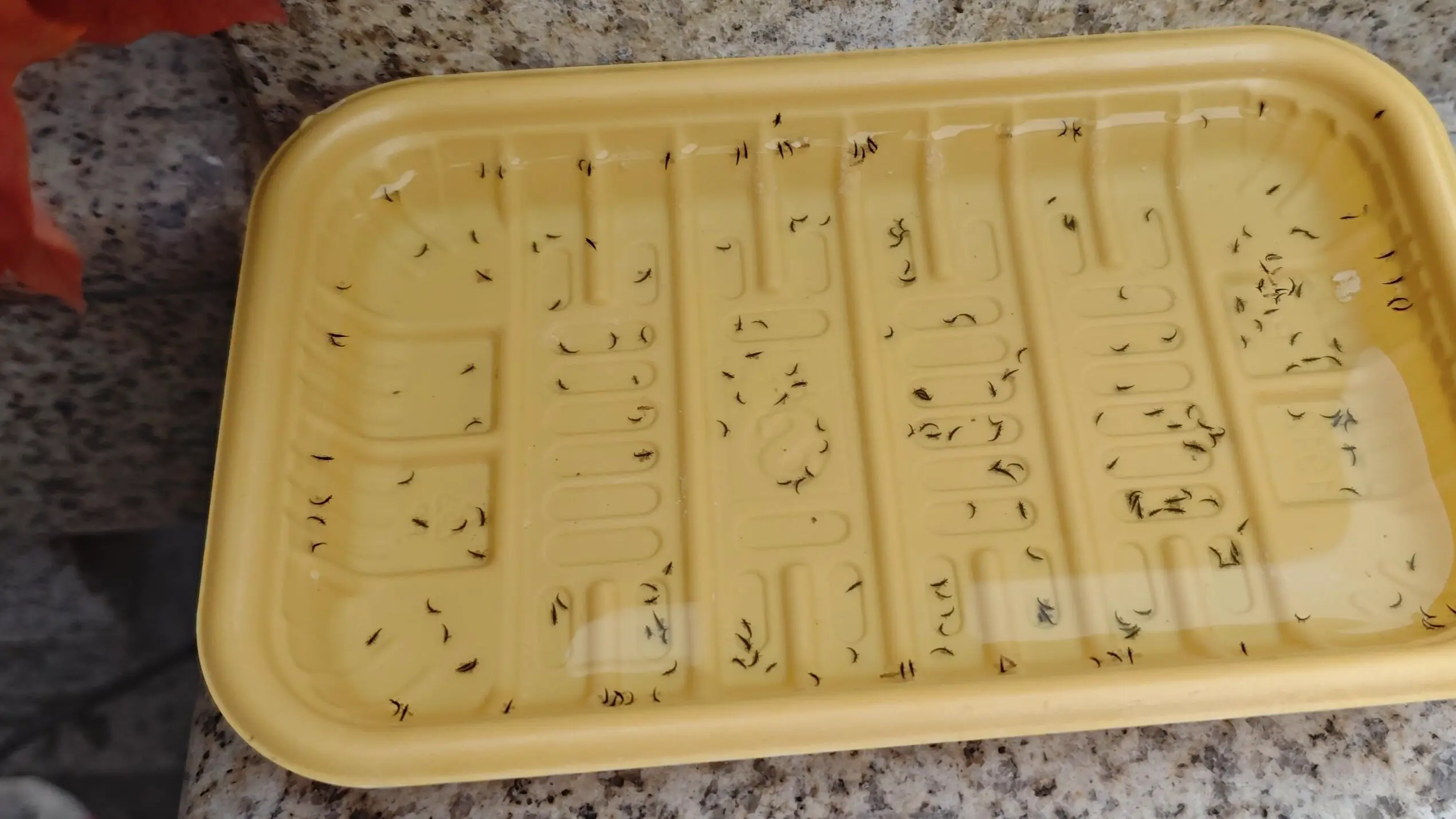
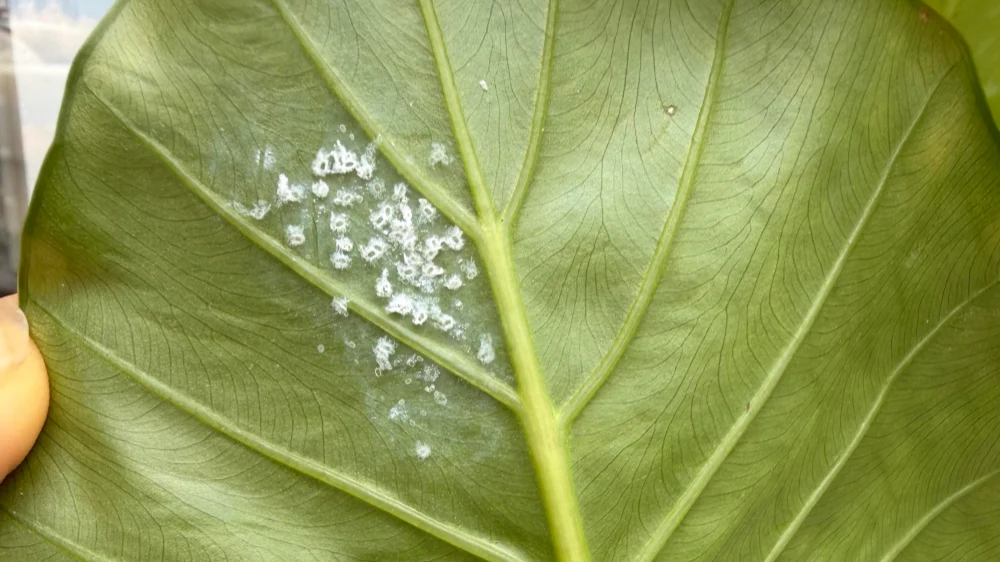
5️⃣ Pest Infestation (Spider Mites / Thrips)
Tiny pests can cause curling long before you see visible damage.
What to check:
Flip the leaf and look for:
- silvery speckles
- dusty, sandy texture
- tiny dots that move (mites)
- thin scars or streaks (thrips)
A small flashlight reveals everything.
Alocasia sap attracts mites especially during dry indoor seasons.
6️⃣ Fertilizer Burn or Salt Buildup
Sometimes we “love” our plants a little too hard.
Symptoms:
- curling at leaf tips
- brown or bronze discoloration
- white crust on top of the soil
My lesson learned:
I once used full-strength liquid fertilizer all summer.
The next week, the edges curled sharply—and that’s when I learned Alocasias prefer half-strength feedings. Diluting has completely prevented burn since then.
7️⃣ Transplant Shock (Optional but Common)
Right after repotting, your Alocasia may curl for a few days or even a week.
Why:
- roots adjusting to new soil structure
- moisture distribution changes
- light levels shift when you move the pot
If the plant looks otherwise fine, just give it consistent conditions and resist the urge to overcorrect. Most unfurl on their own.
Real-World Fixes: What Actually Helped Mine Recover
Most of the time, fixing Alocasia curling is about small adjustments—humidity, light, watering. But every now and then, a plant puts you through something that feels like a survival drama. And honestly, those are the stories that teach you the most.
So before we move on, I want to share the most intense rescue I’ve ever done, because it changed the way I look at curled leaves and “struggling” plants.
My Hardest Rescue: The Polly Incident
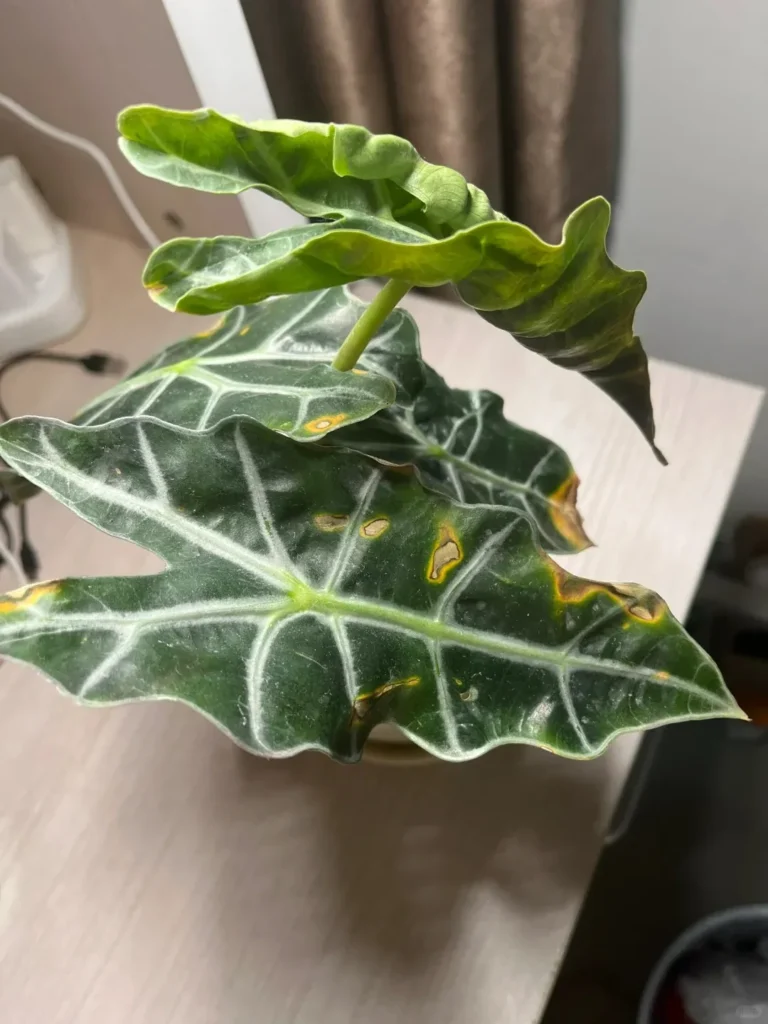
When I first brought home my Alocasia Polly, things went downhill immediately.
I didn’t repot it. I didn’t disturb the soil. I literally just placed it on the shelf—and within hours the leaves began to curl tightly. By the next morning, they were limp, soft, and collapsing. I ended up cutting the entire plant back to almost nothing. A brutal sight.
But the stem was still firm.
So I didn’t give up.
I gave it a high-humidity tent, steady warmth, and absolutely no disturbance. It felt like a last-ditch ICU setup. I left for work worrying the plant wouldn’t make it through the day.
When I came home that evening…
a new shoot had pushed out from the soil.
After everything—it fought back.
When I finally repotted it later, I discovered six tiny corms hiding in the mix. I placed them in a warm propagation box, and within days they were swelling with new growth.
That’s when I realized something important:
Even when every leaf is gone, even when curling turns into collapse—as long as the roots and corms are firm, the plant hasn’t given up. And neither should you.
This experience made me respect Alocasias in a different way.
They’re dramatic, sensitive, easily stressed… but unbelievably determined to live.
What This Taught Me
Here’s what that Polly taught me about real-world fixes:
- Curling doesn’t always mean decline. Sometimes it’s just the transition from greenhouse conditions to home conditions.
- A firm stem or solid corm is enough reason to keep going.
- High humidity + stable warmth can pull a plant back from the brink.
- Cutting everything back is not failure—it’s sometimes the clean slate the plant needs.
- Never underestimate a plant’s will to survive.
This is why I always tell readers:
Don’t give up before your plant does.
Practical Fix Table (retained for usability)
| Curling Problem | What I Actually Did | Recovery Time |
|---|---|---|
| Low humidity → inward edges | Mini humidifier + pebble tray | 3–5 days |
| Underwatering → papery curls | Slightly increased watering; occasional bottom-watering | ~1 week |
| Overwatering / root stress | Improved aeration + airflow | 5–7 days |
| Cold drafts → uneven curling | Moved plant away from cold window | 1–2 weeks |
| Too much sun → cupping | Added sheer curtain; adjusted position | 3–4 days |
| Spider mites → tiny curls | Rinse + neem wipe + humidity boost | 1 week |
| Fertilizer burn | Soil flush + half-strength feed | Stops worsening immediately |
| Repot shock | Stable light + no water for first few days | 2–3 weeks |
FAQ
Once an Alocasia leaf curls due to stress, it rarely returns to its original shape.
But—fix the underlying issue, and the next new leaf will come out flat and healthy.
Light, dry, crumbly soil → underwatering or low humidity
Heavy, wet, cold soil → overwatering or root stress
Underwatering curls feel papery, while overwatering curls feel soft or limp.
New leaves often look awkward for a few days while they unfurl.
If the plant is healthy, the leaf will flatten within 48–72 hours.
But if the leaf is fully curled, yellowing, or no longer contributing to photosynthesis, trimming it off can:
redirect energy to new growth
reduce pest hiding spots
make the plant look cleaner
I usually keep the leaf unless it’s more than 50% damaged.
Curling can be a normal adaptive response to a change in humidity, light, or temperature.
The key is watching whether the plant stabilizes in a few days or the curling continues.
Visible improvement happens forward—in new growth—not by “fixing” the curled leaf.
Trouble with your Alocasia?
Find real fixes for yellow leaves, drooping stems, and root issues in our Problems Hub.
Go to Problems Hub →