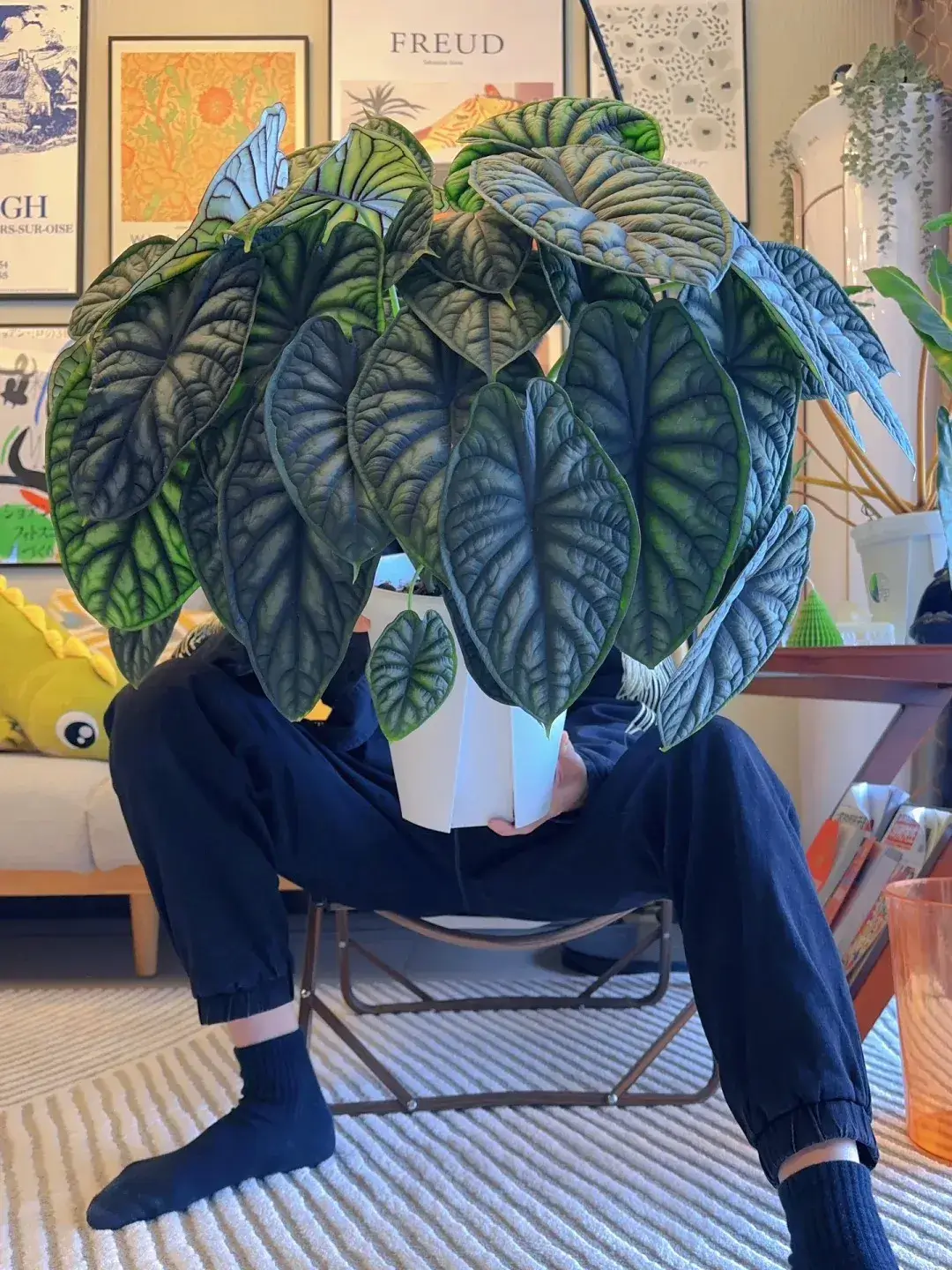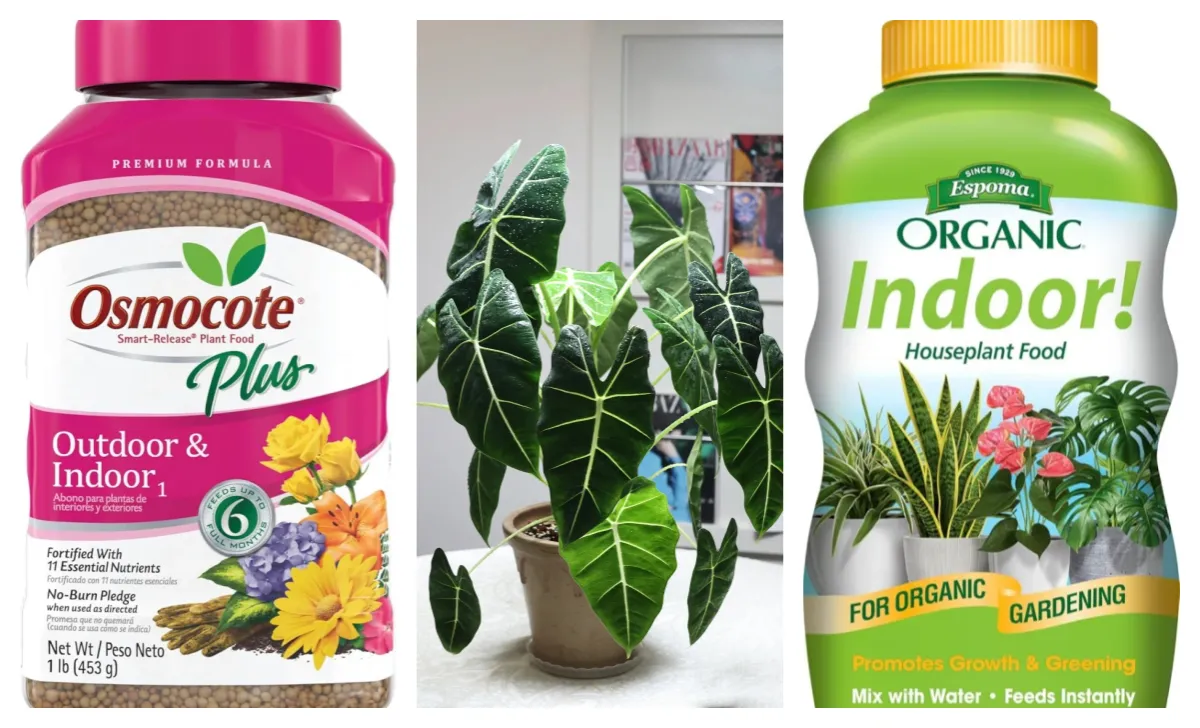
When it comes to Alocasia care, light is the real game changer.
It determines everything — the leaf size, color depth, and that unmistakable tropical sheen.
Here in Portland, where winter days are short and cloudy skies stretch for weeks, I’ve learned firsthand how dramatically light shapes these plants.
Too little sunlight, and the leaves turn dull and small; too much direct sun, and they curl or burn at the edges.
Many new growers believe that “shade-loving” means “low light,” but that’s a misconception.
In reality, Alocasias thrive under bright, filtered light, not dim corners.
Their native rainforest homes provide constant high light intensity — roughly 10,000–20,000 lux of indirect sunlight — the kind that’s strong enough to cast a soft shadow but never harsh enough to scorch.
If your home doesn’t get that kind of brightness, a full-spectrum grow light can work wonders, mimicking the balanced daylight Alocasias naturally crave.
Understanding how to meet these light requirements — whether through natural sun or artificial light — is the foundation of keeping your Alocasia glossy, vibrant, and alive.
Understanding Alocasia’s Native Light Needs
In their natural habitat, Alocasia plants grow beneath the rainforest canopy of Southeast Asia, where sunlight filters through layers of trees and leaves.
This means they receive high light intensity, but never direct exposure — usually between 8,000 and 20,000 lux of diffused, scattered light.
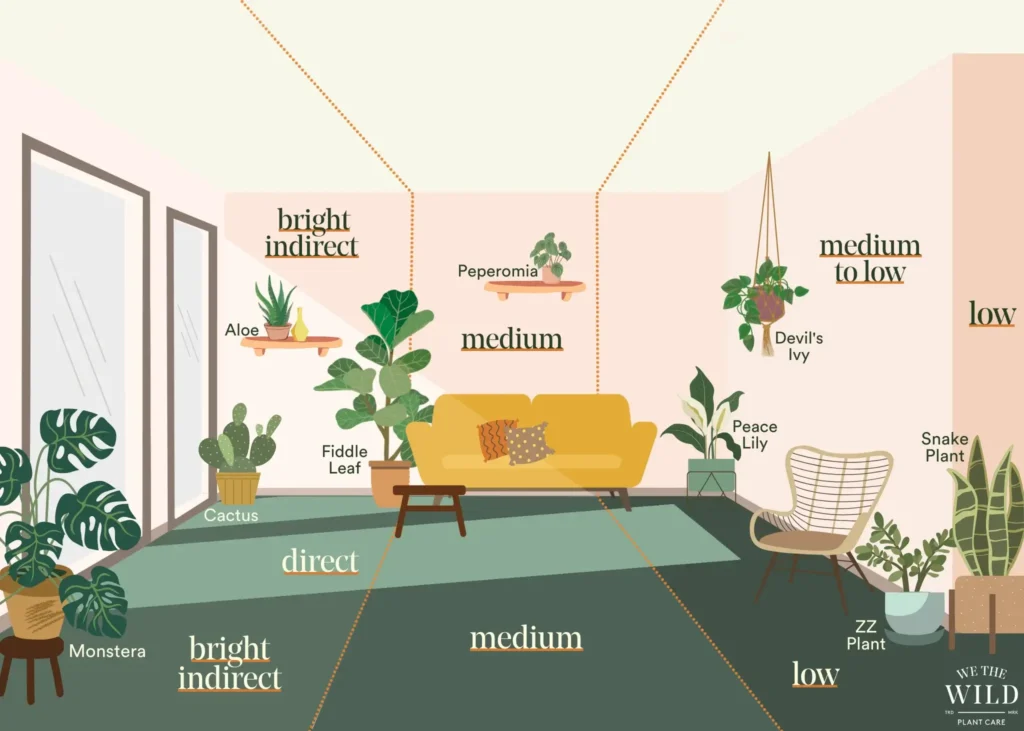
That’s why it can be confusing when people say Alocasia is “shade-loving.”
In the rainforest, “shade” still means bright, warm daylight — just without the burning rays of the sun.
So yes, Alocasia has high light requirements, but that doesn’t mean it enjoys harsh midday sun.
When grown indoors, this balance becomes tricky:
- Too little light → leaves grow smaller, paler, and the plant stops producing new growth.
- Too much direct sun → leaves curl, turn yellow, or develop burn spots.
The goal is to mimic the dappled brightness of a tropical forest, giving your Alocasia a consistent glow without exposing it to harsh rays.
💡 Alocasia plants are high-light tolerant but not sun-loving. They need bright, filtered light — roughly 10,000–20,000 lux — to stay glossy and compact.
If you can clearly see your hand’s shadow but it looks soft and blurry, that’s the perfect amount of light your Alocasia will thank you for.
Light Tolerance by Alocasia Type
Not all Alocasias crave the same amount of light.
Some varieties — like Zebrina or Sarian — can handle bright, near-sunny spots, while others prefer softer, filtered conditions.
Below is a practical guide based on real indoor growing experience, showing how different Alocasia types respond to light intensity.
| Light Level | Approx. Lux Range | Typical Placement | Recommended Varieties | Notes / Signs |
|---|---|---|---|---|
| High Bright Light | 15,000–25,000 lux | Near south / southeast window with sheer curtain | Zebrina, Sarian, Portodora, Yucatan Princess | Strong light keeps leaves large, upright, and deeply colored. Too little → droopy or stretched stems. |
| Medium Bright, Filtered Light | 8,000–15,000 lux | East window or a few feet back from bright south window | Dragon Scale, Silver Dragon, Green Shield, Regal Shield | Ideal for most indoor settings. Textured leaves may scorch under direct sun. |
| Low to Medium Light | 3,000–8,000 lux | North window or setup with grow light | Black Velvet, Melo, Jacklyn, Cuprea | Slower growth rate; deep leaf tones fade if light stays too weak for long. |
💡 Tip: Thicker, leathery Alocasias (like Melo or Dragon Scale) prefer gentler, consistent brightness, while thin-leaved types (like Zebrina or Sarian) can handle stronger light exposure.
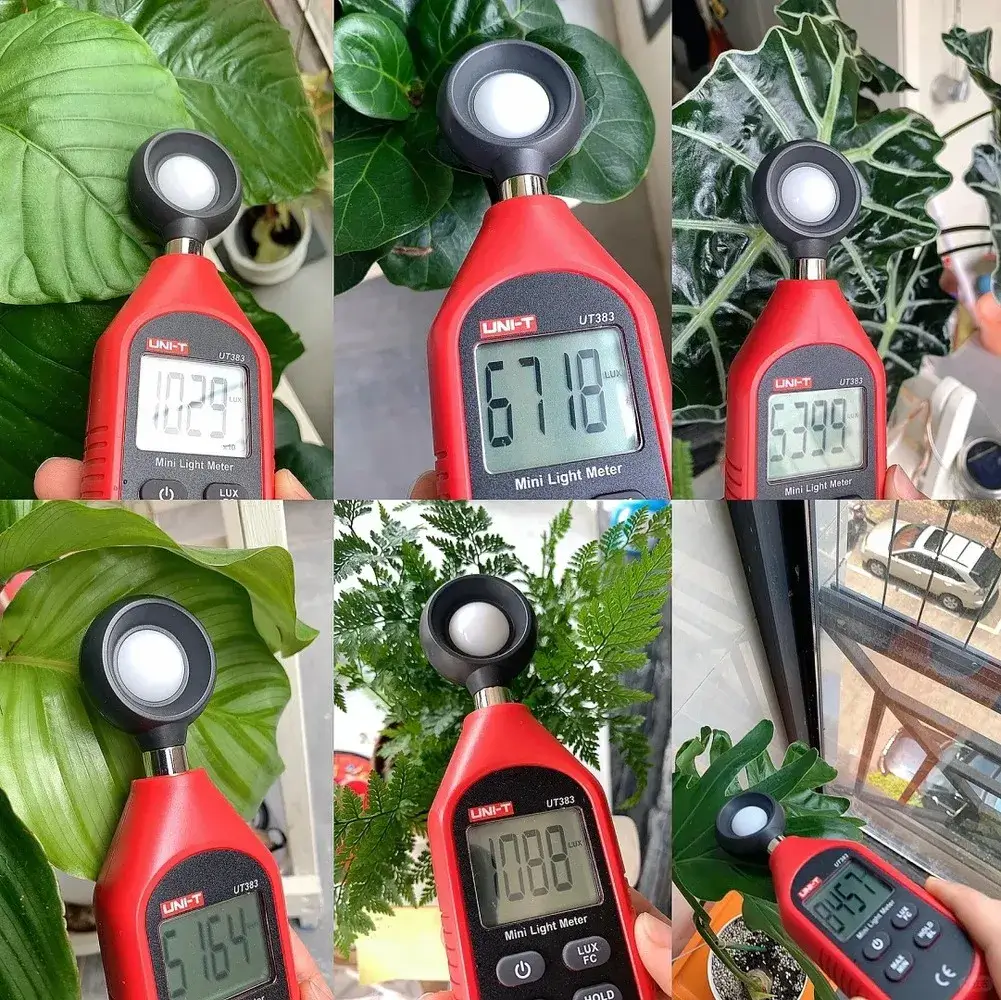
Measuring Light at Home — App vs. Light Meter
If you’re not sure how bright your space really is, measuring can help you avoid guesswork.
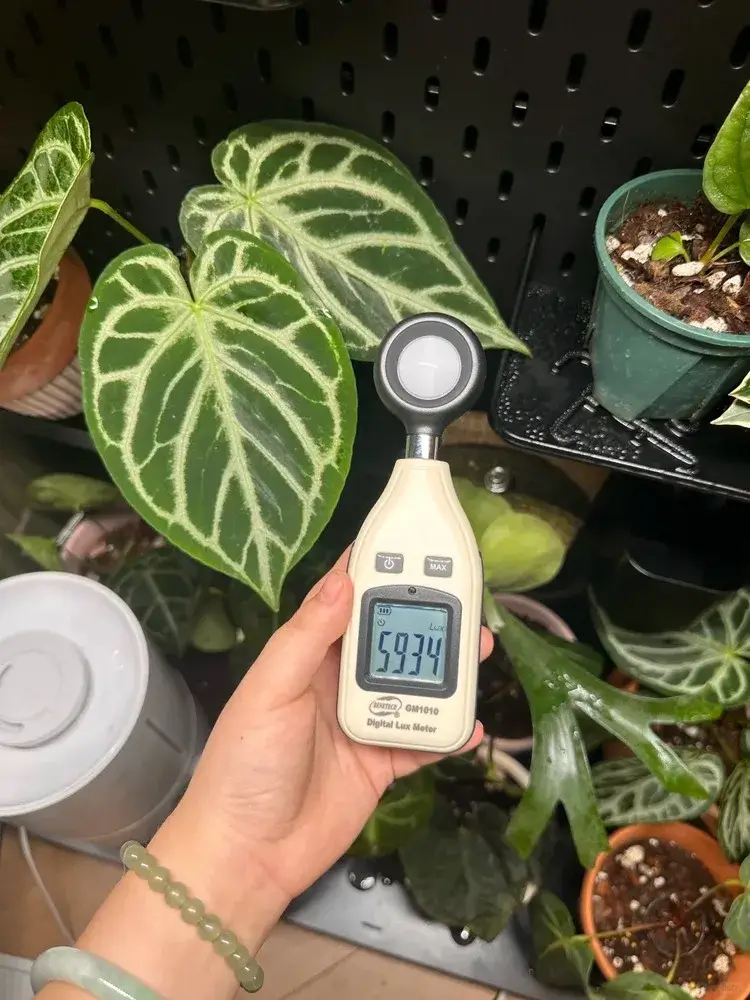
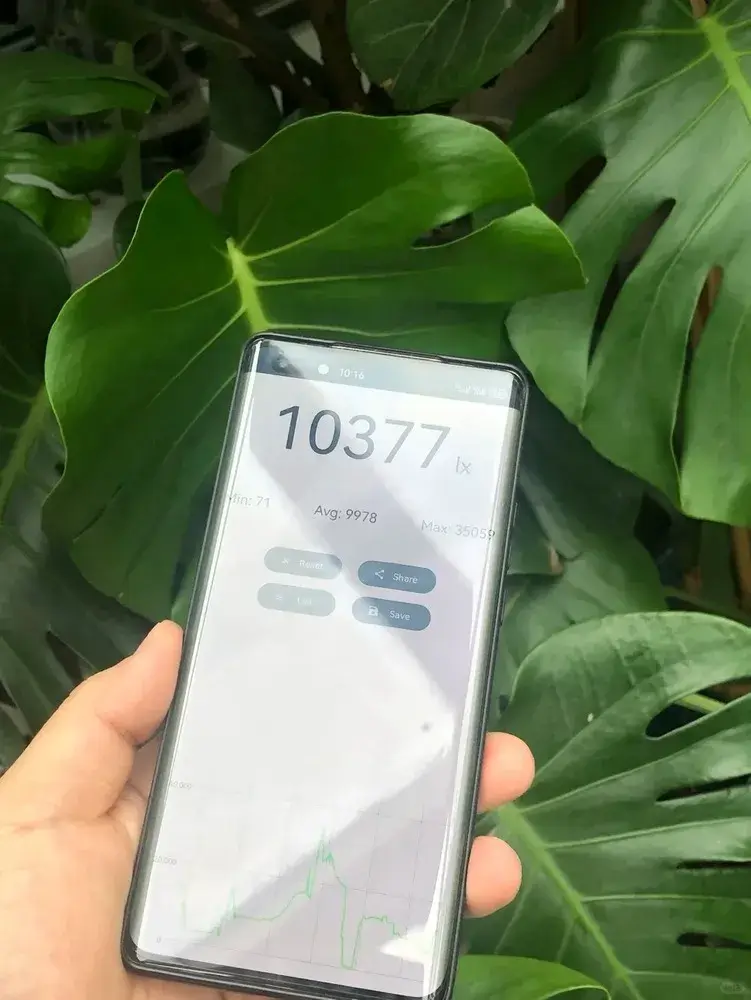
No professional meter?
Your smartphone’s light meter app works surprisingly well for checking lux levels near windows.
It’s not laboratory accurate, but more than enough to tell whether your Alocasia is in low, medium, or bright light.
For serious growers:
If you use multiple grow lights or keep a rare collection, consider a dedicated light meter.
It gives accurate lux or PPFD readings, helping you fine-tune brightness and maintain consistent growth through all seasons.
🌿 In short: Treat light like watering — some varieties like a good soak of sunshine, others prefer it filtered through leaves. Learning their preferences will help each Alocasia show its best color and form.
Using Grow Lights for Alocasia
Even the brightest room can’t replace the tropical daylight that Alocasia loves year-round.
When sunlight fades — especially during long, gray winters — grow lights become essential to keep growth steady and prevent the dull, “sleepy” look many plants develop indoors.
Why Use Grow Lights
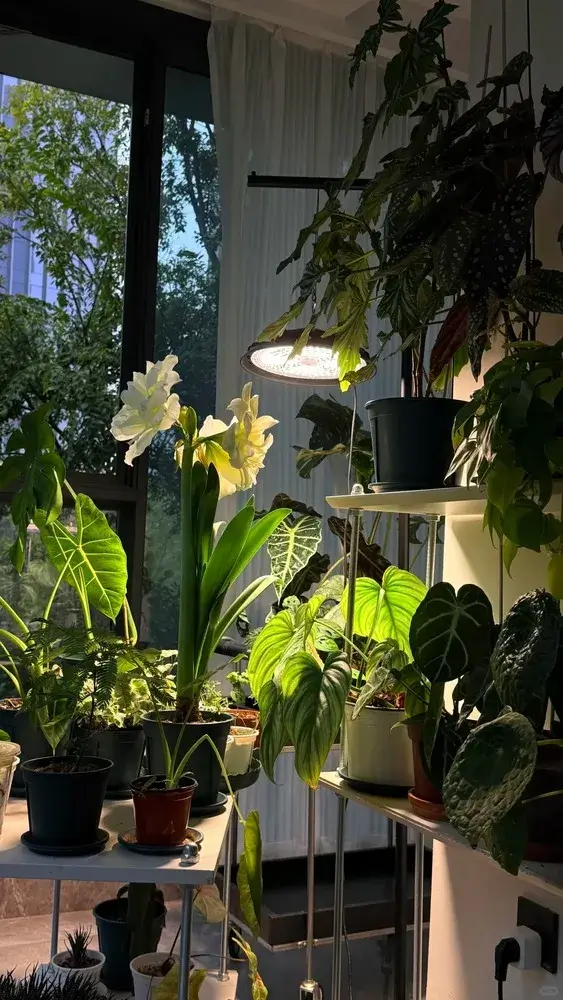
Alocasia leaves rely on consistent light intensity to stay active.
A grow light can:
- Keep growth active through winter, even when daylight hours drop below eight.
- Prevent “closed leaves” and pale color, a common sign of weak indoor light.
- Support healthier root and corm development by maintaining the plant’s internal rhythm.
When used correctly, artificial light doesn’t just replace the sun — it extends the day in a natural, gentle way.
Best Type & Setup
Full-Spectrum LEDs (4000–5000K) work best for Alocasia, as they mimic the color balance of real daylight.
Avoid red/blue-only fixtures — they may encourage growth, but the leaf tones often appear unnatural and washed out.
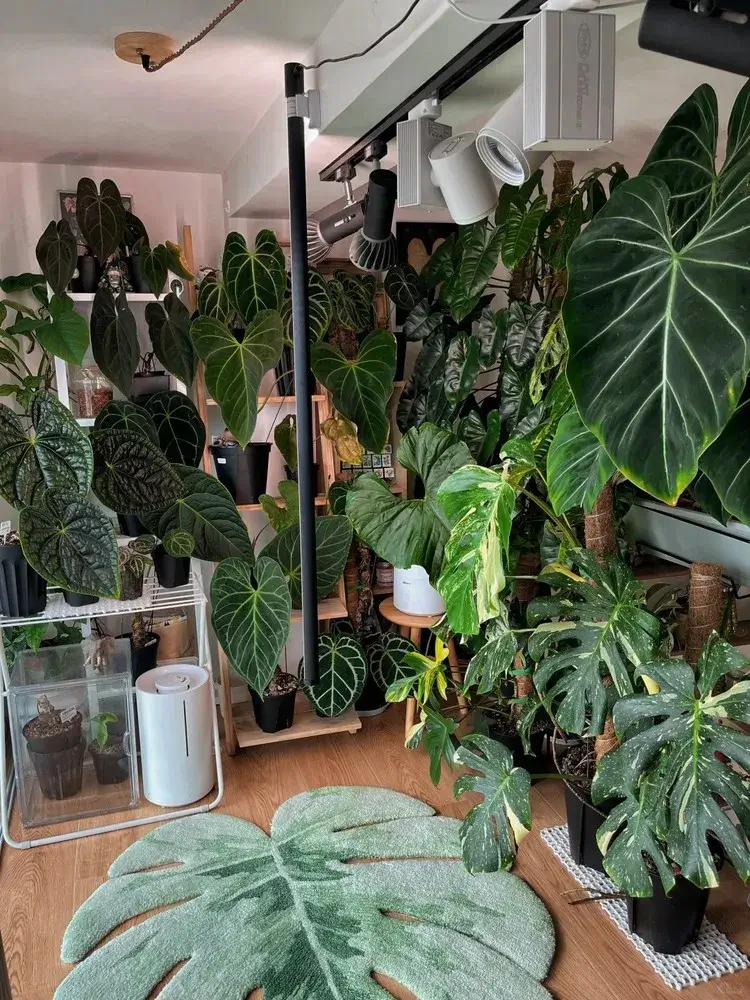
Ideal setup:
- Distance: 30–45 cm (12–18 in) from the top leaves.
- Duration: 10–12 hours per day, depending on season and natural light availability.
- Use a timer plug to maintain a consistent rhythm and avoid late-night light exposure that can disrupt rest cycles.
💬 Real experience:
I use a 4000K LED panel during Portland’s cloudy winters, set for 10 hours each day.
Even when natural daylight drops below eight hours, my Dragon Scale continues to unfurl new leaves without losing color or texture.
Quick Tips for Effective Use
- Rotate your plant weekly so all sides receive even light.
- Keep leaves clean; dust can block up to 20% of light absorption.
- Adjust height as the plant grows — too close causes heat stress, too far reduces efficiency.
- Combine grow lights with airflow (small fan) to prevent heat buildup.
With the right setup, grow lights aren’t a last resort — they’re your indoor rainforest in miniature.
Common Light Problems & Fixes
Even experienced plant lovers struggle with light balance — too much burns, too little stalls growth.
Here’s how to recognize the early warning signs and bring your Alocasia back to balance.
| Symptom | Likely Cause | Fix |
|---|---|---|
| Pale or Faded Leaves | Too little light | Move closer to a bright window or add a full-spectrum LED. Maintain at least 8,000–10,000 lux for healthy color. |
| Crispy or Burned Edges | Too much direct sun | Filter harsh sunlight with a sheer curtain or reposition 30–50 cm away from the glass. |
| Closed or Curled Leaves | Inconsistent light hours | Keep a steady 10–12 hr light schedule; use a timer plug to simulate tropical consistency. |
| Slow Winter Growth | Insufficient light intensity | Supplement with a 4000–5000 K LED during dark months; position 30–45 cm above foliage. |
| Droopy Stems or Leaning Toward Light | Uneven exposure | Rotate plant weekly for balanced growth; increase ambient brightness. |
| Dull Leaf Texture or No New Growth | Low sustained light | Combine natural sun and artificial light to restore energy levels. |
💡 Tip: Alocasia rarely decline overnight — light problems build up slowly.
Watch how new leaves look compared to old ones; it’s the clearest signal of whether your lighting is right.
My Light Routine in Portland & Final Takeaways
Living in Portland means learning to adapt — especially when it comes to light.
Winters here are long, gray, and unpredictable, so I’ve built a rhythm that keeps my Alocasias thriving year-round.
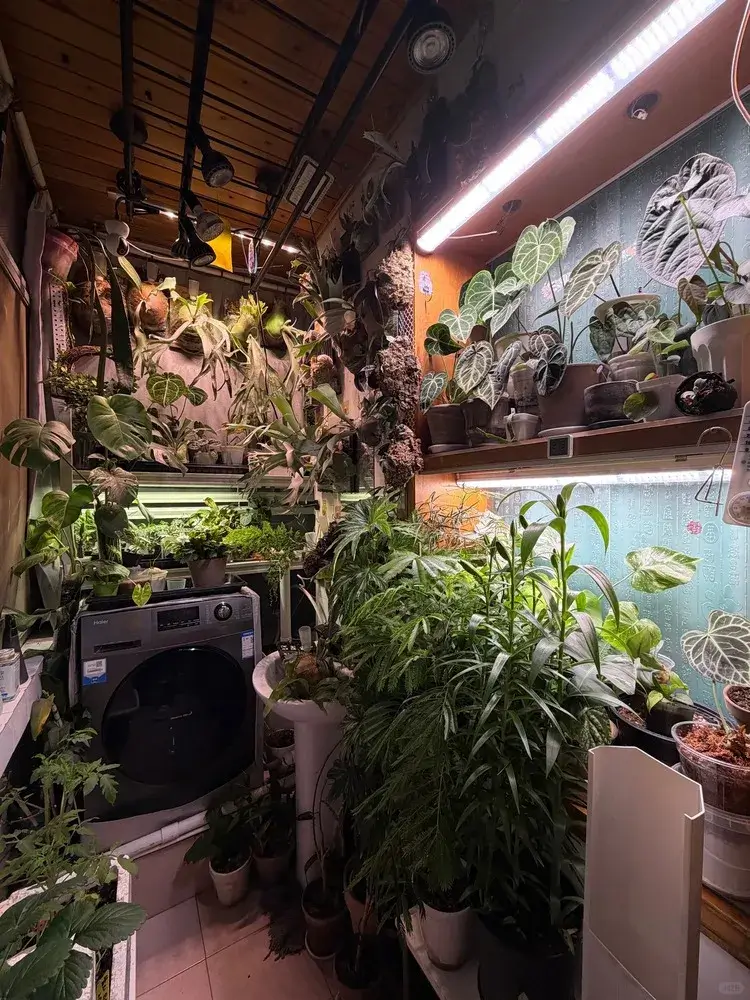
🌤 Winter Routine:
Every morning, I rely on the soft natural light that filters through my southeast window, then switch on a 4000K full-spectrum LED for about 10 hours.
This steady brightness keeps new leaves opening, even when outdoor daylight barely lasts eight hours.
☀️ Summer Routine:
When the sun finally returns, I pull my plants about 40 cm (16 in) back from the window and diffuse the rays with a sheer curtain.
The light is bright, warm, and clean — perfect for encouraging large, upright leaves without scorch marks.
I’ve noticed that my Dragon Scale develops deeper, metallic tones in slightly shaded spots,
while Zebrina stretches happily toward brighter windows, producing bigger, more vibrant leaves.
Each variety tells its own story through its leaves — observing them often teaches more than any lux meter.
Final Takeaways
- Bright but filtered light always wins over harsh, direct sun.
- Grow lights aren’t cheating — they’re nature’s backup plan.
- Your plant’s posture and color are the best teachers.
When an Alocasia is happy, its leaves stand tall, glossy, and open wide.
🌞 In the end, mastering Alocasia light care isn’t about chasing perfect numbers — it’s about learning to see light the way your plant feels it.
FAQ
If you can read comfortably near the plant without turning on a lamp — that’s about right.
Use a timer plug to keep the rhythm consistent — too much light (especially overnight) can stress your plant instead of helping it.
Move closer to a window or increase exposure time under grow lights.
Consistent brightness is key for larger, glossy leaves.
In very dim areas, they’ll grow slower, with smaller leaves and duller tones.
Add a small LED panel or move the plant weekly to a brighter spot for better balance.
Still struggling with your Alocasia?
Learn how to fix common issues in our full Alocasia Care Hub, from watering balance to root health.
Go to Care Hub →