Alocasia leaves drooping isn’t always a sign of failure — sometimes it’s just your plant speaking up.
A droopy Alocasia might be thirsty, reacting to low light, or simply adjusting to a change in its environment.
This guide will help you quickly diagnose why your Alocasia is drooping and show you exactly how to bring it back upright — whether it’s a watering mistake, too much sun, or a case of root suffocation.
💡 Along the way, you’ll learn what each symptom means and how to fix it before it turns serious.
Before you panic, take a minute to compare what you see with the table below.
Most drooping issues fall into just a few patterns — once you match the symptom, you’ll know exactly where to start.
Quick Diagnosis Table
| Symptom | Likely Cause | Quick Fix |
|---|---|---|
| Petioles grow long and soft, leaves get smaller | Too little light | Move to brighter spot (15,000–20,000 lux) or add a grow light |
| Leaves wilt or curl under strong sun | Too much light / heat stress | Relocate to bright, indirect light; increase airflow |
| Soil cracked, root ball feels light | Underwatering | Use edge-watering method — soak evenly until water drains |
| Soil soggy, base soft or mushy | Overwatering / root suffocation | Pause watering, improve ventilation, repot in airy mix |
| Leaves yellow and droop, fine webbing visible | Spider mites / root stress | Check leaf undersides, rinse, and boost humidity + air flow |
| Plant looks healthy but large leaves can’t stay upright | Natural physical drooping | Stake gently for support and feed a potassium-rich fertilizer |
💡 Tip:
Use this as your quick diagnosis chart before scrolling through solutions.
Alocasia usually tells you what’s wrong — you just need to learn its visual language.
Light Issues — When Alocasia Can’t Find Its Balance
Light problems are one of the most common causes of drooping leaves.
Too little light makes stems weak and floppy, while too much direct sun causes heat stress and leaf curling.
The sweet spot for most Alocasias is bright, filtered light around 15,000–20,000 lux — strong enough to keep leaves upright but gentle enough to avoid scorch.
🌤️ Too Little Light
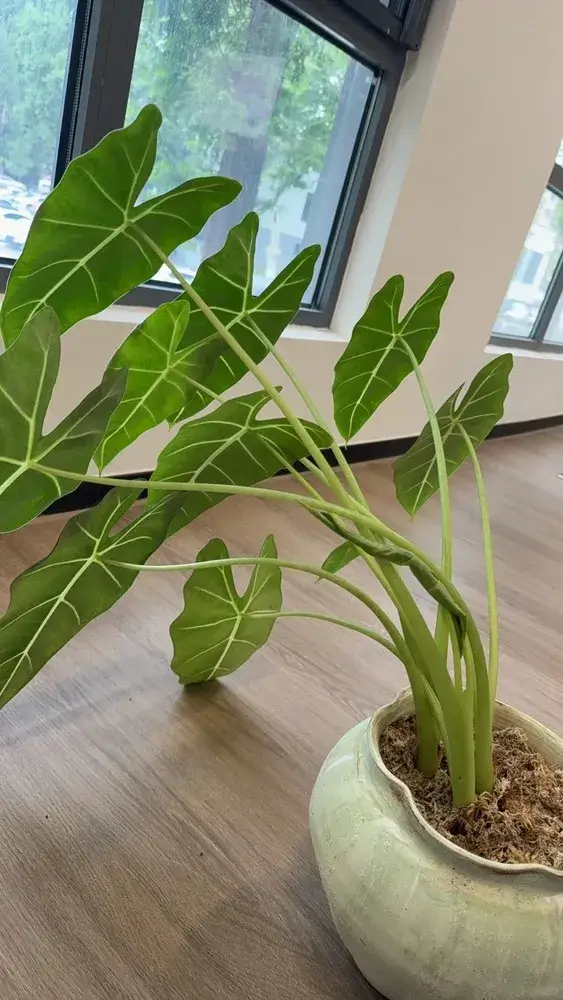
Symptoms:
- Petioles stretch long and soft.
- Leaves get smaller and paler.
- The entire plant starts leaning toward the nearest light source.
Fix:
- Move your Alocasia closer to a south or east-facing window with sheer curtains.
- If your room is dim (especially in winter), use a 4000–5000K grow light for 8–10 hours daily.
- Rotate the pot every few days to keep stems growing evenly.
💬 “When I kept my Dragon Scale too far from the window, it looked sleepy all winter. A simple LED bar brought it back upright within a week.”
☀️ Too Much Light (Heat Stress)
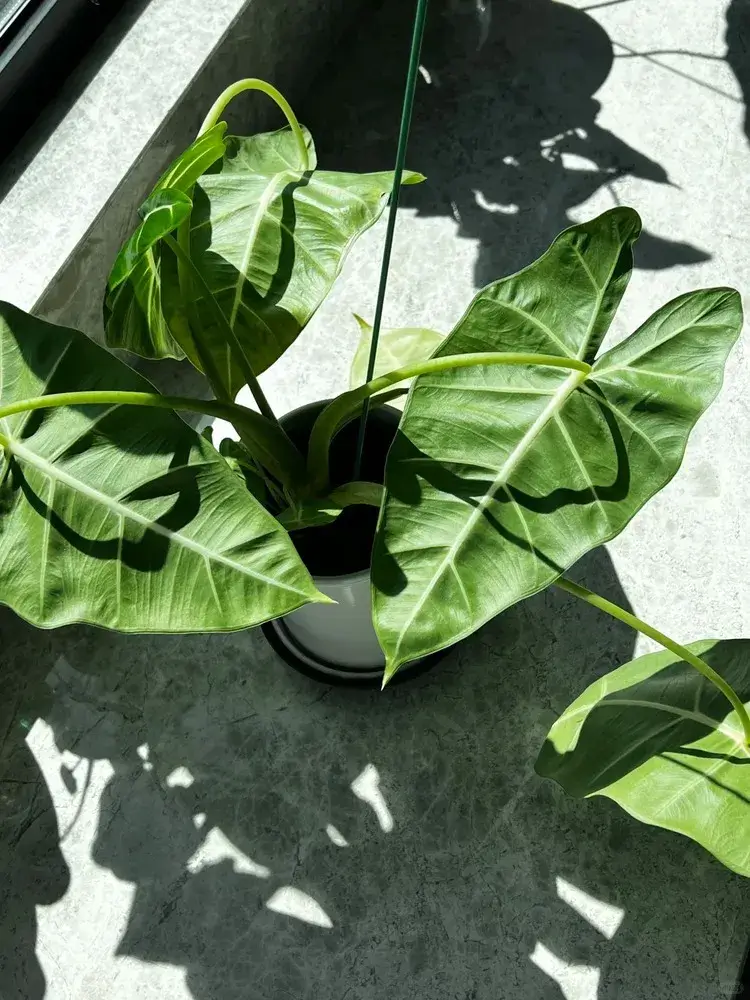
Symptoms:
- Leaves look limp or slightly curled.
- Edges feel warm or slightly crispy to the touch.
- The plant droops during midday but perks up at night.
Fix:
- Pull the pot back 30–50 cm from the window during hot months.
- Filter harsh sun with a sheer curtain or reposition near a north/east window.
- Maintain airflow — a gentle fan can lower leaf temperature fast.
💡 Tip: In summer, Alocasias prefer “sunlight on the wall” — bright but indirect.
💡 Reflective Surfaces (Ground Light Confusion)
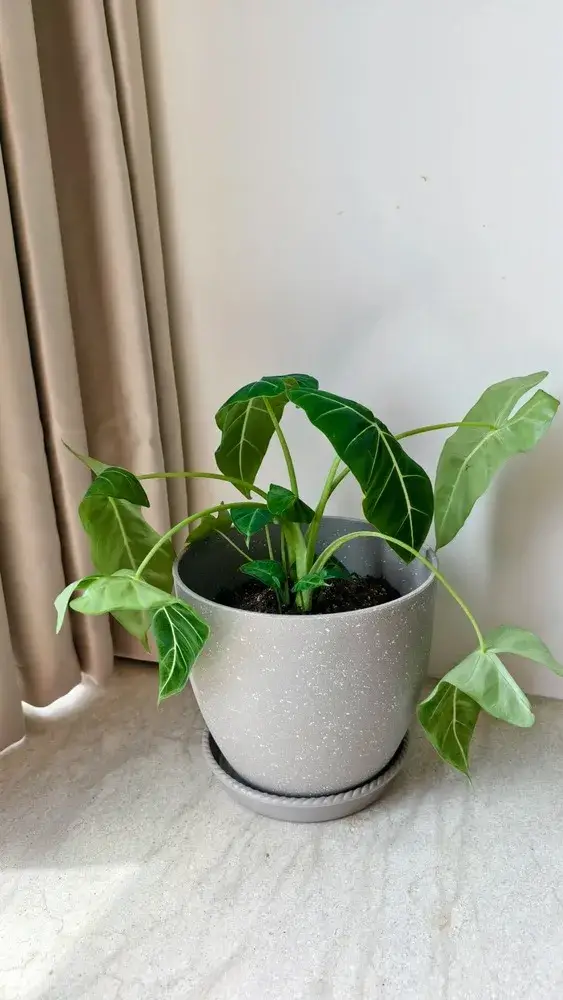
Symptoms:
- Petioles stay firm but all leaves droop downward.
- No visible yellowing or dryness.
- Often happens when the plant sits on shiny white tiles or near mirrors.
Fix:
- Move your Alocasia to a non-reflective floor or add a mat under the pot.
- Adjust its direction so it faces natural overhead light instead of floor glare.
💬 “I once thought my plant was sick — turned out it was just chasing light bouncing off my kitchen tiles.”
Water Imbalance — When Alocasia Drinks Too Little or Too Much
Watering is the trickiest part of Alocasia care — too little and the leaves collapse from thirst, too much and the roots suffocate.
Finding the middle ground means keeping the soil evenly moist but never soggy, especially for non-rhizomatous types that crave gentle humidity.
Rock-dwelling varieties like Dragon Scale or Melo prefer the opposite: let them dry more between waterings.
Underwatering (Dehydration Stress)
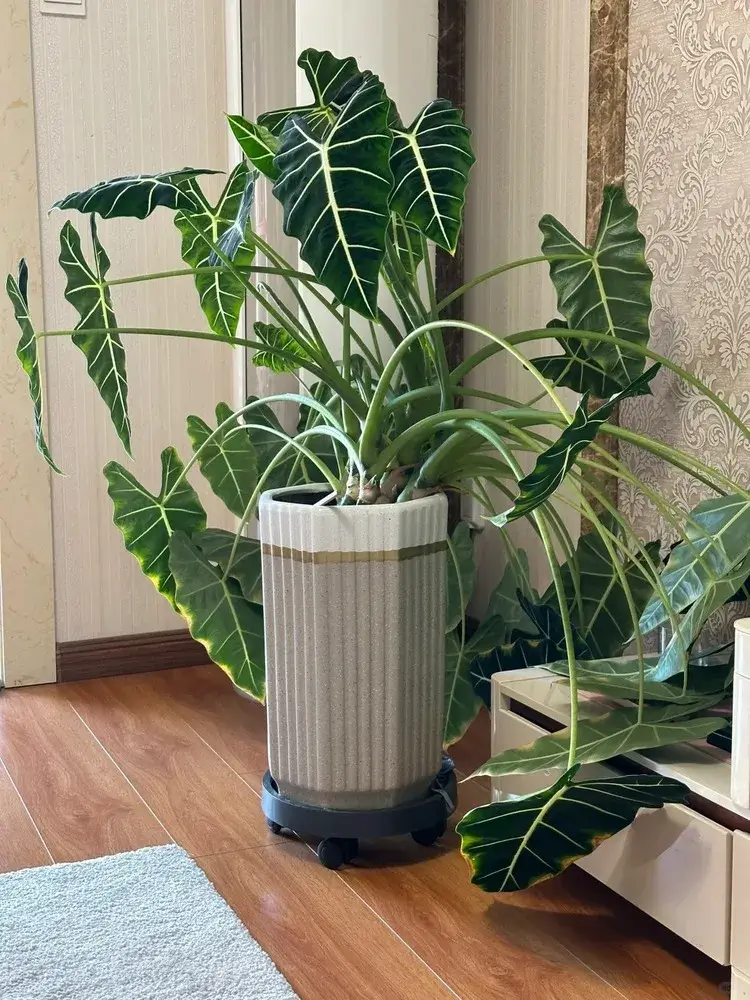
Symptoms:
- Soil surface looks pale or cracked.
- Pot feels unusually light when lifted.
- Stems lose tension, and leaves become thin or crispy at the edges.
Fix:
- Use the edge-watering method: pour water slowly around the inner rim of the pot (1–2 cm from the edge). Stop once water drips from the bottom.
- For severe dehydration, try bottom soaking — place the pot in 2–3 cm of water for 20–30 minutes, then drain.
- Keep soil slightly moist afterward; don’t wait until it’s bone dry again.
💬 “When my Green Shield wilted in Portland’s dry summer, I soaked the pot once and watched it lift back up within hours.”
💡 Tip: For most Alocasias, especially moisture-loving ones (Sarian, Pink Dragon), it’s better to keep the soil slightly damp — never fully dry.
Overwatering (Root Suffocation)
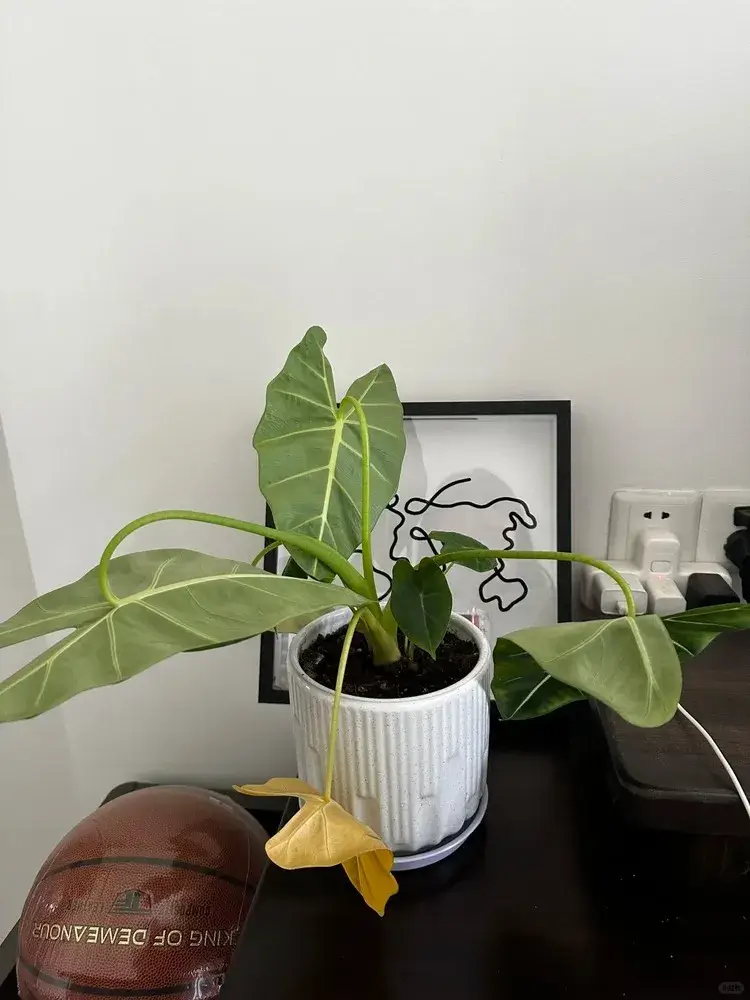
Symptoms:
- Soil stays wet and sticky for days.
- Base of petioles feels soft or mushy.
- Entire plant slumps even though the soil looks moist.
Fix:
- Stop watering immediately and check the roots. Trim off any dark or mushy parts.
- Improve airflow around the pot — use a small fan for 1–2 hours after watering.
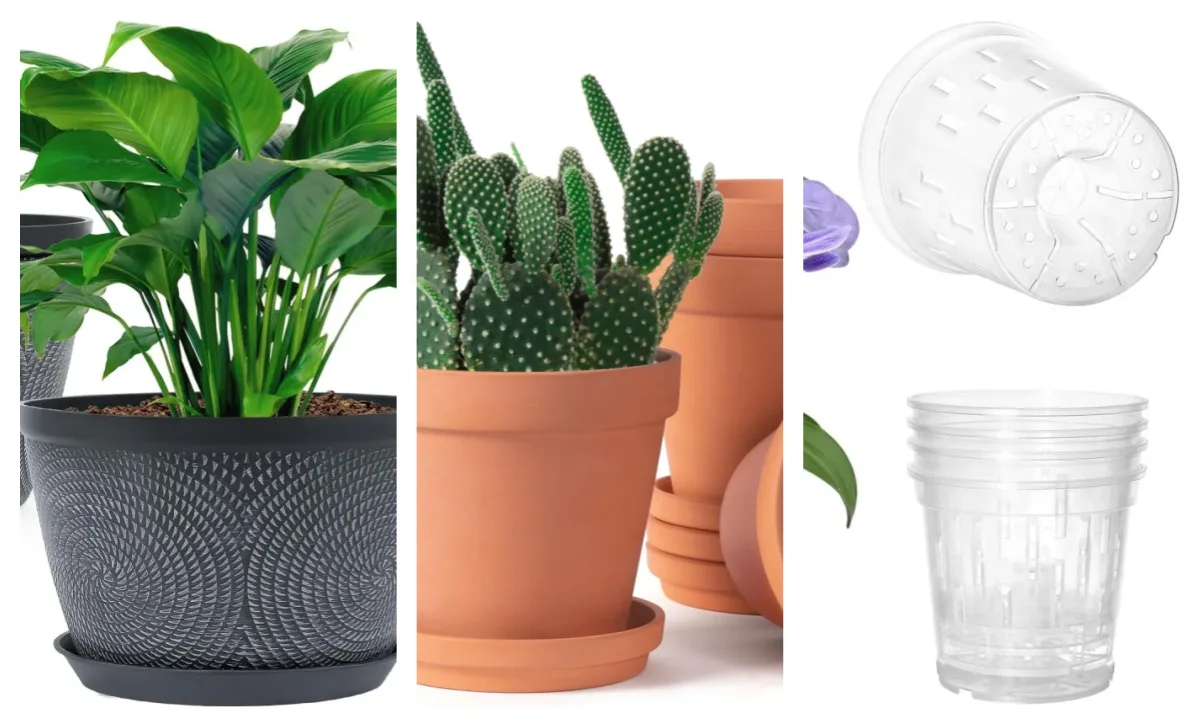
- Repot with an airy soil mix (peat, bark, perlite) and a breathable pot.
- Water only when the top 2–3 cm of soil feels dry to the touch or moisture meter reads 3–4.
💬 “In Portland’s damp winters, I always run a fan after watering. It’s the difference between healthy roots and a mushy disaster.”
💡 Golden Rule:
- Non-rhizomatous Alocasias (like Sarian or Yucatan Princess) → prefer moist soil.
- Rhizomatous or rock-type Alocasias (like Dragon Scale, Melo, Black Velvet) → prefer drier conditions — “better too dry than too wet.”
Pest Infestation — When Drooping Comes with Webs
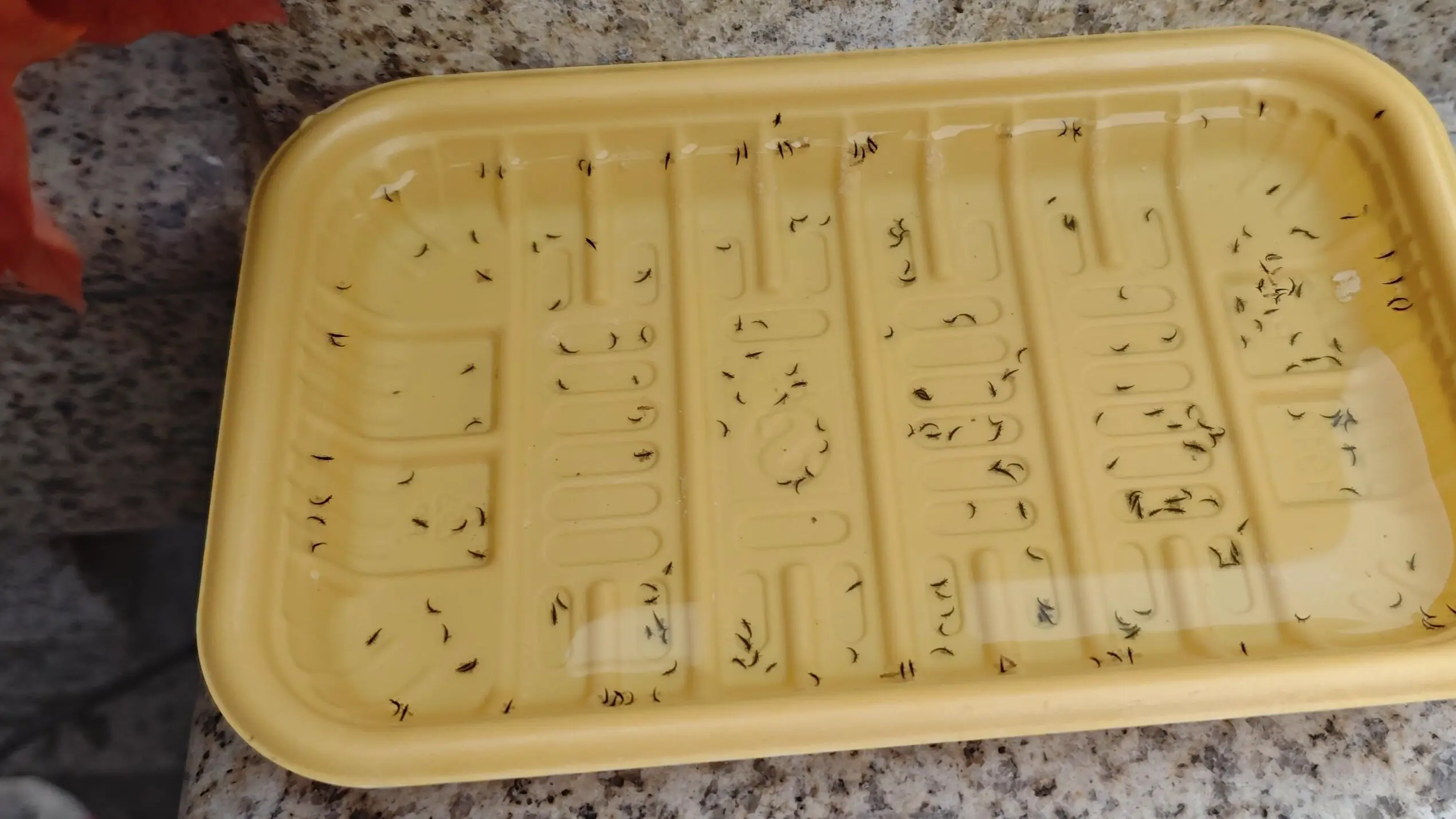
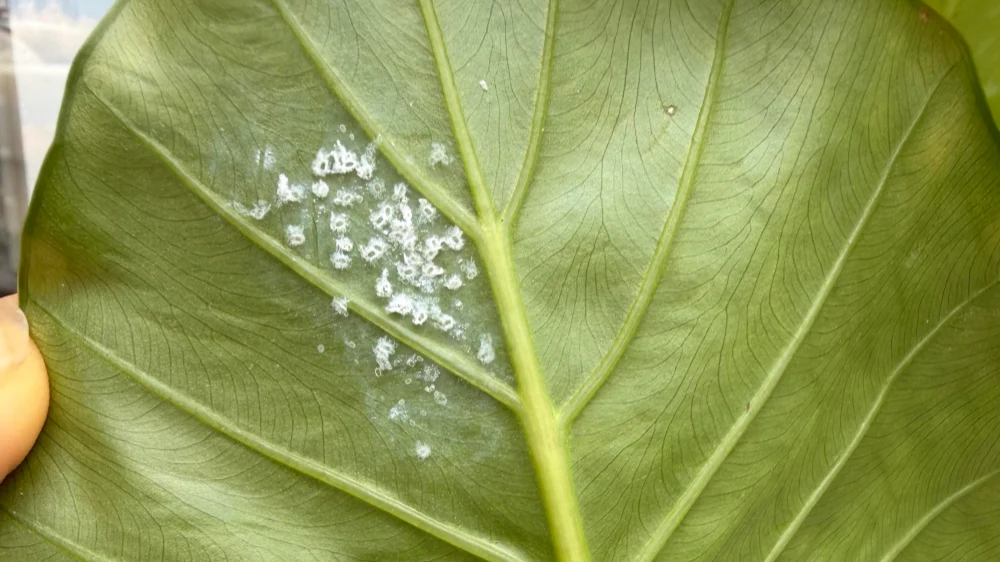
If your Alocasia’s leaves are drooping and turning patchy yellow, it might not be a watering issue at all — it could be spider mites. These tiny pests feed on leaf sap, weakening the plant until the stems lose strength and begin to sag.
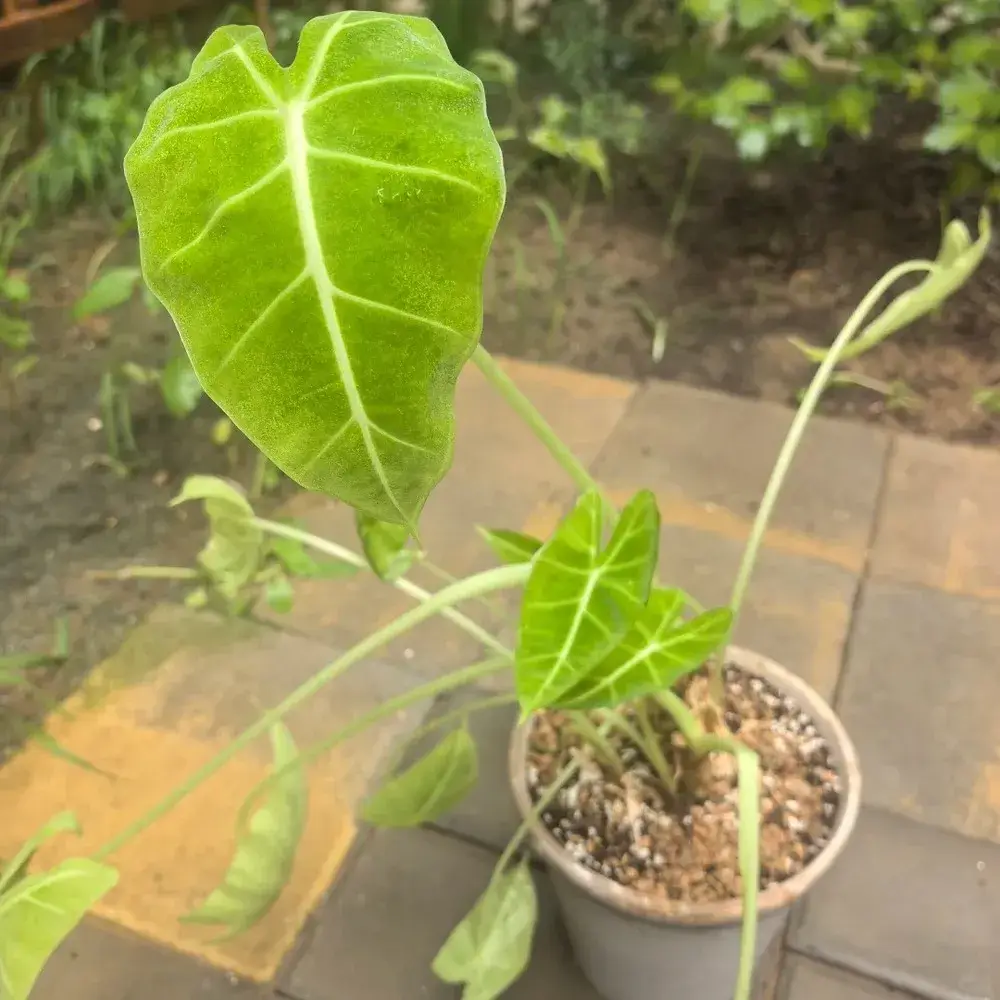
Common Signs:
- Leaves droop even though the soil and light seem fine.
- Fine white specks or dots appear on the underside of leaves.
- Tiny webbing near petiole joints or leaf edges.
- Yellow mottling that worsens over time.
Why It Happens:
Spider mites thrive in dry, warm, and poorly ventilated environments, especially when humidity stays below 50%.
Fix:
- Wipe or rinse leaves with lukewarm water to remove mites and dust.
- Increase humidity to 60–80% and improve airflow with a gentle fan.
- Isolate the plant from others for 1–2 weeks to prevent spread.
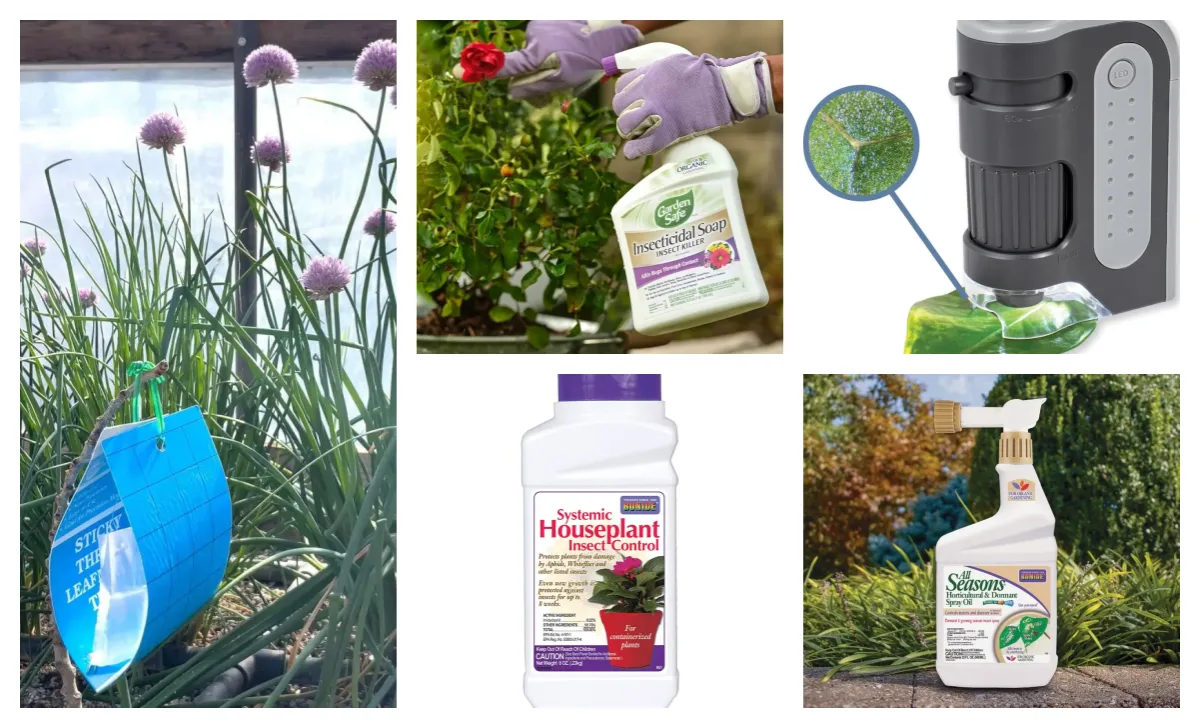
- For heavy infestations, use a natural insecticidal soap or neem oil once every few days until clear.
💬 “I once found webbing on my Dragon Scale after a dry spell — a quick rinse and humidity boost saved it before the mites spread.”
🔗 Related Guide: Spider Mites on Alocasia — How to Identify and Treat Them
Structural / Physical Drooping — When It’s Just Gravity at Work
Sometimes, your Alocasia isn’t sick — it’s just heavy.
Large-leaf varieties like Alocasia Macrorrhiza or Regal Shield often develop oversized foliage on relatively thin petioles, causing the whole plant to lean or droop under its own weight. This kind of “lazy slump” is more about physics than failure.
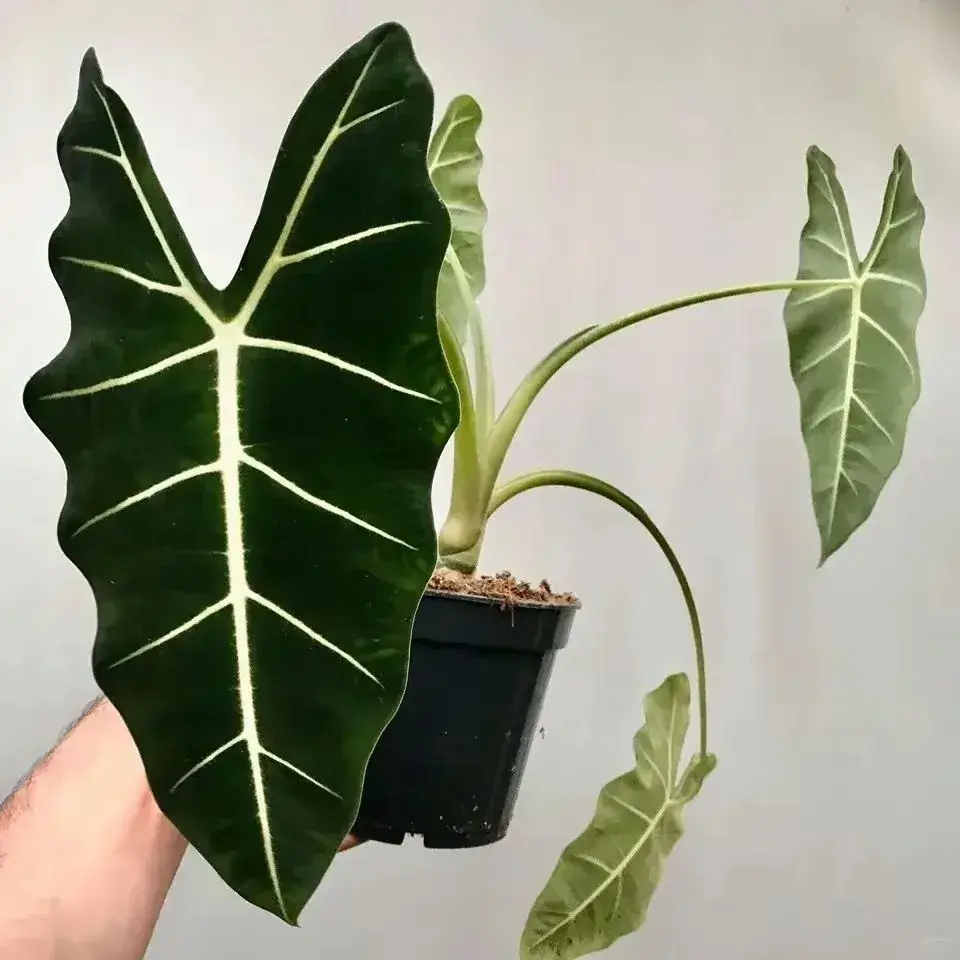
Typical Signs:
- Leaves are fully healthy — green, glossy, no yellowing or softness.
- Petioles bend outward instead of straight up.
- The soil, roots, and new growth look normal.
Fix:
- Use plant stakes or soft ties to gently support the heaviest leaves.
- Increase light exposure to strengthen petioles — around 15,000–20,000 lux is ideal.
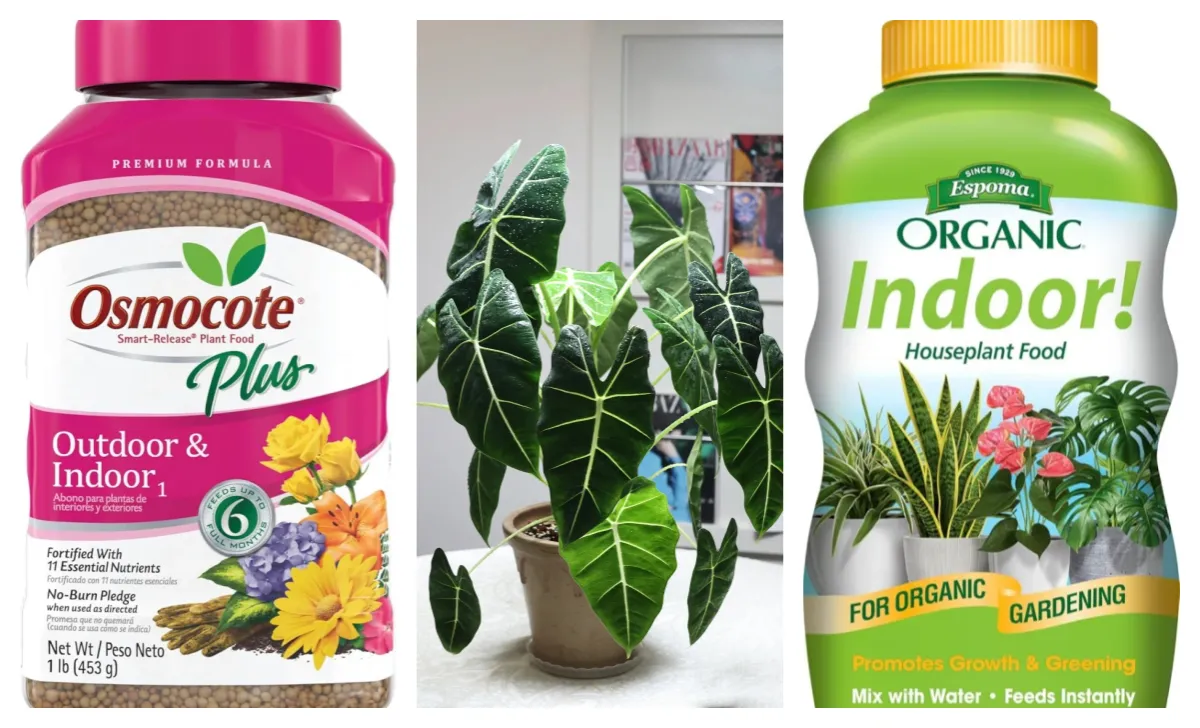
- Feed with a balanced fertilizer or potassium-rich booster (like potassium dihydrogen phosphate) to help stems stay firm.
- Maintain steady airflow — light movement toughens stems naturally.
💬 “This kind of ‘lazy drooping’ isn’t failure — it’s your plant thriving so well that gravity can’t keep up.”
Transplant or Environment Shock
If your Alocasia starts drooping right after repotting or relocation, don’t panic — it’s just in recovery mode.
When roots are disturbed, water and nutrient uptake slow down, causing temporary loss of turgor (the “standing power” of the leaves).
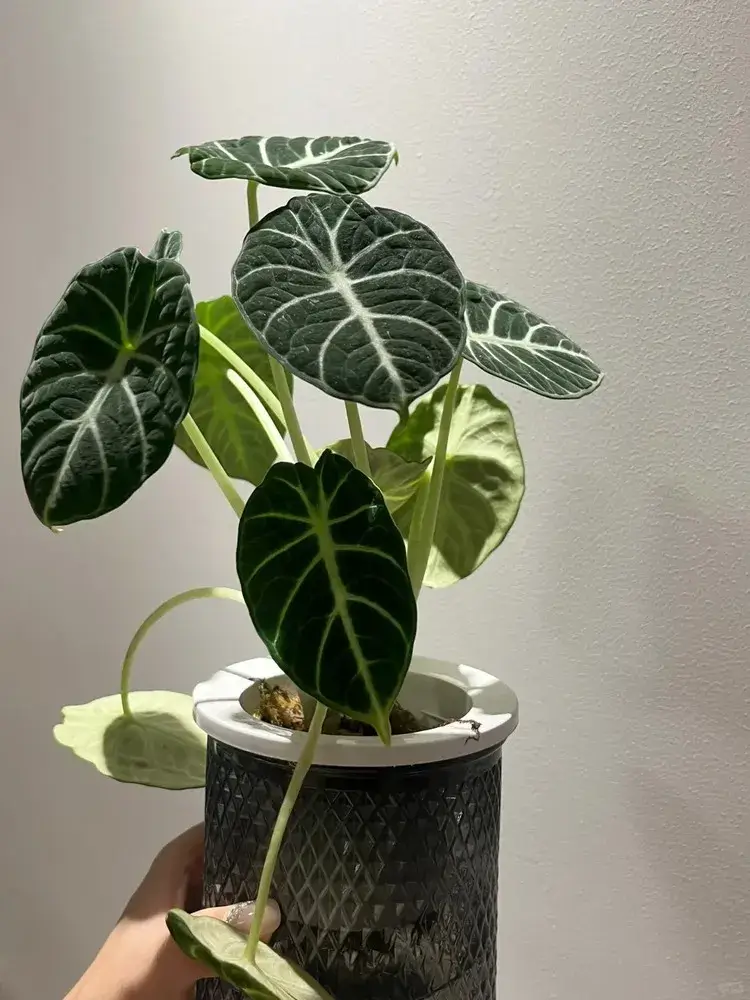
What to Do:
- Keep the plant in one stable spot — no moving or rotating.
- Avoid direct sunlight for the first 7–10 days.
- Maintain consistent warmth (20–25°C) and moderate humidity.
- Normal posture usually returns once the roots adjust.
💬 Think of it as jet lag for your plant — give it time, not treatments.
Nutrient Weakness
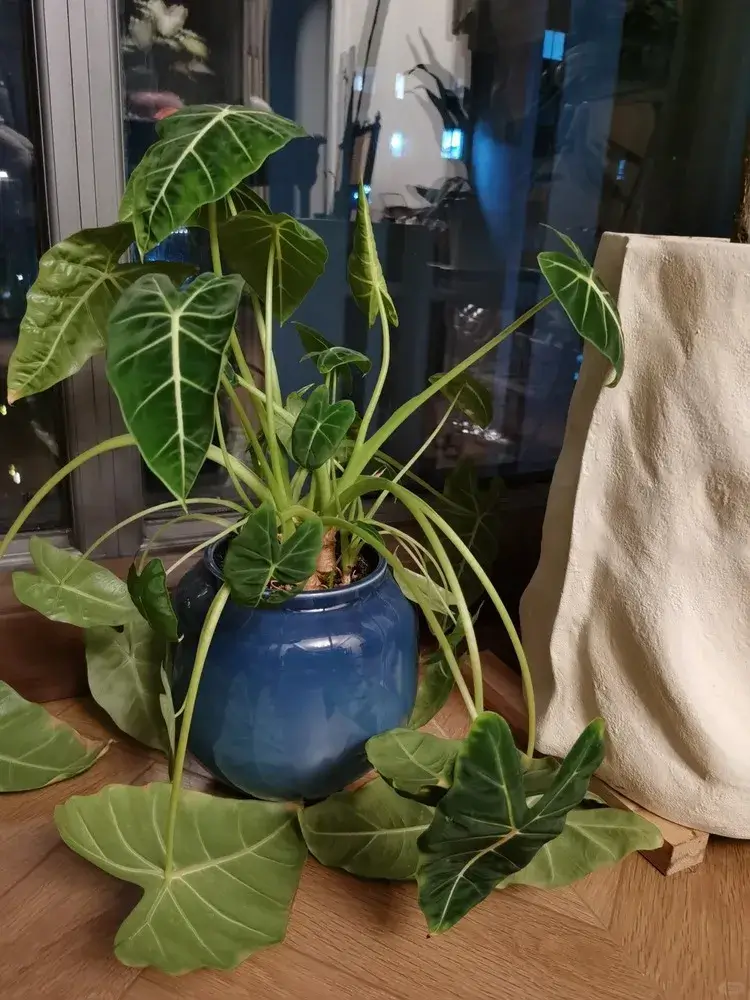
Sometimes, drooping comes from low potassium levels, which weaken petiole strength and reduce leaf resilience.
This is more common in fast-growing plants during the active season.
Quick Fix:
Feed every 2–3 weeks with a balanced fertilizer containing potassium (K), or add a small dose of potassium dihydrogen phosphate (KH₂PO₄).
💡 Tip: Combine this section as “Extended Reading” or place it in the FAQ for advanced growers.
FAQ
Trouble with your Alocasia?
Find real fixes for yellow leaves, drooping stems, and root issues in our Problems Hub.
Go to Problems Hub →