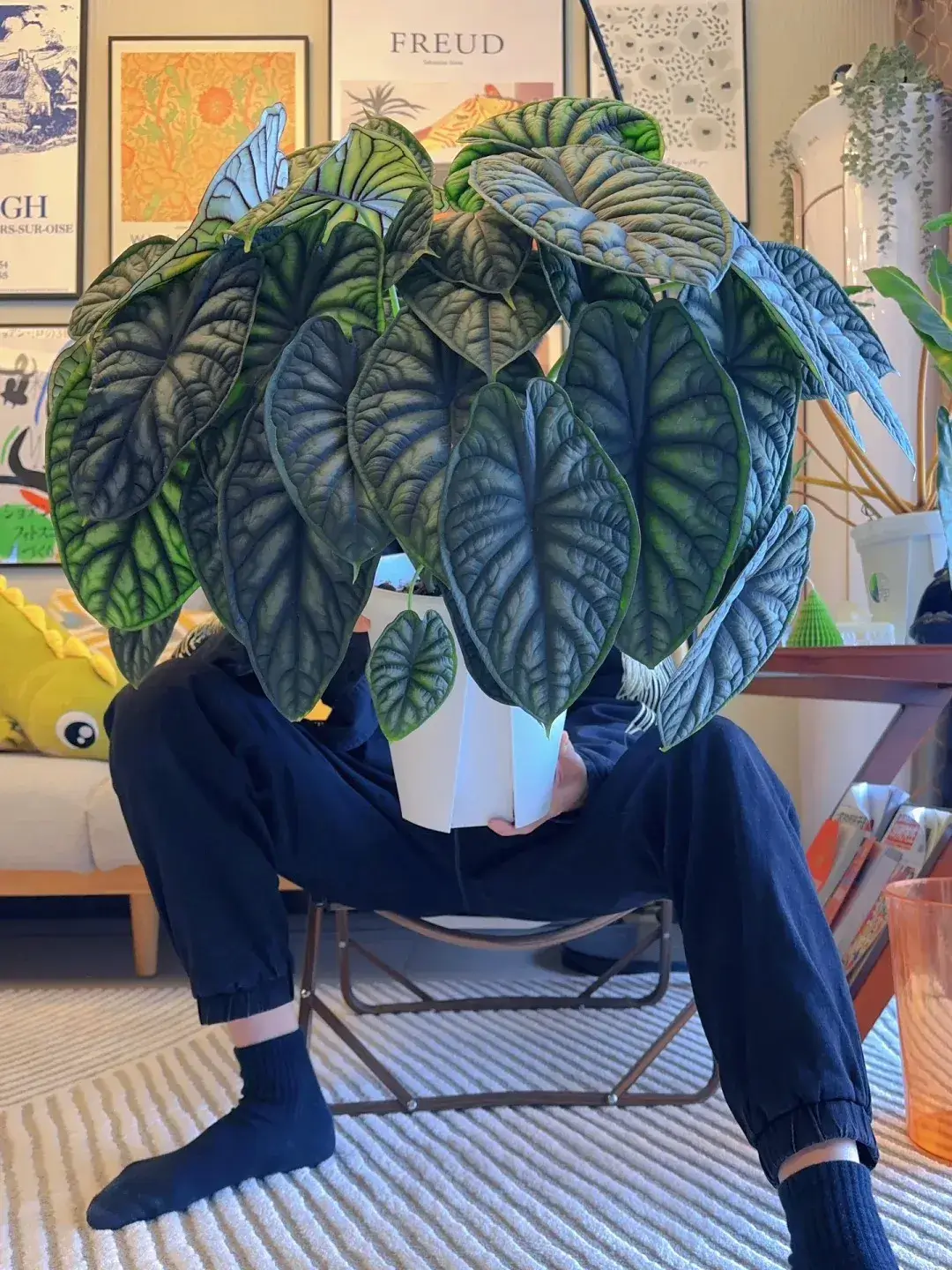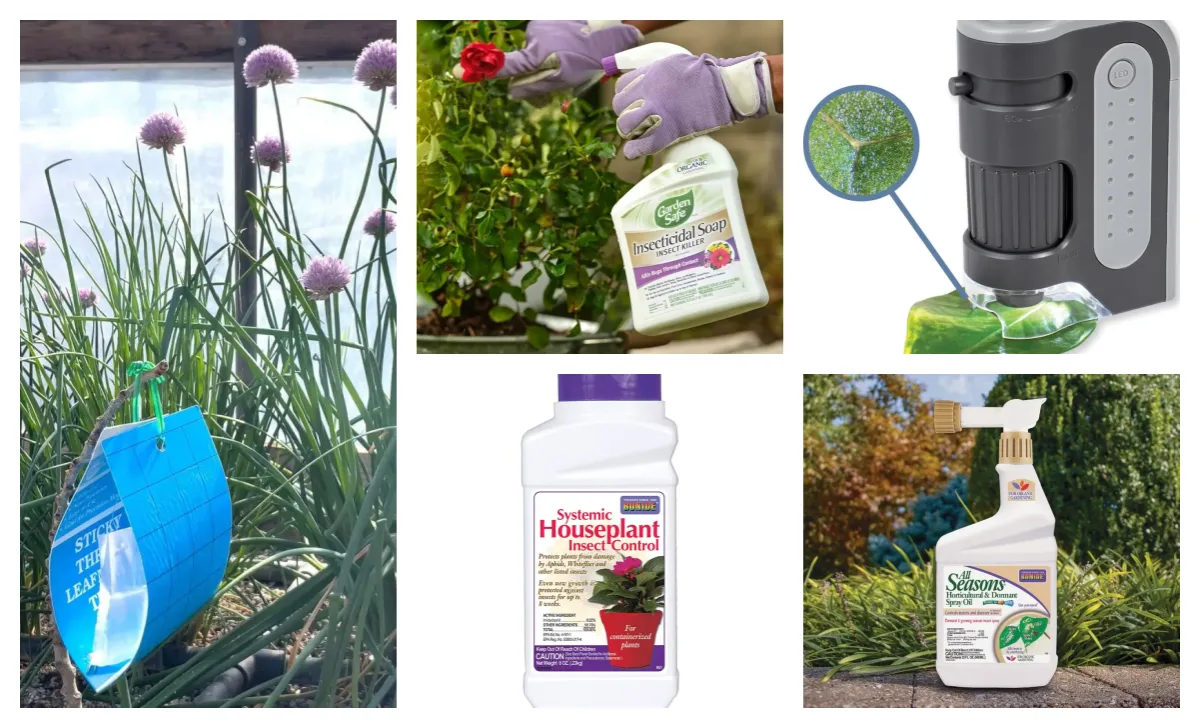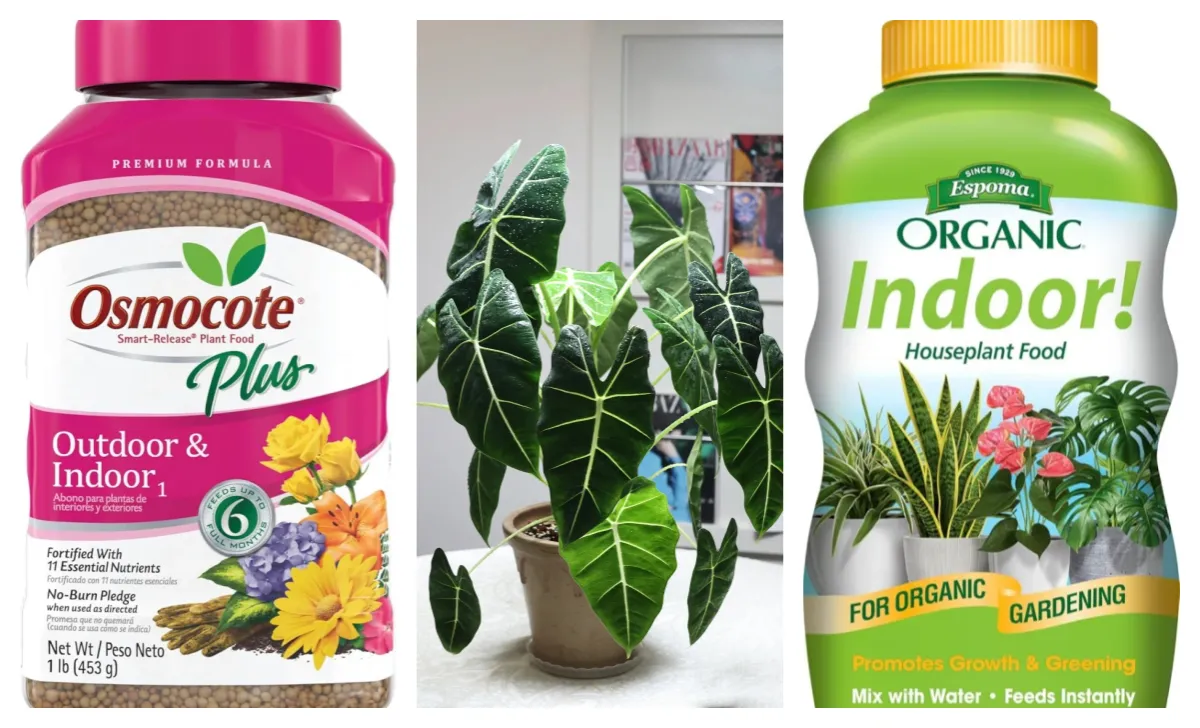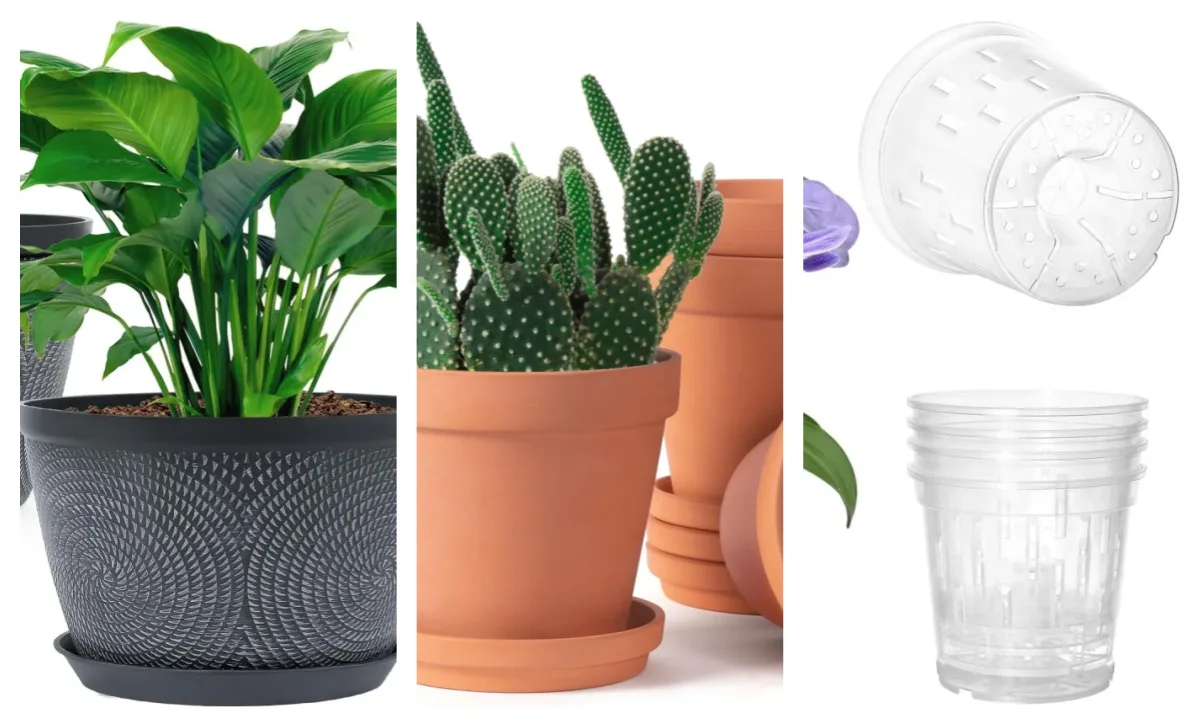
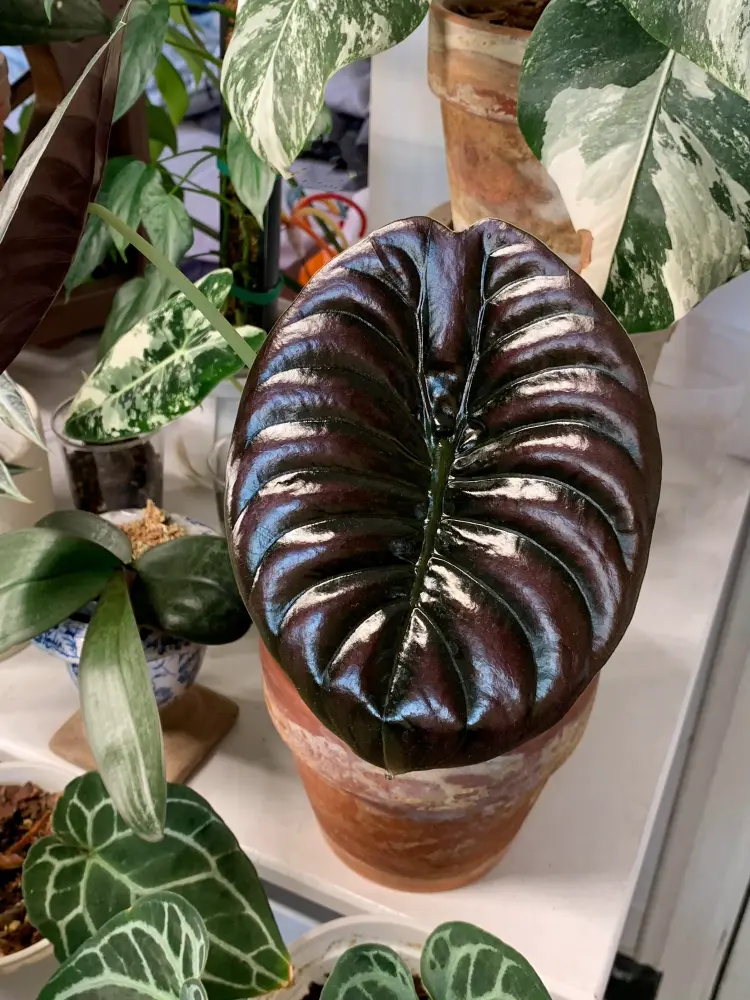
I bought Alocasia cuprea ‘Red Secret’ for the metallic copper leaves. When the light hits the leaf surface at the right angle, it looks almost polished — somewhere between bronze, deep green, and red. It is the kind of plant that makes you stop and look twice.
But for a long time, mine did not grow the way I expected a jewel Alocasia to grow. Instead of becoming fuller, it kept getting taller. The stem looked thin and stretched, and the plant only held a couple of small leaves. It had the color I loved, but not the compact, sturdy shape I wanted.
Later, when I changed the soil and checked the base more closely, I started to understand what was going on. The problem was not just “slow growth.” The plant had height, but not enough leaves or base stability to support that height. Once I saw that, I stopped judging Cuprea only by its leaf color and started paying more attention to the roots, pot support, and overall balance.
Why Alocasia Cuprea ‘Red Secret’ Is So Addictive
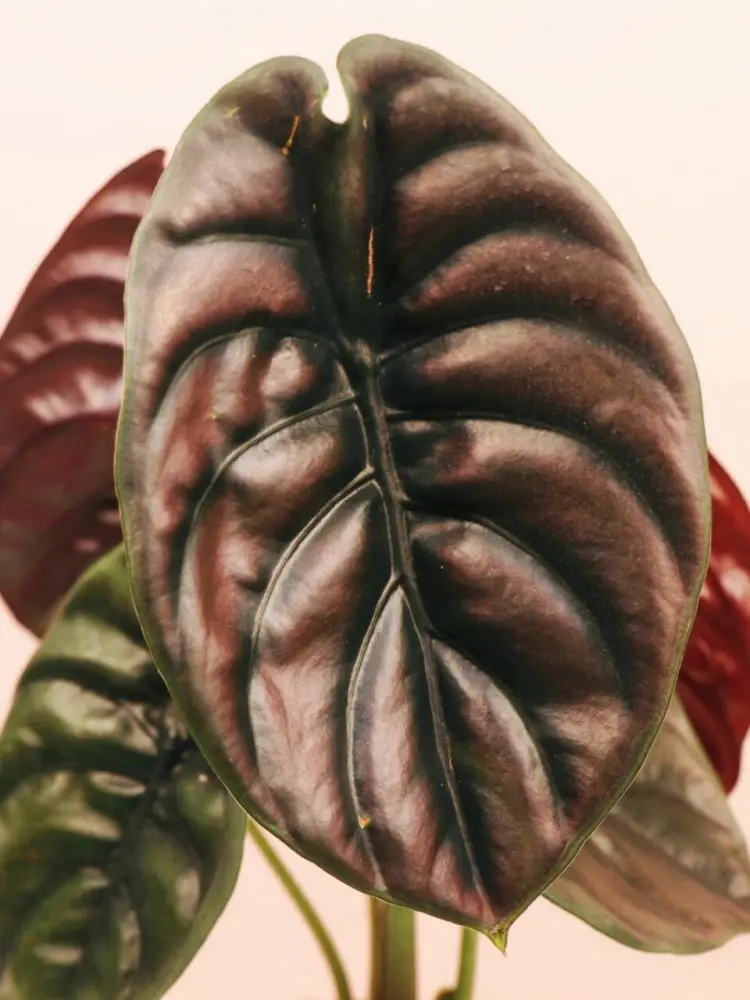
The biggest reason Alocasia cuprea ‘Red Secret’ is so easy to fall for is the leaf surface. The color can shift between copper, bronze, deep green, and red depending on the light, and the glossy texture gives it that almost mirror-like look. It does not feel soft or leafy in the usual way — it feels more like a polished piece of metal.
The underside of the leaf is just as interesting, often showing a deeper red tone that makes the whole plant feel richer when you see it from the side. That contrast is what gives Cuprea its jewel Alocasia appeal. It stays relatively compact compared with many large Alocasias, but the leaves still feel dramatic.
Still, Cuprea is not a plant that automatically looks refined just because the leaves are beautiful. If the plant becomes stretched or unstable, the metallic color alone cannot save the overall look. This is why I now see Cuprea as a plant that needs both good light and a strong base to show its best side.
The Problem Mine Had: Tall Stem, Few Leaves
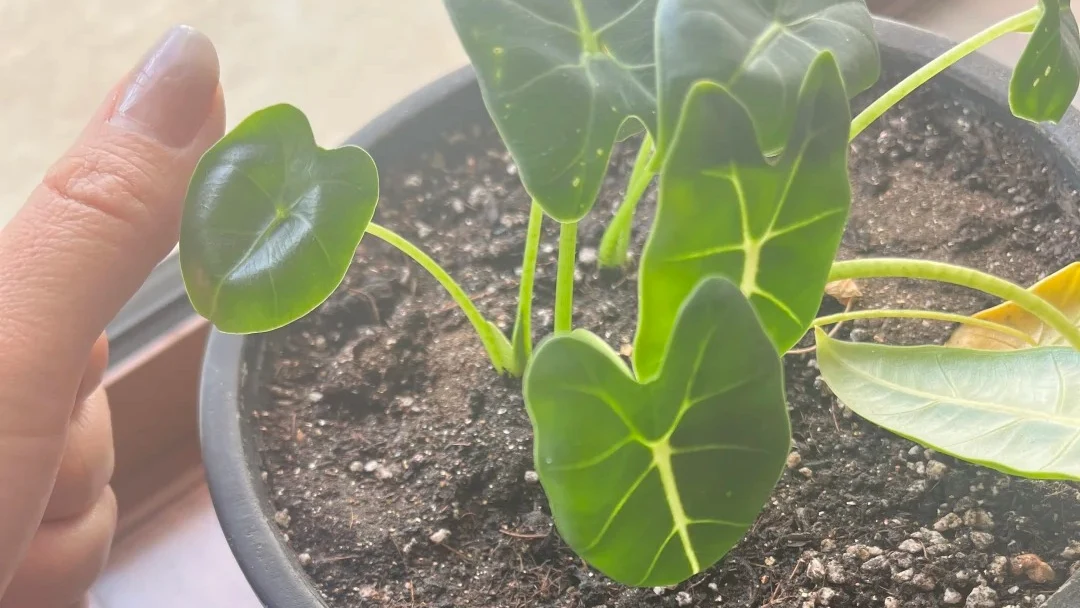
For a long time, my Alocasia cuprea ‘Red Secret’ kept growing upward, but it did not become fuller. The stem looked thin and stretched, and the plant only held a couple of small leaves. It was alive, but it did not have that compact, solid, jewel-like shape I expected from Cuprea.
That was frustrating because this is the kind of Alocasia that looks best when the plant feels balanced — short enough to look sturdy, but strong enough to hold those metallic leaves properly. Mine had the beautiful leaf color, but the overall shape felt weak and unfinished.
Later, I realized that a “compact plant” does not always mean compact growth in real indoor conditions. A leggy Alocasia cuprea is not always a plant that needs more fertilizer. If the plant also shows slow or stalled growth, I check the light, roots, pot stability, and overall growth activity first.
Why I Would Not Rush Into Growth Regulators
I understand why some growers think about using growth regulators on a leggy Alocasia cuprea ‘Red Secret’. Alocasias can respond strongly to them, and the idea is tempting: shorter stems, tighter growth, and a more compact plant.
But for a home grower, I would not make this the first solution. Dosage can be hard to control, and pushing the plant chemically does not fix the reasons it became stretched or weak in the first place. If the light is too weak, the roots are not active, the mix is too heavy, or the pot cannot support the plant well, a growth regulator may only hide the real problem for a while. I also would not give a casual dosage suggestion for this kind of treatment, because the margin for error can be small and different plants may respond differently.
For my own plant, I would rather correct the basics first: brighter filtered light, healthier roots, an airy mix, and a stable pot. Once those are right, the plant has a much better chance of growing in a balanced way without relying on a treatment that is easy to overdo.
What I Found When I Changed the Soil
I eventually decided to change the soil because the plant just looked tired. The leaves did not have the same shine, the new growth was slow, and the whole plant seemed less steady than it should have been. My first worry was that I was seeing early Alocasia root rot signs.
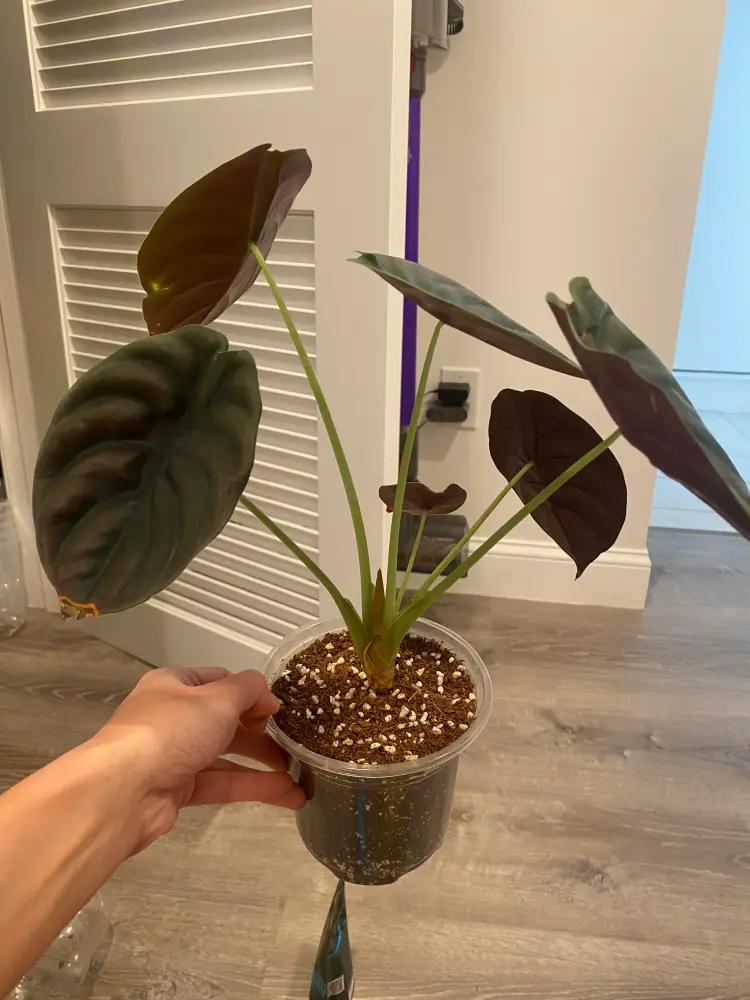
I would not unpot Cuprea every time it looks a little imperfect, but when dull leaves, slow growth, and wobbling happen together, I think it is worth checking what is going on below the surface.
When I took it out of the pot, the roots were actually better than I expected. They were not perfect, but they were not the disaster I had imagined either. What surprised me was the base. Instead of finding a strong, rounded corm-like base anchoring the plant, I mostly found a long stem structure.
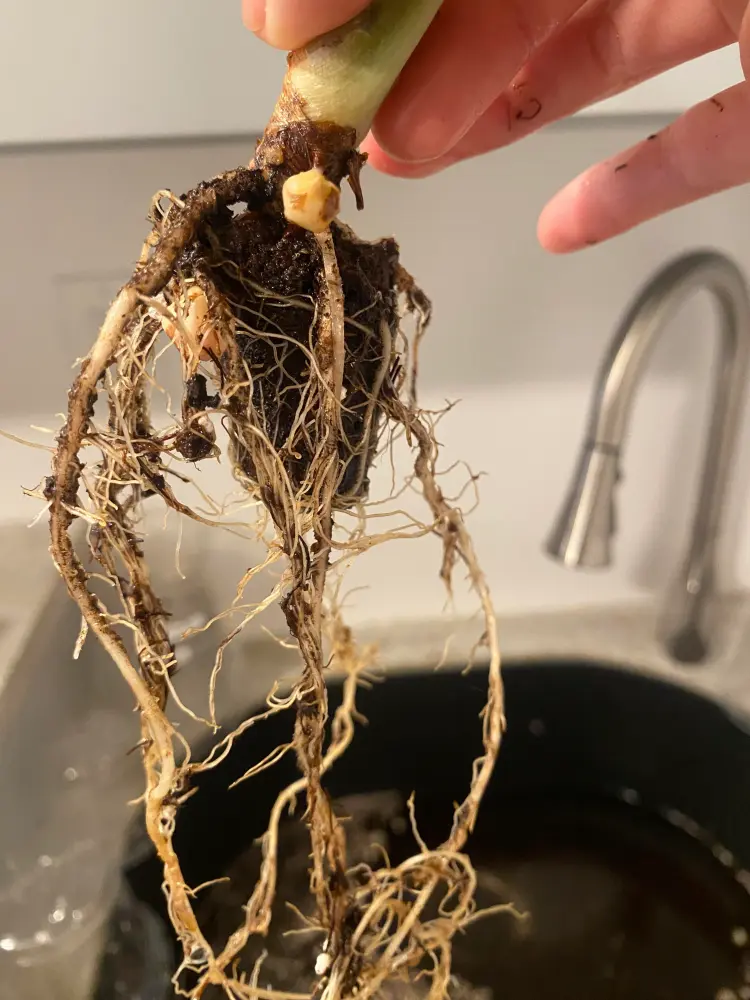
That explained why the plant had been wobbling so much. It was not just a potting issue or a weak leaf problem — the plant simply did not have the kind of solid base I expected from the outside.
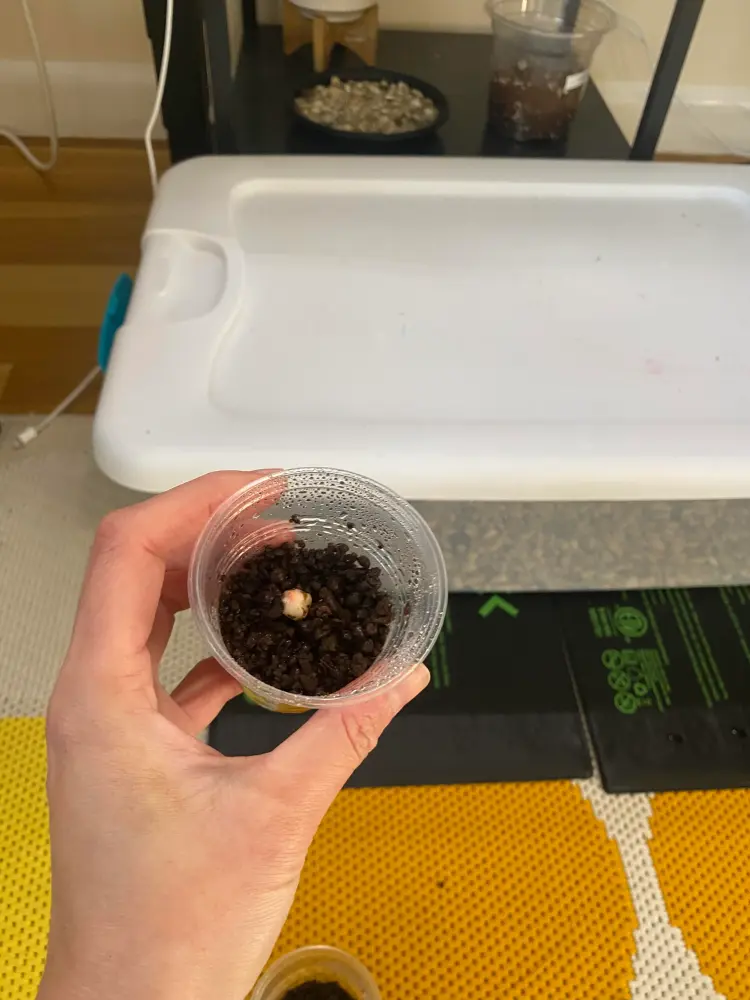
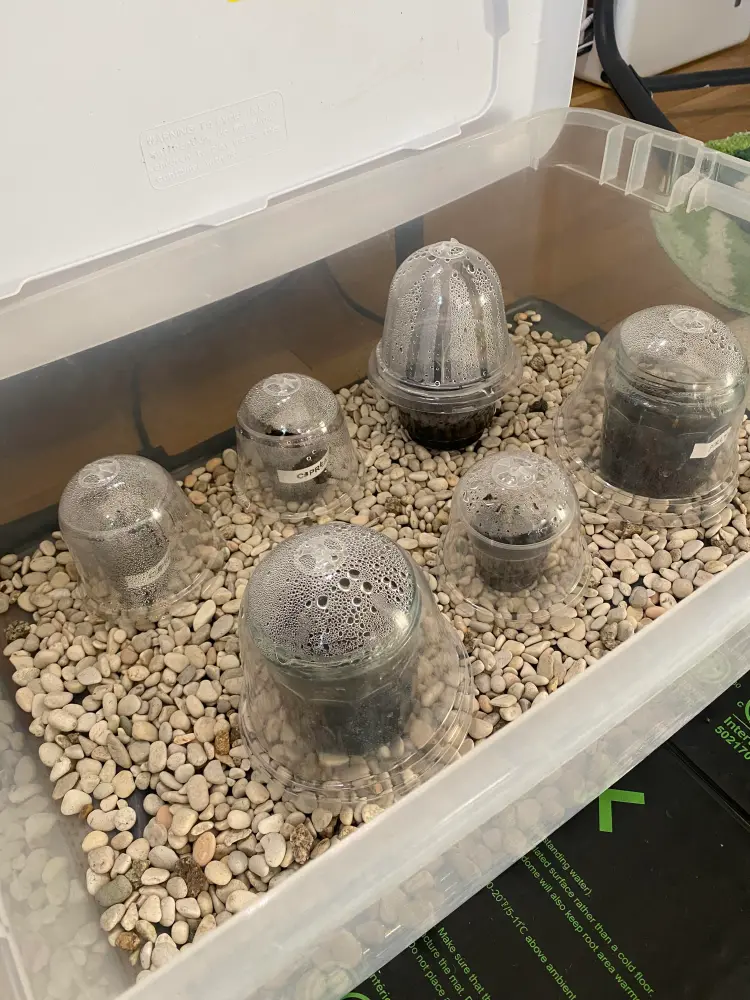
The good surprise was that it had already produced three small offsets. I kept one with the mother plant and moved the other two into a propagation box with my other small Alocasias. If you are new to separating pups or corms, my Alocasia propagation guide explains the basic approach in more detail. Even though the main plant looked awkward, those offsets told me it was still active and trying to grow.
How I Care for Cuprea ‘Red Secret’ Now
After seeing how easily my Alocasia cuprea ‘Red Secret’ became tall and unbalanced, I care for it with more attention to the whole plant now — not just the leaves. The metallic leaf color is what makes it beautiful, but the roots, base, light, and pot setup are what decide whether it actually looks good long term.
Light
I keep Cuprea in bright indirect light. Weak light can make growth slower and leggier, which is the last thing I want with a plant that already has a tendency to look stretched indoors.
Gentle morning light can be helpful, but I avoid harsh summer afternoon sun. The leaves may look thick and metallic, but they can still scorch if the light is too strong, especially through hot glass.
Watering
I water thoroughly, then let the mix dry down partly before watering again. I do not keep the pot constantly wet, and I follow a flexible Alocasia watering rhythm instead of a fixed weekly schedule.
For this plant, I check the pot first. If the mix is still moist deeper down, I wait. Cuprea does not like staying dry for too long, but soggy roots can make the plant look dull, weak, and unstable very quickly.
Soil and Pot
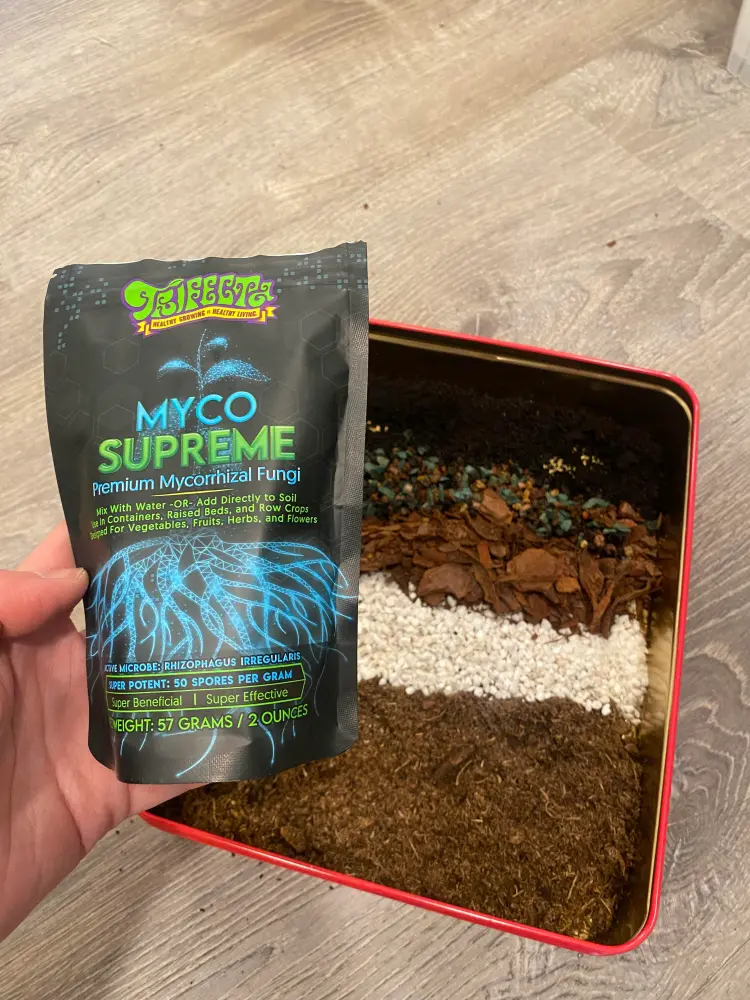
I use an airy Alocasia soil mix that can hold some moisture without staying dense and wet. The goal is not a dry mix, but a mix that gives the roots both moisture and oxygen.
The pot matters too. A wobbly Cuprea does not always need a much bigger pot. It needs a pot that supports the base without leaving too much empty wet soil around the roots. I would rather choose a stable, well-draining pot than oversize it too quickly.
Temperature and Humidity
Warm, stable conditions are better than sudden swings. I try to keep it away from cold drafts, cold windows, and chilly wet soil, especially in the cooler months.
Humidity helps the leaves look better, but it does not replace airflow or root health. I would not solve every dull-leaf problem by adding more humidity. If the roots are weak, the light is poor, or the pot is staying too wet, high humidity alone will not fix the plant.
Feeding
I feed lightly only when the plant is actively growing. A balanced fertilizer at a gentle strength is enough for me; I do not use feeding as a way to force a stalled plant.
If Cuprea is cold, newly repotted, root-stressed, or not producing new growth, I skip fertilizer. In those moments, I focus on light, warmth, root recovery, and stable watering first.
What New Growers Often Misread With Cuprea
With Alocasia cuprea ‘Red Secret’, it is easy to blame every dull leaf on humidity. Humidity does matter, but a leaf that loses its shine can also be a sign that the roots are not working well, the light is too weak, or the plant is showing early overwatered Alocasia symptoms because the mix is staying wet for too long.
Slow growth is similar. I would not immediately solve it with more fertilizer. If Cuprea is barely making new leaves, I check the whole setup first: light, root health, pot size, temperature, and whether the plant is actually in active growth. Feeding helps a growing plant, but it does not wake up a stressed one.
A tall stem with only a few leaves is also worth reading carefully. It may mean the plant is stretching, but it can also point to weak roots, poor pot support, or a base that is not strong enough to hold the plant well. In that situation, piling more soil around the stem is not always the right answer.
Offsets are a good sign because they show the plant still has energy, but they also use energy. If the mother plant is already weak or unbalanced, I pay attention to how many offsets I leave with it. Sometimes keeping one and growing the others separately gives both the main plant and the small plants a better chance.
The Metallic Leaves Are Only Half the Story
Alocasia cuprea ‘Red Secret’ is easy to fall for because of the leaves. The copper shine, the red underside, and the almost mirror-like surface are what make people notice it first. But after growing mine through that awkward tall-stem stage, I no longer see this plant as just a pretty jewel Alocasia.
For me, Cuprea became easier to understand when I stopped judging only the leaves. A dull leaf, slow new growth, a wobbly stem, or too few leaves can all point to something deeper: light that is not strong enough, roots that are not active enough, a pot that does not support the base, or a growing rhythm that has become unbalanced.
I still think Alocasia cuprea ‘Red Secret’ is absolutely worth growing, but it is not the kind of plant I would treat casually. If you can give it bright filtered light, an airy mix, stable warmth, and the patience to read the whole plant instead of chasing perfect leaves, it becomes much more rewarding. The metallic color is beautiful, but the real satisfaction comes when the plant finally looks balanced enough to hold those leaves well.
FAQ
Want to Compare Cuprea With Other Jewel Alocasias?
If you like the metallic look of Alocasia cuprea ‘Red Secret’ but want to compare it with other compact, dark-leaf, or textured types, browse my jewel Alocasia guide. I find it easier to choose the right plant after comparing leaf texture, mature size, root sensitivity, and how demanding each type feels indoors.
Go to Varieties Hub →