Last updated: May 19, 2026
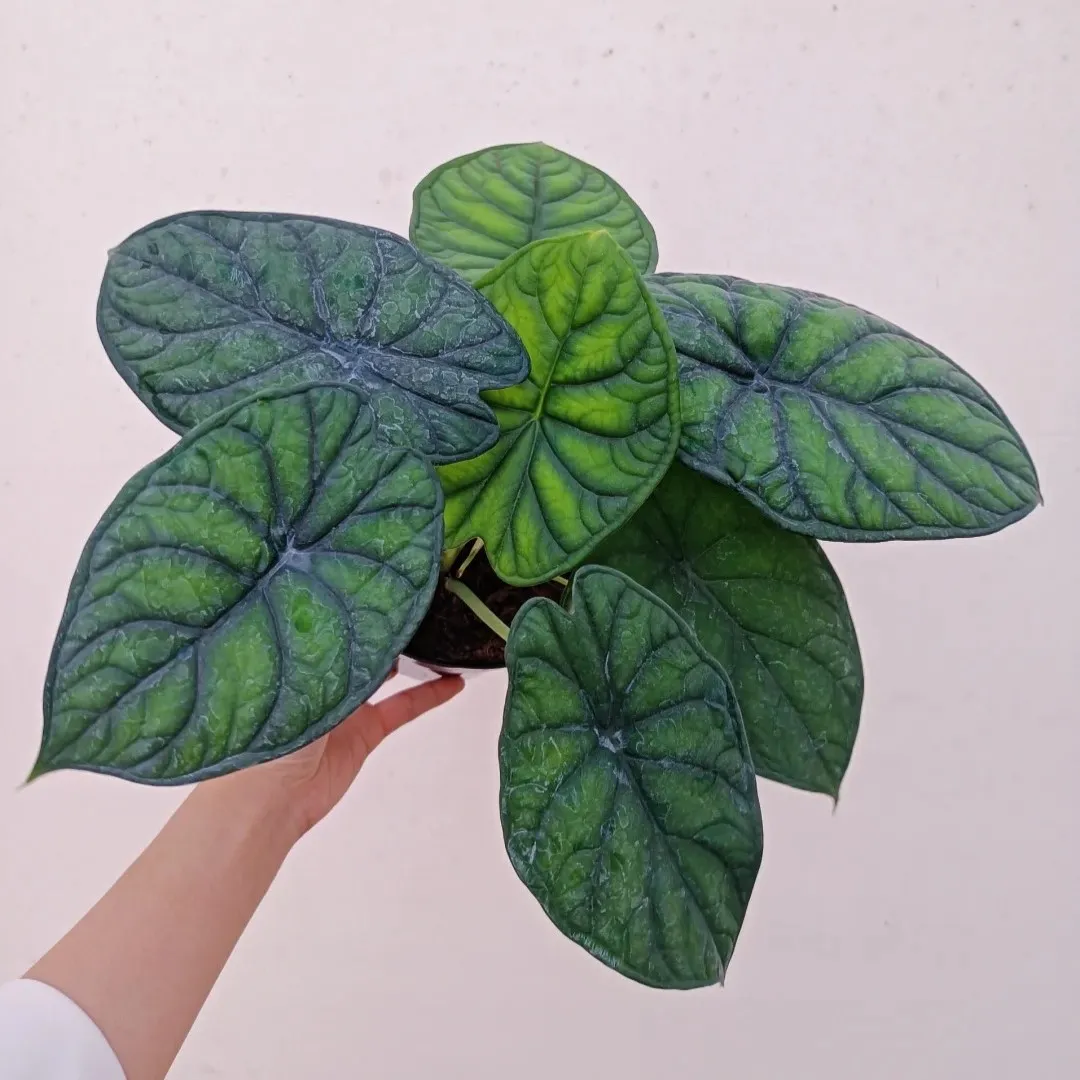
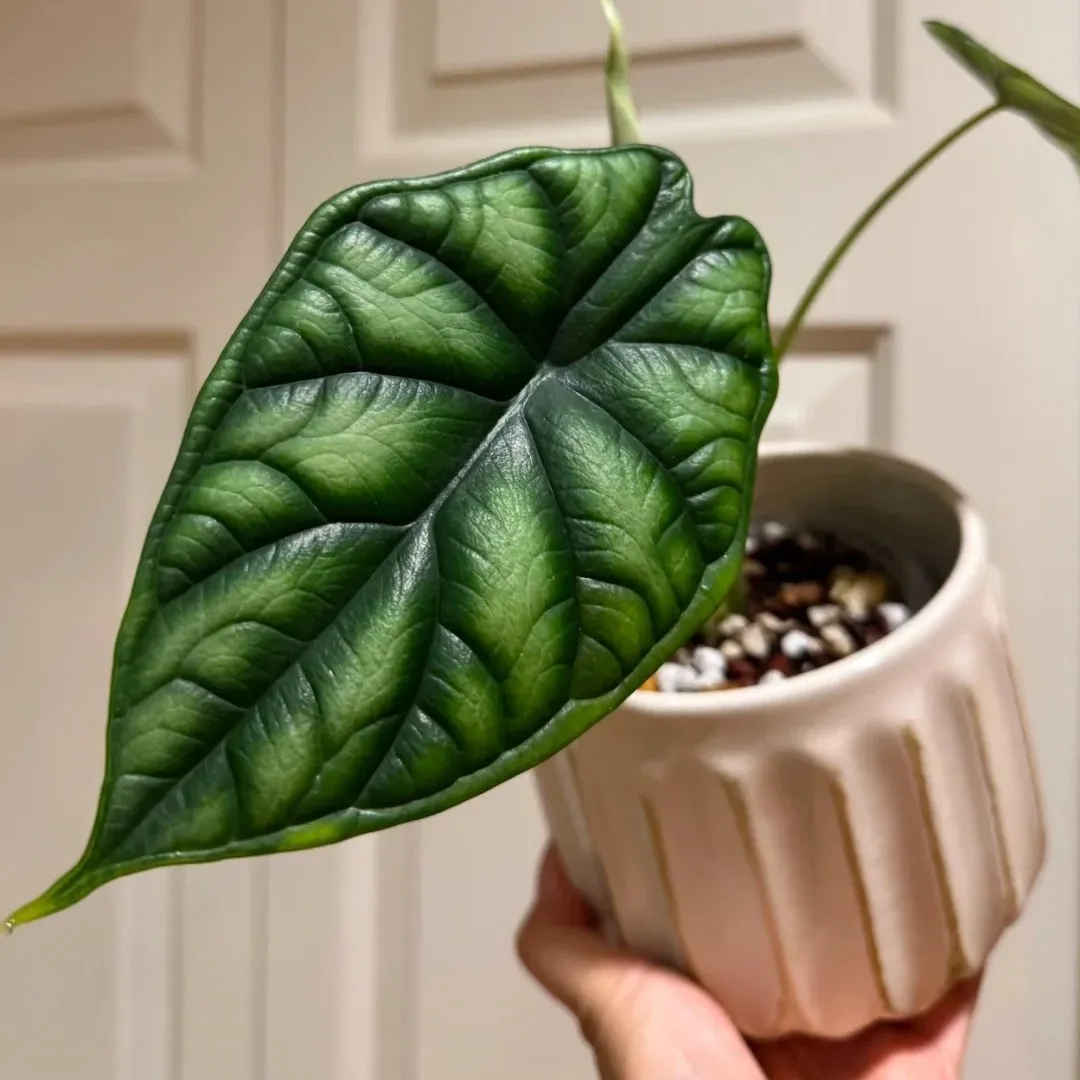
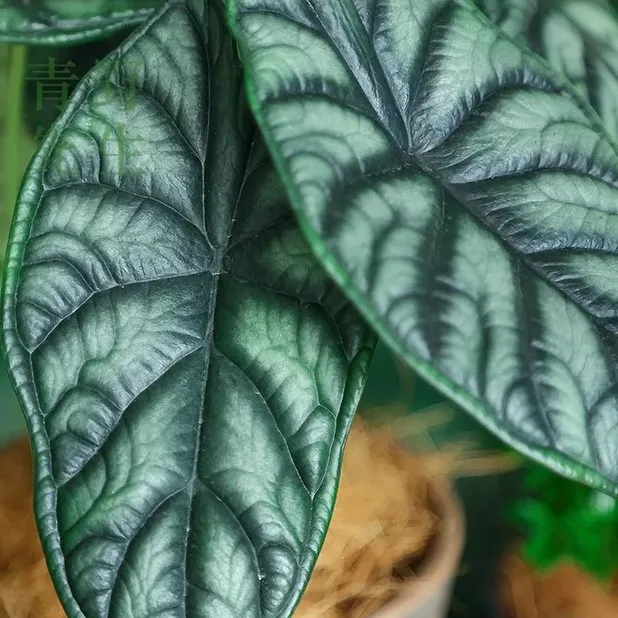
Alocasia Dragon Scale is one of the most satisfying Alocasias I have grown, but it is also one of those plants that taught me to slow down and read the whole plant, not just the leaves.
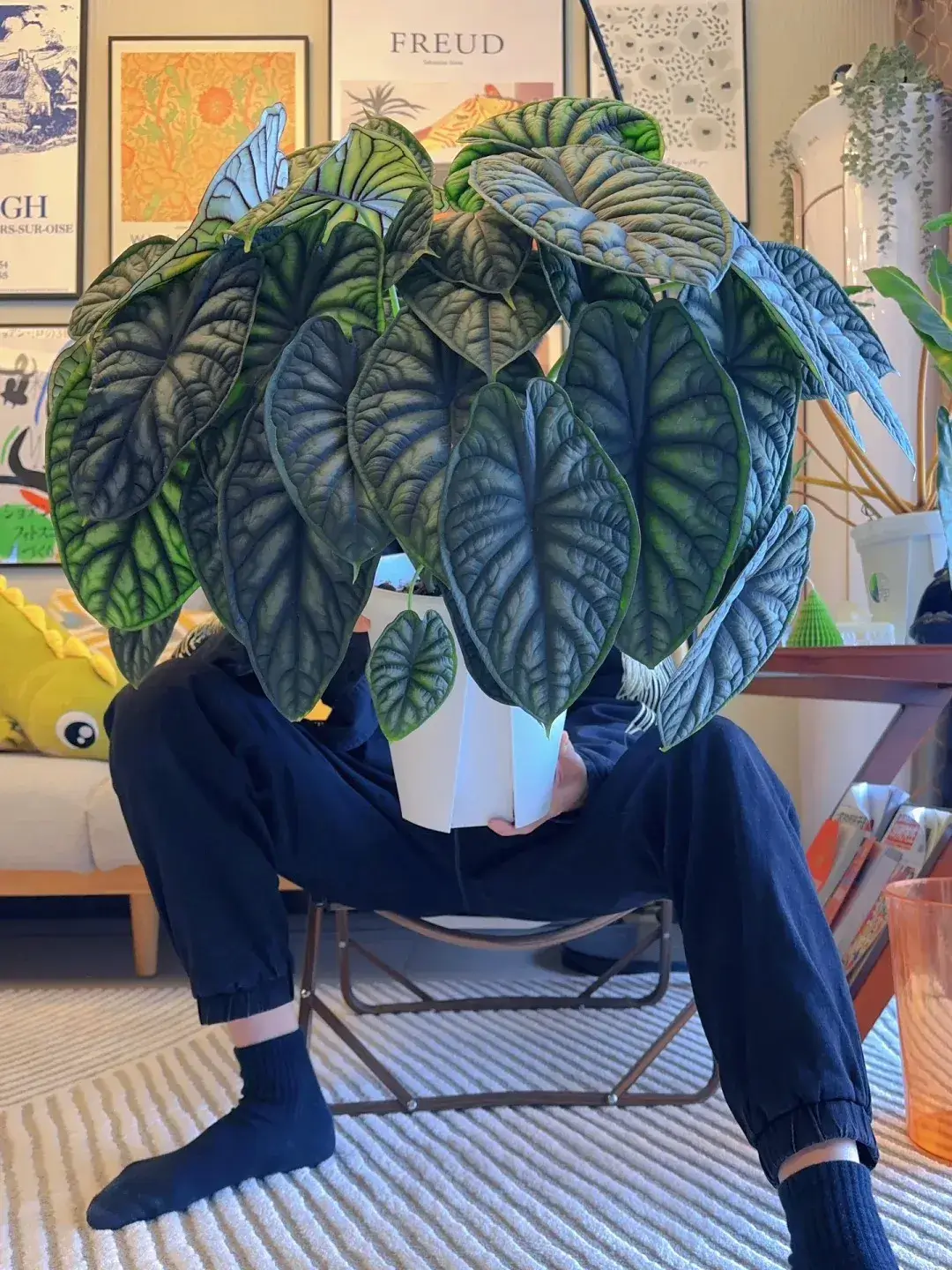
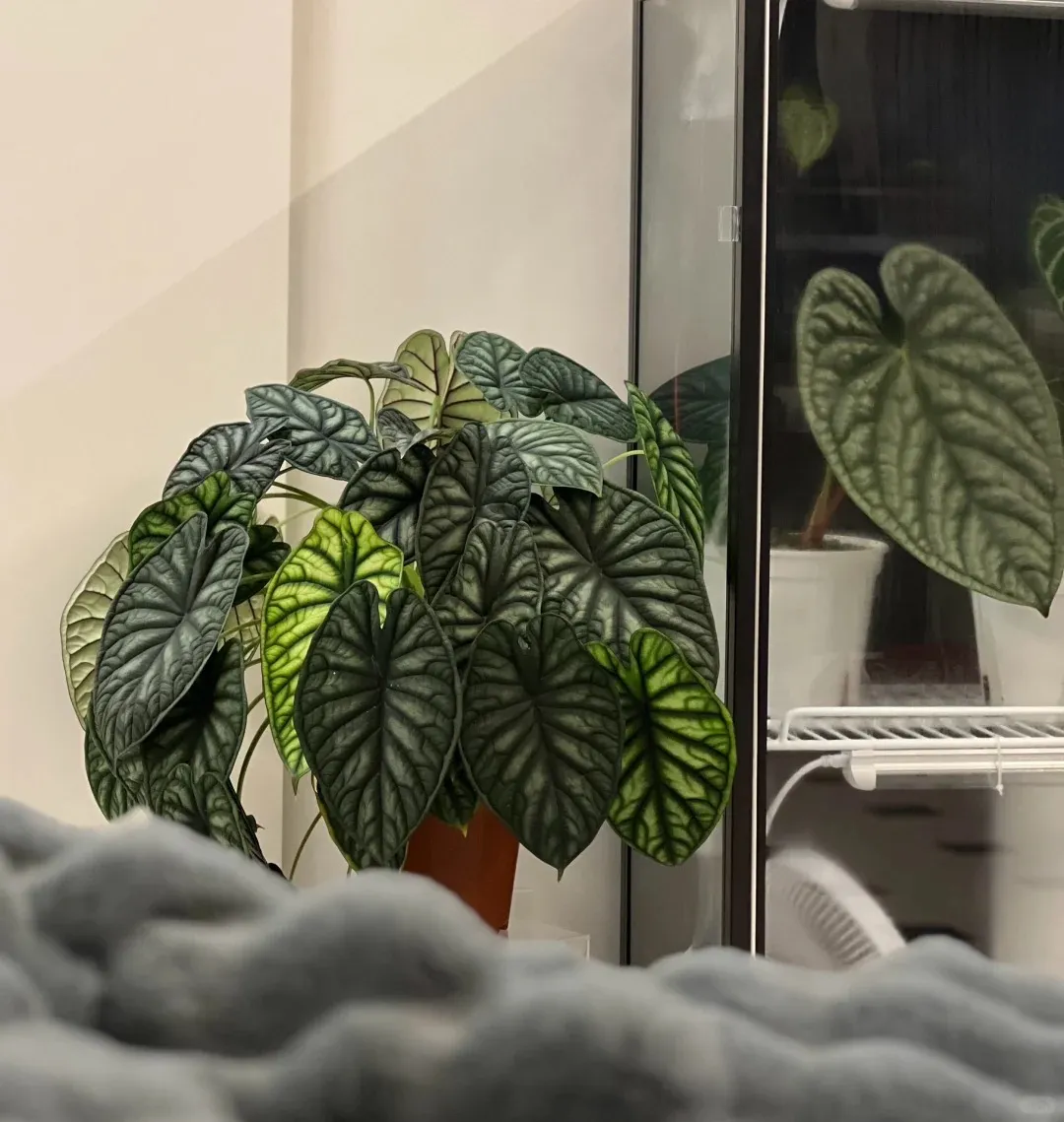
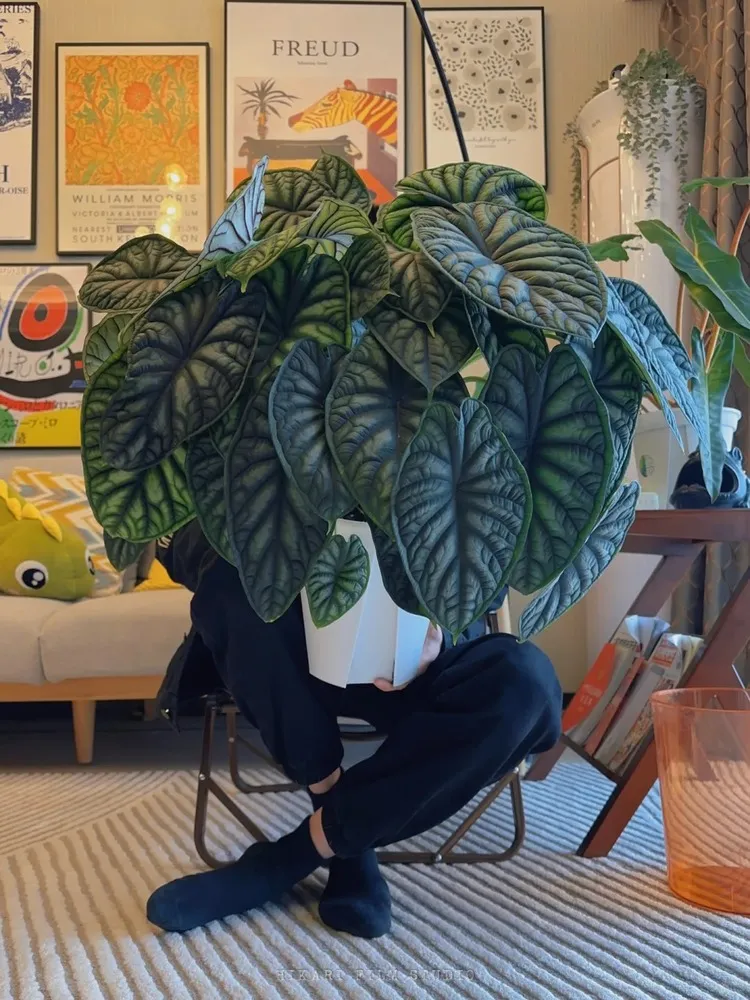
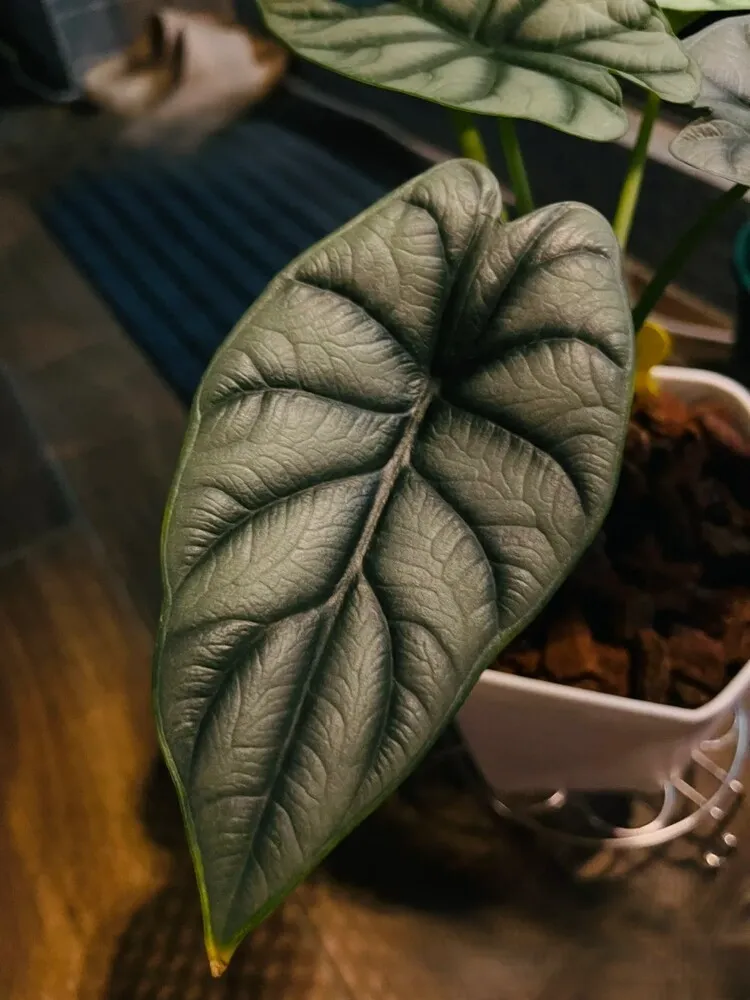
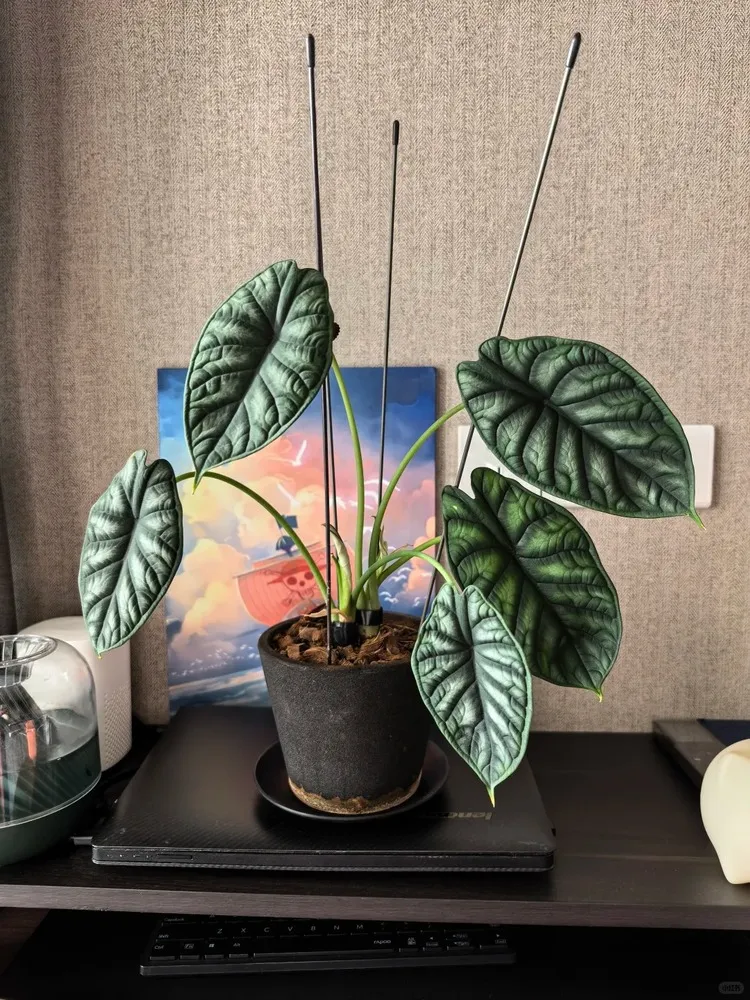
After about five months, mine went from only three leaves to more than a dozen leaves, and the texture became more beautiful with each new leaf. Recently, I noticed four new growth points starting again, with two of them looking especially strong. That kind of progress is exciting, but it also made me pay closer attention to what this plant actually responds to indoors.
The biggest things that helped mine were not complicated: a very chunky mix, a slightly drier watering rhythm, high humidity with good airflow, strong but filtered light, and careful root checks when yellowing appeared. I also learned one rule the hard way: I do not water Dragon Scale at night anymore.
This guide is based on my own Dragon Scale growing notes, including what worked, what caused yellowing, how I handled possible spider mites, and why I check the roots quickly when more than one leaf starts yellowing at the same time.
Quick Answer: What Helped My Dragon Scale Grow More Leaves
My Alocasia Dragon Scale grew best in a chunky, airy mix with large particles, high humidity, good airflow, and bright filtered light. I keep it slightly on the drier side rather than constantly wet. In my plant room, humidity can stay above 90% at night and above 60% during the day, so I usually water thoroughly every 7–10 days, depending on how dry the mix feels.
The most important watering lesson for me is simple: I avoid watering at night. When I watered late, my Dragon Scale showed heavy guttation, and the moisture did not dry fast enough. Over time, the leaf tips started yellowing. Now I water earlier in the day so the plant has time to dry and breathe before night.
If Dragon Scale starts yellowing slowly, I check light, fertilizer, pests, and roots instead of assuming one cause immediately. If two leaves yellow suddenly, I treat it as a root warning and check for stale wet soil or root rot.
My 5-Month Dragon Scale Growth Record
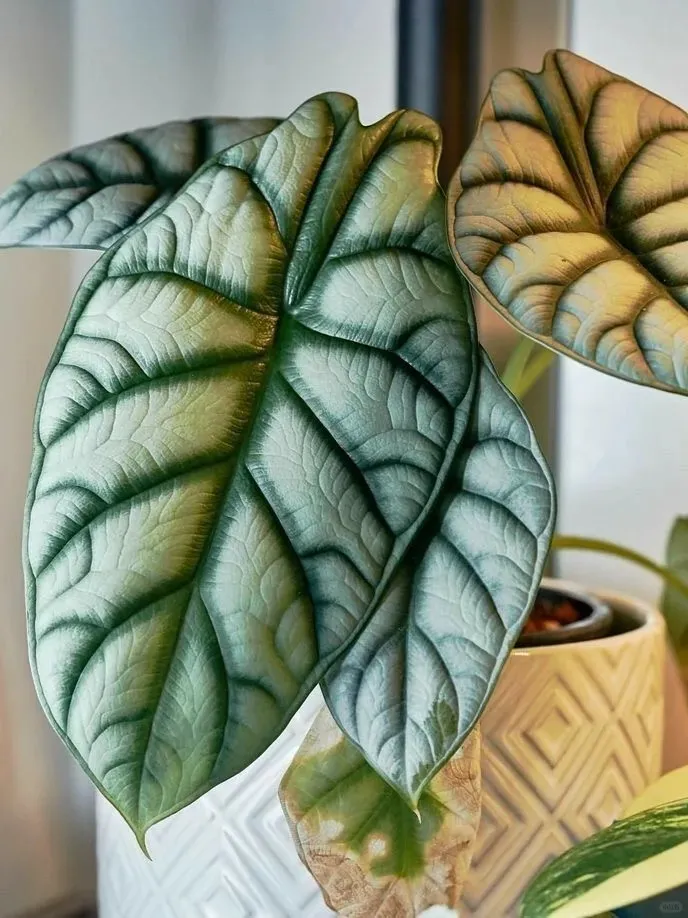
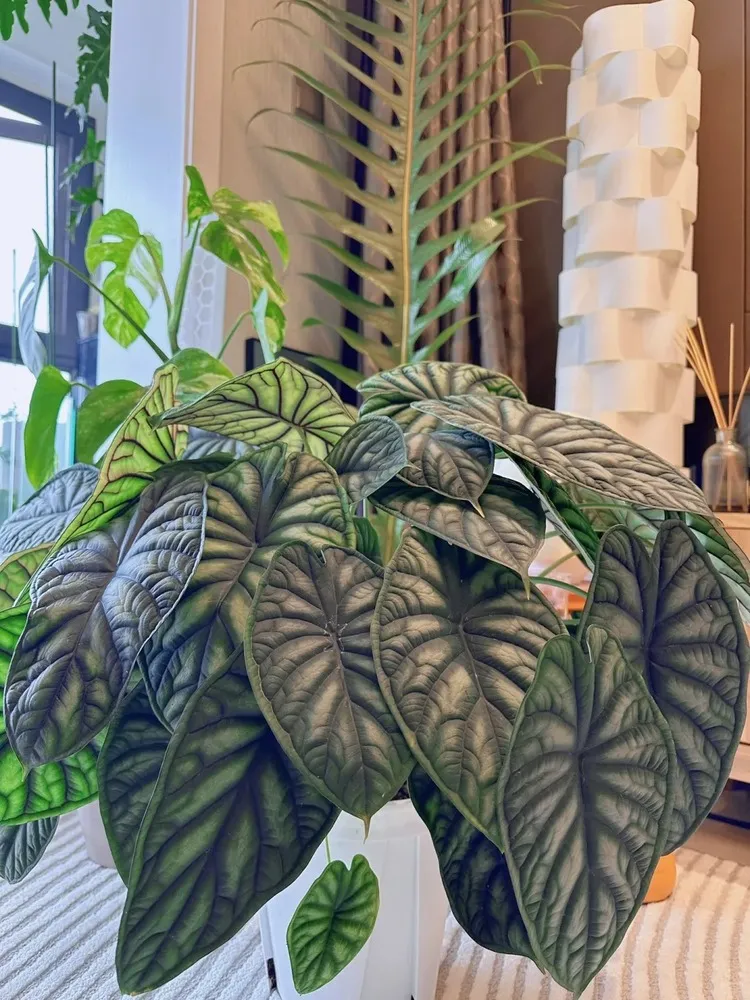
When I first started growing this Dragon Scale, it had only three leaves. Five months later, it had grown into a much fuller plant with more than a dozen leaves. The leaf pattern also became stronger and more beautiful as the plant matured. That change made me realize how much this plant can improve once the roots and environment are stable.
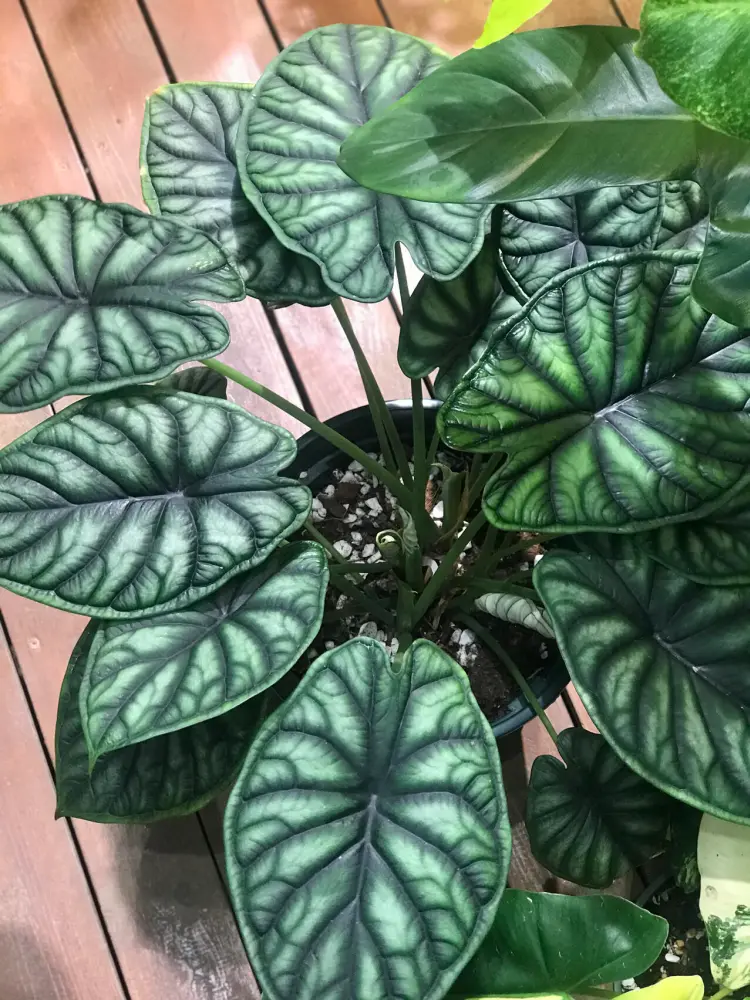
I have heard people say Dragon Scale can eventually become a large plant, with very big leaves under ideal conditions. I am not ready to judge that from my own plant yet. I want to grow it for at least a full year before I make any strong claims about its true size potential indoors.
What I can say now is that it is not a plant I would grow in dense, wet soil. Mine improved most when the mix was open, chunky, and allowed plenty of air around the roots. For this plant, I would rather water a little less often than keep the root zone constantly damp.
For broader basics, you can also compare this with my Alocasia care guide, but Dragon Scale needs a slightly more careful balance between moisture, airflow, and root oxygen.
If you are comparing similar textured Alocasias, my Dragon Scale vs Silver Dragon comparison may help you understand how this plant differs from the paler, more silvery type.
Detailed Care Guide
Watering
For my Dragon Scale, I follow a “slightly dry rather than constantly wet” rhythm. I do not keep the mix wet all the time. I let the pot dry down enough, then water thoroughly when the plant actually needs it.
In my plant room, nighttime humidity can rise above 90%, and daytime humidity usually stays above 60% even without running a humidifier all day. Under those conditions, I usually water thoroughly about every 7–10 days. That number is not a rule for every home. If your room is cooler, darker, or less ventilated, the pot may stay wet much longer.
Sometimes I do not fully soak the pot. If the plant only needs a small refresh, I may lightly water around the edge of the pot or add a small amount of water to the tray for a short period, then remove any leftover water. I only do this when I know the root zone is not already wet. The goal is to avoid sudden extremes while still preventing stale, soggy soil.
The rule I follow now is: water deeply when needed, but never let Dragon Scale sit in wet soil without airflow. After watering, I keep the plant raised or positioned so air can move around the pot and the excess moisture can leave quickly. If you are unsure whether the plant is simply moist or actually staying too wet, compare the signs in my overwatered Alocasia symptoms guide.
For a broader watering breakdown, see my Alocasia watering guide.
Why I No Longer Water Dragon Scale at Night
This was one of my clearest lessons with Dragon Scale. I do not water it at night anymore.
When I watered in the evening, the plant produced a lot of guttation. Guttation is when moisture is pushed out through the leaf tips or edges. A little guttation can happen with many Alocasias, but on my Dragon Scale, heavy nighttime guttation became a problem because the water did not dry fast enough.
The leaf tips started to yellow, especially when the room stayed very humid overnight. Since then, I water earlier in the day whenever possible. That gives the plant more time to release extra moisture, dry its leaf tips, and avoid sitting wet through the night.
This is especially important in a high-humidity setup. High humidity can help Dragon Scale grow, but if the air is too still and the plant is watered late, moisture can sit on the leaves longer than I want.
Light
My Dragon Scale grows in fairly strong light compared with many lower-shelf plants in my plant room. For part of the day, sunlight can come through the glass and reach the plant. I do not treat it as a deep-shade plant.
That said, I am careful with direct afternoon sun. My home has strong west-facing light, and I have had outdoor or exposed plants scorch before. For Dragon Scale, filtered light through glass has worked better than harsh direct exposure.
If the leaves look pale, washed out, or less glossy than before, I do not immediately blame fertilizer. I check light first. Too much direct sun can bleach or scorch the leaves, while too little light can make the plant dull and slow.
For more window-by-window guidance, see my Alocasia light requirements guide.
Soil
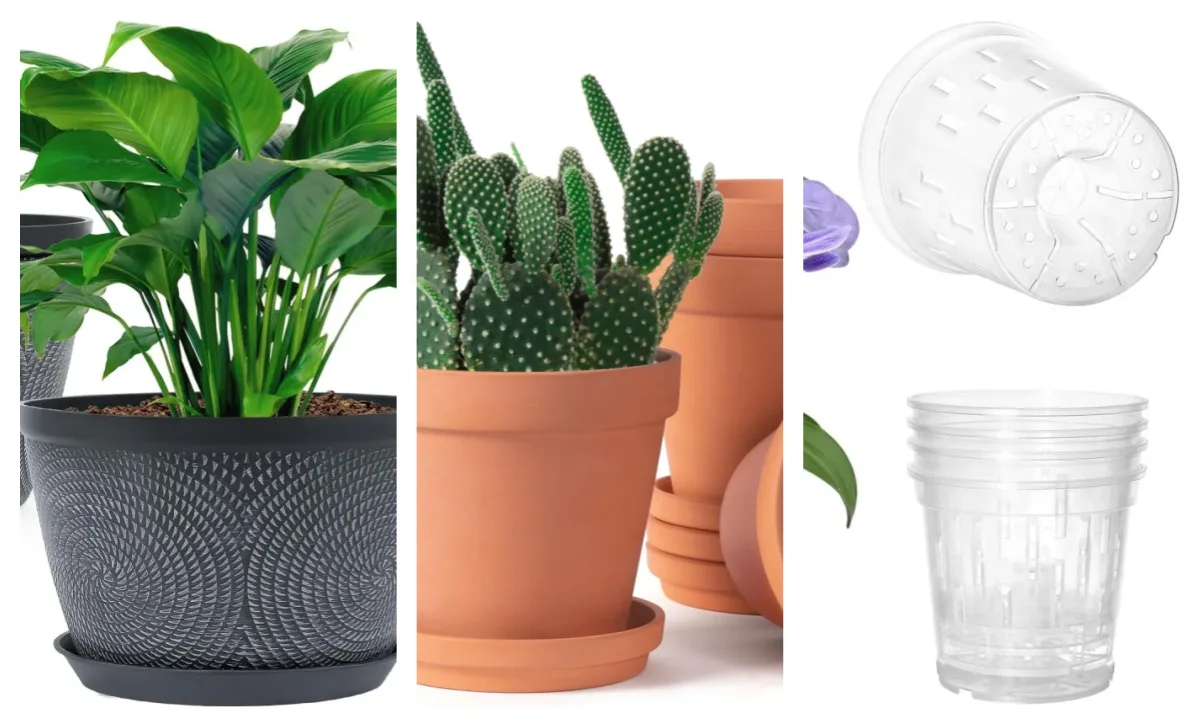
Dragon Scale needs a very airy mix. This is not a plant I would put in fine, dense, moisture-heavy soil. I prefer larger particles and plenty of gaps in the mix so the roots can breathe after watering.
My general rule is simple: more chunky material, not less. Orchid bark, pumice, perlite, coco husk, and similar coarse materials help keep the mix open. The exact recipe can vary, but the texture should feel loose, not muddy.
A dense mix can look fine for a while, especially when the leaves are still glossy, but root stress can build quietly underneath. With Dragon Scale, yellowing leaves often make me check whether the roots are sitting in stale wet soil.
For a full mix breakdown, see my best soil mix for Alocasia guide.
Humidity and Airflow
Dragon Scale appreciates humidity, but humidity without airflow can become a problem. In my plant room, humidity is often very high at night, and during the day it usually stays above 60%. That has helped the leaves stay firm and textured, but I also make sure the plant has good ventilation.
After watering, I raise the pot or position it where air can move around the base. This helps the mix dry more evenly and prevents the bottom of the pot from staying wet too long.
If you grow Dragon Scale in a cabinet, greenhouse shelf, or enclosed plant room, airflow matters as much as humidity. High humidity alone does not protect the roots if the potting mix stays wet and stale.
Fertilizer
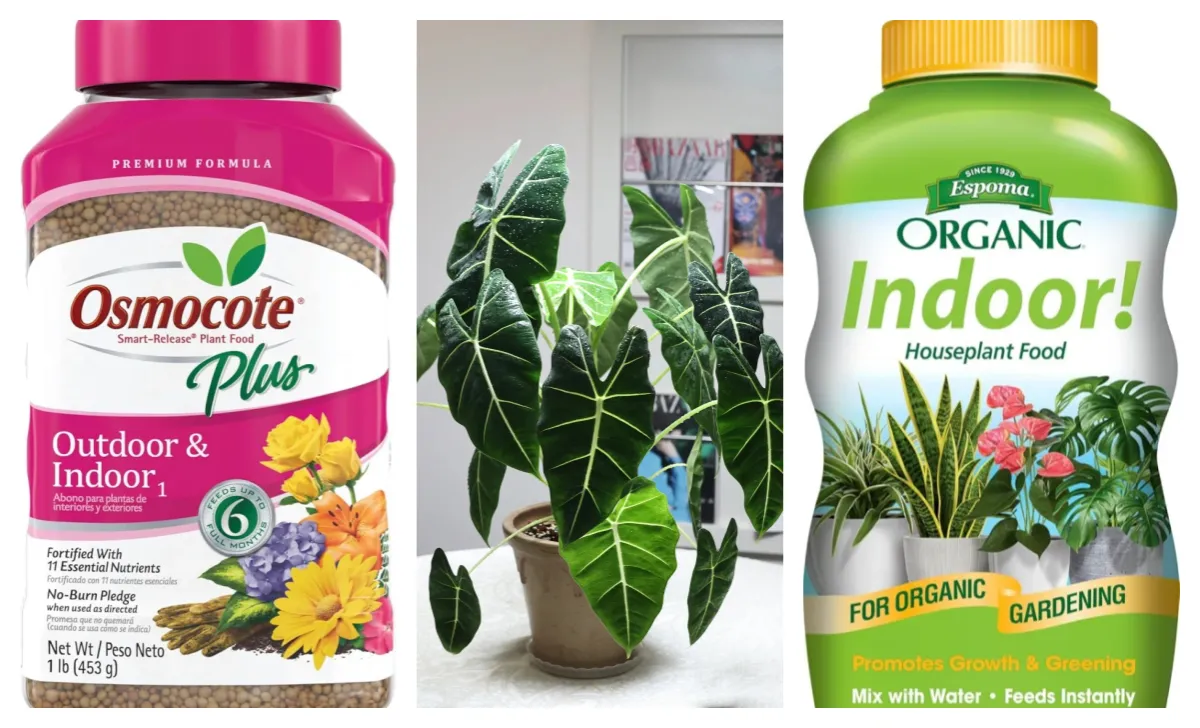
During active growth, I feed lightly rather than heavily. I use diluted fertilizer at about half strength and prefer a gentle, consistent rhythm instead of strong feeding. In my own routine, I alternate between balanced foliage formulas and lighter supplemental feeds, but I keep the concentration low.
If the label suggests a certain dilution, I often go weaker rather than stronger. For example, if the normal dilution is 1:1000, I may use around 1:2000. Dragon Scale does not need aggressive feeding to grow well, and too much fertilizer can make yellowing and pale leaves harder to diagnose.
When my plant started yellowing and looking pale, I tried different supplements before realizing I needed to step back and look at the whole picture: light, pests, watering, and roots. Fertilizer is not the first thing I would reach for now when Dragon Scale looks stressed.
When My Dragon Scale Started Yellowing and Looking Pale
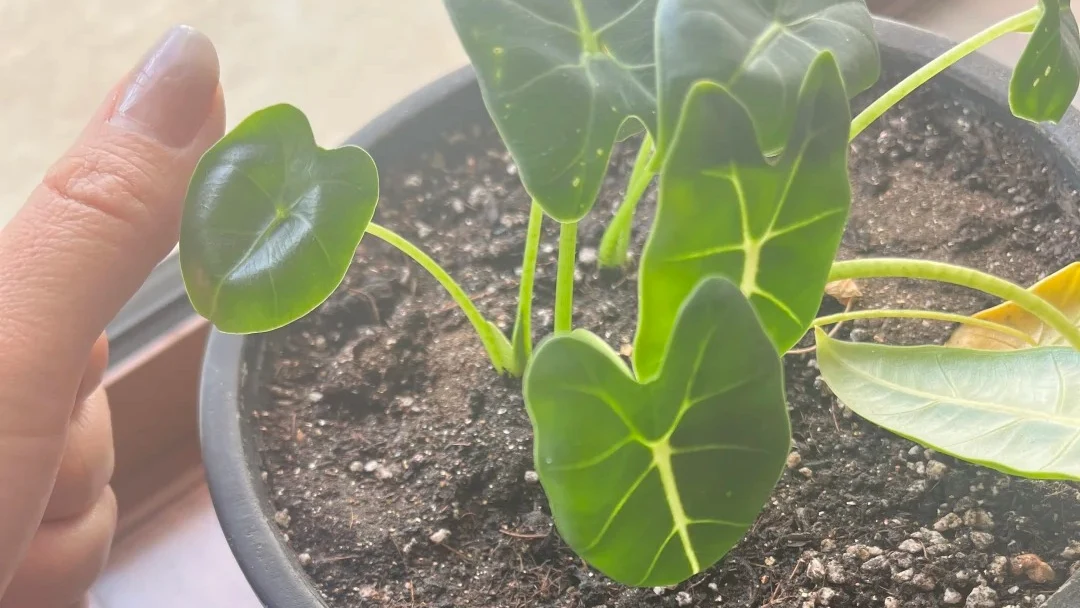
I did run into yellowing with my Dragon Scale. Some leaves slowly lost their deep green shine, and a few areas looked pale or washed out instead of rich and glossy. At first, I wondered if it was a nutrient issue, because I had already used light fertilizer and a few supplements.
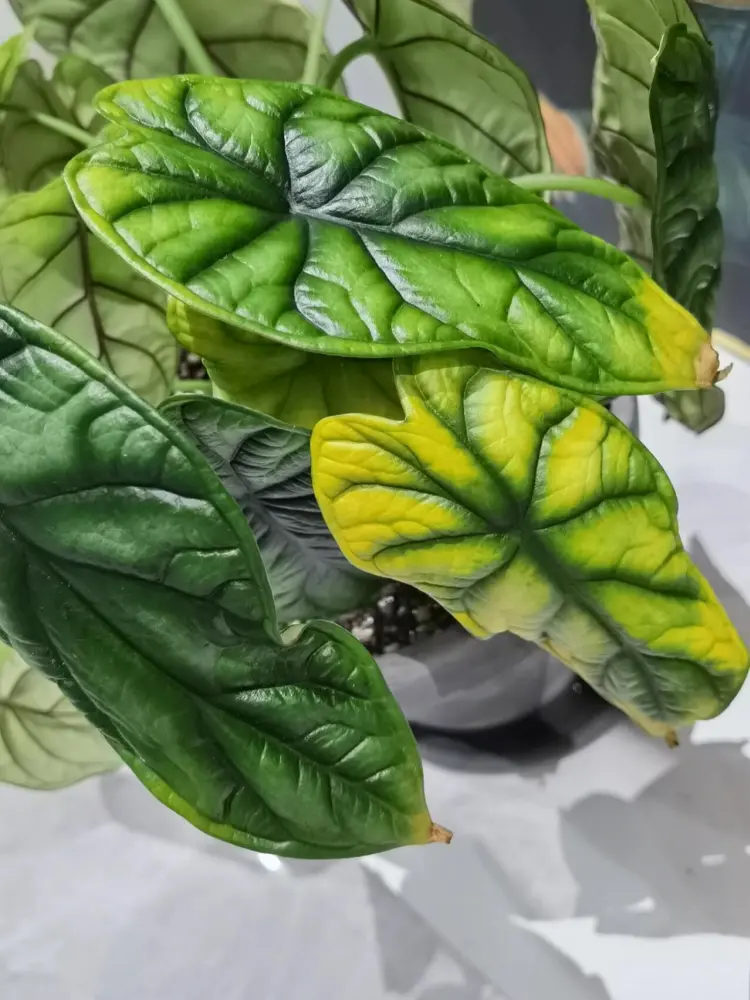
Looking back, I would not keep adding different fertilizers once the leaves start changing color. Yellowing and pale leaves can come from several causes: too much direct sun, overwatering, root stress, pest damage, or fertilizer stress. Adding more products too quickly can make it harder to know what actually helped or hurt.
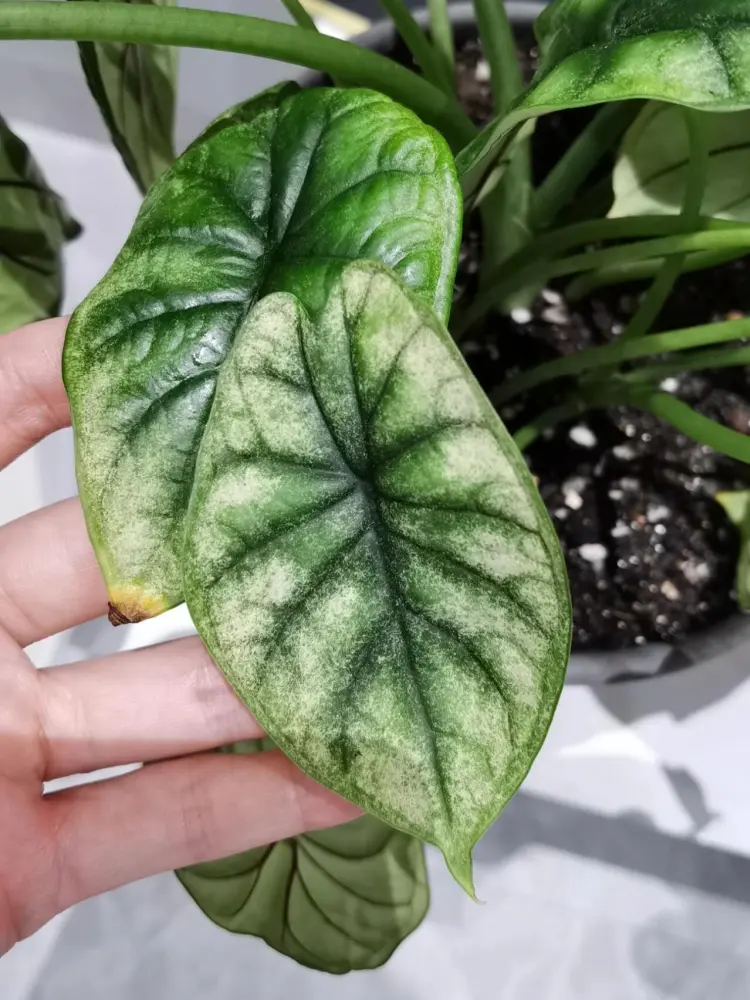
Because my plant receives fairly strong filtered light through glass, I also consider light stress when leaves become pale. Dragon Scale can enjoy bright light, but harsh afternoon sun can still push the leaves toward a faded or damaged look.
For yellowing symptoms, compare with my Alocasia leaves turning yellow guide.
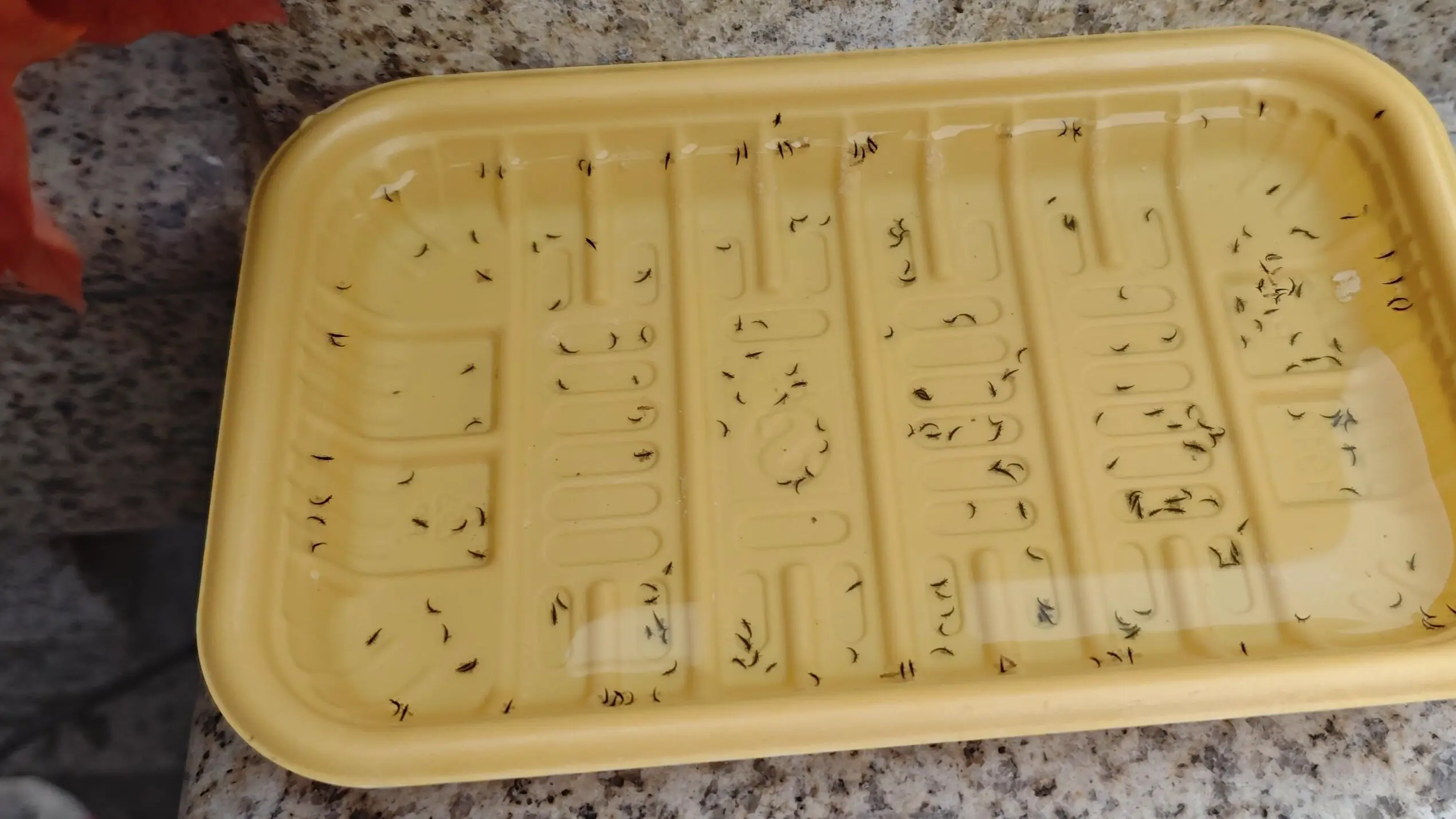
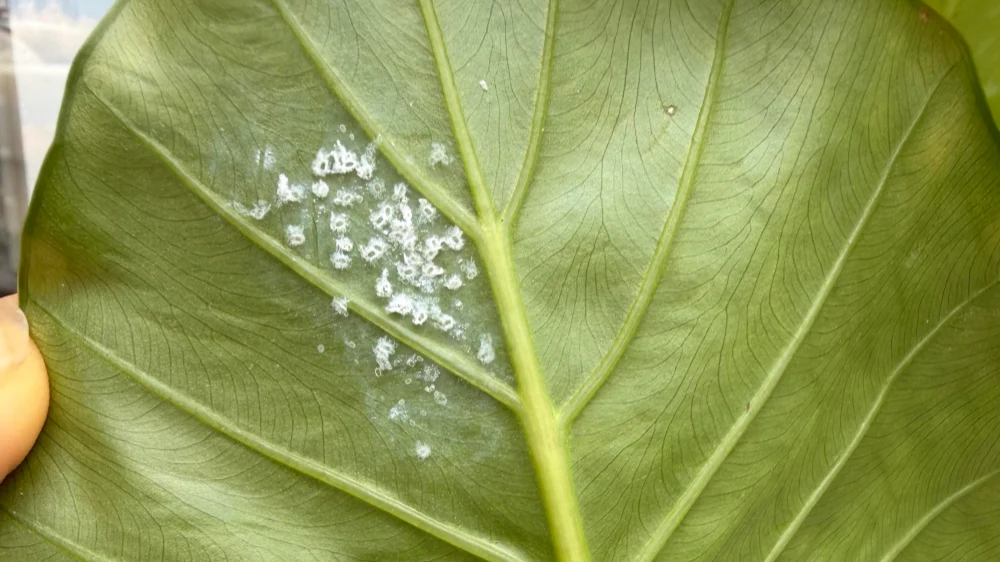
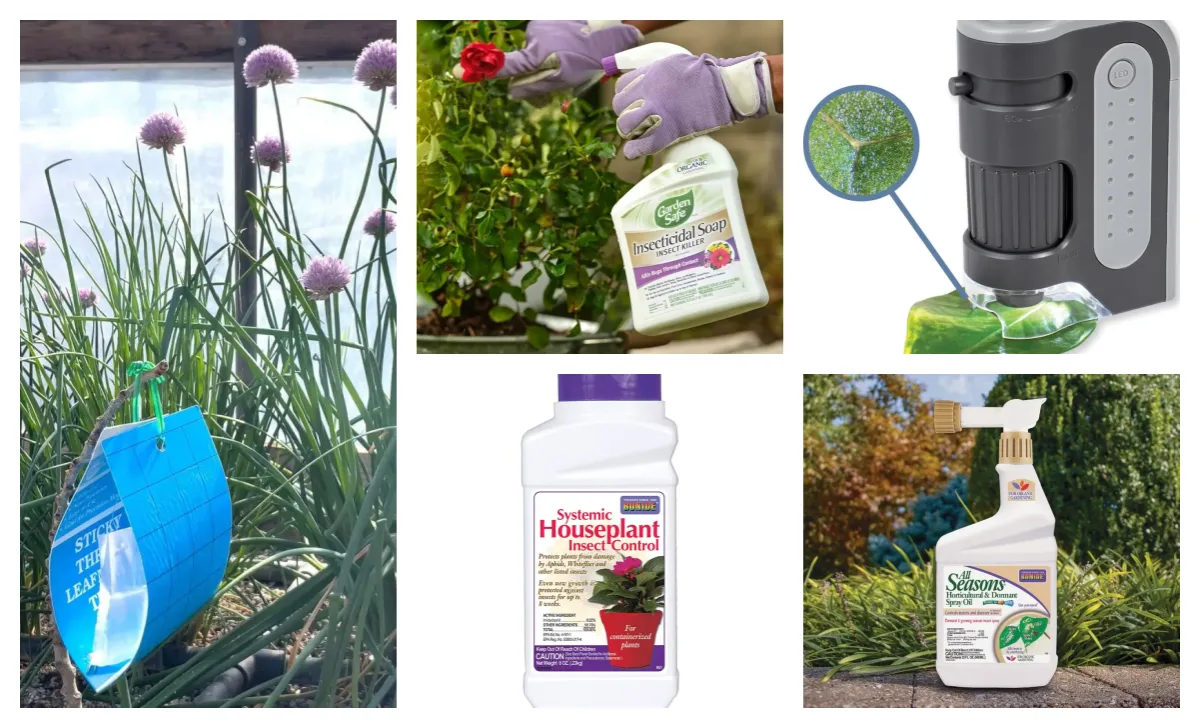
How I Checked for Possible Spider Mites
When I wiped them, they left a yellowish smear, which made me suspect spider mite activity or pest residue.
I treated the leaves, wiped the undersides clean with a damp cloth, and treated again. After that, the backs of the leaves looked much cleaner. I still keep checking because spider mites can return quickly if the plant is stressed or the air is too dry around the foliage.
I would not diagnose every pale Dragon Scale leaf as spider mites, but if you see tiny specks, dusty leaf backs, webbing, or yellow stippling, inspect carefully before blaming watering or fertilizer.
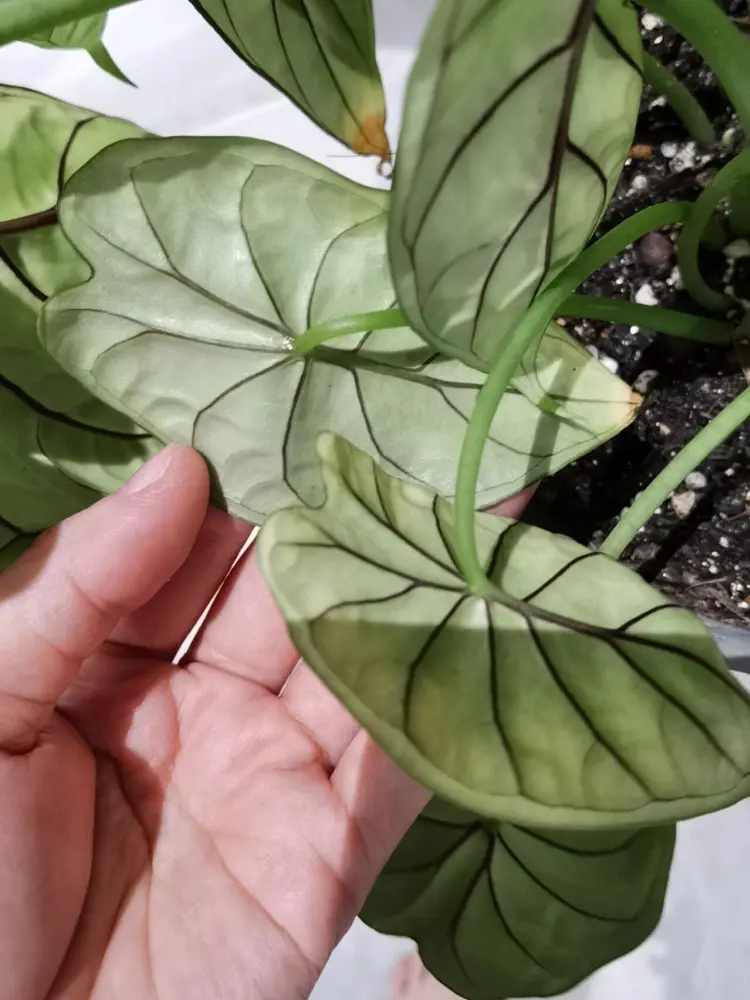
For more pest signs, see my spider mites on Alocasia guide.
My Rule When Dragon Scale Leaves Turn Yellow Suddenly
From growing other plants, I have learned not to ignore sudden yellowing. If one leaf slowly ages out, I watch it, because Alocasia losing old leaves can be part of a normal growth cycle. If one leaf suddenly turns abnormal, I start checking the care conditions. But if two leaves yellow suddenly, I usually suspect root stress first.
That rule helped with my Dragon Scale. When the yellowing became more concerning, I gently unpotted the plant and checked the root zone. The plant did have root rot, so I removed the unhealthy roots and moved the remaining healthy base into a temporary water recovery setup. I would not treat this as normal care, but as a rescue step after root rot.
I do not recommend disturbing Dragon Scale roots casually. But if the plant is declining, the soil smells sour, leaves are yellowing quickly, or the base feels unstable, checking the roots can save time. Waiting too long with root rot usually makes recovery harder.
If you see soft roots, blackened roots, or a sour wet smell, use my Alocasia root rot guide as a reference.
Common Problems I Watch for on Dragon Scale
- Yellowing leaves → Often related to overwatering, root stress, too much direct sun, pests, or fertilizer buildup. I do not assume one cause without checking the whole plant.
- Pale or whitish leaves → Can happen from strong light exposure, pest damage, or stress. If the plant used to be glossy and deep green, I check both the light and the undersides of the leaves.
- Yellow or brown leaf tips → In my setup, this can happen after heavy nighttime guttation, especially when the air stays very humid overnight.
- Tiny dots or yellow smears under the leaves → Possible spider mite activity or pest residue. I inspect, wipe the leaf backs, isolate if needed, and treat before the damage spreads.
- Root rot → More likely when the mix stays wet too long, roots lack airflow, or several leaves yellow suddenly.
- Stalled growth or tiny new leaves → Usually points to weak roots, poor light, compact soil, or the plant spending energy recovering from stress.
Repotting, Roots, and Recovery
Dragon Scale does not propagate from ordinary stem cuttings. Like other Alocasias, it is usually divided when mature enough or grown from offsets. But for me, the more important topic is root health.
If the plant is healthy, I avoid unnecessary root disturbance. Dragon Scale roots can be sensitive, and I would rather keep the root system stable than pull everything apart just to refresh the soil.
If the plant is declining, that changes. Sudden yellowing, sour soil, soft roots, or a wobbly base are signs that I should check below the surface. In my case, checking the roots revealed rot, and moving quickly gave the plant a better chance to recover.
For propagation details, see my Alocasia propagation guide. If the plant is declining after repotting, focus on root stability before dividing or disturbing it again.
FAQ
Love discovering new Alocasias?
Explore more textured, compact, and collector-style Alocasias in our Jewel Alocasias guide, or browse the full Alocasia Varieties Hub.
Go to Varieties Hub →