Alocasia Yucatan Princess was not a plant I fell in love with immediately. When I first brought it home, it did not have the dramatic silver veins, oversized leaves, or loud leaf pattern that some Alocasias have. In a group of bolder plants, it can look almost too quiet at first.
But this plant changed my opinion slowly. After a few months of simple care, it kept making new leaves, started producing side shoots, and became one of those Alocasias I appreciated more every time I looked at it.
This article is based on my own experience growing Alocasia Yucatan Princess indoors, from the first few months of steady growth to the later division when I found several offsets and many corms in the pot.
Why I Started Liking Alocasia Yucatan Princess More Over Time
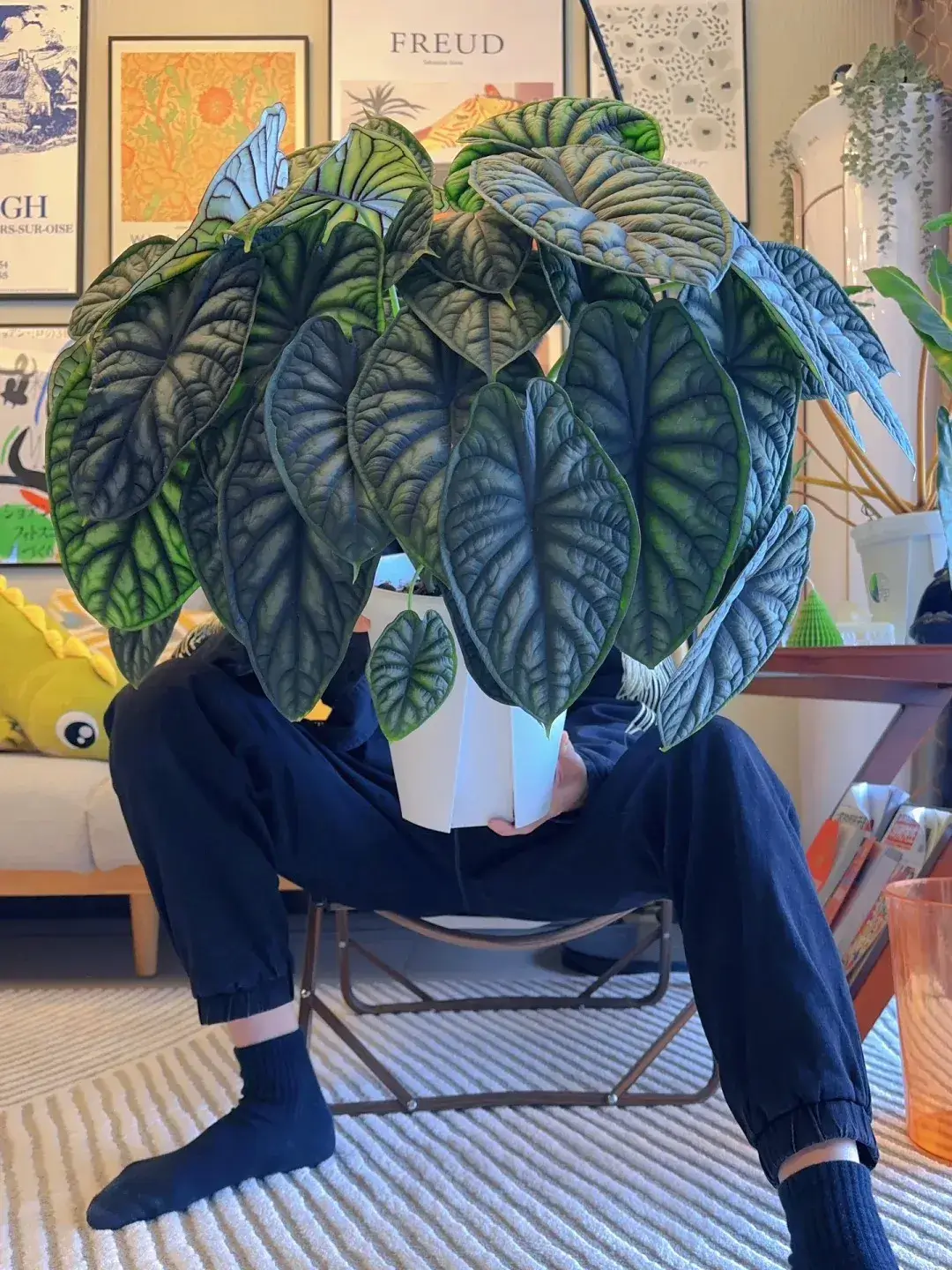
Alocasia Yucatan Princess is not the loudest Alocasia in a collection. If it is placed beside silver-veined types, huge elephant ear varieties, or plants with very dramatic leaf patterns, it may not be the first one people notice. At first, I also felt it was beautiful, but not especially eye-catching.
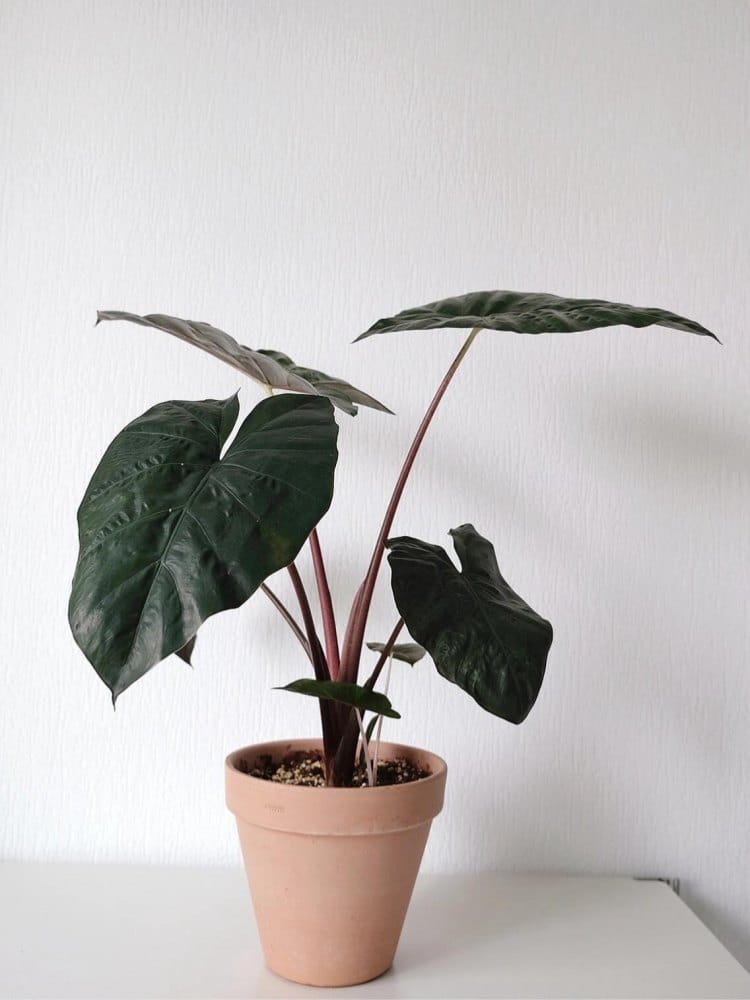
But the longer I kept it, the more I started to appreciate its quieter look. The leaves have a dark, muted tone, and the veins are not strongly marked. Instead of looking bright or graphic, the whole plant has a softer, moodier feel. It is the kind of Alocasia that becomes more interesting when you stop comparing it with flashier plants.
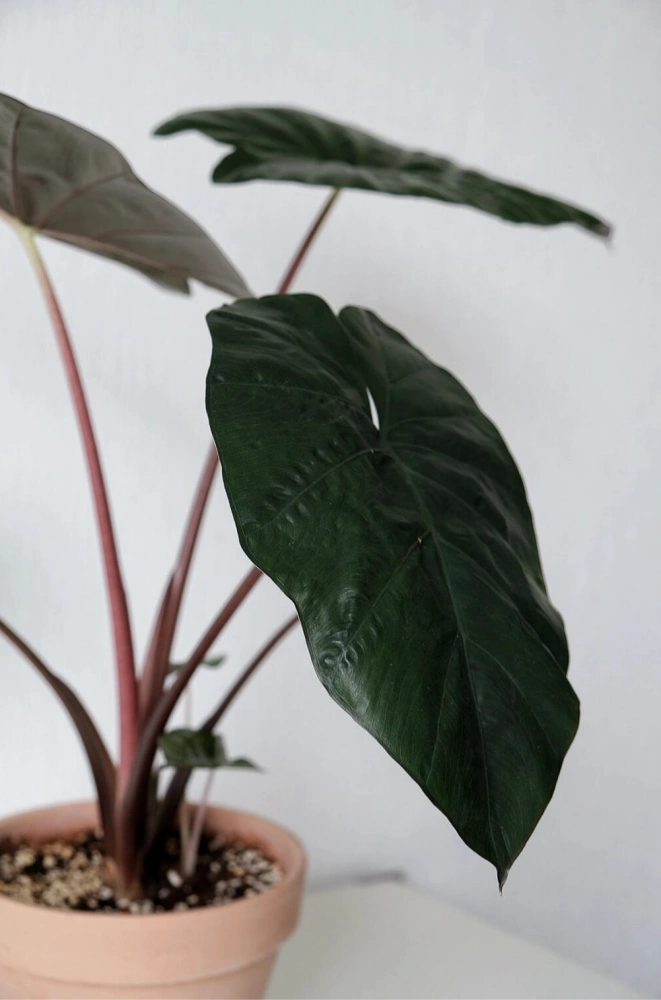
The stems are probably my favorite detail. They have a deep reddish color that gives the plant a cooler, slightly darker character. Paired with the name “Yucatan Princess,” it feels less like a delicate princess plant and more like a dark, understated one. There is something quietly elegant about that contrast.
I also think this plant looks better when it has its own space. In a crowded group of Alocasias, the leaves can disappear a little. But when I placed it on its own, the dark foliage, red stems, and upright shape became much easier to notice. It is not a plant that impressed me immediately, but it slowly became one of those Alocasias I liked more every time I looked at it.
The First Four Months: Simple Care, Steady Growth
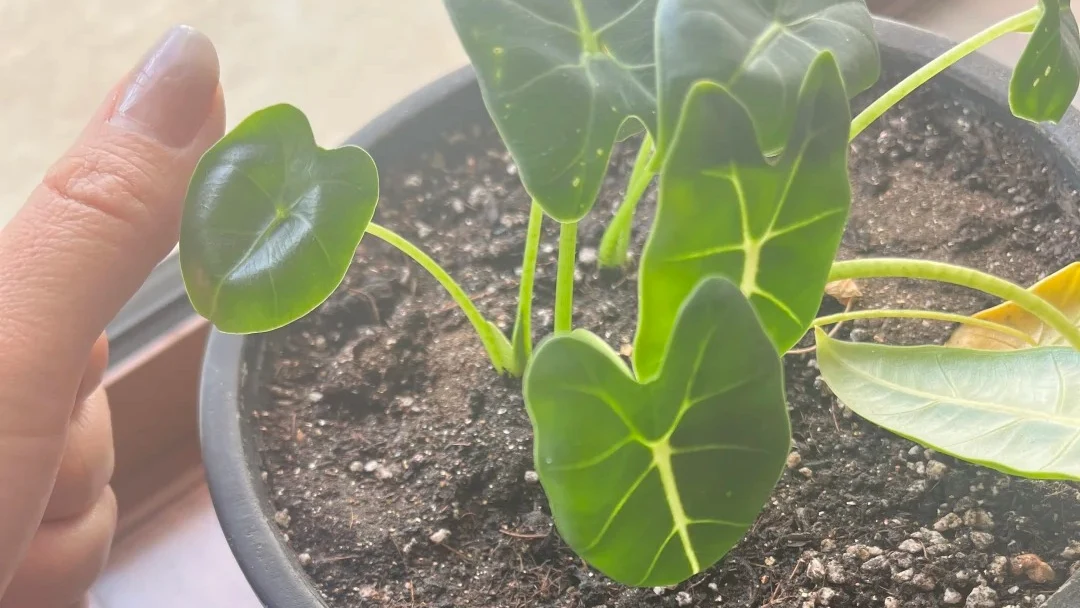
For the first few months, my Alocasia Yucatan Princess was surprisingly easygoing. I had it for almost four months, and I did not give it any special treatment. It was not one of those Alocasias that made me check the leaves every day or constantly worry about the roots. After it settled in, it simply kept growing.
I repotted it once during that period, and the plant handled the change better than I expected. Instead of sulking for a long time, it pushed out several new leaves after repotting. That was one of the reasons I started liking it more. It did not look dramatic at first, but it was steady, responsive, and much less fussy than some of the more eye-catching Alocasias I have grown.
The care was fairly simple. I kept it in bright indirect light, away from harsh direct sun, and used a loose, airy mix rather than dense soil. I did not try to keep the pot constantly wet. Like most Alocasias, it still needs moisture when it is actively growing, but I would rather let the mix dry down a little than leave the base sitting in a damp, airless pot for too long.
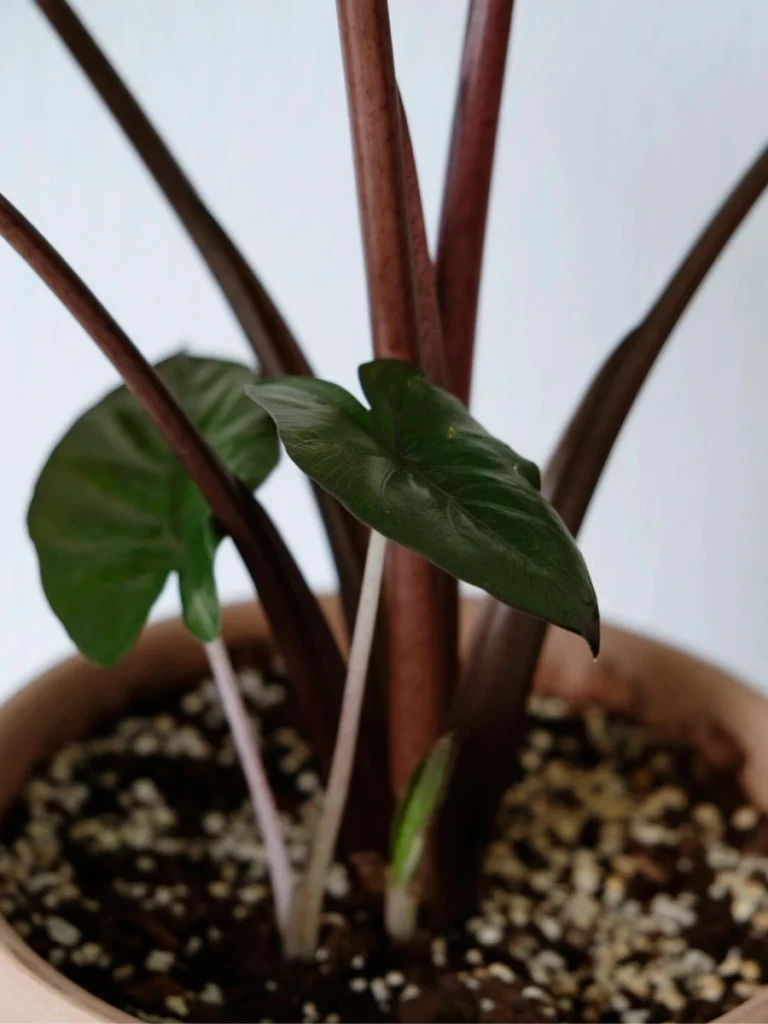
By the end of those first few months, the plant had not only grown new leaves, but also started producing small baby plants around the base. That was the moment it became more interesting to me. It was not just maintaining itself indoors — it was quietly building strength under the soil and preparing to multiply.
The Setup That Worked Best for Mine
The setup that worked best for my Alocasia Yucatan Princess was not intense or complicated. I kept it in bright indirect light, away from harsh direct sun, and I did not place it in a dark corner. Steady light seemed more important than pushing it with the strongest spot I had.
I also kept the pot and soil on the safer side. A slightly snug pot with an airy Alocasia soil mix worked better for me than giving it a large amount of wet soil around the base. For watering, I checked the pot weight and the condition of the mix instead of following a fixed Alocasia watering schedule. This plant felt steadier than some of my more nervous Alocasias, but I still would not keep it in a damp, airless pot.
Almost One Year Later, I Divided It and Found So Many Corms
Almost a year later, this plant gave me another reason to appreciate it. By then, several side shoots had started growing around the mother plant. At first, I left them alone because the whole plant still looked stable, and I did not want to disturb the root system too early. But once the offsets became more obvious, I finally decided it was time to divide it.
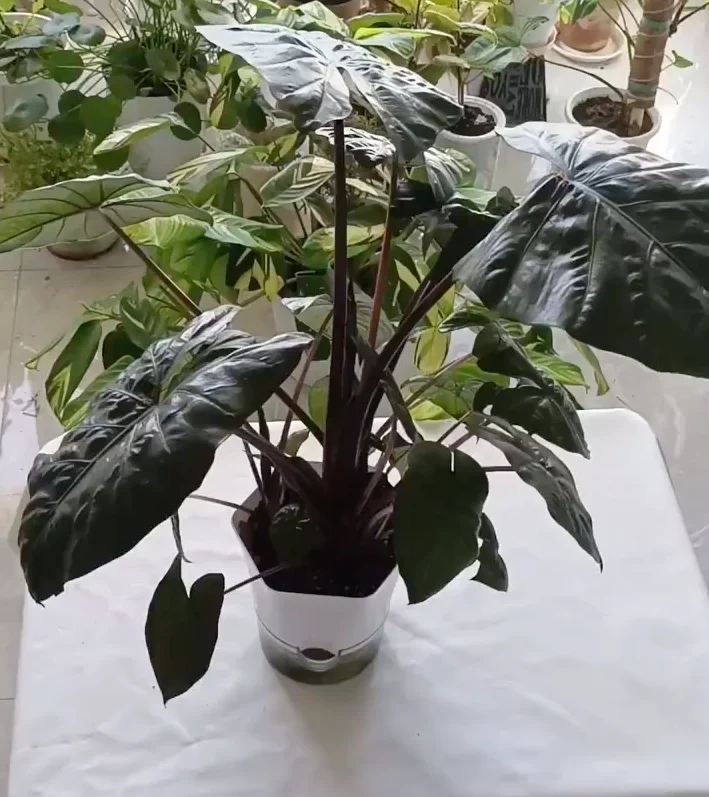
My original plan was simple. I wanted to separate the babies from the mother plant and check whether there were any corms hiding in the soil. I expected to find a few, but the plant surprised me. Once I opened up the root ball, there was much more going on under the surface than I had expected.
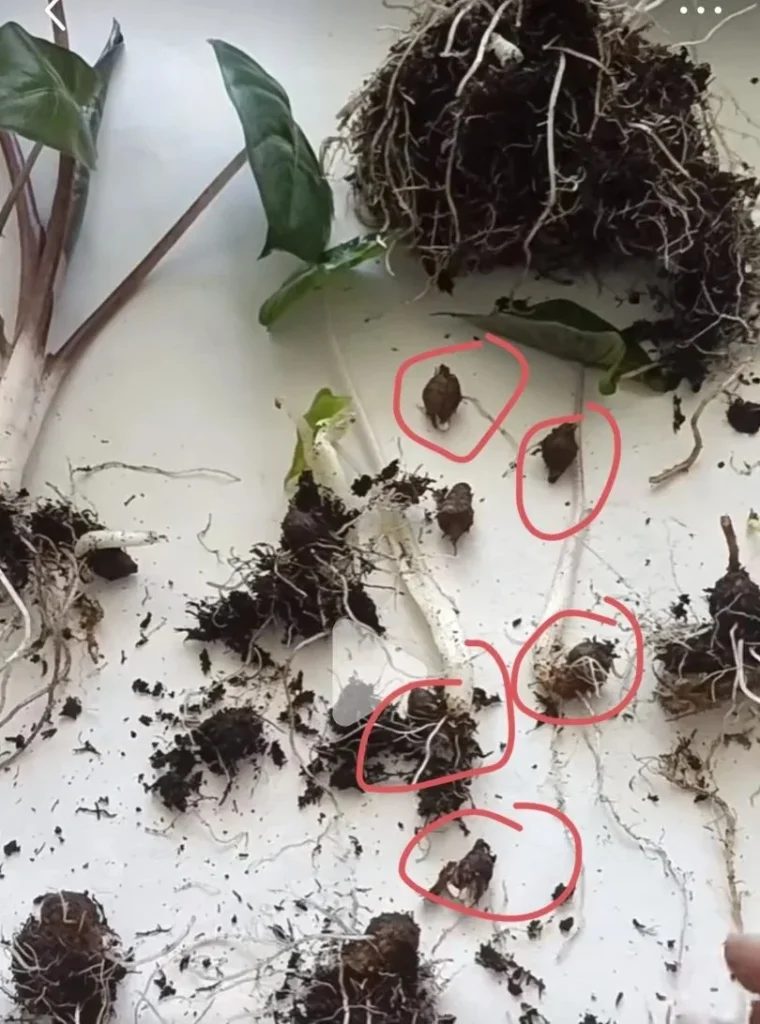
In the end, I was able to divide the plant into four separate pots, and there were still many corms left in the mix. That completely changed how I saw this Alocasia. Above the soil, Yucatan Princess looked calm and understated. Under the soil, it had been quietly building a whole new batch of plants.
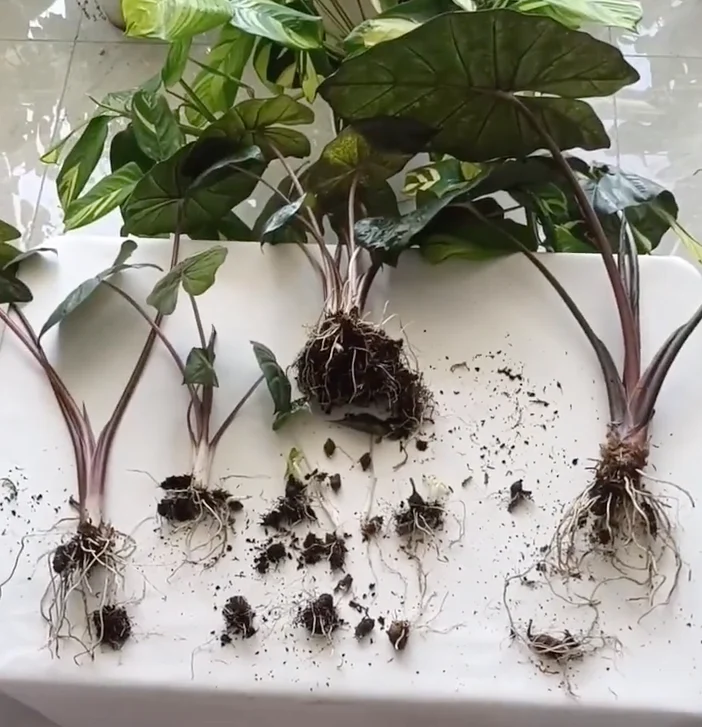
This was probably the moment I started liking it even more. It is not the kind of Alocasia that looks dramatic every day, but it is rewarding in a slower way. It kept growing, made new leaves, produced offsets, and eventually gave me more plants than I expected. For a variety that seemed so low-key at first, that was a very nice surprise.
How I Divided My Alocasia Yucatan Princess
I would not divide Alocasia Yucatan Princess too early. For me, the right time was when the side shoots were clearly visible and had some size to them. If the babies are still tiny and weak, I would rather leave them attached to the mother plant a little longer so they can build more strength before being separated.
When I took the plant out of the pot, I tried not to pull hard from the stems. Alocasia roots can tear more easily than they look, so I loosened the root ball slowly and looked for the natural connection points between the mother plant and the side shoots. If a division already had some of its own roots, I felt much more comfortable potting it separately.
While separating the plant, I also checked through the soil for corms. This was the most surprising part for me. I expected a few, but there were many more than I thought. I collected the firm corms and kept them aside instead of throwing away the old mix too quickly.
After dividing the plant, I potted each piece into a small pot rather than giving every division too much space. Small pots are easier to manage after separation because the mix does not stay wet for too long. I used an airy mix, kept the plants in bright indirect light, and avoided heavy watering right away.
For the first few days after division, I treated them gently. I did not fertilize immediately, and I did not keep disturbing the roots to check on them. My goal was simple: let each division settle, keep the moisture controlled, and wait for the plants to show new signs of growth on their own.
Is Alocasia Yucatan Princess Easy to Grow Indoors?
Based on my experience, Alocasia Yucatan Princess is one of the easier Alocasias I have grown indoors. I would not call it completely care-free, but it did not feel as nervous or dramatic as some other types. Mine handled repotting, kept making new leaves, and later produced several offsets and corms.
I think it is a good choice if you like darker foliage, reddish stems, and less common Alocasias that do not look too flashy at first. It is not the plant I would choose for instant drama, but it becomes much more appealing when grown on its own and allowed to settle.
The main thing I would watch is moisture around the roots and base. If the mix is airy, the pot is not oversized, and the light stays stable, Yucatan Princess does not feel difficult. But I still would not treat it like a plant that enjoys heavy, wet soil just because it seems strong. If this is your first Alocasia, I would still compare it with a few beginner-friendly Alocasia types before choosing.
The Kind of Alocasia That Sneaks Up on You
Alocasia Yucatan Princess is not the most dramatic Alocasia in my collection, and I do not think that is a weakness. It does not have the loudest veins or the biggest leaves, but it has a quiet kind of beauty that I appreciated more the longer I kept it.
What changed my mind was how steadily it grew. It kept making leaves, produced side shoots, and eventually gave me far more corms than I expected. For a plant that looked so understated above the soil, there was a lot happening underneath.
That is why I like it more now than when I first bought it. Yucatan Princess is not the Alocasia I would choose for instant impact, but it is one I would keep for its dark color, steady growth, and slow-burn charm.
FAQ
Love discovering new Alocasias?
If you like darker, less common Alocasias with a quieter look, browse my Alocasia Varieties Hub to compare Yucatan Princess with other indoor Alocasia types.
Go to Varieties Hub →