Last updated: May 9, 2026
When I say Regal Shield was my first Elephant Ear Alocasia, I do not mean it was my first Alocasia ever.
I mean it was the first Alocasia I grew that really felt like a big plant. Before this, most of my Alocasias were smaller decorative types, so I assumed a large Elephant Ear would be harder to manage. Bigger leaves, faster growth, stronger roots — in my mind, that meant more chances to make mistakes.
Regal Shield surprised me.
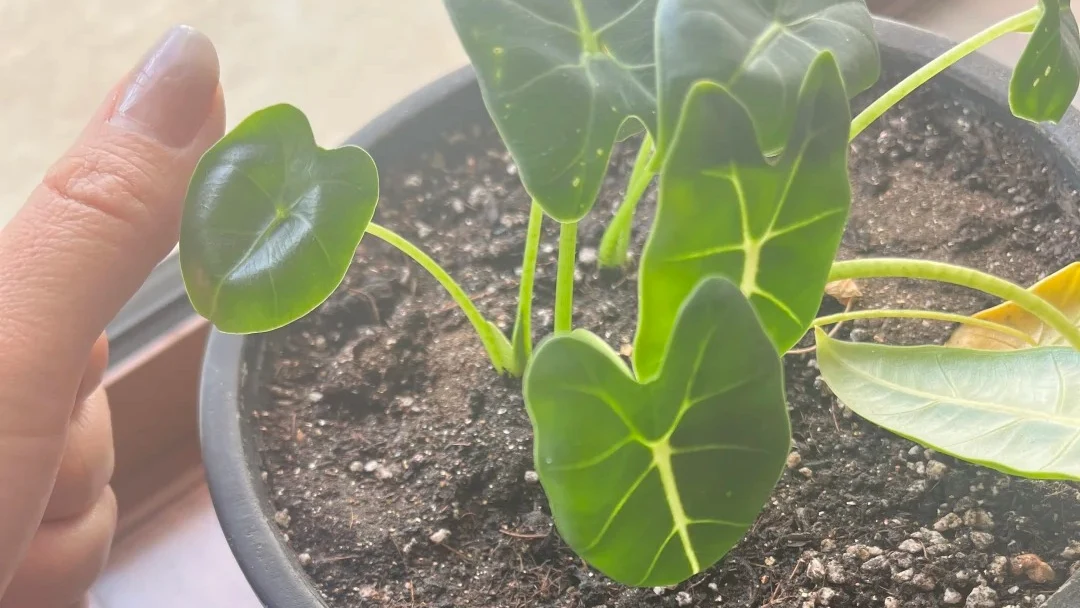
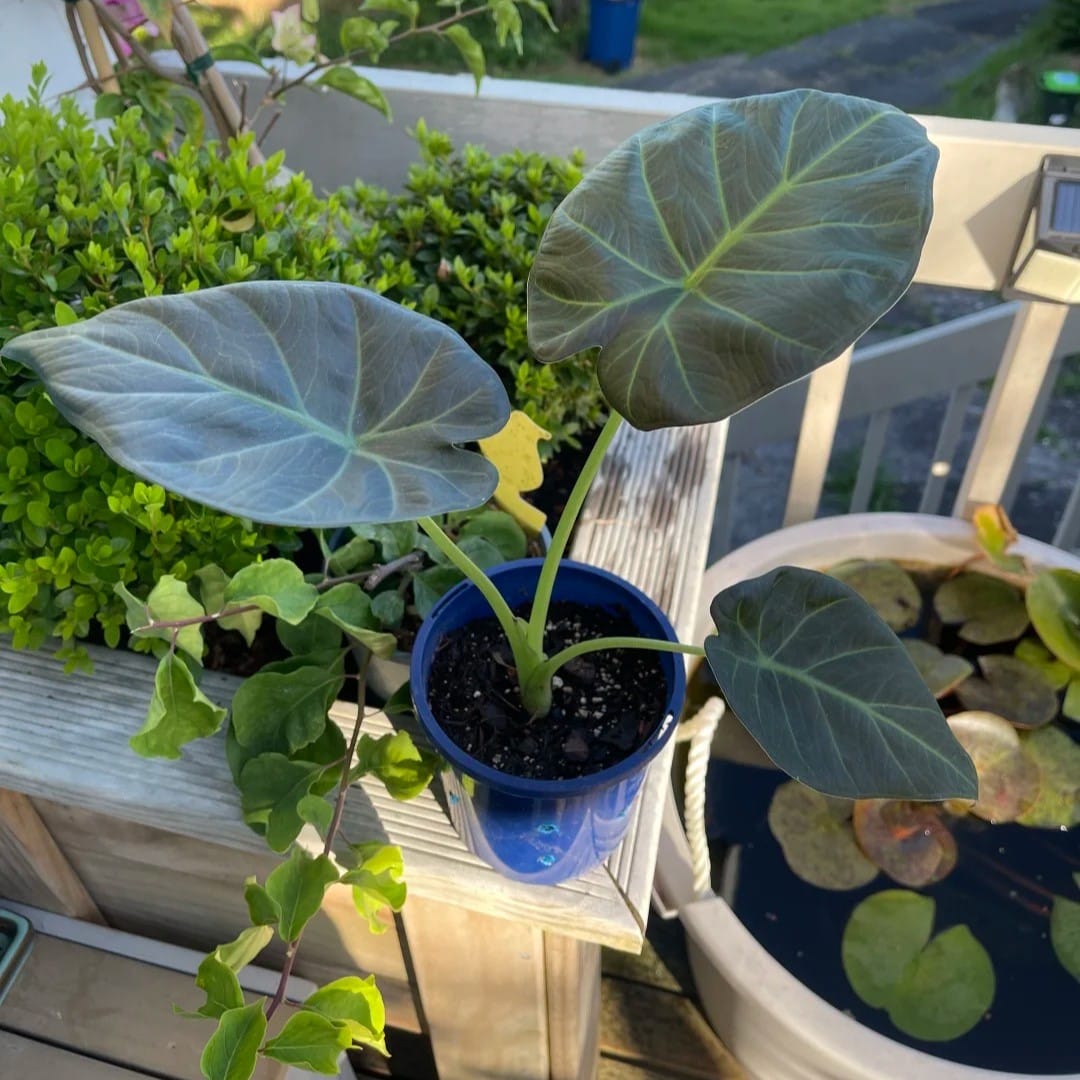
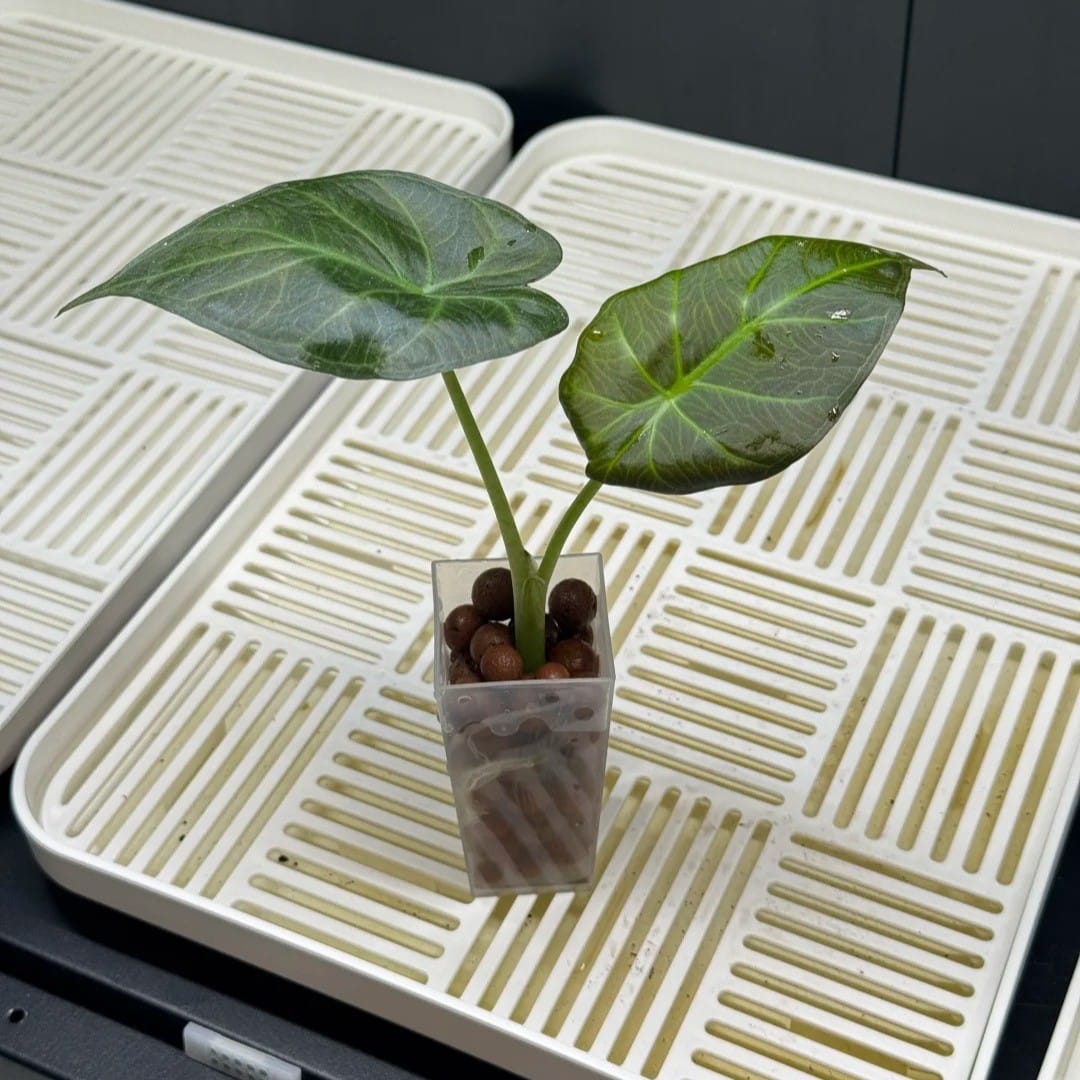
Mine arrived as a small starter plant with four leaves in a 10 cm pot. I kept it near a bright window with bright indirect light and did not give it any special setup. No grow light, no cabinet, no strict feeding routine.
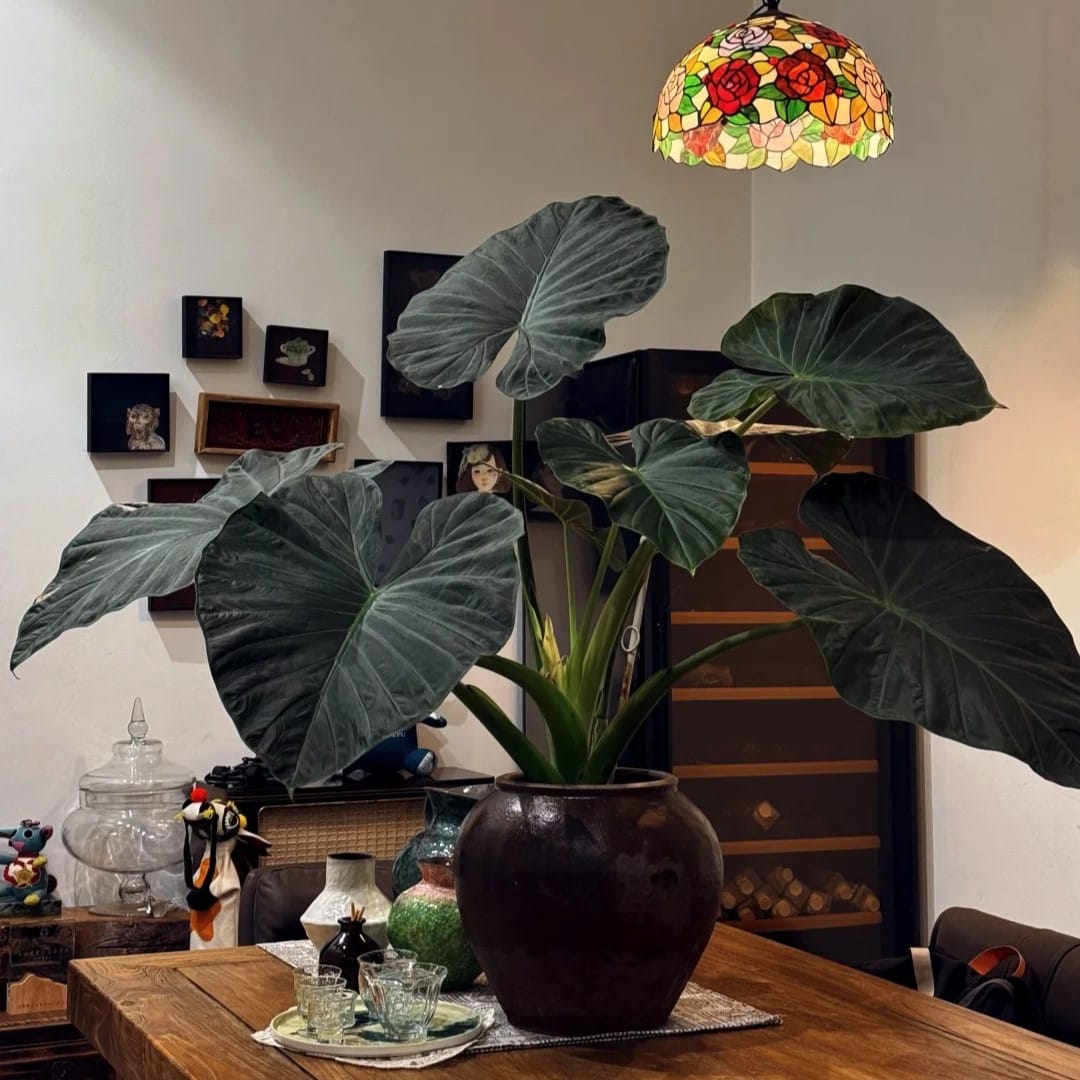
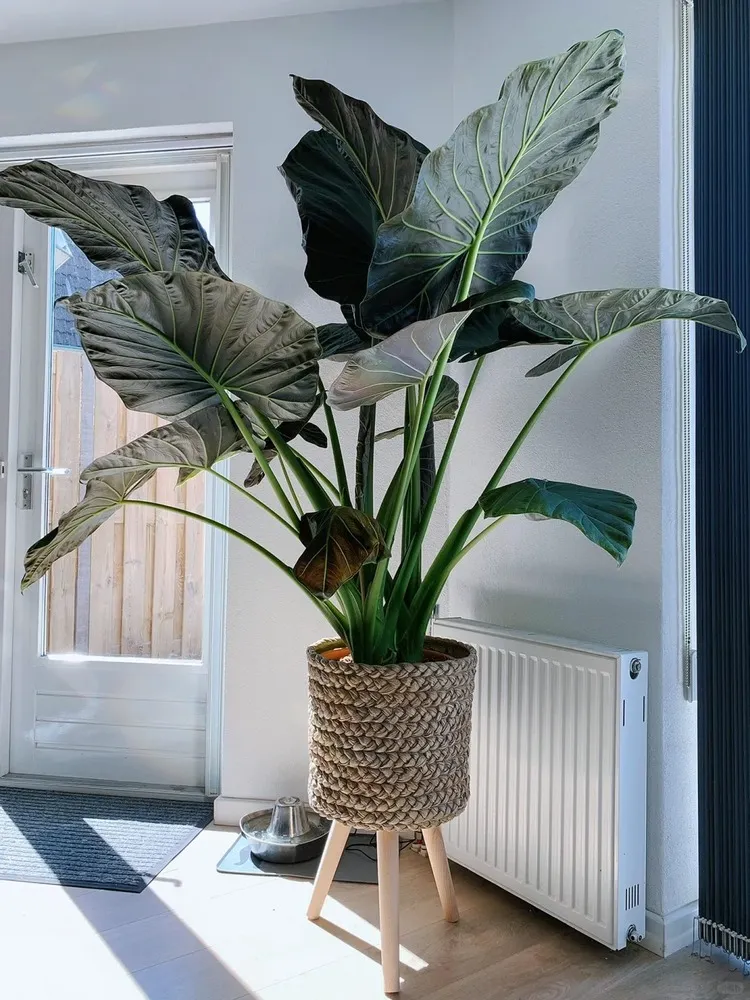
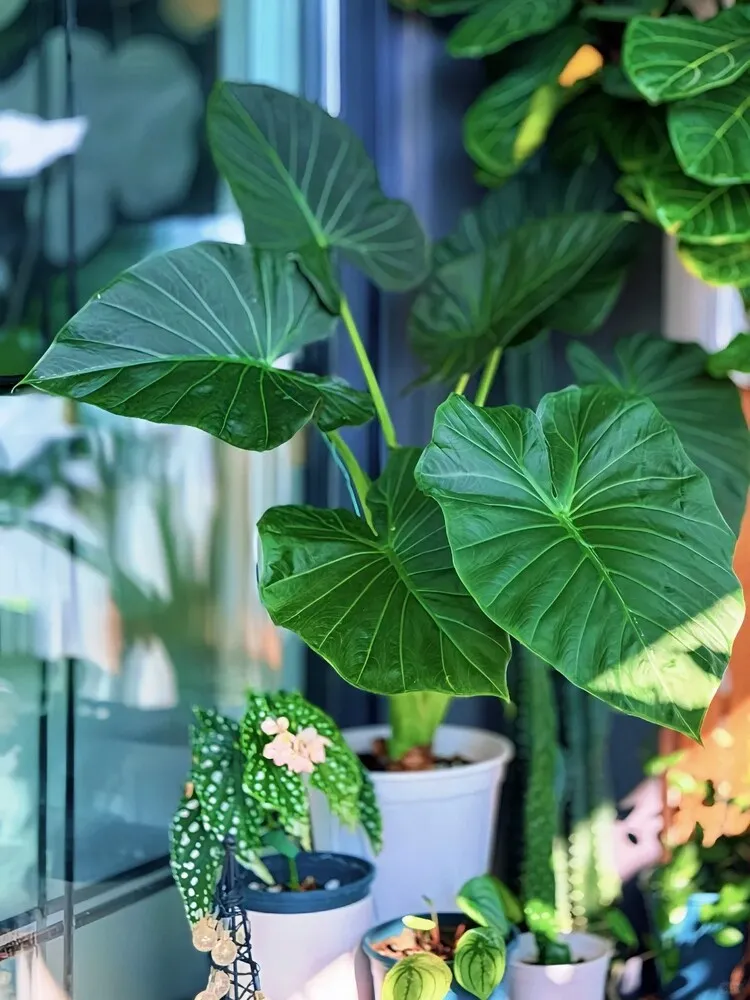
Over the next 80 days, it pushed out four new leaves. Each one came in larger and more defined than the last, and the plant never had that long, frustrating pause I sometimes see with smaller Alocasias after they come home.
That is why I now think Regal Shield can be a good first Elephant Ear–type Alocasia. Not because it is impossible to damage, but because it gives you visible progress quickly enough that you can understand what your care is doing. If you are comparing easier options, I also keep a separate guide to beginner-friendly Alocasia varieties.
What Happened in the First 80 Days
Regal Shield arrived in early April as a small starter plant — four compact leaves in a 10 cm pot. At that stage, it did not look dramatic at all. No huge leaves, no strong “statement plant” shape, just a young plant with a lot of room to grow.
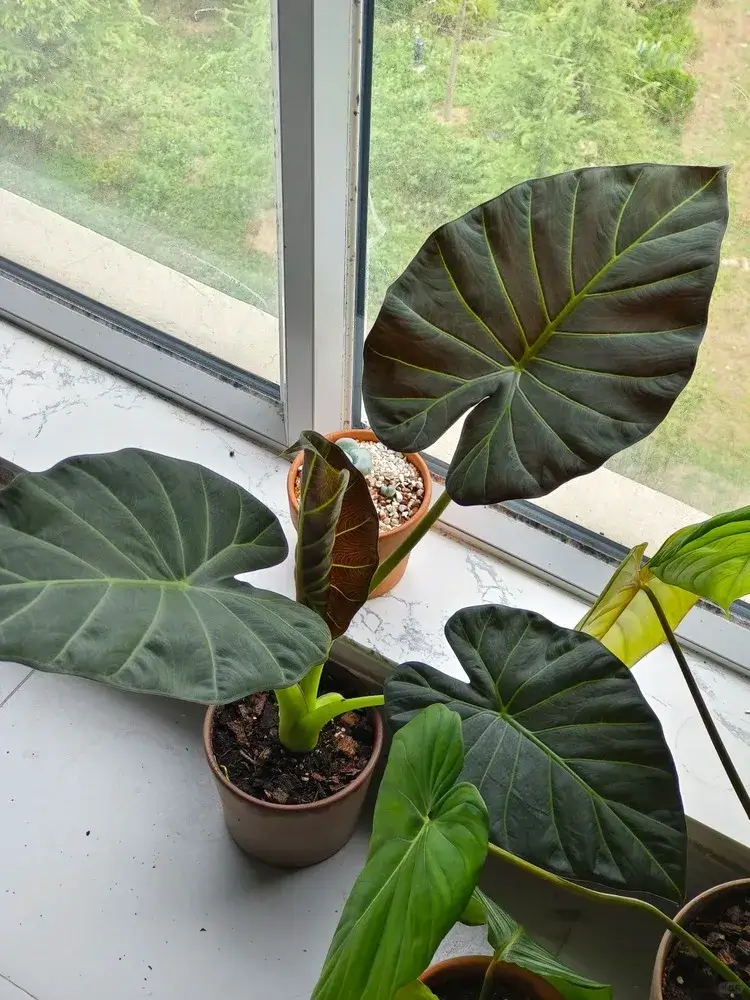
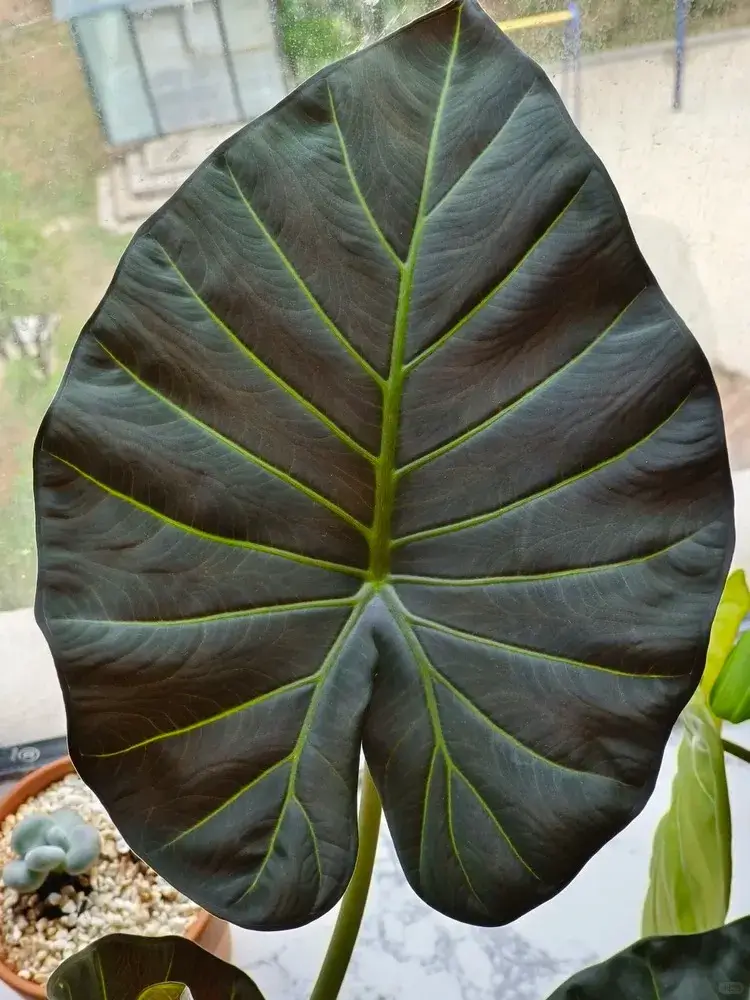
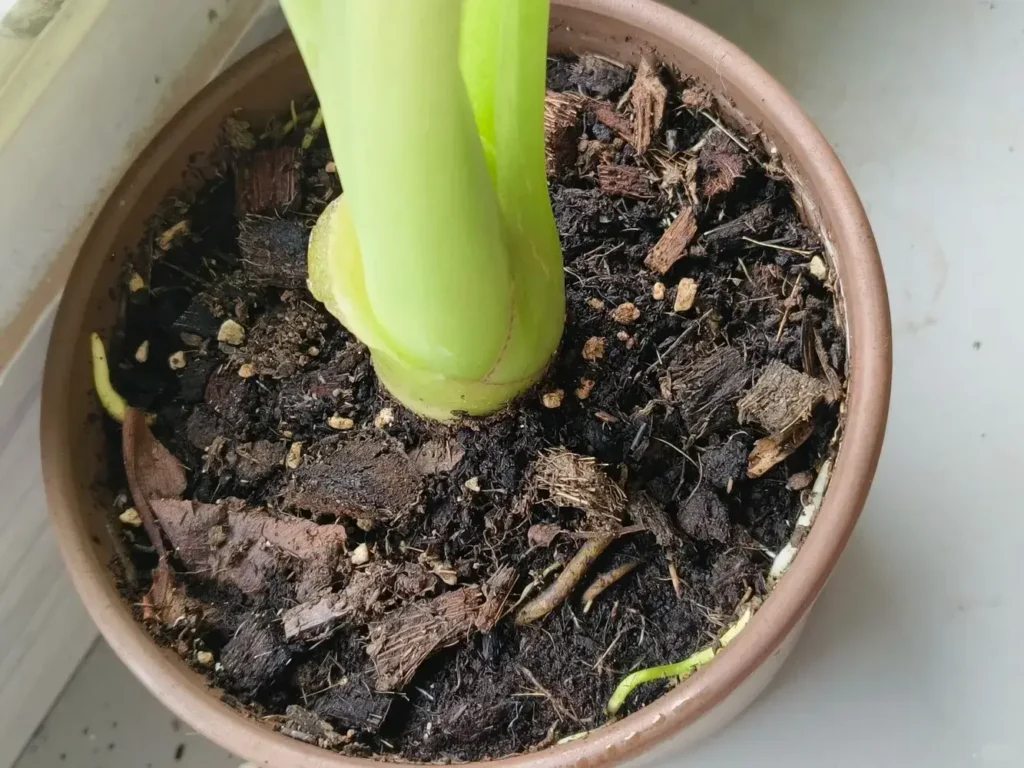
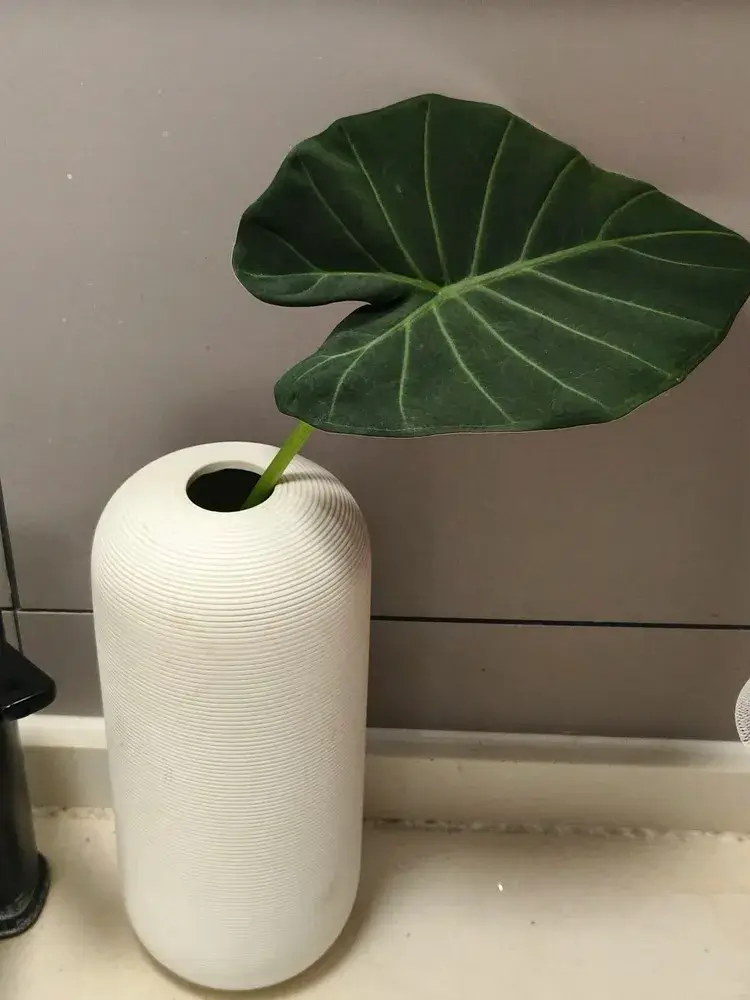
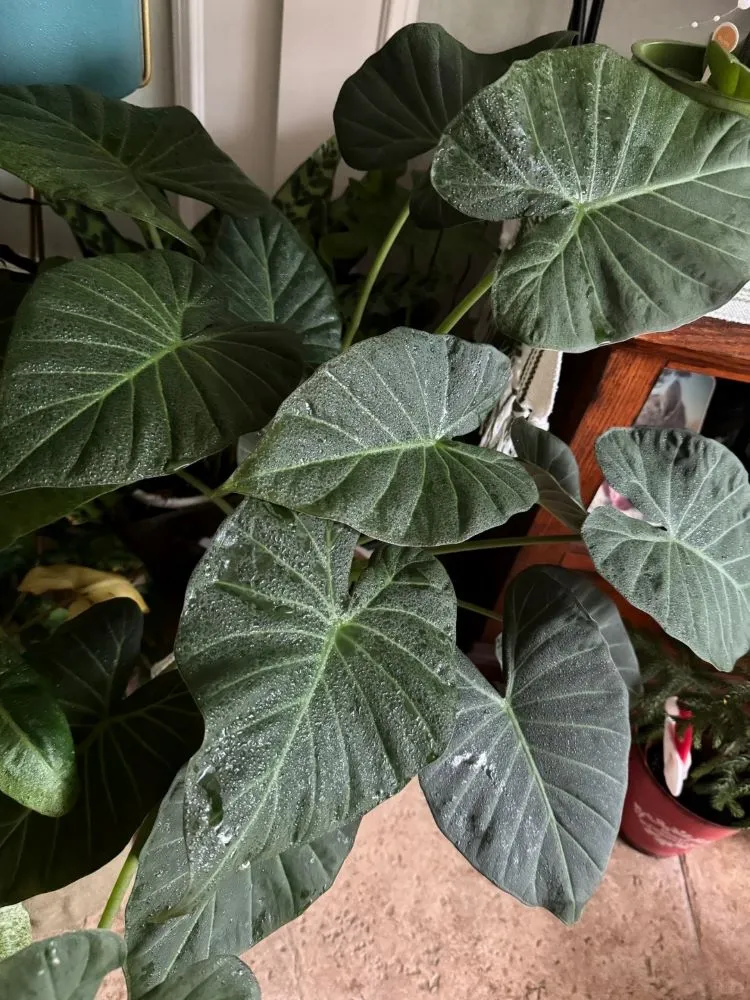
I did not treat it like a project plant. I did not put it in a cabinet, push it with fertilizer, or use a grow light to force faster growth. It stayed near my other plants in bright indirect light, and I mostly watched how it adjusted.
The original four leaves were eventually removed, not because the plant was failing, but because they no longer matched the size and direction of the newer growth. This is different from sudden decline; in many Alocasias, losing old leaves can simply be part of the plant redirecting energy into stronger new growth.
By the end of the 80-day period, Regal Shield had produced four new leaves. That worked out to roughly one new leaf every few weeks. What impressed me was not just the speed, but the lack of drama. It did not stall for weeks, collapse after repotting, or need constant correction.
For me, that was the first sign that this plant was easier to read than many smaller jewel-type Alocasias. When it was happy, the next leaf showed up. When something was slightly off, the plant showed that too.
Fast Roots, Fast Growth, and Why I Had to Repot So Soon
The part that surprised me most was how quickly the roots kept up with the leaves.
As the plant grew, the pot filled faster than I expected. My first repot from a 10 cm pot to a 13 cm pot did not feel like an emergency. The plant was not declining, wobbling, or showing stress. It simply looked ready for more room.
The second move to a 15 cm pot came soon after. At that point, I added larger coco husk to make the mix airier and more open. For a fast-growing Alocasia with thick roots, I do not want the soil mix to stay dense and wet around the base for too long.
This is where Regal Shield felt different from some slower Alocasias I have grown. I was not repotting because I was trying to fix a problem. I was repotting because the plant had already filled the space I gave it.
Above the soil, the pattern was just as easy to follow. New leaves appeared at a steady rhythm, roughly one every twenty days. I did not need to compare old photos to convince myself it was growing. The change was obvious from week to week.
That is one reason I found Regal Shield so satisfying as a first large Alocasia. It grows fast enough to keep you engaged, but not so unpredictably that you feel out of control.
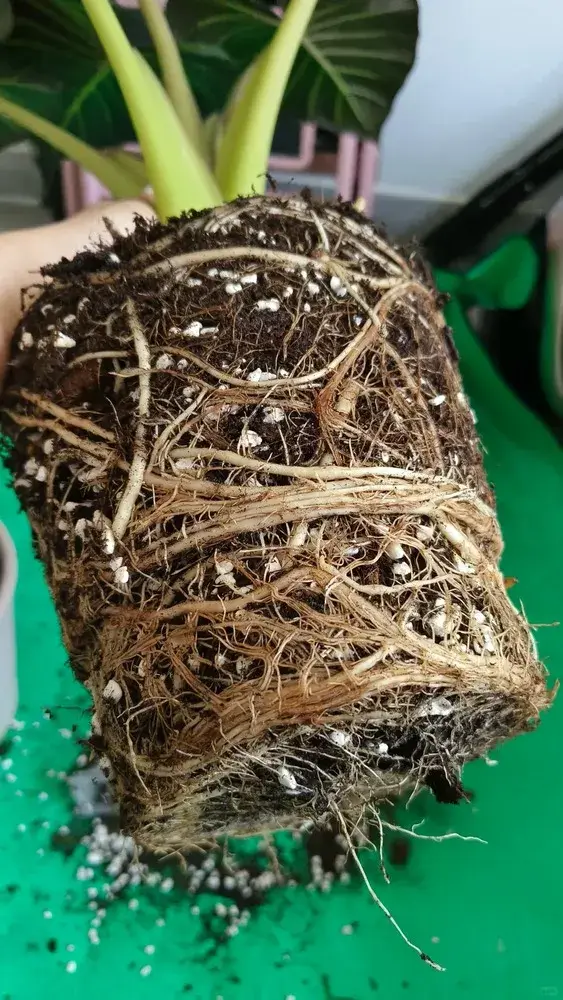
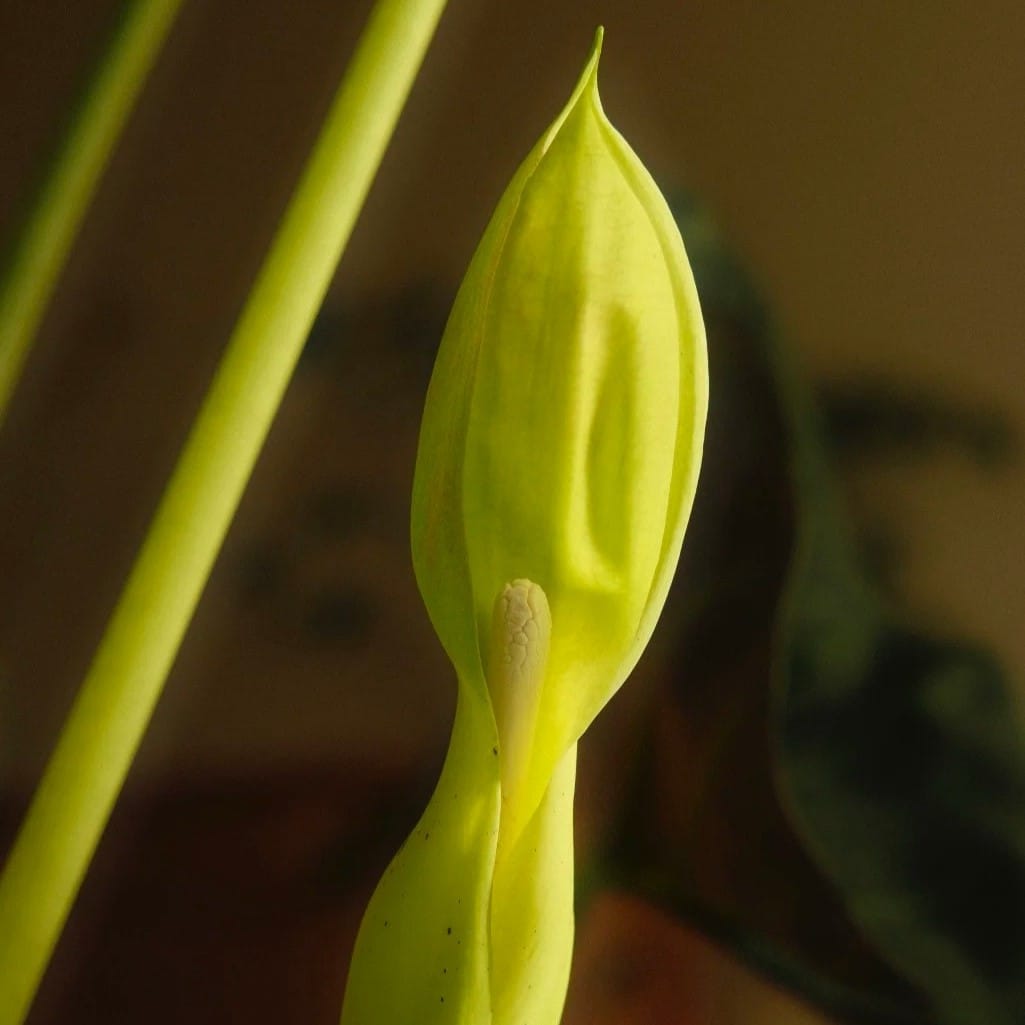
This wasn’t stress — it was a clear signal that the plant was ready for division.
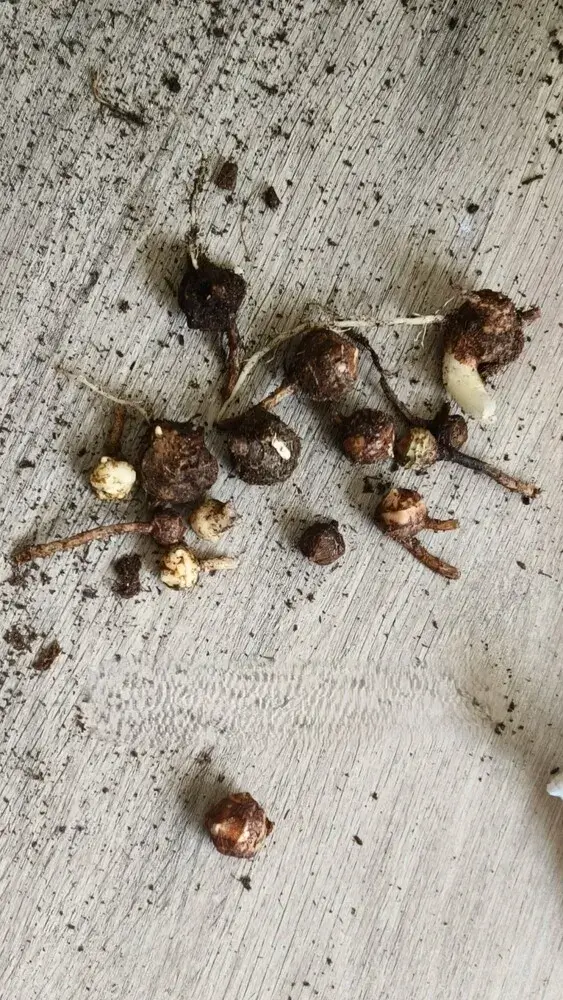
Healthy corms like these are the reason Regal Shield is so rewarding to propagate.
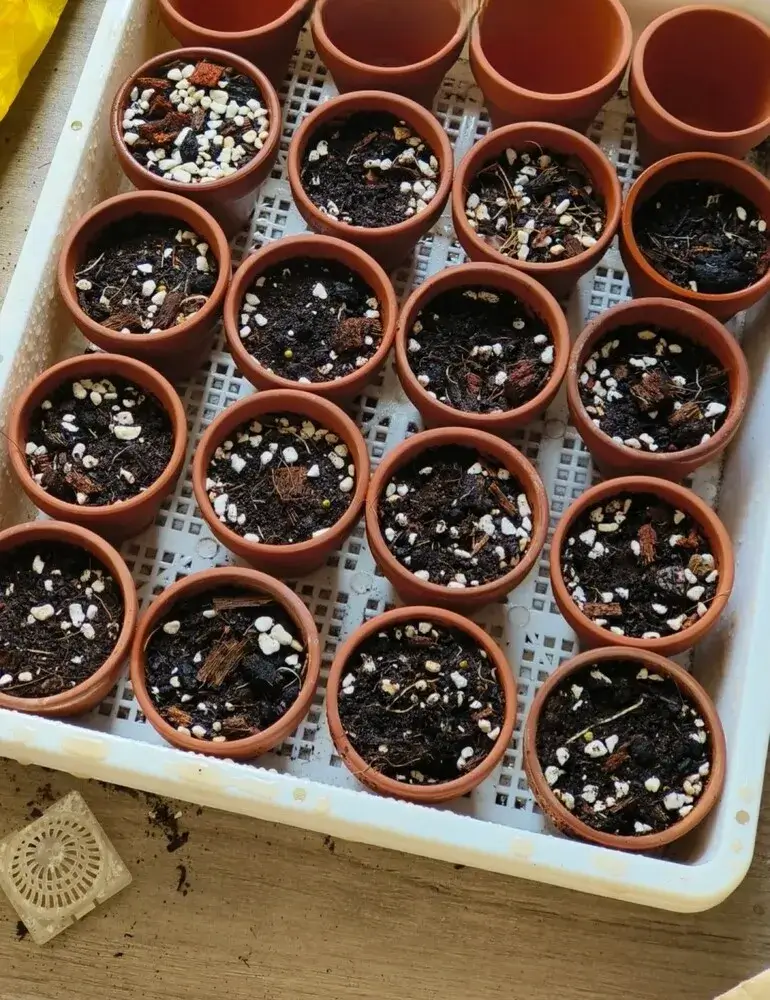
No special setup — just space, drainage, and patience.
If you want to try this at home, here’s my step-by-step on how to propagate Alocasia.
Beginner-Friendly, But Not Careless
Calling Regal Shield beginner-friendly does not mean you can ignore it.
What I mean is that it gives you more room to learn than many smaller, more delicate Alocasias. You do not need perfect timing every time you water. You do not need a complicated setup. And when something starts to go wrong, the plant does not usually fall apart overnight.
But it is still an Alocasia, and I learned that very clearly with watering.
Early on, I watered too heavily because the plant looked strong and fast-growing. I assumed a larger plant could handle more moisture. That was not a good assumption. After heavier watering sessions, some leaves started to darken.
In my case, the issue was not one single watering. It was that the mix stayed too wet for too long around the roots. The plant was still growing, but the leaf darkening was a warning that I needed to slow down.
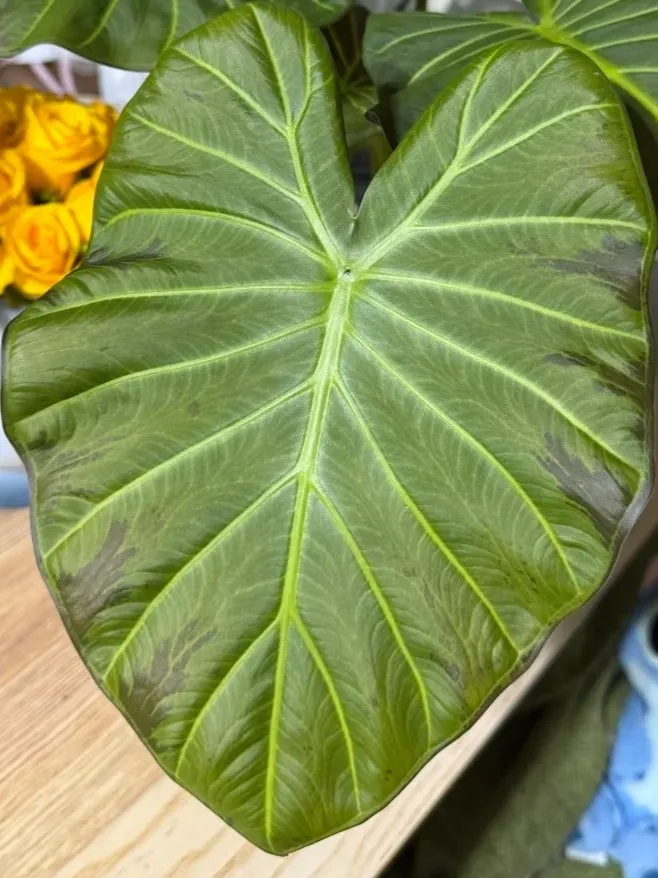
Once I reduced the amount of water and let the mix breathe more between waterings, the problem stopped spreading. New growth continued, and the plant did not carry the issue into later leaves. If you are still finding the right rhythm, my Alocasia watering guide explains how I judge timing by pot size, soil mix, and indoor conditions instead of using a fixed schedule.
That experience changed how I define beginner-friendly. Regal Shield is not mistake-proof. It just gives you clearer warning signs and enough time to adjust before a small mistake becomes a serious root problem.
For a first Elephant Ear–type Alocasia, that balance matters. You still have to pay attention, but you do not have to panic over every imperfect leaf.
FAQ
Regal Shield responds clearly and consistently to care, which makes it easier to learn from. It doesn’t require perfect conditions, and small mistakes don’t immediately spiral into major problems. That kind of feedback is exactly what beginners need.
Once established, it produced roughly one new leaf every two to three weeks. What mattered more than speed was consistency — growth didn’t stall or come in unpredictable bursts.
In my case, repotting wasn’t done to save the plant but to keep up with it. When roots fill the pot quickly, upgrading the container becomes part of normal care rather than a sign of stress.
It handles slight over- or under-watering better than delicate foliage types. When I overwatered, the plant showed signs, but it recovered quickly once I adjusted. The key is paying attention, not chasing perfection.
The issue didn’t escalate, and new growth remained healthy after adjusting water volume. Importantly, the damage wasn’t irreversible — the plant corrected itself once conditions improved.
This is one of the plant’s strongest qualities. Growth is easy to see, easy to track, and hard to miss. For growers who stay motivated by visible change rather than subtle cues, Regal Shield is especially rewarding.
Love discovering new Alocasias?
Explore more large-leaf, beginner-friendly, and collector-style plants in our Alocasia Varieties Hub.
Go to Varieties Hub →