The first time I noticed scale insects on an Alocasia, I almost ignored them. They did not look like typical pests moving around the plant. Instead, they looked like tiny bumps attached to the leaf, and at first I was not even sure whether they were insects or just part of the plant.
Alocasia can make this problem easy to miss. Their large leaves, thick petioles, and textured surfaces create many places where scale insects can hide, especially along leaf veins, leaf undersides, and new growth.
When I find something unusual on my Alocasia, I do not immediately reach for the strongest spray. I first confirm what I am dealing with, remove what I can manually, and then choose a treatment that I can repeat without putting unnecessary stress on the plant. This is also the approach I use when choosing Alocasia pest control products for different problems.
In this guide, I will show what scale insects look like on Alocasia, where I usually find them, and the steps I use to clean and treat an affected plant before the problem spreads.
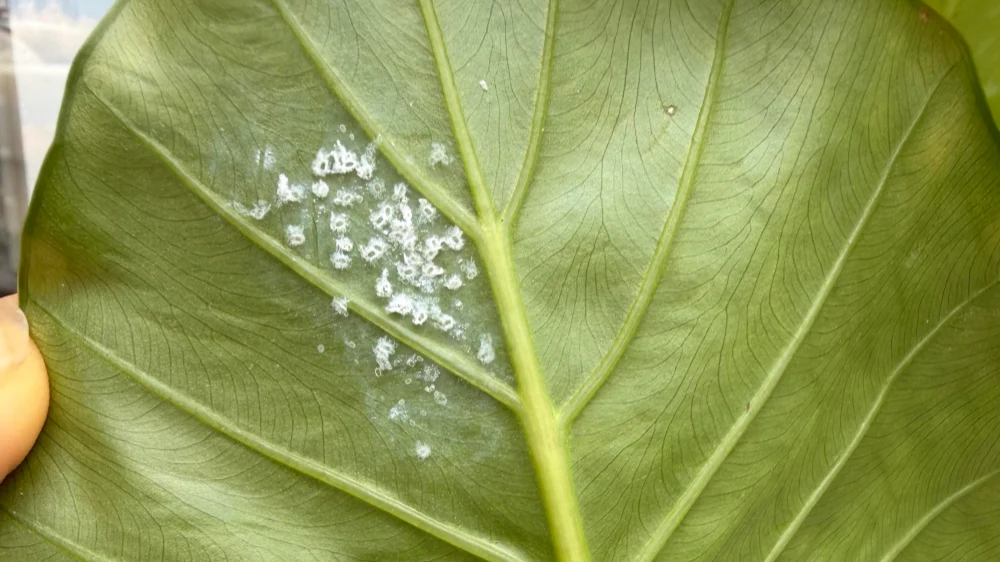
I found scale insects on one of my Alocasia when I noticed unusual bumps that did not look like normal leaf marks. At first, the infestation was easy to miss because the insects were attached to the plant rather than moving around.
After checking the underside of the leaves and the petiole area, I realized the problem was larger than the first spot I noticed. That experience changed the way I inspect my Alocasia now.
Quick Answer: What Should I Do If My Alocasia Has Scale Insects?
When I find scale insects on my Alocasia, the first thing I do is not spray. I first confirm the pest, isolate the plant, and remove what I can see.
| Situation | What I Would Do First |
|---|---|
| I see one or two scale insects | Remove them manually and clean the affected area |
| I find multiple insects on leaves or petioles | Isolate the plant and inspect the whole plant carefully |
| I am not sure if it is scale | Check whether the bumps can be removed or are part of the leaf |
| The infestation is spreading | Combine cleaning with a repeated treatment plan |
My simple rule is: identify first, clean second, treat third. Scale insects are easier to manage when I catch them early, but using a stronger product immediately is not always the best first step for a stressed Alocasia.
What Scale Insects Look Like on Alocasia
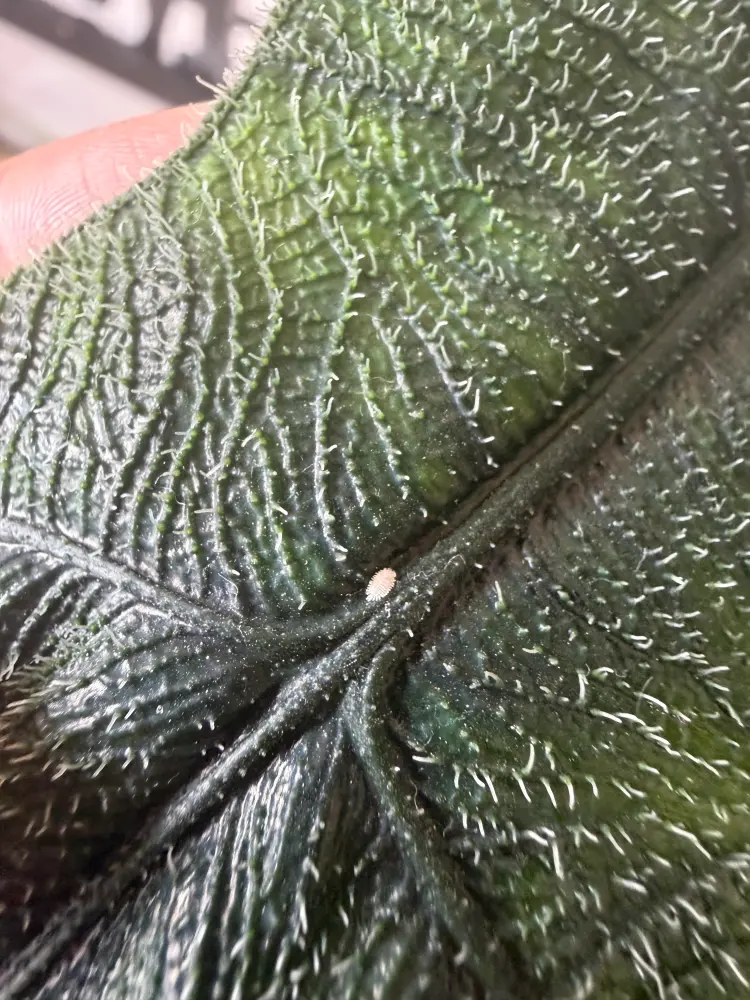
Scale insects are easy to miss on Alocasia because they do not move around like many other pests. Unlike spider mites on Alocasia, which often leave speckled damage and may create fine webbing, scale insects usually stay attached to one place and can look like small bumps, spots, or pieces of debris stuck on the leaf.
When I first found them on my Alocasia, the most obvious signs were small raised spots attached to the leaf surface and clusters hiding underneath the leaves. Once I knew what I was looking for, I started checking the areas where they are most likely to appear.
Where I Usually Find Scale Insects on Alocasia
On Alocasia, I pay extra attention to three areas:
- The underside of leaves: this is where I often find hidden groups, especially along the veins.
- Leaf veins and textured areas: the uneven surface of some Alocasia leaves gives pests more places to attach.
- Petioles and leaf joints: these areas are easy to overlook but can hold insects close to new growth.
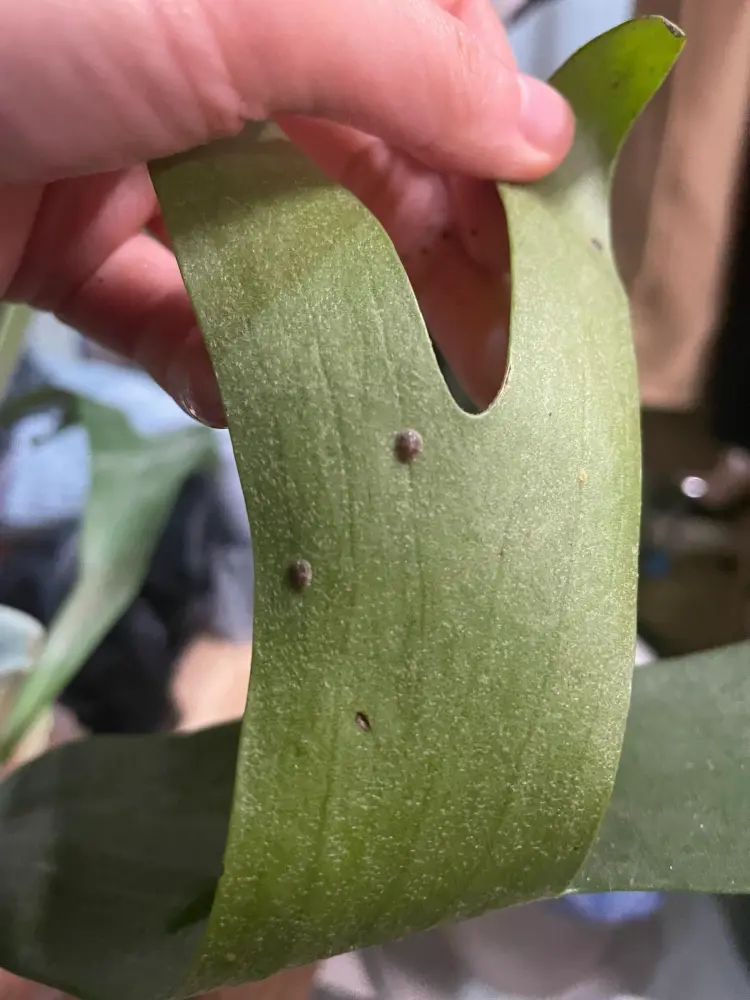
Because Alocasia leaves are large, I do not only check the top surface. I always turn the leaf over and inspect the underside, especially near the main veins.
How I Tell Scale Insects From Leaf Damage
Not every spot on an Alocasia leaf is a pest. Before treating the plant, I first check whether the mark is actually attached to the leaf or whether it is part of the leaf tissue itself. Similar to other issues like yellowing Alocasia leaves, the visible symptom does not always show the real cause.
| Scale Insects | Leaf Damage or Natural Marks |
|---|---|
| Raised bumps that sit above the leaf surface | Flat discoloration or changes within the leaf tissue |
| Firmly attached and often found in groups | Usually spread randomly without a raised structure |
| May be removed carefully with a cotton swab or fingernail | Cannot be removed because it is part of the leaf |
| Often appear along veins, leaf backs, and petioles | Usually follows damage patterns, aging, or environmental stress |
One simple check I use is gently touching the suspected spot. If it feels like something sitting on top of the leaf and can be lifted away carefully, I treat it as a possible pest. If the mark stays within the leaf surface, I look for other causes instead.
I avoid spraying first and asking questions later. Misidentifying leaf damage as scale insects can lead to unnecessary treatments, especially on Alocasia with more sensitive leaves.
Before Spraying: How I Inspect and Isolate My Alocasia
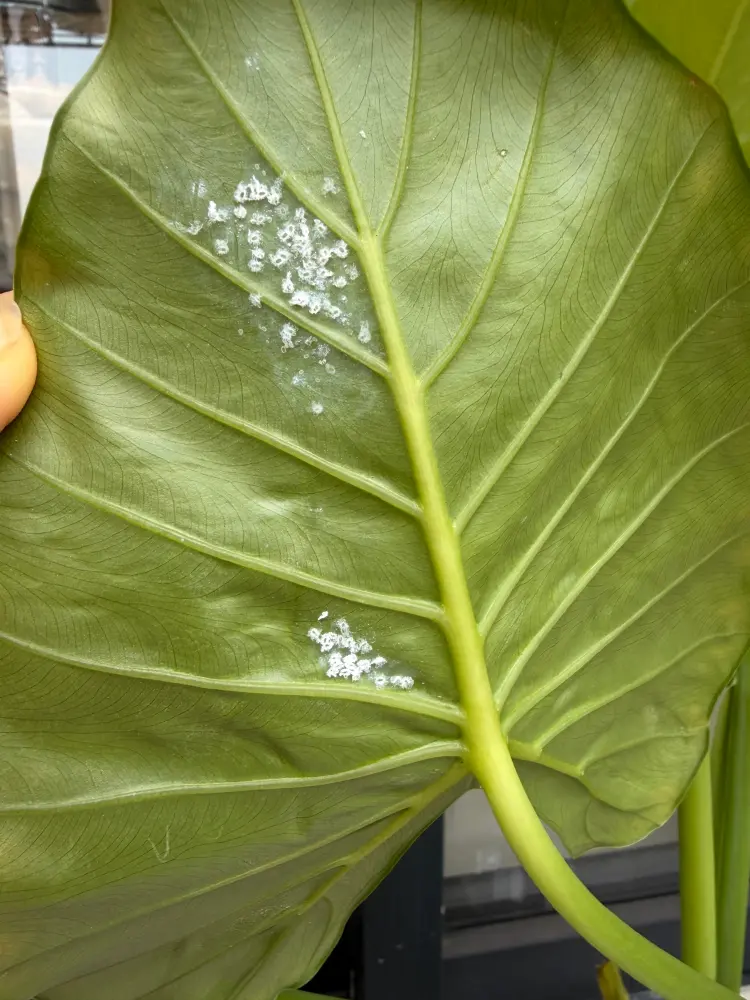
When I find scale insects on an Alocasia, I do not immediately spray the entire plant. The first thing I do is slow down and check how far the problem has spread.
Scale insects are much easier to manage when I catch them early. A few insects on one leaf are a very different situation from an infestation that has already reached new growth and nearby plants.
I Isolate the Plant First
If possible, I move the affected Alocasia away from my other plants before cleaning or treating it. This is especially important when I keep multiple tropical plants together because scale insects can spread before I notice obvious damage.
I do not assume the problem is limited to the leaf where I first found the insects. Isolation gives me time to inspect the plant properly without worrying about nearby plants being exposed.
I Check Nearby Plants Too
After finding scale insects, I check the plants that were sitting closest to the affected Alocasia. I pay extra attention to other aroids, including Anthurium and Philodendron, because they often share similar indoor conditions.
I am not looking for a reason to spray everything. I am simply trying to find out whether this is an isolated problem or part of a larger infestation.
I Always Check the Leaf Underside
The top of an Alocasia leaf can look completely normal while the underside is already showing signs of pests. I carefully check along the main veins, smaller veins, and areas close to the petiole because these are places where scale insects are easy to miss.
Large Alocasia leaves make this easier to overlook. A quick look from above is usually not enough.
I Pay Extra Attention to New Growth
New leaves and tightly folded growth deserve extra attention because damage here can affect the plant’s next stage of growth. I check the newest leaf, the petiole, and the area where new leaves emerge from the center of the plant.
If the new growth is clean and the insects are limited to older leaves, I usually have more time to handle the problem carefully. If pests are already appearing around new growth, I treat it as a higher priority.
How I Remove Scale Insects From Alocasia
When I find scale insects on Alocasia, I prefer to remove as many visible insects as possible before using any spray. Since scale insects attach themselves to the plant, reducing the number of insects first makes any follow-up treatment more effective.
Step 1: Remove Visible Scale Insects Manually
For a small infestation, manual removal is usually where I start. I use a cotton swab or a soft tool to gently remove the insects from the leaf surface, veins, and petioles.
I focus on removing the insects themselves rather than aggressively rubbing the leaf. Alocasia leaves can be sensitive, and damaging the surface creates another problem while I am trying to solve the first one.
If I find only a few scale insects, this step can make a noticeable difference. But if there are many insects hidden in different areas of the plant, I combine manual removal with a repeated cleaning routine.
Step 2: Clean the Leaves and Hidden Areas
After removing visible insects, I clean the affected areas instead of leaving behind residue from the infestation. I pay special attention to the underside of leaves, leaf veins, and the points where petioles connect to the plant.
A microfiber cloth, cotton swabs, and a small amount of water are usually enough for basic cleaning. The goal is not to make the leaves shiny. The goal is to remove pests and make future inspections easier.
I avoid using leaf shine products because they do not solve a scale insect problem and can make it harder to monitor what is happening on the leaf surface. If you are dealing with different pest issues across multiple Alocasia plants, I also keep a separate guide on the pest control products I use and consider for indoor Alocasia care.
Step 3: Repeat Inspection Instead of Treating Once and Forgetting
One of the biggest mistakes with scale insects is assuming the problem is solved after one cleaning. Depending on the infestation stage, new insects can appear later, so I continue checking the plant after the first treatment.
I usually inspect the same areas again: leaf undersides, veins, petioles, and new growth. If I keep finding new insects, that tells me the plant needs another round of cleaning or a more targeted treatment.
For Alocasia, I would rather repeat a gentle process several times than use a very aggressive treatment once and risk stressing an already weakened plant.
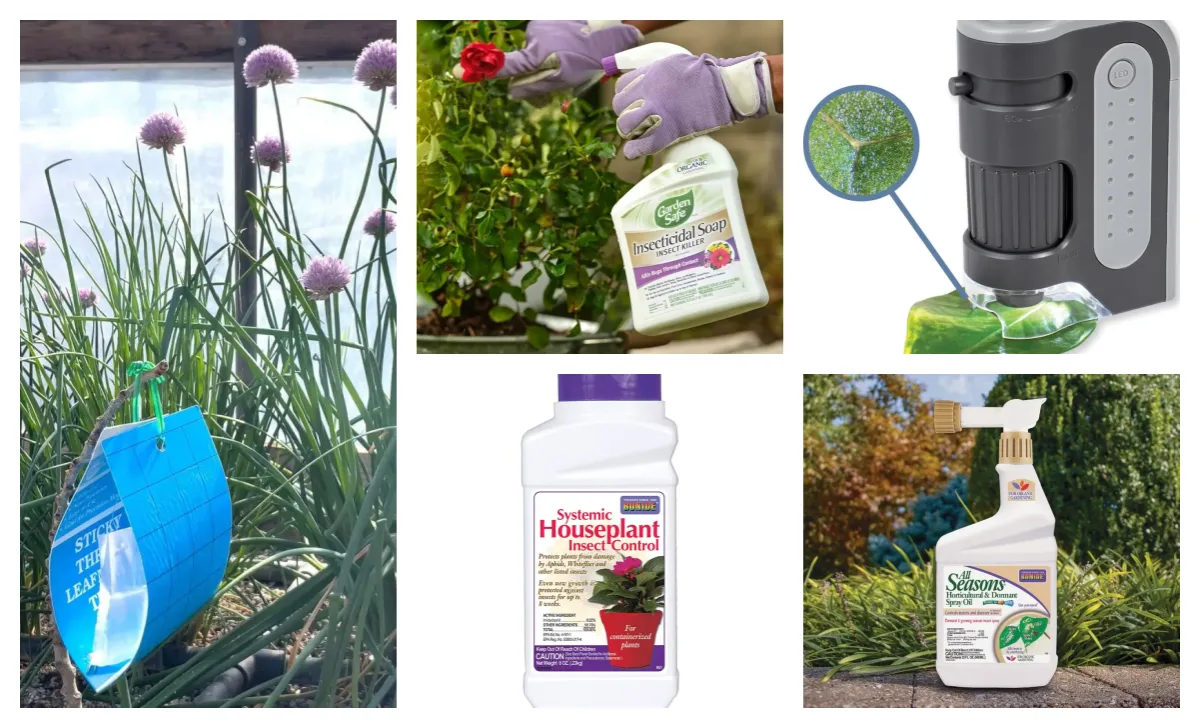
Products I Would Use for Alocasia Scale Insects
I do not consider sprays the first step for scale insects on Alocasia. If I only find a few insects, manual removal is usually more effective than immediately covering the whole plant with a product.
However, when I find repeated infestations or insects hiding in difficult areas like leaf veins and petiole joints, I use products that help me reach missed pests. I prefer simpler treatments that I can repeat and monitor rather than using the strongest option immediately.
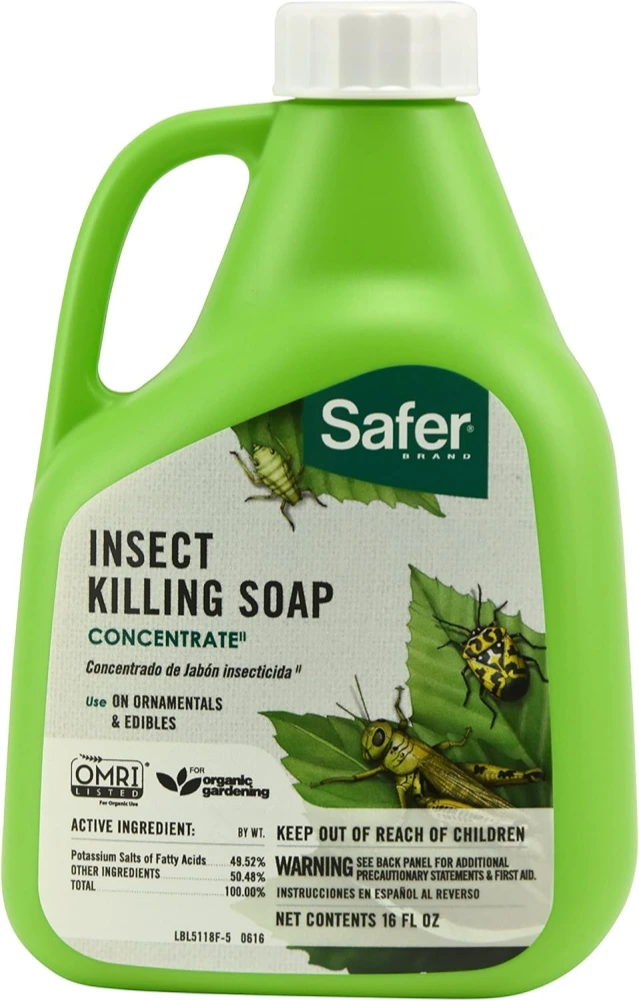
Safer Brand Insect Killing Soap
Use for:
Early scale insect problems and follow-up cleaning after manual removal.
Why I like it:
A gentle contact spray that fits a repeat-treatment approach.
Remember:
Spray coverage matters more than spray strength.
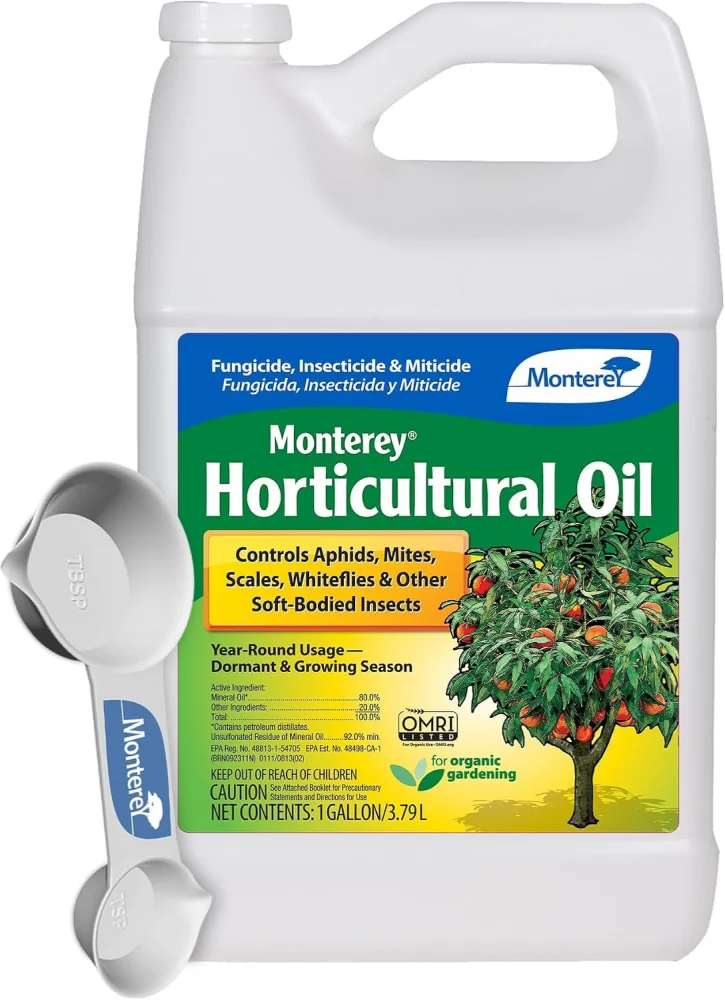
Bonide All Seasons Horticultural Oil
Role:
Second option for repeated scale insect problems
Best for:
Scale insects hiding on leaf undersides, veins, and petioles
Why I would choose it:
Useful when manual removal alone is not enough.
Avoid:
Using it on stressed Alocasia or mixing multiple pest sprays together.
Signs Your Alocasia Is Recovering
After treating scale insects, I do not judge success by whether every mark disappears from the old leaves. Damaged Alocasia leaves often keep their scars, even after the pest problem is under control.
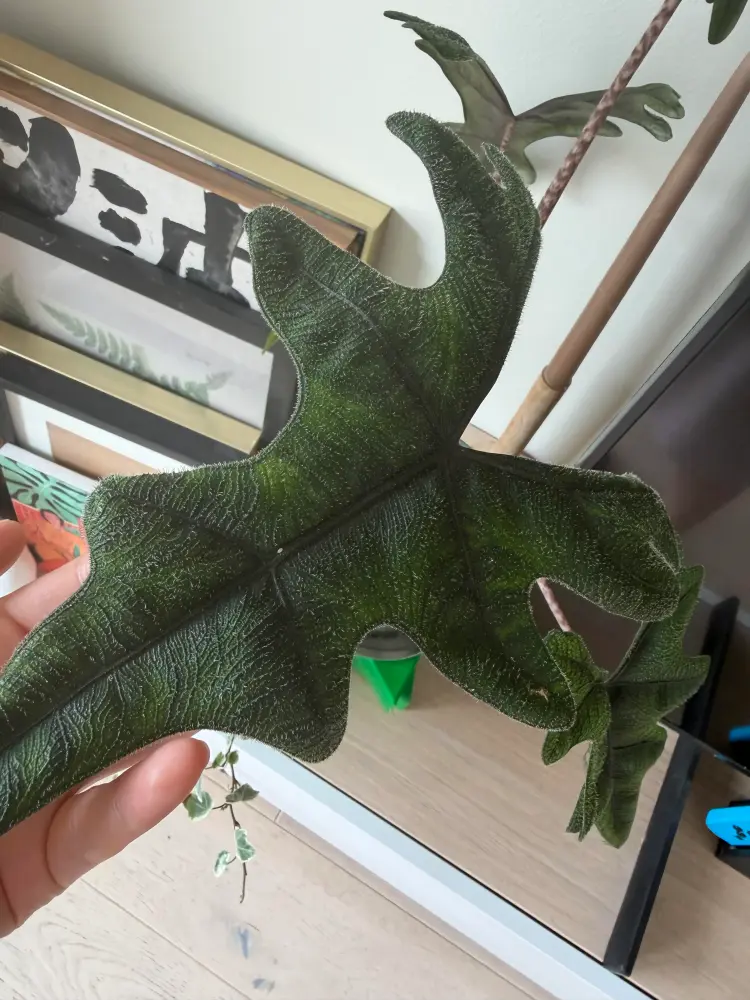
Instead, I look for signs that the plant is moving in the right direction:
- Fewer visible insects. After cleaning and treatment, I should see fewer scale insects appearing during follow-up inspections.
- Clean new growth. New leaves and petioles developing without new insects are a much better sign than trying to repair older damaged leaves.
- No spreading damage. The infestation should stop moving to new leaves or nearby areas of the plant.
For Alocasia, I pay more attention to the next leaf than the leaf that was already damaged. A healthy new leaf tells me the plant is recovering, even if the older leaves still show where the problem happened. If the plant continues declining after the pest issue is controlled, I also check for other problems such as Alocasia root rot.
When I Would Remove a Damaged Leaf
I do not remove an Alocasia leaf just because it has a few scale insect marks. If the leaf is still green and helping the plant photosynthesize, I usually leave it in place while I deal with the pest problem.
I would consider removing a leaf when:
- The leaf is heavily covered with scale insects and difficult to clean.
- The damage is severe enough that the leaf is no longer contributing much to the plant.
- The infestation keeps returning from the same damaged area.
- The leaf is already yellowing or naturally declining.
When I remove a damaged leaf, I prefer to solve the pest problem first rather than simply cutting away the visible symptom. Otherwise, new leaves can become affected if the insects are still present elsewhere on the plant.
How I Handle Scale Insects on Alocasia Now
Scale insects can look intimidating on Alocasia because they stay attached to the plant and are easy to miss at the beginning. But finding them early makes the problem much easier to manage.
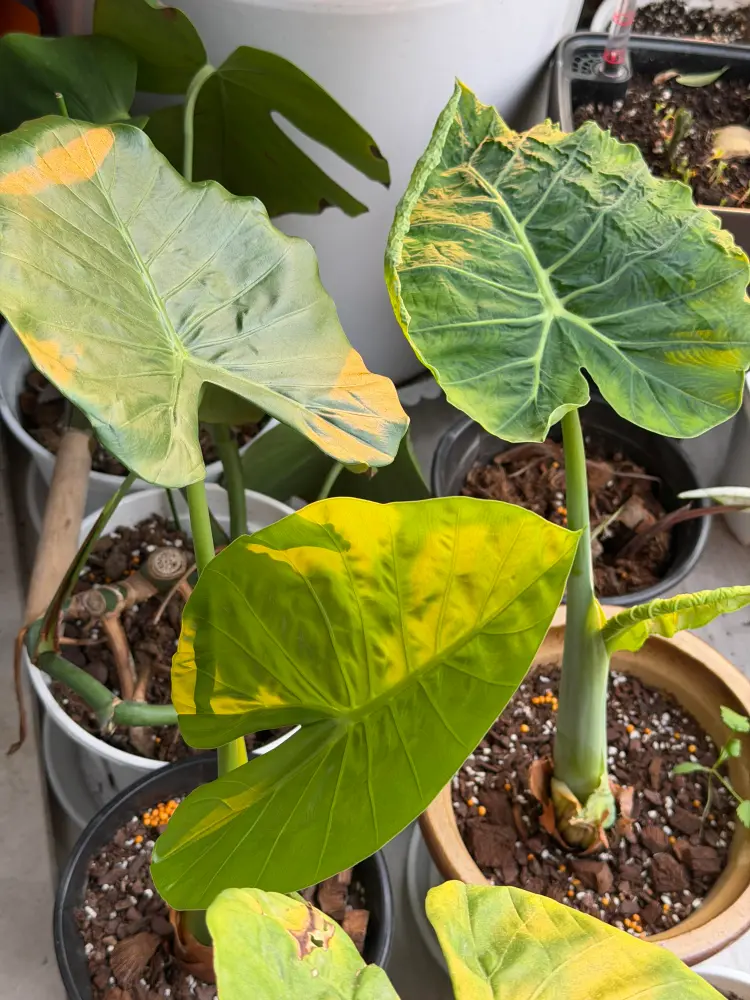
My approach is simple: identify the pest, remove what I can see, clean the plant carefully, and continue checking instead of assuming one treatment solved everything.
With Alocasia, I would rather use a gentle process that I can repeat than a harsh treatment that creates more stress for the plant. Healthy new growth is the sign I look for—not a perfect old leaf. Good recovery also depends on stable growing conditions, including proper Alocasia light requirements.