Yellow and brown leaves often appear together on Alocasia, but they’re rarely two separate problems. In most cases, they reflect different stages of the same process rather than multiple issues happening at once. What matters most isn’t the color itself — it’s the order of change. Understanding which symptom appeared first makes the difference between normal adjustment and a sign of real damage.
Yellow → Brown: A Slow Exit, Not Immediate Damage
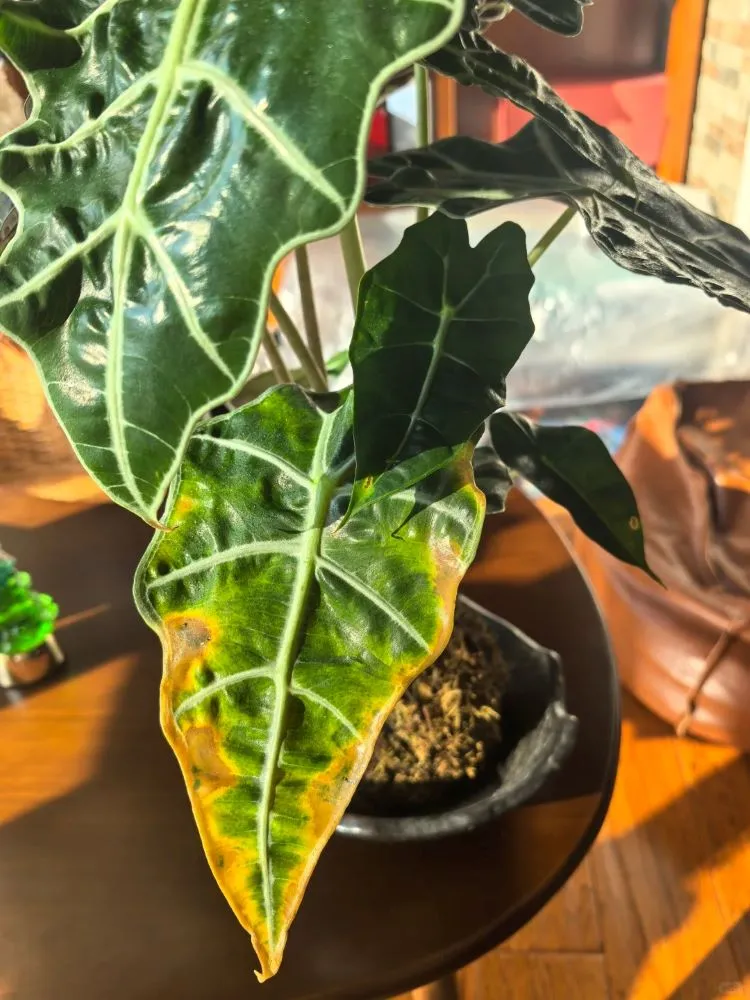
In this pattern, yellowing comes first. The leaf gradually loses its deep green tone, often starting from the lower or older leaves, while the structure stays firm. Only later do the edges or tips dry out and turn brown. This isn’t a sudden failure — it’s a slow withdrawal.
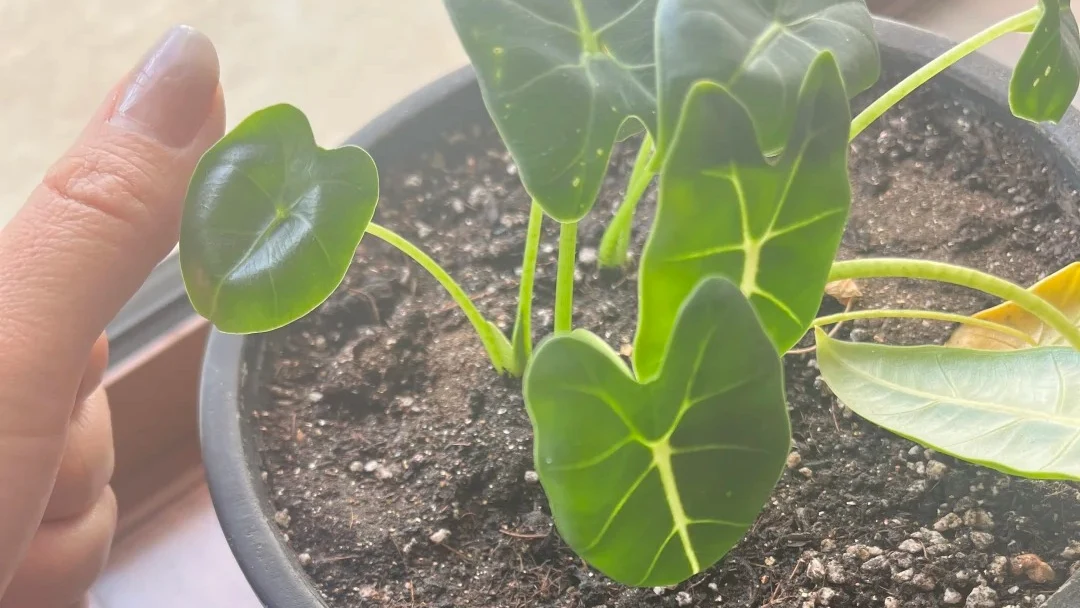
That’s exactly what happened with one of my Alocasias. In the photo above, the leaf didn’t collapse or soften overnight. It slowly turned yellow over time, stayed functional for a while, and only then began browning at the edges as it aged out. There was no spread to nearby leaves, and new growth remained unaffected.
When yellow comes before brown like this, it usually points to a normal exit process, not active damage. The plant is reallocating resources — often phasing out an older leaf after environmental adjustment, seasonal slowdown, or changes in watering rhythm and light exposure. The browning that follows is simply the final stage, not the cause.
This type of progression is typically slow, contained, and predictable. The key signal is stability: the decline stays limited to that one leaf, and the rest of the plant continues growing normally. In those cases, the yellow-to-brown sequence is less a problem to fix and more a process to recognize.
Brown → Yellow: Damage First, Decline After
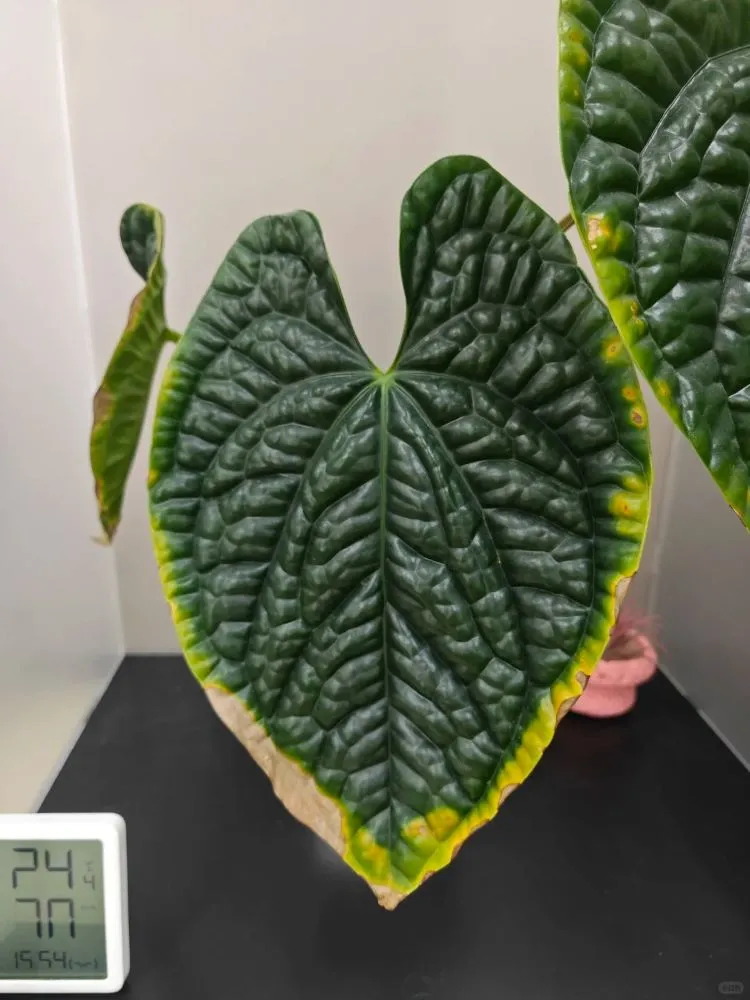
This pattern starts the other way around — and it’s the one I take much more seriously.
In this case, the leaf edges or tips turn brown first. The tissue often looks water-soaked, soft, or slightly translucent before it dries out. Only after that initial damage does the rest of the leaf begin to yellow. By the time yellowing shows up, the problem has already been in motion for a while.
That’s what I experienced with my own Alocasia in the photos above. The browning didn’t come slowly or evenly. It appeared along the margins, spread quickly, and had a soggy, weakened look at first. Within days, the yellowing followed across the leaf surface — not as a natural fade, but as a response to tissue failure.
When brown comes before yellow like this, it usually means the leaf was damaged first, not aged out. Common triggers are root stress, excess moisture, poor oxygen around the roots, or a breakdown between water uptake and transpiration. Once that balance is lost, the leaf can’t maintain itself, and decline accelerates.
This path tends to move fast, repeat on multiple leaves, and in some cases even affect new growth. Unlike the yellow-to-brown sequence, this isn’t a passive exit. It’s a sign that something in the plant’s water handling system needs attention — sooner rather than later.
When Yellow and Brown Seem to Happen at the Same Time
At first glance, yellow and brown often look like they appeared together. A leaf shows yellowing, brown edges, and discoloration all at once — and it’s tempting to treat it as a single mixed problem. In reality, this is usually a timing illusion.
What matters is not how the leaf looks now, but how it changed.
To sort this out, I always step back and reconstruct the sequence. Which symptom showed up first? Did the tissue feel dry and papery, or soft and waterlogged? Did the change unfold over weeks, or over just a few days? Those details reveal far more than color alone.
The goal here isn’t to diagnose a new category — it’s to rebuild the timeline. Once the order becomes clear, the pattern usually falls into one of the two paths above: a slow, low-risk exit, or a fast, damage-driven decline. The colors may overlap, but the process behind them never does.
Causes That Affect Both Colors (After Order Is Clear)
Once the order is clear — yellow first or brown first — only then do these broader factors start to matter. Looking at them too early often leads to the wrong fix.
Unstable watering patterns are one of the most common background causes. Alternating between very wet and very dry cycles puts constant stress on both roots and leaves, making color changes more likely regardless of which appears first.
Declining root health can influence both yellowing and browning. Reduced oxygen, compacted soil, or early root damage weakens the plant’s ability to regulate water, and leaf symptoms tend to follow.
Salt or fertilizer buildup is another slow contributor. Over time, excess minerals interfere with water uptake, often showing up as edge damage or uneven yellowing that doesn’t respond to simple watering adjustments.
Sudden changes in light or temperature can trigger similar mixed symptoms. Moving a plant closer to a window, introducing cold drafts, or shifting seasons too quickly can all force the plant to rebalance faster than it can adapt.
These factors matter — but only after the sequence is understood. Without knowing which color came first, addressing them is mostly guesswork.
What Matters More Than the Color
Color alone rarely gives the full answer. Yellow and brown are just visible outcomes, not explanations by themselves. What actually matters is the sequence behind them.
Once you shift the focus from color to order, the picture becomes clearer. Looking at how the change unfolded — slowly or quickly, evenly or abruptly — tells you far more than the final appearance ever could.
In the end, it’s not about reacting to what the leaf looks like in a single moment. It’s about reading the process that led there.
FAQ
Trouble with your Alocasia?
Find real fixes for yellow leaves, drooping stems, and root issues in our Problems Hub.
Go to Problems Hub →