Yellowing leaves and drooping often show up together on Alocasia, but they’re not two separate problems. When these symptoms appear at the same time, they usually point to a breakdown in root-zone respiration and overall environmental rhythm rather than a simple watering mistake. The issue isn’t how much water the plant receives, but how air, moisture, and light are interacting. Until that balance is restored, adjusting watering alone rarely solves the problem.
What Yellow + Drooping Together Usually Means
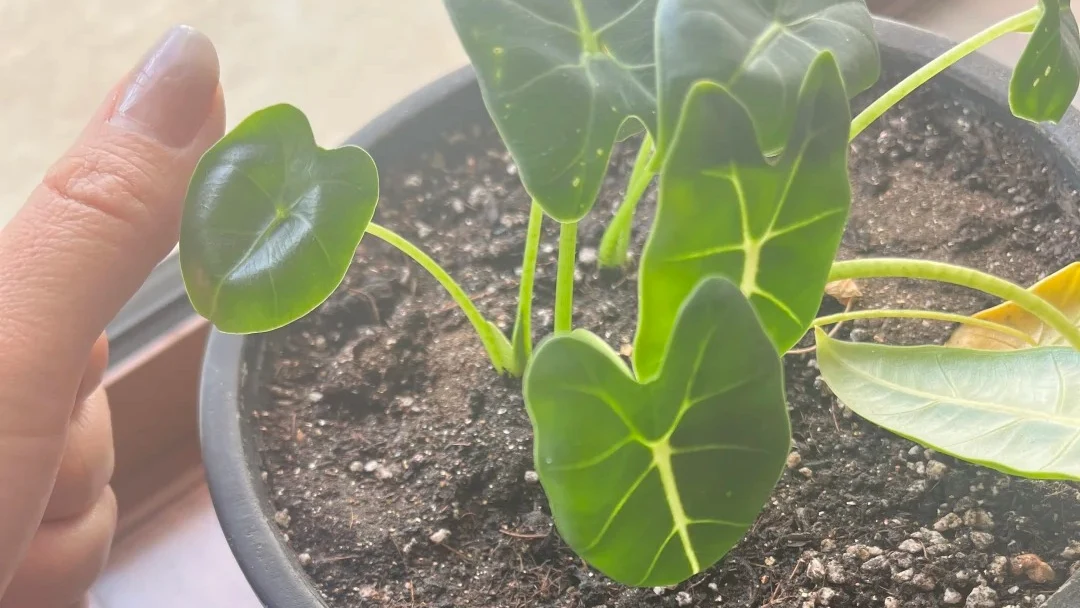
When yellowing and drooping appear at the same time on Alocasia, the issue is rarely localized. Leaves lose their rich green tone, turning pale or unevenly yellow, while the petioles soften and can no longer hold the leaf upright. The whole plant looks like it has “given up” structurally, not just cosmetically.
This combination is often accompanied by brown or scorched tips, especially on older or outer leaves. It shows up most frequently in crowded pots, where multiple plants compete below the soil, and in poorly ventilated indoor spaces where air exchange is limited.
The key point is this: this is not single-leaf damage. It’s a coordinated response from the plant as a whole. When roots struggle to breathe and the surrounding environment stops supporting normal transpiration, yellowing and drooping appear together as a system-level signal — not as isolated symptoms.
My Case: Healthy → Decline in One Month
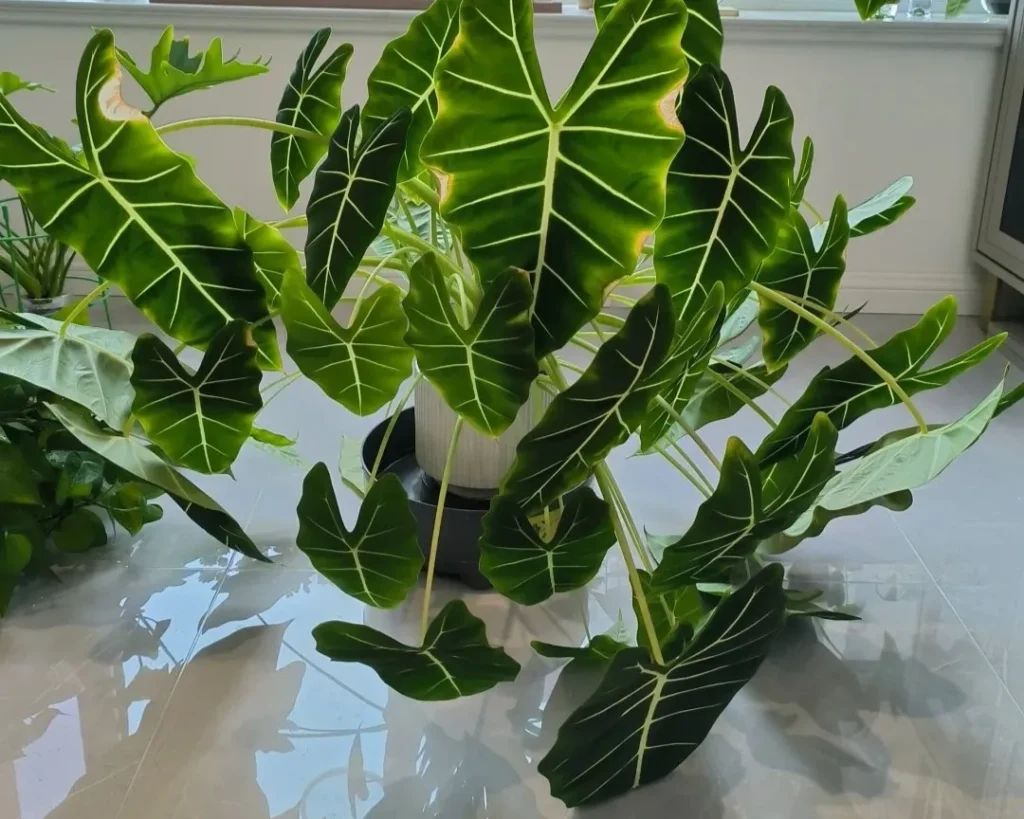
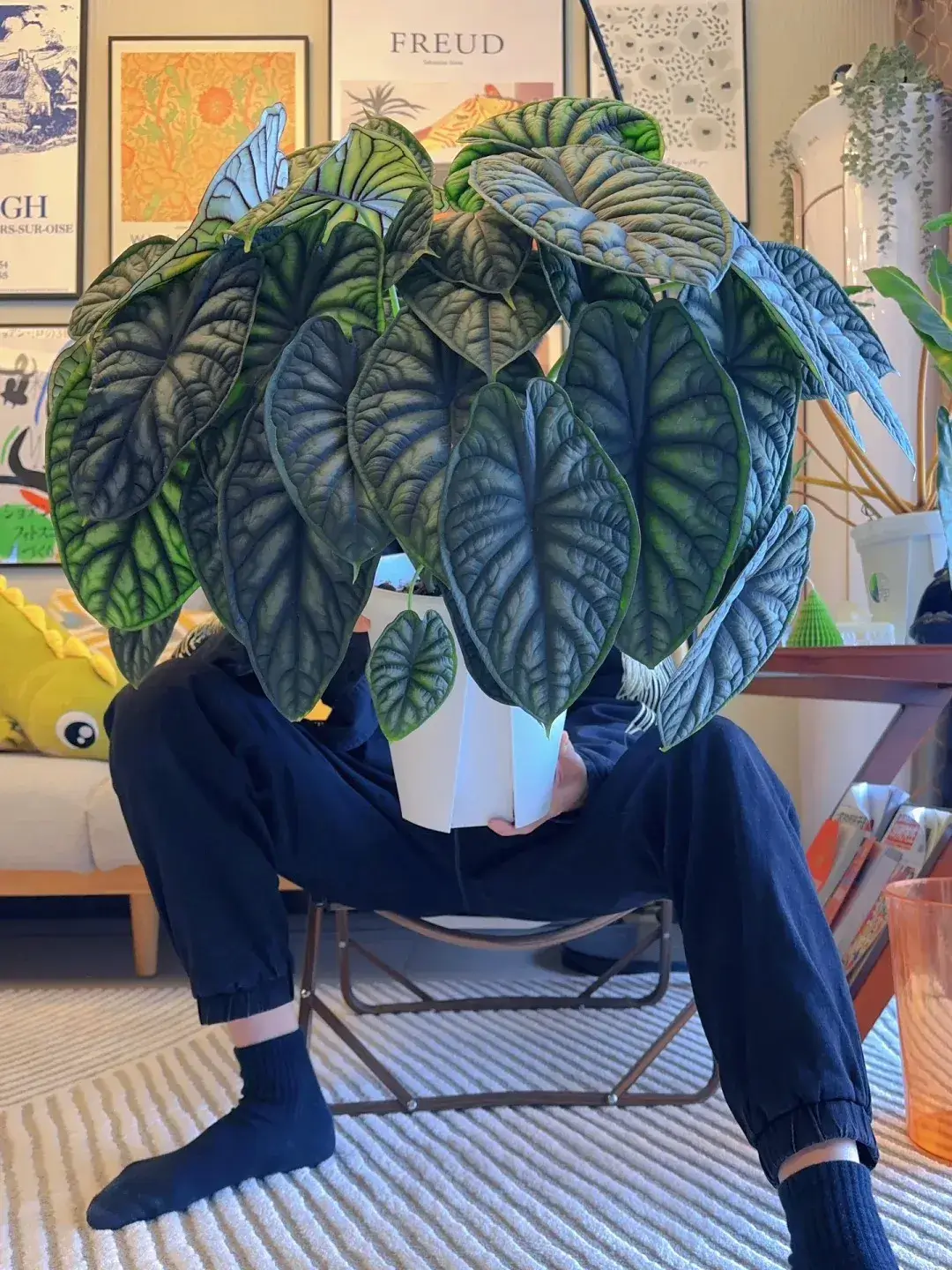
This plant didn’t decline slowly. For a long time, it was stable — upright leaves, solid petioles, good color, no warning signs. The change happened within about a month, which immediately told me this wasn’t simple aging.
The biggest shift wasn’t watering volume or light placement, but the living environment. The apartment became mostly unoccupied, which meant almost no daily airflow. At the same time, watering was stretched from every four days to about once a week. The light source stayed the same, but daylight hours were noticeably shorter than in summer.
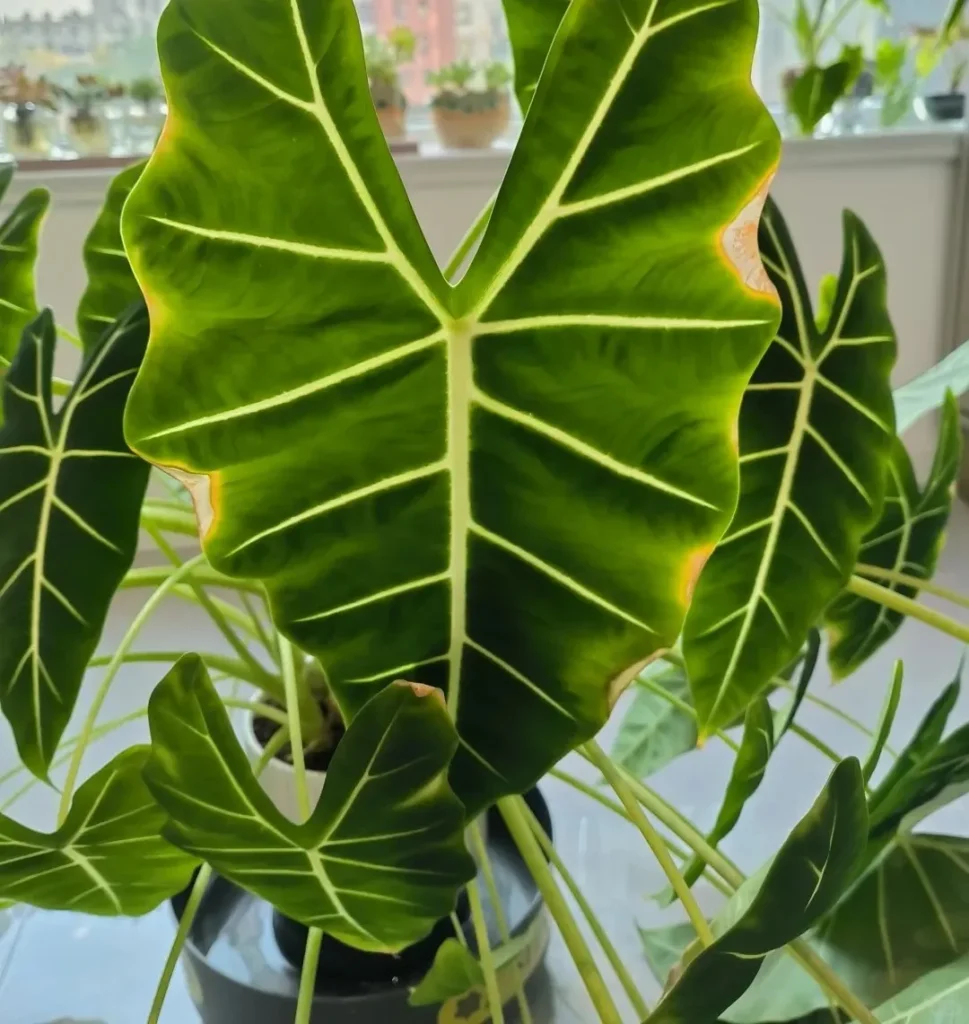
The result was a confusing mix of symptoms: yellowing leaves, burnt tips, and clear drooping across the plant. On the surface, it looked like dehydration. The soil even felt dry near the top, which made “needs more water” feel like the obvious answer.
But that conclusion didn’t hold up. What was actually happening was stagnation. With reduced airflow, crowded roots, and slower evaporation, the root zone stayed oxygen-poor even as the surface dried. The plant wasn’t failing from lack of water — it was struggling to breathe.
👉 It looked like drought. In reality, it was suffocation.
Why This Happens (The Core Mechanism)
The trigger is low airflow, but the failure happens underground.
When air movement drops, oxygen exchange in the root zone slows down dramatically. Even if the soil surface feels dry, moisture inside the pot evaporates far more slowly. Roots sit in a low-oxygen environment longer than they should, and their ability to absorb and regulate water weakens.
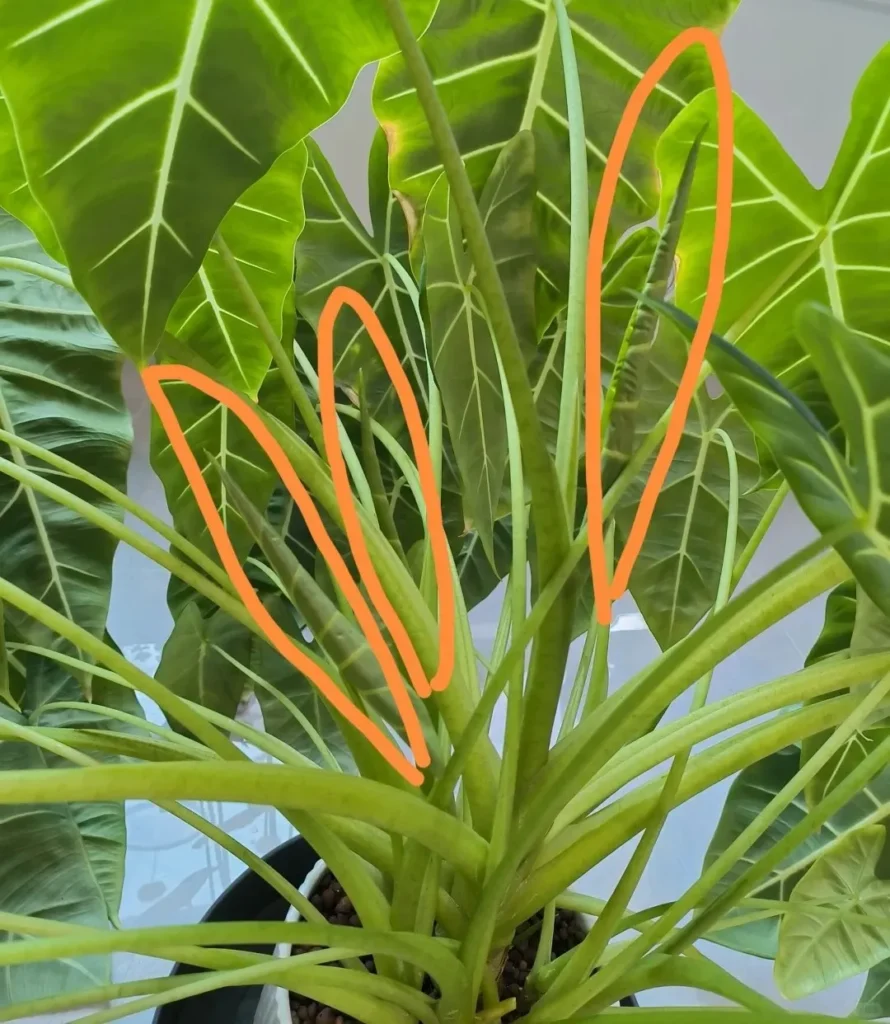
This effect is amplified when multiple plants share one pot. Dense roots compete for the same limited air pockets, and water moves unevenly through the soil. Adding a layer of decorative pebbles or clay balls on top may look neat, but it further seals the surface, reducing gas exchange even more.
The result is a breakdown in coordination:
roots can’t take in water properly, and leaves can’t stay upright.
Yellowing reflects disrupted metabolism. Drooping shows loss of internal pressure and structural support. Together, they point to one core issue — the plant isn’t failing because it’s dry, but because its roots are effectively suffocating.
👉 Roots can’t absorb. Leaves can’t hold.
The Drooping Trap: Light Reflection
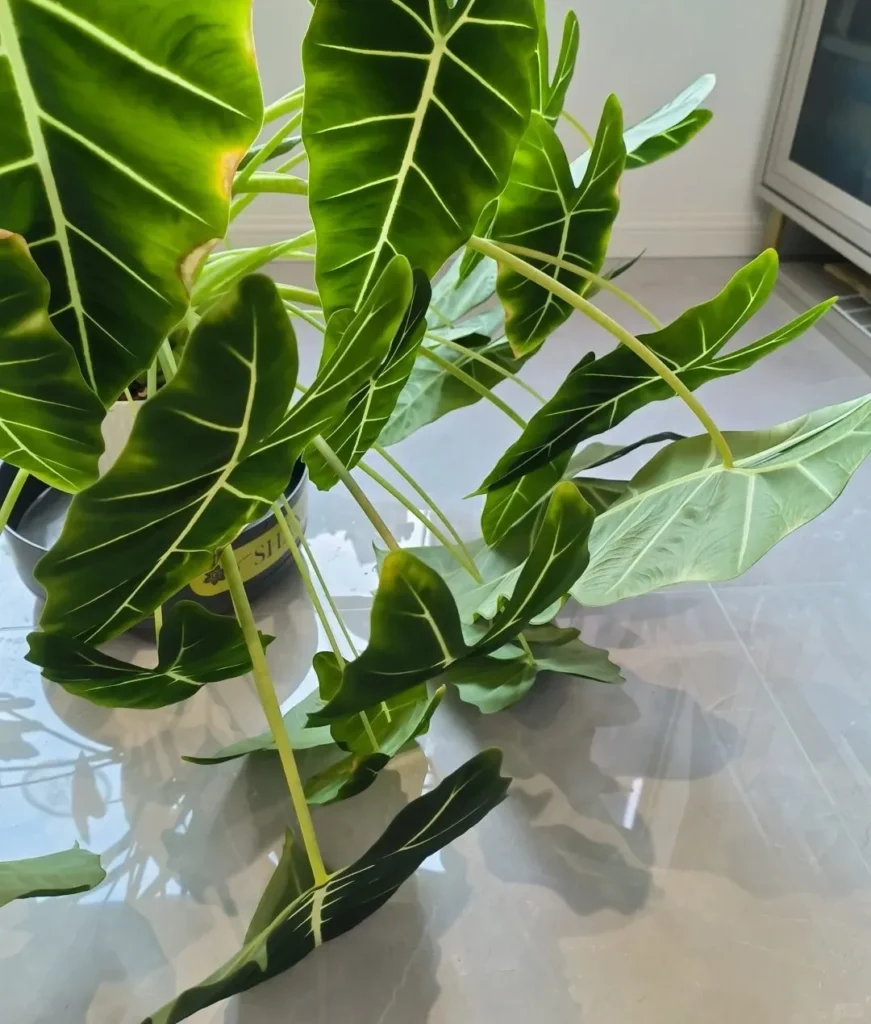
Alocasia is extremely light-seeking — sometimes to a misleading degree.
In indoor spaces, reflective surfaces like tiles, white tables, or glossy floors can act like secondary light sources. The plant doesn’t distinguish between direct light and reflected light. It simply responds to the brightest direction it detects.
When this happens, the petioles begin to stretch and lean toward the reflection. Leaves tilt, the plant looks off-balance, and the whole clump can appear to be “collapsing.” Structurally, nothing is failing — it’s just a directional response.
I saw this clearly in my own setup. After moving the plant away from reflective flooring and placing it in a more evenly lit spot, the drooping stopped almost immediately. No change in watering. No pruning. Just a shift in position.
👉 This is a physical light response, not disease or root damage.
If the plant perks up after repositioning, you’re not dealing with a health issue — you’re correcting a visual trap.
What Actually Fixed It
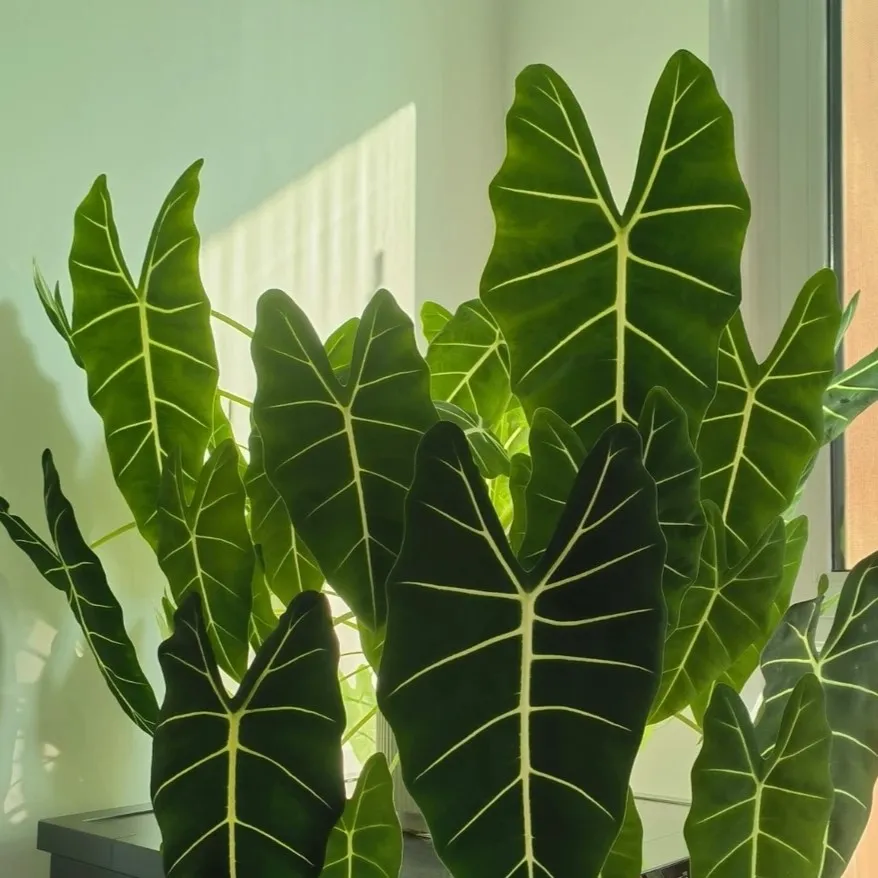
I didn’t change everything at once. I fixed the airflow first.
The biggest shift was daily ventilation. Opening the window for at least 30 minutes a day immediately changed how the plant responded. Once air started moving, the pot stopped staying damp for days, and the leaves began holding themselves up again.
Next, I removed the clay pebbles from the soil surface. They looked tidy, but in a multi-plant pot they were quietly trapping moisture and limiting gas exchange. Once exposed, the soil dried more evenly and predictably.
I also adjusted the plant’s position to eliminate reflective light from tiles and white surfaces. That alone reduced exaggerated leaning and made the drooping look far less dramatic.
Severely yellowed leaves were cut back, not as a fix, but to reduce unnecessary stress on the plant while it stabilized.
Only after airflow and posture improved did I add a very light feeding — and even then, cautiously. Feeding before airflow returned would have made things worse.
👉 Air first. Then water. Then fertilizer.
How to Judge This Pattern Yourself
Before adjusting water or fertilizer, ask yourself these four questions:
- Has the air been mostly stagnant?
Rooms that stay closed for days — especially unused spaces — quietly trap moisture around the pot, even when the soil surface looks dry. - Does the soil feel wet, or does it feel stuffy?
“Stuffy” soil isn’t dripping wet, but it dries slowly and smells heavy. That’s a sign roots aren’t breathing well. - Are there multiple plants sharing one pot?
More roots mean higher oxygen demand — and less margin for poor airflow. - Is there a reflective surface nearby?
Tiles, white tables, or glossy floors can pull leaves toward false light, exaggerating drooping.
If you answered yes to more than one of these, don’t rush to water more — or cut water back.
👉 Fix airflow first. Once air moves, the correct watering rhythm usually reveals itself.
When yellowing and drooping show up together on Alocasia, they’re rarely random. It’s a signal that the plant’s environmental rhythm is off — air, water, and light are no longer working together.
For Alocasia specifically, stagnation causes more harm than dryness. A plant can tolerate being slightly dry for a while, but it struggles quickly when air stops moving and roots can’t breathe.
The key isn’t reacting to a single symptom. Step back, look at the sequence and the setting, and read the process as a whole — that’s where the real answer usually is.
FAQ
Trouble with your Alocasia?
Find real fixes for yellow leaves, drooping stems, and root issues in our Problems Hub.
Go to Problems Hub →