I started writing this because I kept getting the same question over and over again:
“My Alocasia stopped growing. What did I do wrong?”
And most of the time, the answer is — nothing.
When an Alocasia pauses, it’s rarely sick, and it’s almost never “ruined.” What’s actually happening is much quieter: the plant has shifted its priorities. Roots, flowers, recovery, temperature adjustment — growth doesn’t always mean new leaves.
Once I realized this, a lot of “mystery problems” stopped being problems at all.
When an Alocasia seems stuck, it’s usually doing one of five very specific things.
If you know which one you’re looking at, you stop guessing — and you stop overreacting. If you want a place to troubleshoot symptoms one by one (yellowing, drooping, curling, root issues), I keep everything organized in my Alocasia Problems Hub.
Case 1: It Stopped Growing Because It Started Flowering
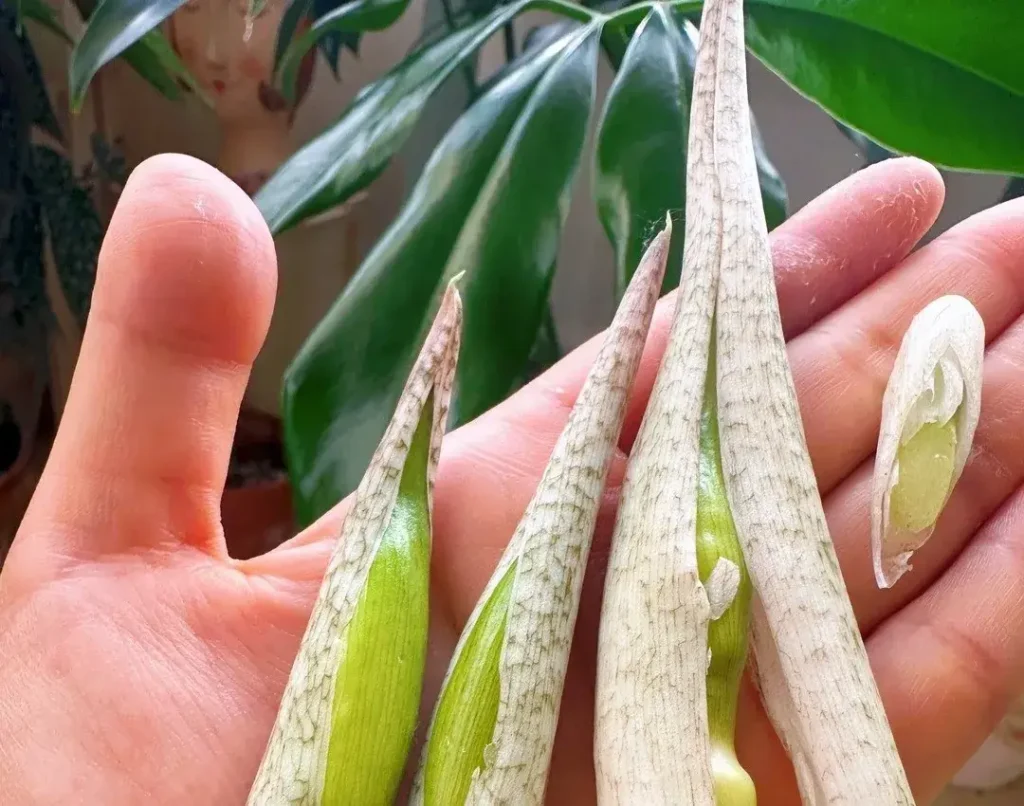
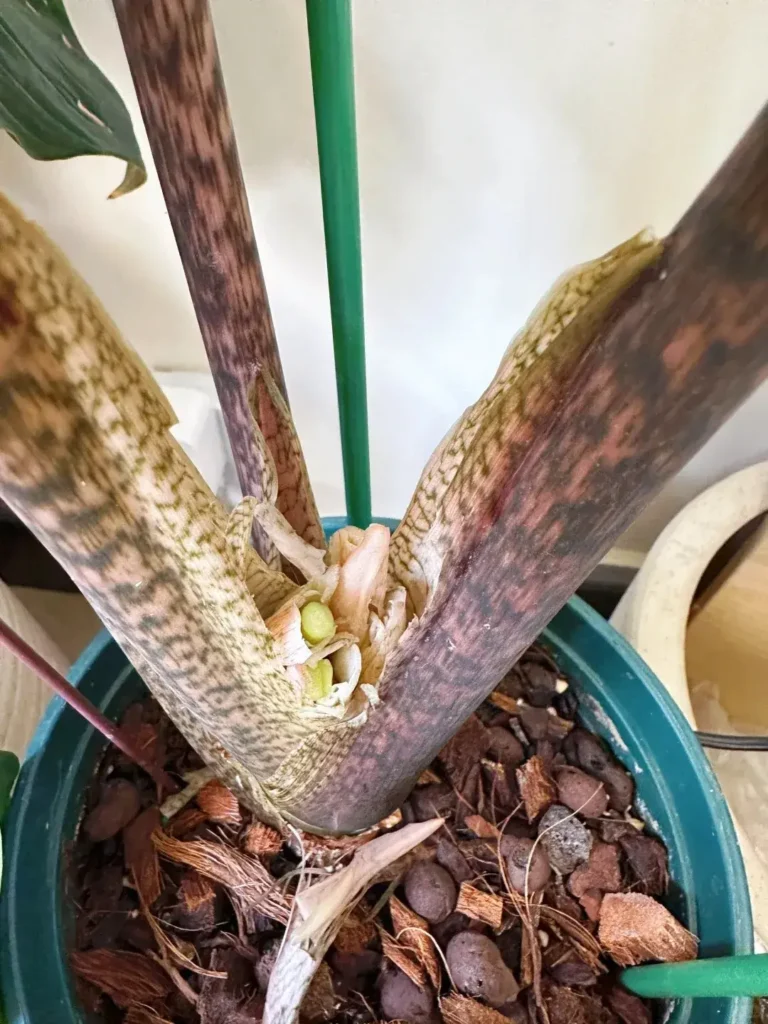
(It wasn’t resting — it was spending everything on blooms)
My Jacklyn had always been a fast grower, even through winter. So when it suddenly stopped for almost a month, I knew this wasn’t a seasonal slowdown.
I tried watering and fertilizing first, but nothing responded. The plant looked healthy, just completely stalled.
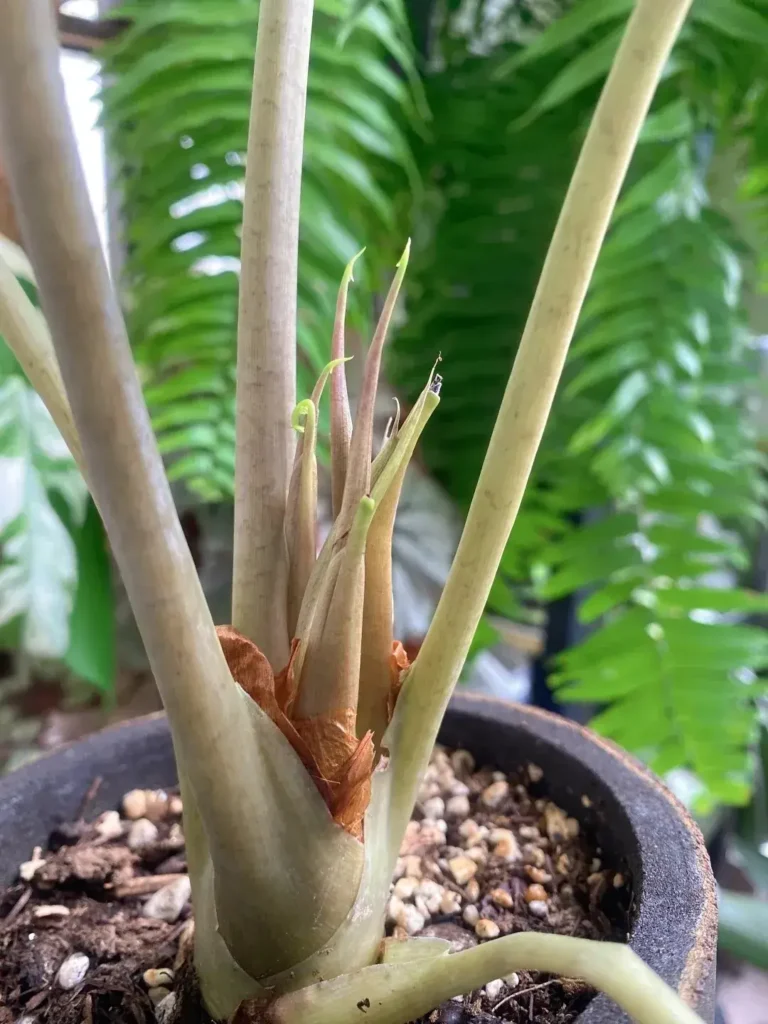
What made me look closer was the base of the petiole. It wasn’t soft or rotting, just noticeably swollen in a way that didn’t match new leaf growth.
When I gently opened the sheath, I realized why nothing was happening. There was no new leaf inside — instead, there was a cluster of flower buds developing all at once.
That was when I stopped blaming nutrients or care mistakes. For potted Alocasia, flowering isn’t a reward; it pulls directly from stored energy that would otherwise support leaves and roots.
I chose to remove all the flower buds immediately, without waiting. About one to two weeks later, the growth point clearly reactivated and leaf growth resumed.
My rule from this case: if you see swelling without a leaf unfolding, suspect flowers first — not fertilizer.
Case 2: It’s Recovering From Division Shock
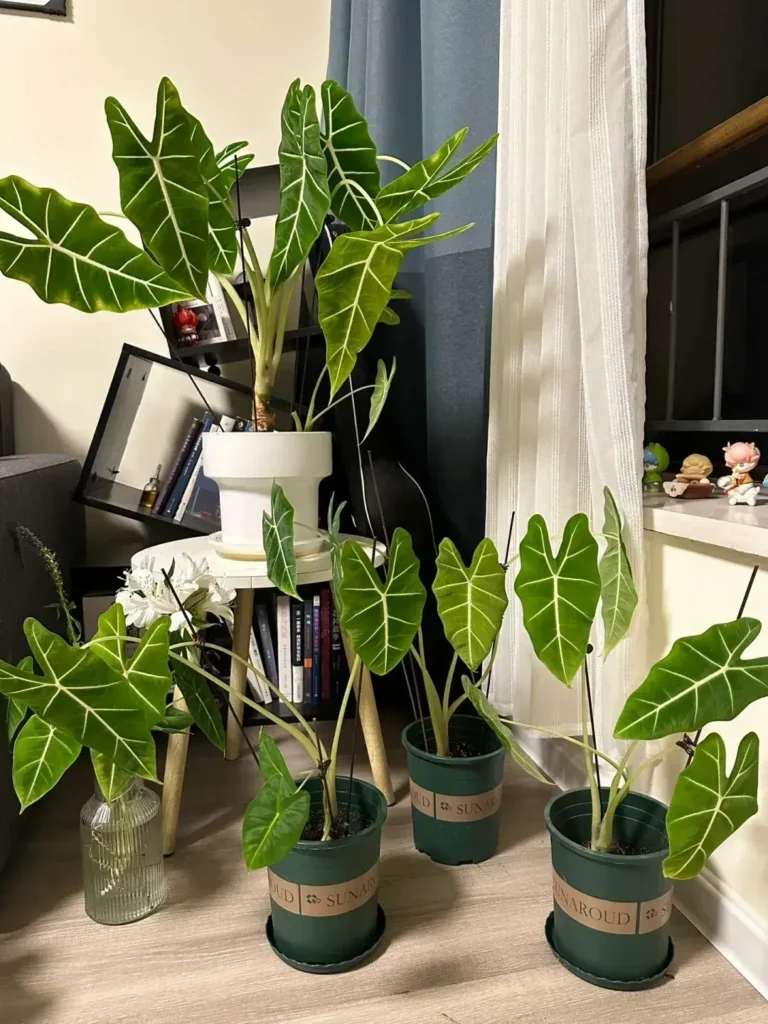
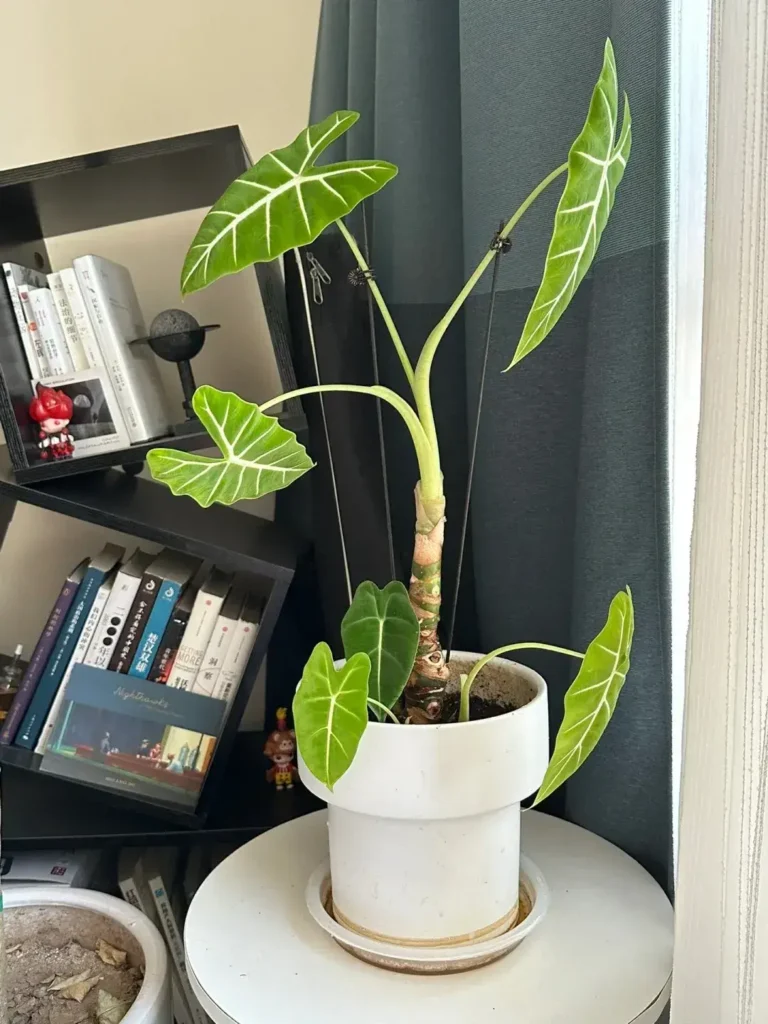
(After division, Alocasia often “reboots” before growing again)
Before division, my Green Swan had large, full leaves and steady growth. The plant looked established and strong, which is why the slowdown afterward felt so alarming.
After dividing it, the old leaves yellowed and dropped quickly. New growth didn’t stop completely, but the leaves came out much smaller than before.
What really stood out to me was where those new leaves appeared. Instead of emerging lower on the plant like before, they formed higher up along the stem.
That pattern told me this wasn’t a nutrient issue. Division is a major shock to the root system, even when it’s done carefully. If you’ve just divided or are planning to, this Alocasia propagation guide explains the safest timing and what “normal recovery” looks like afterward.
From my experience, the plant shifts into survival mode after division. It focuses first on rebuilding roots and stabilizing stem structure, not on producing large leaves.
Because of that, I avoided the two things that usually make this phase worse. I didn’t push fertilizer, and I didn’t keep moving the plant around trying to “wake it up.”
What I did instead was keep conditions boring and consistent. Stable light, gentle dry–wet cycles, and patience.
I’ve learned to expect this phase to last one to two months. During that time, the plant may look unimpressive, but it isn’t failing.
My rule from this case:
A divided Alocasia isn’t regressing — it’s rebuilding its base system before growing again.
Case 3: It’s Getting Light, But Not Enough to Grow Big
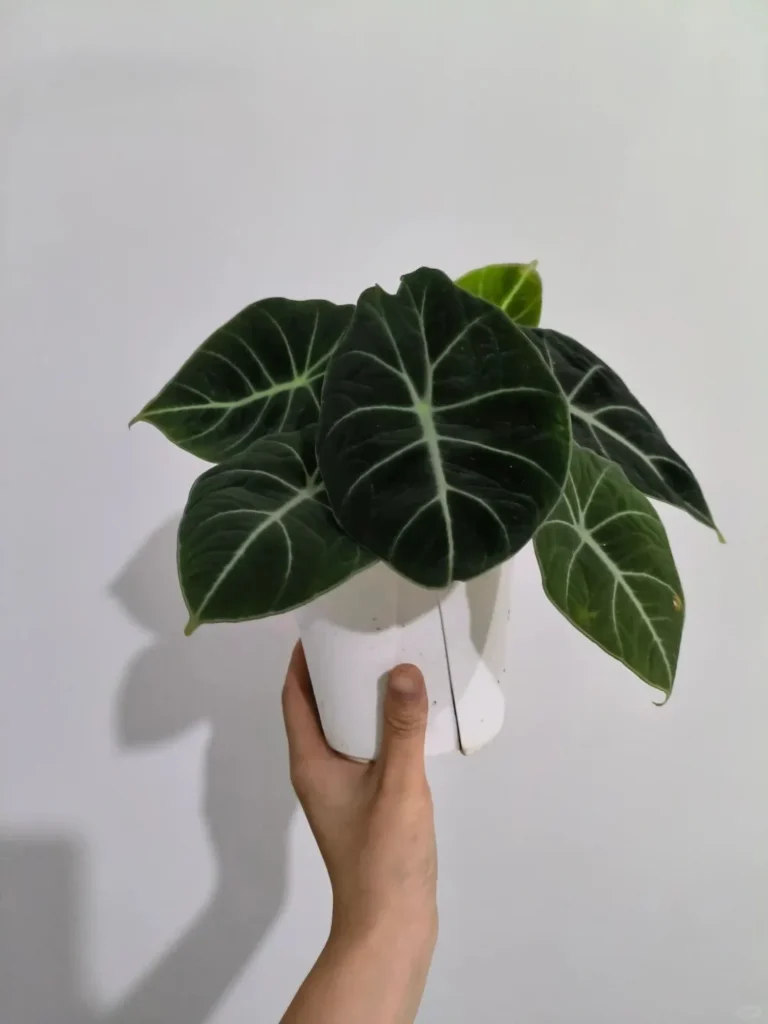
(Surviving light, not growth-level light)
I understood this case almost immediately when I saw it. The plant was on a balcony with light, but direct sun lasted less than an hour a day.
Most of the time, it was living on bright but diffused light. That’s enough for an Alocasia to stay alive, but not enough to grow large leaves.
The plant kept producing new leaves, which is why this situation is easy to misread. Each leaf came out smaller than the last, and the internodes shortened, giving the plant a compressed, stunted look.
That pattern told me the plant wasn’t sick or damaged. It was simply operating within a “safe light” range rather than a “growth” range. If you’re not sure whether your plant is in “survival light” or “growth light,” my Alocasia light requirements page breaks down what I look for in real homes.
Alocasia can survive under moderate light for a long time. But large leaves require a higher energy input than survival alone.
I didn’t move the plant into harsh sun. Instead, I brought it closer to the window and, in some cases, added one to two hours of supplemental light.
Once the light level crossed that threshold, leaf size began increasing again.
My rule from this case:
Small leaves aren’t a disease — they’re a sign the light is enough to maintain, but not enough to push growth.
Case 4: It Entered a Temperature-Induced Pause
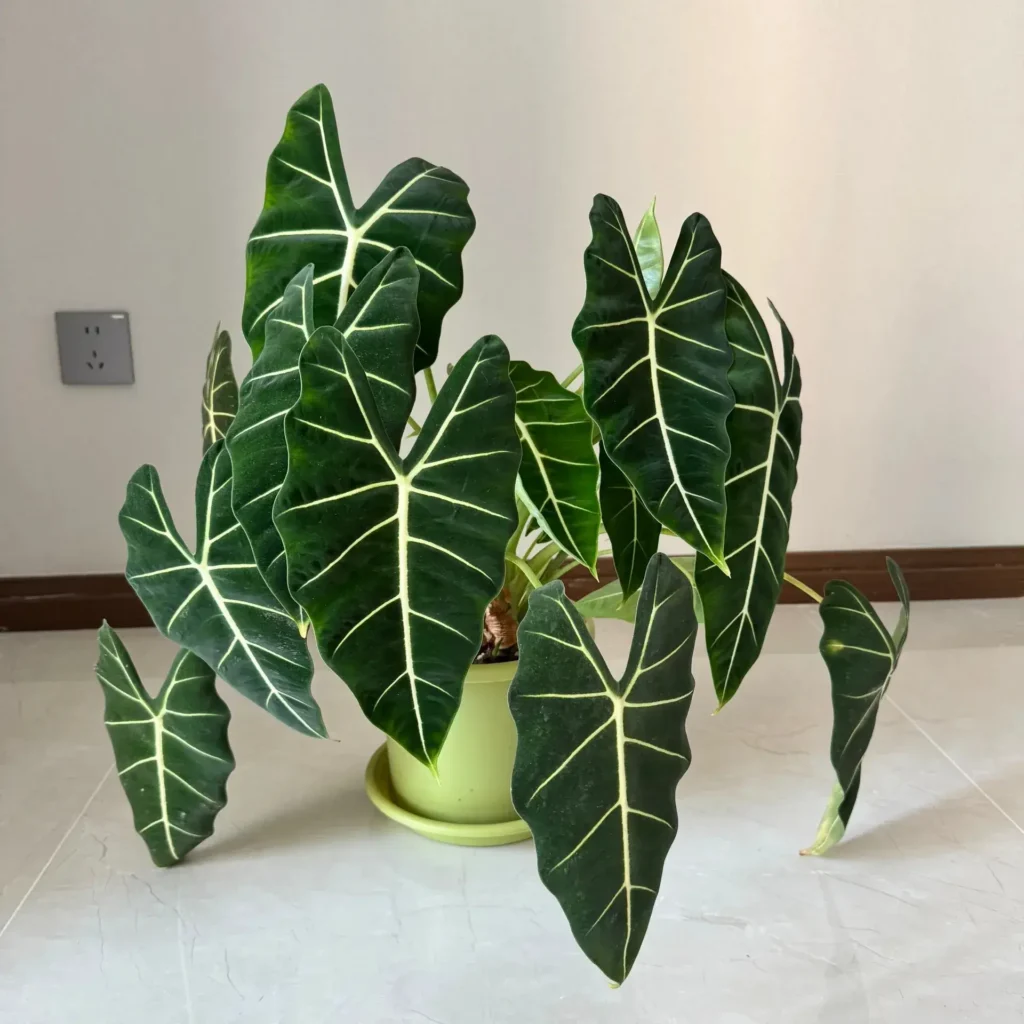
(Not dying — just put on pause)
When I see this situation, the first thing I check isn’t fertilizer or pests. I look at whether the environment has quietly turned colder, especially if day–night temperature differences have increased.
In this case, the plant had been growing in a consistently warm setting for months. Then, within the last month, temperatures dropped noticeably — even though nothing else seemed to change.
What confused people was that other Alocasias nearby were still producing leaves. But this one, a large variety, stopped completely.
That pattern made sense to me. Larger Alocasia types, like Giant Taro or Green Swan, react more strongly to temperature shifts than smaller varieties.
They don’t struggle forward under suboptimal conditions. They wait. When my Alocasia slows down in cooler weeks, I go back to basics: light, watering rhythm, airflow. This Alocasia care guide is the checklist I use before I “do anything.”
So I don’t try to push growth during this phase. No extra feeding, no repotting, no constant adjustments.
What I do instead is keep light and temperature as stable as possible and let time do the rest. Once indoor temperatures rise again or spring returns, growth usually resumes on its own.
My rule from this case:
Some Alocasias aren’t lazy — they’re just cold.
Case 5: New Leaves Keep Getting Smaller Because Storage Is Depleted
(Not a lack of fertilizer — the reserves are running low)
When I see this pattern, my first reaction isn’t to reach for fertilizer. I stop and ask myself one question: has this plant been growing nonstop for a while?
In many cases, the answer is yes. The plant keeps pushing new leaves, but the roots or corm can’t replenish energy fast enough. In this phase, I don’t increase watering “just because it’s growing.” I stick to a simple rhythm — this guide on how often to water Alocasia matches the exact method I use (pot weight + dry–wet cycle).
That’s when leaf size starts shrinking. New leaves come out thinner, lighter, and noticeably smaller than the previous ones. If shrinking leaves are happening alongside soft petioles or a “tired” droop, I also check roots — because a weak root system can mimic “low energy.” This is how I assess Alocasia root rot early.
This isn’t the same as classic nutrient deficiency. The plant isn’t missing food — it’s burned through its stored reserves.
So I don’t force growth. I avoid heavy feeding and definitely don’t try to “correct” the next leaf.
What I do instead is support recovery. I use light, consistent feeding and give the plant time to rebuild its internal storage.
Once reserves stabilize, leaf size usually recovers on its own.
My rule from this case:
Shrinking leaves usually mean energy is being spent faster than it can be replaced — not that nutrients are missing.
Your Alocasia Didn’t Stop Growing — It Just Changed Priorities
After growing Alocasia for a while, the biggest change wasn’t learning how to “fix” them. It was learning when not to.
Most pauses aren’t failures. They’re shifts — toward roots, recovery, or storage — things you don’t see yet. If you’re still unsure which case you’re in, start from the symptom you see (yellow, droop, curl, root smell) and work backward — that’s why I built the Problems section as a decision tree.
Once I stopped correcting every slowdown, my plants grew better.
Sometimes, they’re not stuck at all — they’re just preparing for what comes next.
FAQ
When an Alocasia is dying, you usually see multiple warning signs at once: rapid leaf loss, mushy stems, or collapsing roots. A growth pause by itself is often a shift in priority — not failure. I only worry when the plant looks worse week by week, not just “stuck.”
I only fertilize if I’m confident the plant is actively growing and has the root system to use nutrients. During pauses caused by flowering, division shock, cold, or recovery, fertilizer often does nothing — or makes things worse. Timing matters more than strength.
Division shock, temperature drops, and root rebuilding all take time. I start investigating deeper only if there’s no movement after conditions improve and new growth should reasonably resume.
This can happen with light that’s sufficient for survival but not for large leaf production, or when stored energy has been depleted after heavy growth. In those cases, pushing harder rarely helps — stability does. If you want to confirm quickly, I wrote a simple guide on Alocasia light requirements that helps you tell “enough to live” vs “enough to size up.
I don’t repot just because growth slows down. Repotting adds another layer of stress, especially if the pause is already caused by roots recovering, temperature changes, or flowering. I repot when roots are crowded and the plant is otherwise ready to grow — and I stick to a chunky mix like the one in my best soil mix for Alocasia
If leaves are still firm, growth points are intact, and nothing is actively worsening, I usually wait. Intervention makes sense when damage is progressing — not when the plant is simply quiet.
Trouble with your Alocasia?
Find real fixes for yellow leaves, drooping stems, and root issues in our Problems Hub.
Go to Problems Hub →