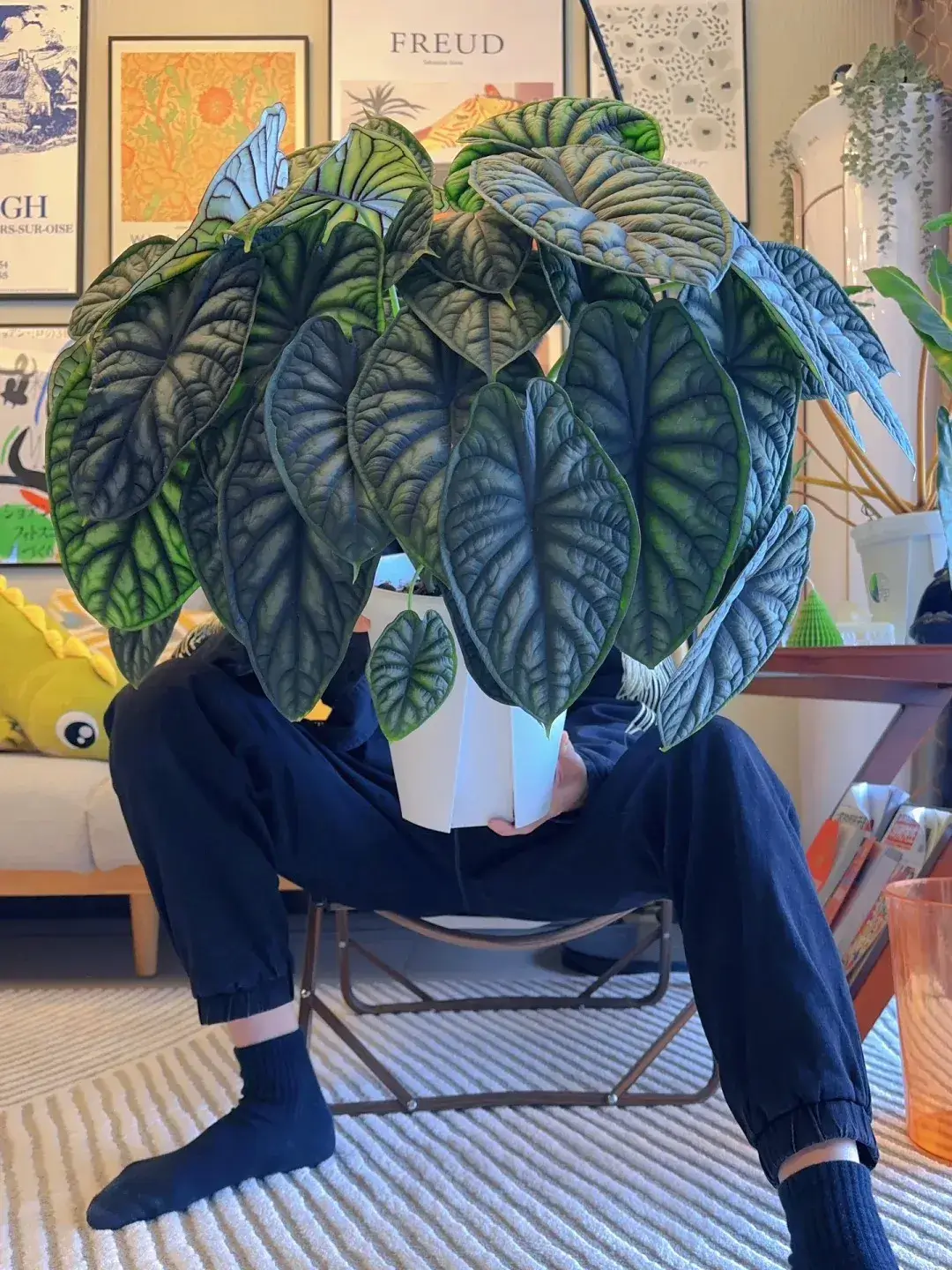
Alocasia Sarian looks like the kind of plant that should stand tall no matter what. The leaves are huge, the petioles are long, and when it is growing well, it has that oversized tropical look that can make a room feel completely different. It fits naturally with other Elephant Ear Alocasia types, but it can be more dramatic when indoor conditions are not right.
But mine did not arrive looking strong at all. When I first brought it home, the stems felt soft, the leaves were flopping in different directions, and the small pot could barely keep the whole plant upright. I honestly thought I might lose it.
What surprised me was how slowly it recovered. This was not a plant that bounced back in three or four days. I used a support pole for more than 20 days, kept it in bright filtered light with good airflow, and focused on keeping the roots stable instead of constantly changing its care. Little by little, the stems firmed up, the leaves held better, and eventually the plant could stand on its own without support.
This guide is based on that experience: how I helped a weak, leaning Alocasia Sarian recover after arrival, how I adjust care in winter, and what changed when I later gave it stronger light outdoors. Sarian can be dramatic when it struggles, but once warmth, light, water, and root health are balanced, it is much stronger than it first looks.
Quick Answer: How I Keep Alocasia Sarian From Collapsing
To keep Alocasia Sarian from collapsing, I focus on warmth, bright filtered light, airflow, and root stability before anything else. This plant may look tough, but it can flop quickly when it is cold, dry, underlit, or stressed after shipping. If your plant is already leaning badly, my Alocasia leaves drooping guide can help you compare the common causes.
In winter, I try to keep Sarian above 18°C / 65°F, away from cold drafts, and out of spots where the pot stays wet for too long. I water much less than I do during active summer growth, and I always let the pot dry down before watering again.
If the stems are already weak, temporary support can help. I used a support pole on mine for more than 20 days while it recovered, then gradually removed it once the petioles became firmer and the plant could stand on its own.
I also separate winter care from active-growth care. In true winter slowdown, I do not push fertilizer. But when Sarian is warm, bright, actively growing, and drying properly between waterings, light feeding can help support stronger stems and larger leaves.
Why Alocasia Sarian Struggles in Winter
Alocasia Sarian can look powerful in the growing season, but winter exposes its weak points quickly. The plant has huge leaves, long petioles, and a fast-growing root system when conditions are warm. Once the room becomes colder, darker, or drier, the same plant can suddenly look soft, floppy, and unstable.
For me, winter Sarian care is less about pushing new growth and more about keeping the plant stable until warmth and stronger light return. The three things I watch most closely are temperature, humidity, and how long the soil stays wet.
Cold Makes the Stems Weak
When Alocasia Sarian gets too cold, the first thing I notice is usually the petioles. They lose firmness, lean more easily, and the whole plant can start looking floppy. This is especially obvious on large plants because the leaves are heavy and the stems need strength to hold them upright.
Once temperatures drop below about 18°C / 65°F, Sarian often slows down. It may stop pushing new leaves, hold water longer, and become more sensitive to mistakes. If temperatures drop closer to 15°C / 59°F or below, cold stress becomes much more serious. Soft stems, collapsed leaves, and water-soaked damage can appear, especially if the soil is wet at the same time.
The dangerous combination is not just cold air by itself. It is cold air plus wet soil. When the roots are sitting in a cold, damp mix, they cannot work normally, and the plant can decline much faster than it would in warm conditions.
Dry Indoor Air Causes Crispy Edges
Sarian has very large leaves, and those leaves lose moisture quickly in dry indoor air. In winter, heaters make the room feel comfortable for us, but they often pull humidity down to a level that Alocasia leaves do not enjoy.
When the air stays too dry, the leaf edges are usually the first place to show it. The tips and margins can turn brown, dry, and crispy, even if the roots are not completely dry. This is why watering more is not always the answer. Sometimes the soil is already moist, but the air around the leaves is too dry.
A humidifier helps much more than occasional misting, especially for a large Sarian. I still keep airflow in mind, though. High humidity with still air can create other problems, especially around the leaf bases and soil surface. The goal is not wet air trapped around the plant, but steady humidity with gentle air movement.
Wet Soil Makes Winter Collapse Worse
One of the easiest winter mistakes is watering Sarian like it is still summer. In warm months, a large Sarian can use water quickly. In winter, the same pot may stay damp for much longer because the room is cooler, the light is weaker, and the plant is not growing as actively.
The dangerous part is not moisture by itself, but cold, wet soil that stays around the roots for too long. When that happens, soft stems, yellowing leaves, and sudden collapse can follow quickly. If the base feels unstable or the soil smells sour, I would also compare the signs with my Alocasia root rot guide.
How I Helped My Drooping Sarian Recover
The first real lesson I learned with Alocasia Sarian came before I even had a chance to enjoy the plant. When mine first arrived, it was not standing tall at all. The whole plant was leaning badly, the petioles felt soft, and the leaves were flopping in different directions. The pot was also small for the size of the plant, so the entire thing felt top-heavy and unstable.
At that moment, I honestly thought I might lose it. It did not look like a strong tropical plant. It looked like a plant that had been stressed by moving, weak roots, unstable potting, or all of those things at the same time. Instead of repotting it immediately or changing too many things at once, I focused on helping it stay upright while it settled.
What It Looked Like When It Arrived
The biggest problem was not just one drooping leaf. The whole structure looked unstable. The long petioles could not hold the leaves properly, and because the pot was small, the plant leaned easily whenever I moved it or watered it.
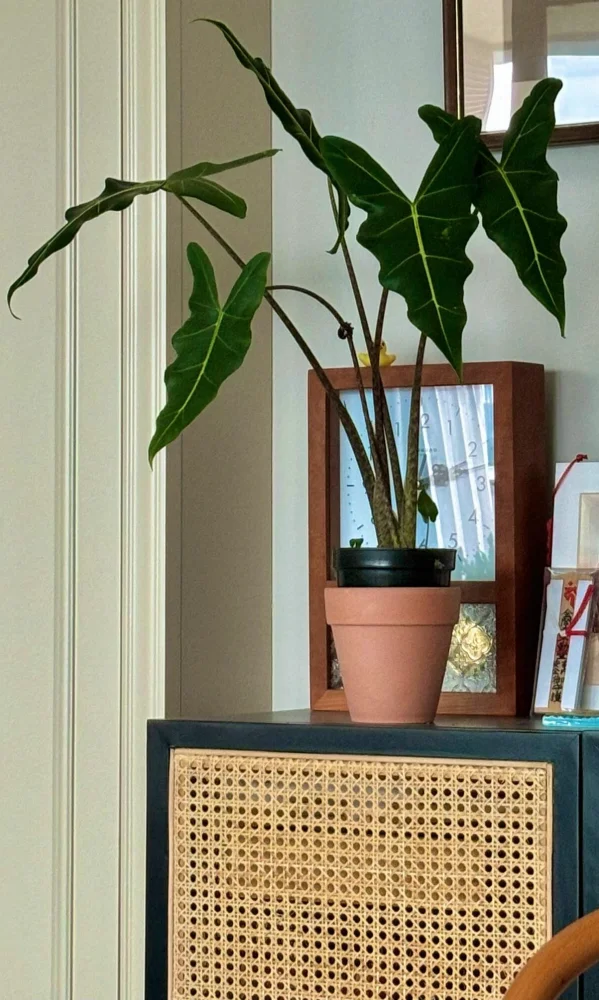
The stems were soft, but not mushy. That difference mattered. Soft petioles after shipping or stress can sometimes recover with warmth, light, and time. Mushy stems, a sour smell, or a collapsing base would make me suspect rot instead.
Since the base still seemed worth saving, I treated it as a recovery problem rather than a lost plant. I kept it in bright filtered light, gave it airflow, avoided cold drafts, and tried not to move it around too much while it adjusted.
Why I Used Temporary Support
I used a support pole because the plant needed help staying upright while it recovered. I do not see support as something Sarian should need forever, but in this case, it made a big difference. Mine stayed supported for more than 20 days before it gradually became strong enough to stand on its own.
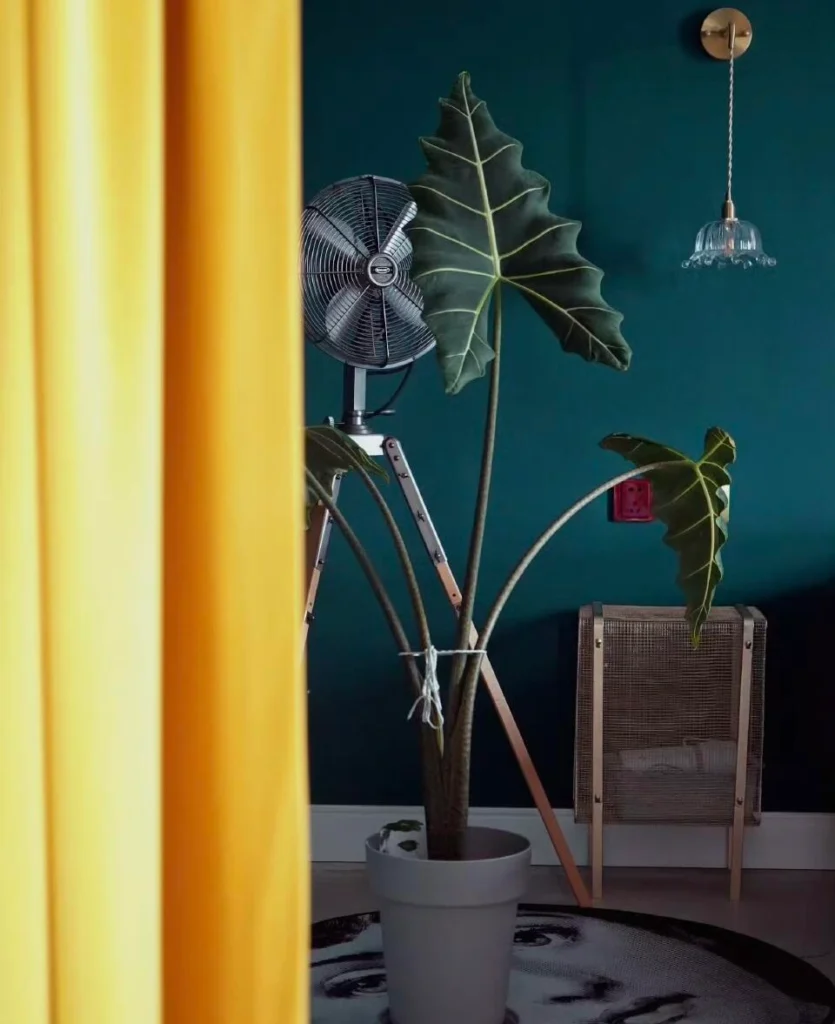
I tied the petioles loosely. I did not pull them tightly against the pole or force the plant into a perfectly upright shape. The goal was not to make it look perfect overnight. The goal was to stop the heavy leaves from dragging the soft stems sideways while the plant rebuilt strength.
During that recovery period, I watched for small signs of improvement: firmer petioles, less leaning after watering, and leaves holding their position better. Once the plant started to feel more stable, I gradually loosened the support instead of removing everything at once.
After a little over 20 days, I was able to remove the pole. The plant could finally stand on its own. That recovery changed how I handle a drooping Sarian now: I do not panic immediately, but I also do not ignore it. I check the base, give temporary support if needed, and keep the environment stable long enough for the plant to respond.
Light Changed the Way My Sarian Grew
Light made one of the biggest long-term differences in how my Alocasia Sarian grew. Indoors, mine survived in a bright spot, but it still stretched and leaned more than I wanted. The plant was not exactly unhealthy, but it did not have the strong, upright shape I hoped for.
That taught me that “bright indoors” is not always the same as enough light for strong Sarian growth. A bright indoor corner was much better than a dim room, but for my plant, it still was not perfect. The petioles stayed longer, the plant leaned toward the light, and it rarely held as many leaves as I expected.
Indoors, Bright Light Was Not Always Enough
When I kept Sarian indoors, it could grow, but it still looked a little stretched. The leaves were there, but the overall shape was looser. If your Sarian keeps leaning even though it is not rotting or underwatered, I would check light before blaming the plant itself.
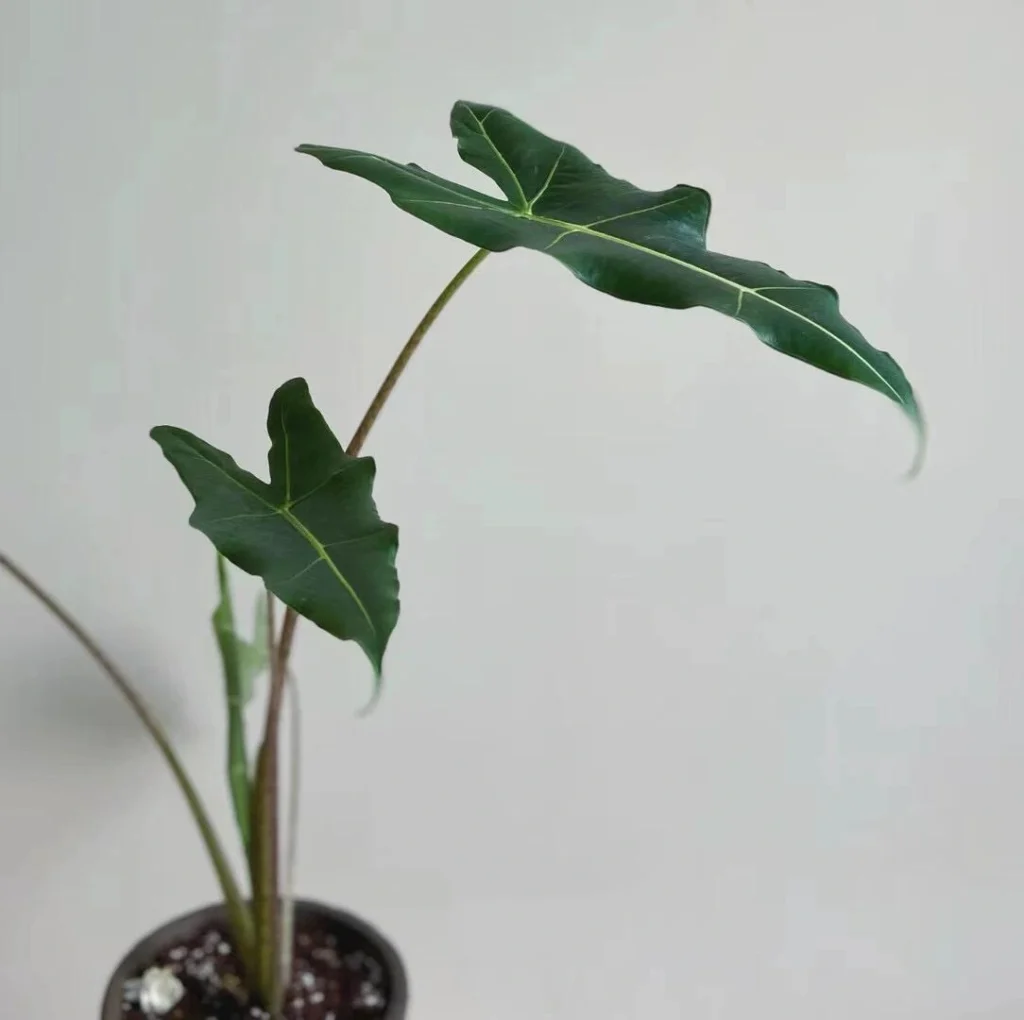
Sarian is a large-growing Alocasia, and weak light often shows up as long petioles, fewer leaves, and a plant that cannot hold its shape well. It may stay alive in medium light, but it usually looks stronger when the light is brighter and more consistent.
Stronger Light Helped, But I Acclimated It Slowly
The biggest change came after I moved it outdoors and slowly acclimated it to stronger light. I did not move it from indoor shade straight into harsh afternoon sun. That kind of sudden change can scorch the leaves quickly, especially if the plant has been growing indoors for a long time.
After it adjusted, the difference was obvious. Before, one plant rarely held more than three leaves at the same time. Outdoors, once it was used to stronger light, it could hold around six leaves at once. The growth looked stronger, the plant leaned less, and the overall shape became much better.
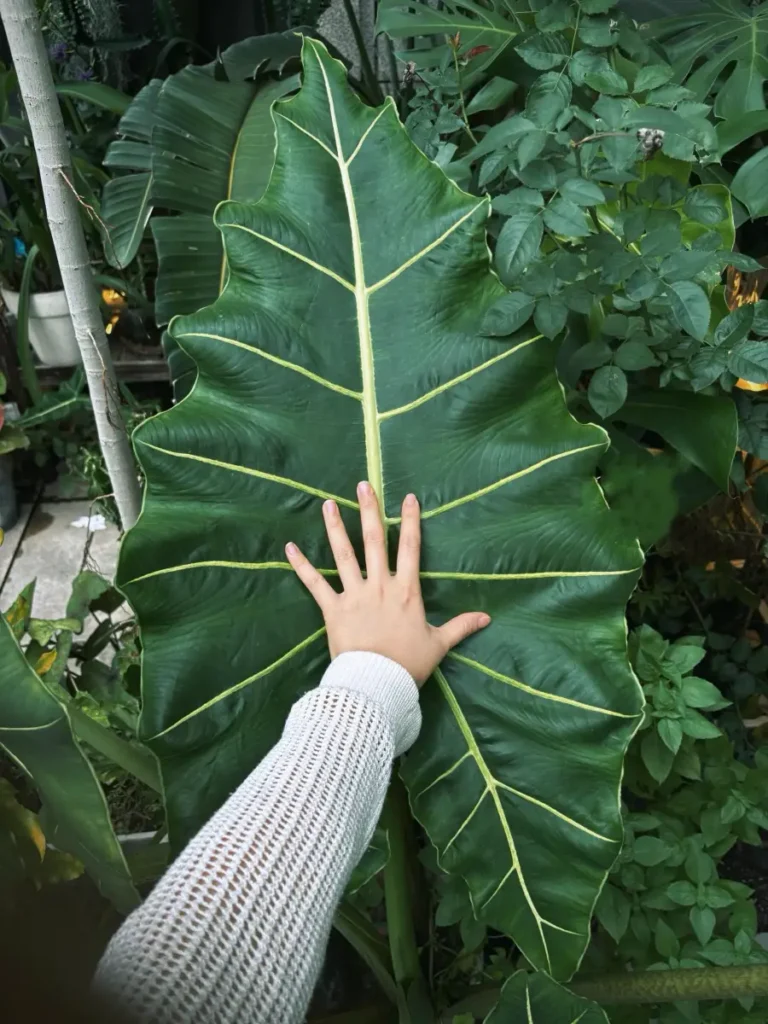
That does not mean every Sarian should be thrown into full sun. For me, the lesson was that this plant wants more light than many people expect, but it needs time to adapt. Gradual acclimation matters more than suddenly giving it the strongest light possible.
My Winter Indoor Light Rule
In winter, I care less about perfect placement and more about stable warmth plus enough light to keep the plant from stretching. I choose the brightest warm indoor spot I can give it, usually near an east- or south-facing window with filtered light. For a broader breakdown, see my Alocasia light requirements guide.
I avoid cold glass and drafty windows. A spot can look bright during the day but still become too cold at night, and Sarian does not handle that combination well. If the leaves are pressed near a cold window or sitting in moving cold air, the plant can weaken even if the light seems good.
If winter light is poor, a grow light can help keep the plant more stable. I also rotate the pot occasionally if the plant starts leaning toward one side. With leaves this large, even uneven light can slowly pull the whole plant out of shape.
Watering, Humidity, and Soil in Winter
Winter Sarian care is mostly about balance. The plant still needs moisture and humidity, but it cannot handle cold, wet soil for long. For me, the safest winter setup is a breathable mix, careful watering, warm indoor conditions, and enough humidity to protect the large leaves from crispy edges.
I Water Much Less in Winter
In winter, I water Alocasia Sarian much less often than I do during active summer growth. The plant is using less water, the light is weaker, and the potting mix stays damp longer. If I keep the same watering rhythm as summer, the roots are much more likely to sit in cold, wet soil.
I do not judge watering by the surface only. The top layer can look dry while the middle of the pot is still moist. I check the pot weight and, when I am not sure, I use a bamboo skewer or moisture stick to check deeper into the mix. If the deeper part still feels wet, I wait.
When I do water in winter, I use room-temperature water and usually water around midday. That gives the pot time to drain before the room cools down at night. After watering, I always empty the saucer. Sarian should not sit in standing water, especially when the room is cool. I explain this seasonal rhythm more in my Alocasia watering guide.
Humidity Helps, But Airflow Still Matters
Sarian has large leaves, so dry indoor air can show up quickly as crispy edges and brown tips. In heated rooms, a humidifier is usually more useful than occasional misting, especially if the plant is large and losing moisture fast through its leaves.
But I do not want the plant sitting in still, wet air either. I avoid letting water stay in the crown, leaf joints, or on the leaves for too long. Wet surfaces plus poor airflow can lead to leaf spots, stem issues, or fungal problems.
My goal is steady humidity with gentle air movement. The leaves need moisture in the air, but the stems and soil surface still need to dry properly after watering.
Breathable Soil Keeps the Roots Safer
For Sarian, I prefer a chunky, breathable mix rather than heavy soil that holds water for too long. The plant can grow large and thirsty in warm conditions, but in winter, dense wet soil becomes risky very quickly. For mix structure, I use the same basic logic from my best soil mix for Alocasia guide.
A mix with bark, perlite, pumice, coco husk, or other coarse material helps the pot dry more evenly. I want the roots to get moisture, but I also want oxygen around them. Poor root aeration is one of the fastest ways for a weak winter Sarian to decline.
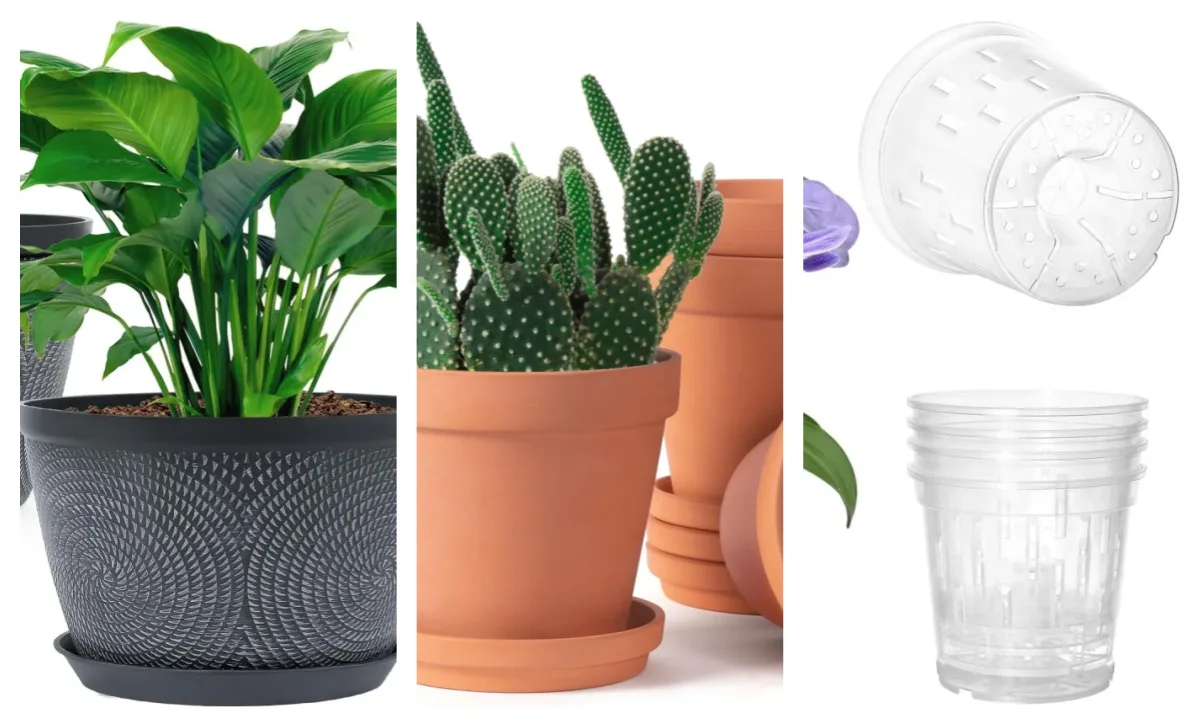
I also avoid jumping into an oversized pot just because the plant is tall. A smaller airy pot can sometimes be safer than a large decorative pot that stays wet for too long, but the pot still needs enough weight and stability to hold a top-heavy Sarian upright. For me, the best choice is not simply a bigger pot, but a stable pot with a breathable mix that dries at a healthy pace.
Fertilizer: What I Do in Winter vs Active Growth
Fertilizer is one part of Sarian care that I separate by season. This plant can grow strongly when it is warm, bright, and actively pushing leaves, but I do not treat winter the same way. In winter, my goal is stability, not forcing growth.
I Do Not Push Fertilizer in Winter
When Alocasia Sarian is slowing down in cold or low-light conditions, I do not push fertilizer. Fertilizer does not fix cold stress, weak light, or soft stems. If the roots are already working slowly, extra nutrients can create more stress instead of helping the plant recover.
This is especially important if the soil is staying damp longer than usual. Weak winter roots cannot use fertilizer well, and feeding a plant that is cold, wet, or stressed can make root problems harder to manage. If my Sarian is not actively growing, I skip feeding and focus on warmth, light, and careful watering first.
During Active Growth, Light Feeding Helped Mine
During active growth, Sarian is a different plant. When mine was warm, bright, and drying properly between waterings, light feeding helped support stronger petioles and larger leaves. Sarian can be a fairly hungry Alocasia when it is actually growing well.
I used a small amount of slow-release fertilizer in the soil and also fed lightly through watering during the growing period. I kept the feeding gentle because the pot was small, the mix was airy, and the wet-dry cycle was fast. In that setup, the plant could use the extra nutrition without sitting in heavy, wet soil for too long.
My rule now is simple: no fertilizer when Sarian is cold and slowing down, but light feeding is useful when the plant is warm, bright, actively growing, and the roots are healthy enough to handle it.
Common Problems I Watch for on Alocasia Sarian
When my Sarian starts looking weak, I try not to guess from one symptom alone. I look at the whole plant: the stems, leaves, pot weight, soil moisture, temperature, and light. These are the problems I watch for first.
| What I See | What I Suspect First | What I Do |
|---|---|---|
| Soft leaning stems | Shipping stress, cold stress, weak roots, or unstable potting | Support the plant temporarily, keep it warm, and avoid moving it around too much |
| Crispy leaf edges | Crispy leaf edgesDry indoor air, heating, or irregular wateringRaise humidity, check airflow, and avoid letting the plant dry too far | Raise humidity, check airflow, and avoid letting the plant dry too far |
| Whole plant collapsing | Cold plus wet soil, root rot, or severe stress | Check the soil smell, root condition, and whether the base feels firm or mushy |
| Long, weak petioles | Not enough light or uneven light | Move it brighter gradually and rotate the pot if it keeps leaning one way |
| Yellowing old leaves | Yellowing old leavesNormal old leaf loss, root stress, or winter slowdownCheck whether it is only one older leaf or several leaves yellowing at once | Check whether it is only one older leaf or several leaves yellowing at once |
| Wobbly plant in a small pot | Top-heavy growth or weak root support | Use temporary support, stabilize the pot, or repot carefully when conditions are warm enough |
If only one old leaf yellows slowly, I usually watch it first. But if several leaves yellow quickly, the stems soften, or the whole plant starts leaning at the same time, I check the roots and soil conditions much sooner.
If Sarian Looks Dead, Check the Base Before Throwing It Away
Alocasia Sarian can look frightening when it collapses. The leaves may droop, the petioles may soften, and the whole plant can look like it is finished. But with Alocasias, collapsed leaves do not always mean the plant is truly dead.
Before giving up, I always check the base. If the corm or tuber-like base still feels firm, there is still a chance the plant can recover and push a new shoot when conditions improve. In that case, I keep it warm, reduce watering, avoid fertilizer, and give it time instead of throwing it away too quickly.
The situation is different if the base feels mushy, smells sour, or collapses when touched. That usually points to serious rot, and the plant needs a closer root check. A firm base means there is still stored energy. A mushy, smelly base means the problem has gone much deeper.
This is why I do not judge Sarian only by the leaves in winter. Leaves can be lost, especially after cold stress, shipping stress, or a difficult indoor season. What matters more is whether the base is still alive and whether the roots have a chance to recover.
After growing Sarian, my biggest lesson is this: winter care is not about forcing the plant to look perfect. It is about keeping it warm, bright, slightly drier, and stable enough to survive until growth returns. Once the season improves, a firm base can surprise you with new growth again.
FAQ
Love discovering new Alocasias?
If you like tall, dramatic, large-leaf Alocasias, start with my Elephant Ear Alocasia guide, or browse the full Alocasia Varieties Hub to compare Sarian with other bold indoor types.
Go to Varieties Hub →