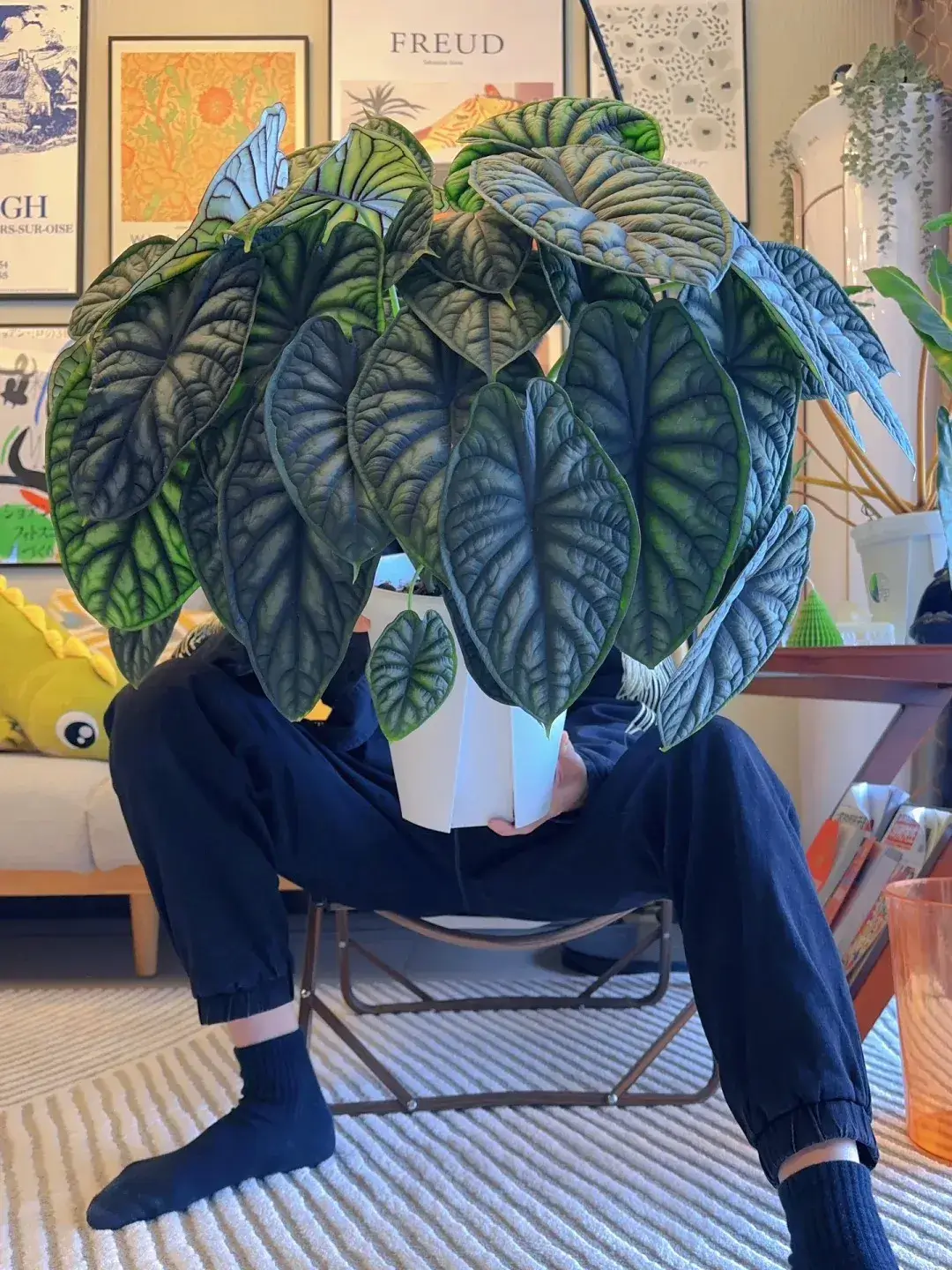
I was first drawn to Alocasia Pink Dragon for the pink stems. At that stage, it felt like one of those plants you notice instantly — elegant, a little unusual, and easy to admire from across the room. But I ended up learning far more from it after things started going wrong than I ever did when it was simply sitting there looking pretty.
At one point, spider mites on my Alocasia got so bad that I cut off every leaf. For a while, I honestly thought I might end up throwing the whole plant away. Then, about 21 days later, a small green bud appeared — the kind of restart that reminded me an Alocasia that has stopped growing is not always finished. That changed the way I looked at the plant completely. Later, after sitting almost still through winter, it started moving again in spring and pushed out a fresh new leaf that felt like a real restart.
So this is not really a guide about how to keep Pink Dragon looking perfect all the time. For me, it became a plant that taught me how to read stress, pause, and recovery — and how much patience matters when an Alocasia looks like it has gone quiet or gone wrong.
Why Pink Dragon Catches Attention So Fast
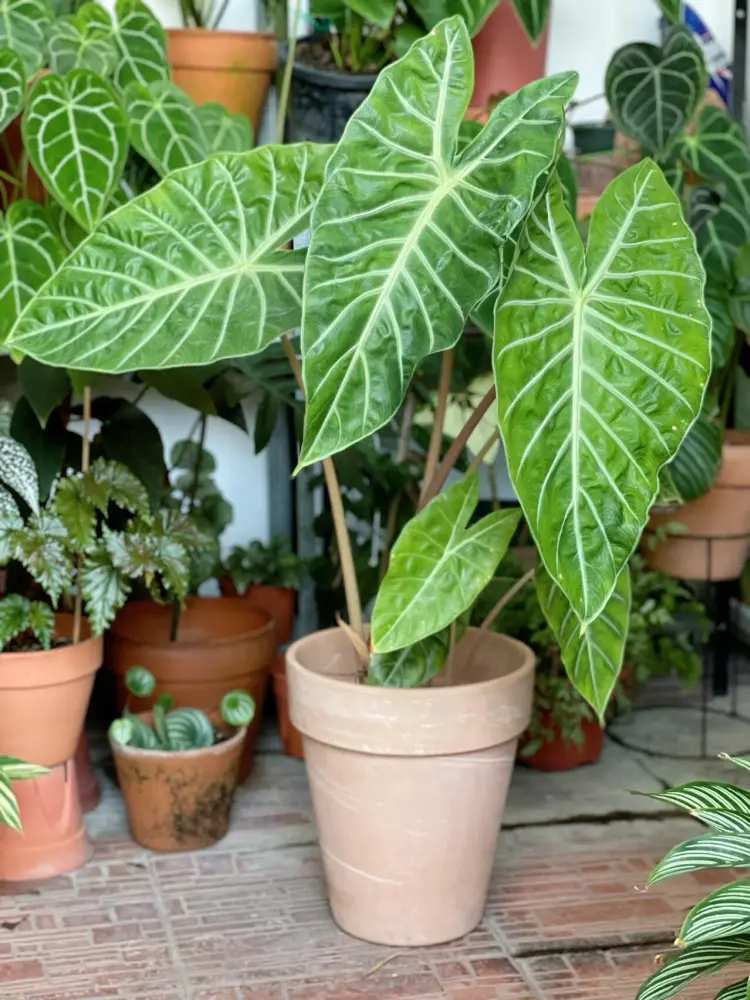
The first thing most people notice about Alocasia Pink Dragon is the stem color. That soft pink tone gives the plant a very different presence from a standard green Alocasia, especially when the stems are clean and upright. It looks elegant right away, but not in a cold or overly polished way.
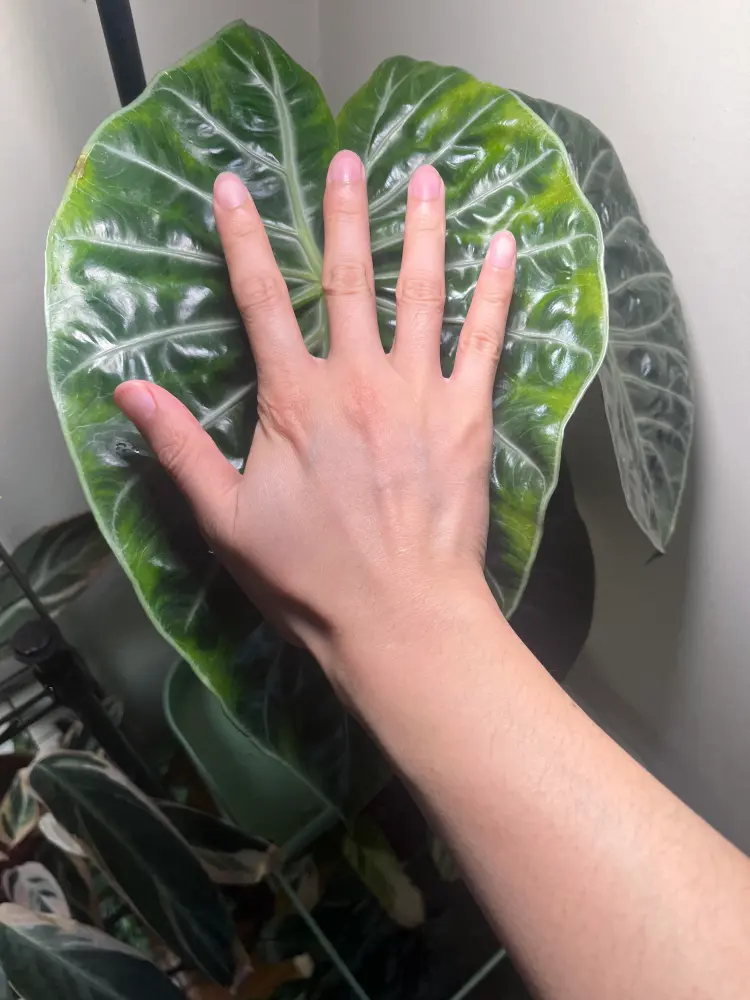
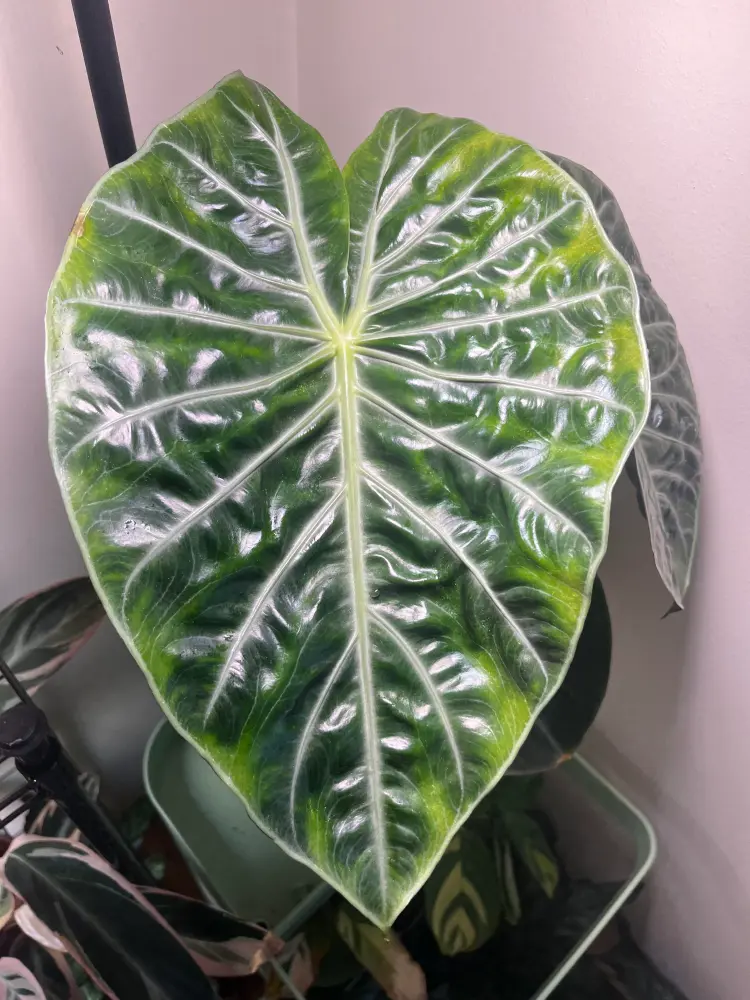
The leaves add to that first impression too. They are not completely flat or plain, and they often have a slightly textured, faintly crinkled look that makes the plant feel more alive up close. That is part of what makes Pink Dragon so appealing to me: it looks delicate and refined at first glance, but in reality it reacts very visibly to stress, warmth, and recovery.
My Pink Dragon Timeline: From Tiny Plant to Hard Reset to Spring Recovery
It Started as a Small Plant I Was Still Learning With
When I first got my Pink Dragon, it was still a small plant, and I was very much learning as I went. At that stage, I was mostly focused on how beautiful it looked — the pink stems, the leaf shape, the overall elegance of it. I liked it immediately, but I was still in that phase where every new Alocasia felt a little uncertain in my hands.
Looking back, that early stage matters to me because it reminds me how much of my confidence with Alocasias came from trial, observation, and a few plants that forced me to pay closer attention. Pink Dragon became one of those plants for me very quickly.
Spider Mites Got Out of Hand and I Cut It Back Hard
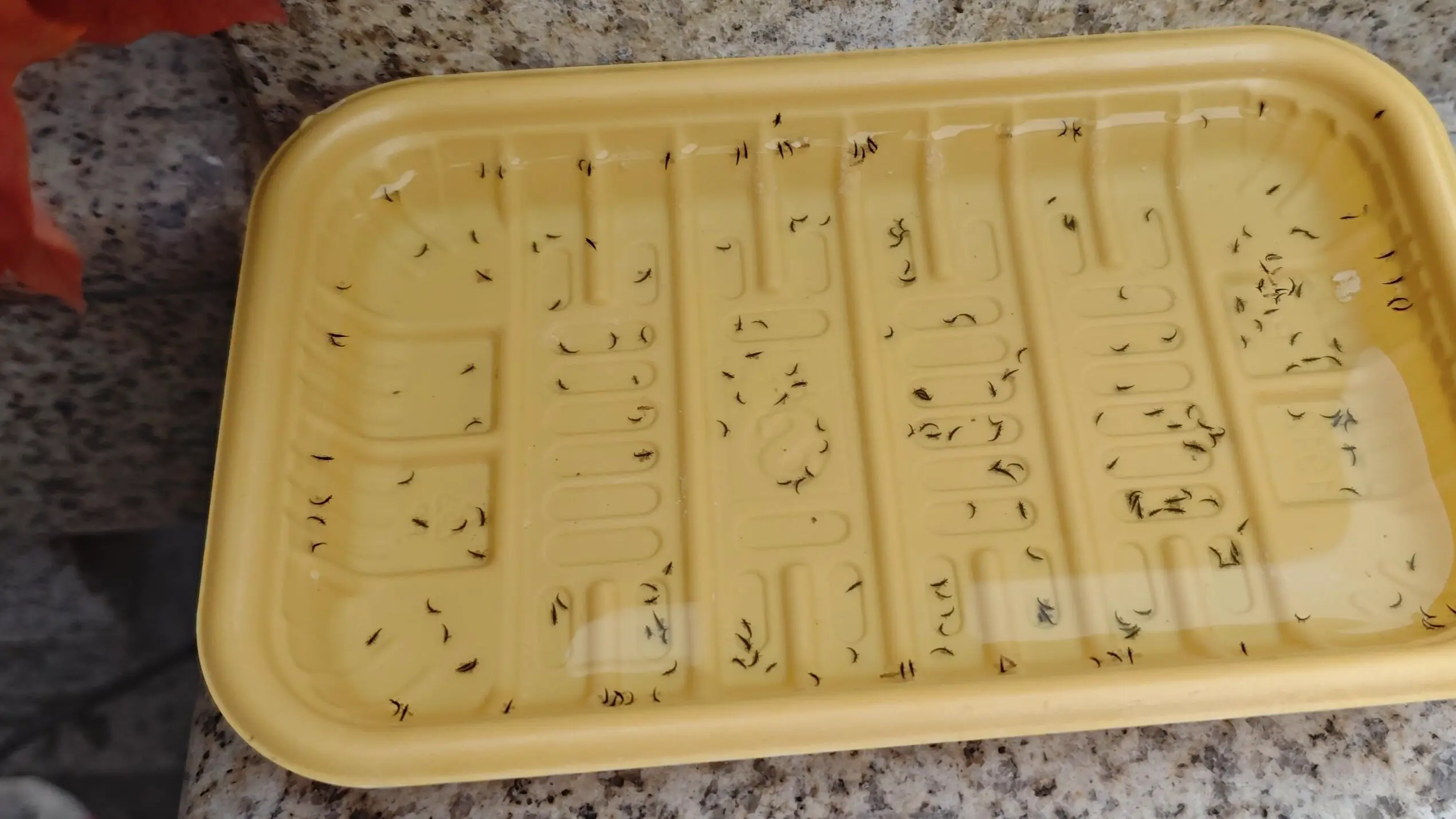
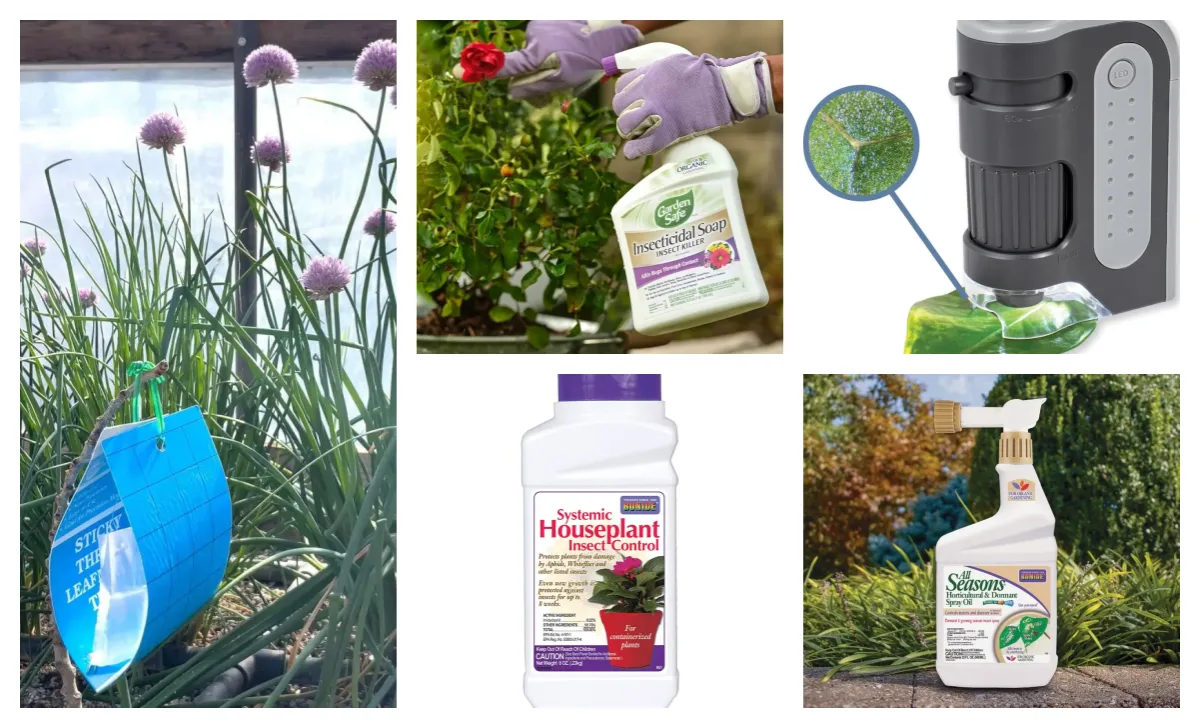
The hardest moment came when spider mites spread across the plant so badly that I ended up cutting off every leaf. At that point, it stopped feeling like a beauty problem and started feeling like a real survival question. Once the foliage was gone, the whole plant looked stripped down and exposed, and I honestly thought I might end up throwing it away.
That experience changed the way I think about pests on Alocasias. Pink Dragon can look refined and polished when it is doing well, but it can also go downhill very quickly once mites get ahead of you. That was the first time I really saw how fast a plant I loved for its looks could turn into a recovery project.
The Green Bud After 21 Days Changed Everything
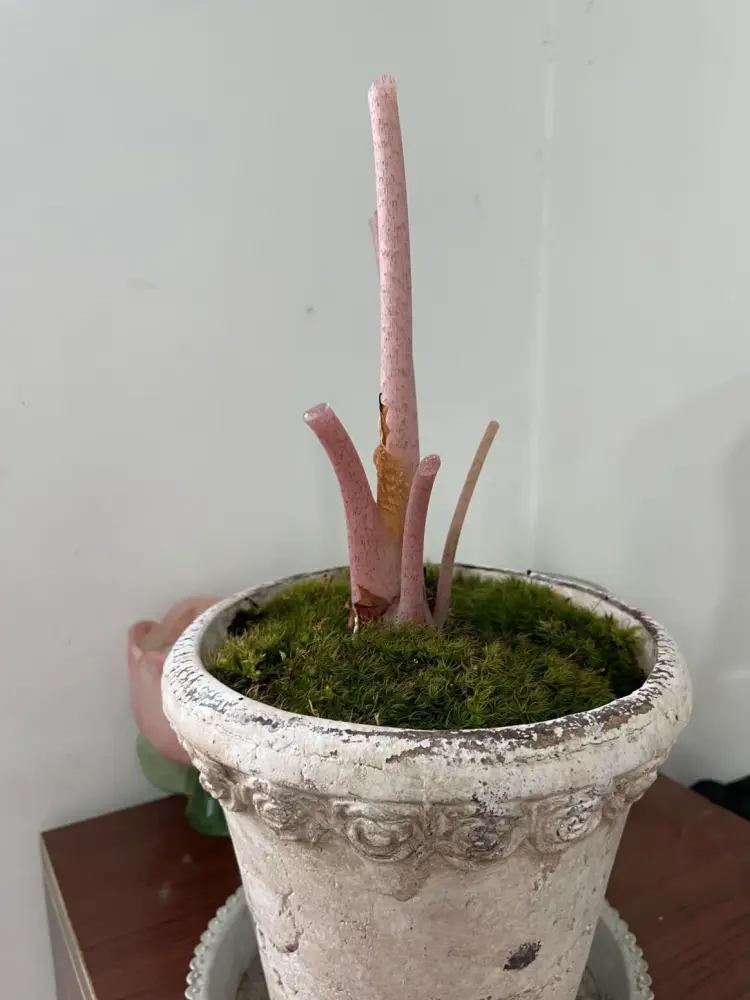
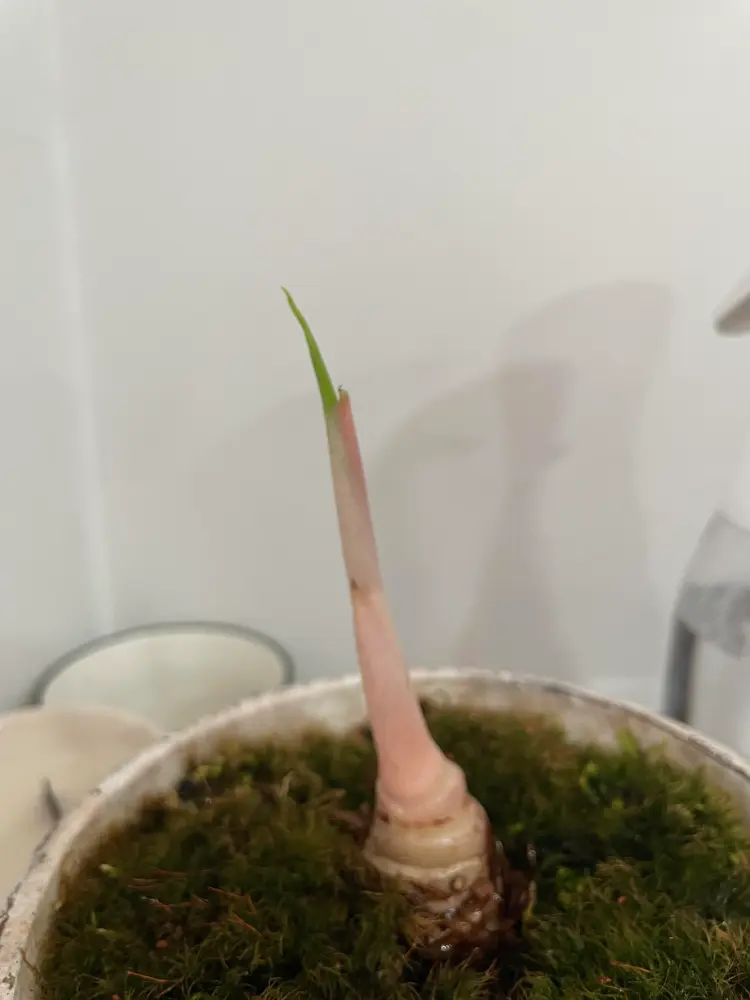
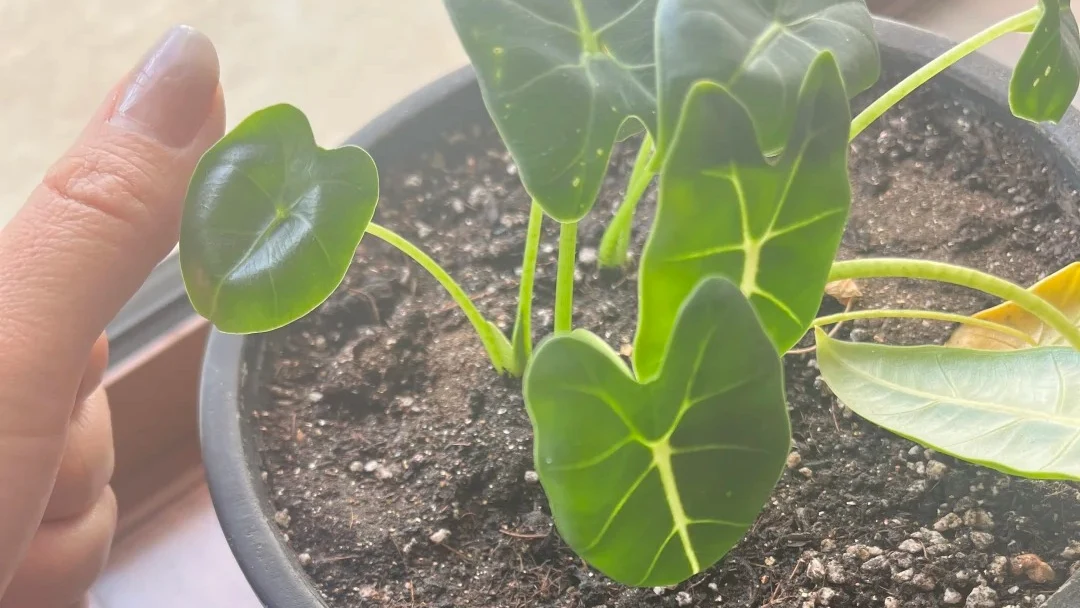
About 21 days later, just when I was close to giving up on it, I noticed a small green bud starting to emerge. That moment completely changed how I saw the plant. Until then, I had been looking at what was gone. The bud was the first sign that I needed to start looking at what was still alive.
That was also when I stopped treating heavy leaf loss as the same thing as death. Pink Dragon taught me that a plant can look finished above the soil and still have enough life left at the base to restart. The new growth did not erase the setback, but it changed the direction of the story.
Winter Slowed It Down, Then Spring Started It Again
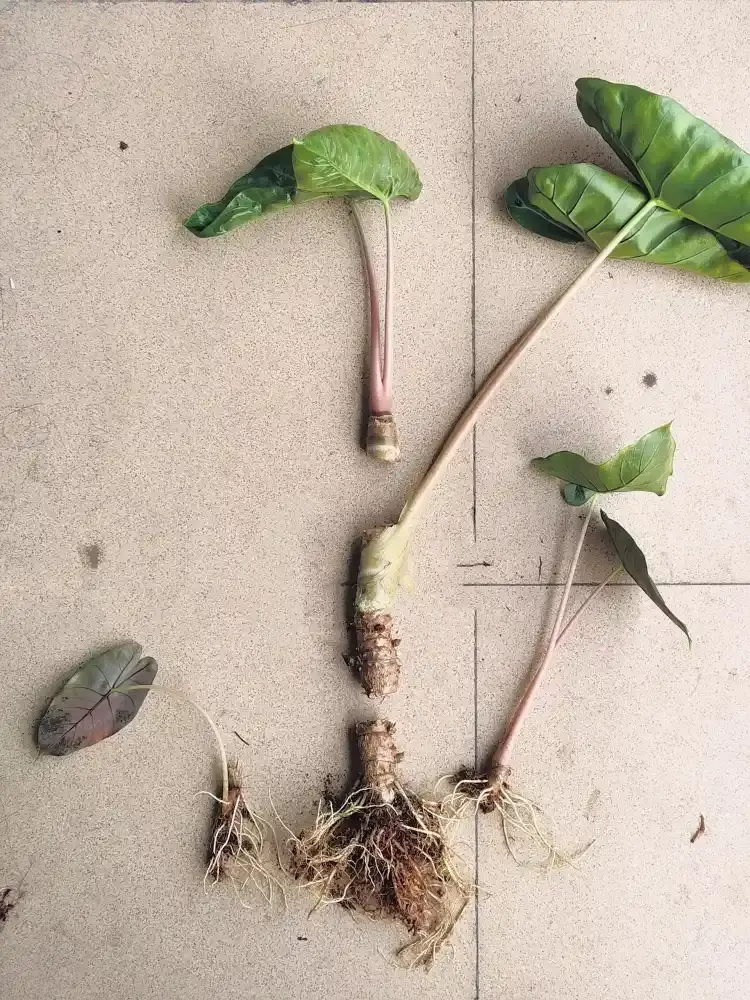
After that recovery phase, the plant did not stay in constant motion. Winter slowed it down again, and for a while it felt like it had gone quiet. It was not collapsing this time, but it was clearly not growing with the same energy either. That pause reminded me that with Alocasias, inactivity does not always mean decline. Sometimes it just means the plant is waiting for better conditions.
Then spring came, and the whole tone changed again. The first new leaf of the season felt like a real restart — not just survival, but active growth returning. That sequence taught me more than any perfect-looking plant ever could. Pink Dragon did not just show me how beautiful it could be. It showed me how clearly an Alocasia can reflect stress, pause, and recovery when you pay attention closely enough.
What Actually Makes Pink Dragon Grow Well
Bright Filtered Light, Not Harsh Sun
Pink Dragon grows best for me in bright, filtered light. That is where the plant stays active, the stems keep their color well, and the leaves develop with better shape and substance. I do not treat it like a low-light Alocasia, but I also do not push it into harsh direct sun, especially in summer when strong midday light can scorch the foliage faster than people expect.
Gentle morning light or soft late-day sun can be helpful, but the plant looks best when the light is strong without being aggressive. If the light is too weak, growth slows and the plant starts losing some of the crisp, upright look that makes it attractive in the first place.
Warmth Matters More Than People Think
If there is one thing that really changes the pace of this plant, it is warmth. Pink Dragon can sit almost still when temperatures are low or the season turns dull, then suddenly start moving again once the environment feels warm enough. That is one reason I take slow winter growth much more seriously as a temperature and season issue than as a simple “care problem.”
In my experience, Pink Dragon becomes much easier to read once it is warm enough. Growth picks up, recovery makes more sense, and the plant stops feeling hesitant. That is why spring usually tells me much more about its real condition than winter ever does.
A Chunky Mix and an Active Root Zone Matter More Than Fixed Watering Days
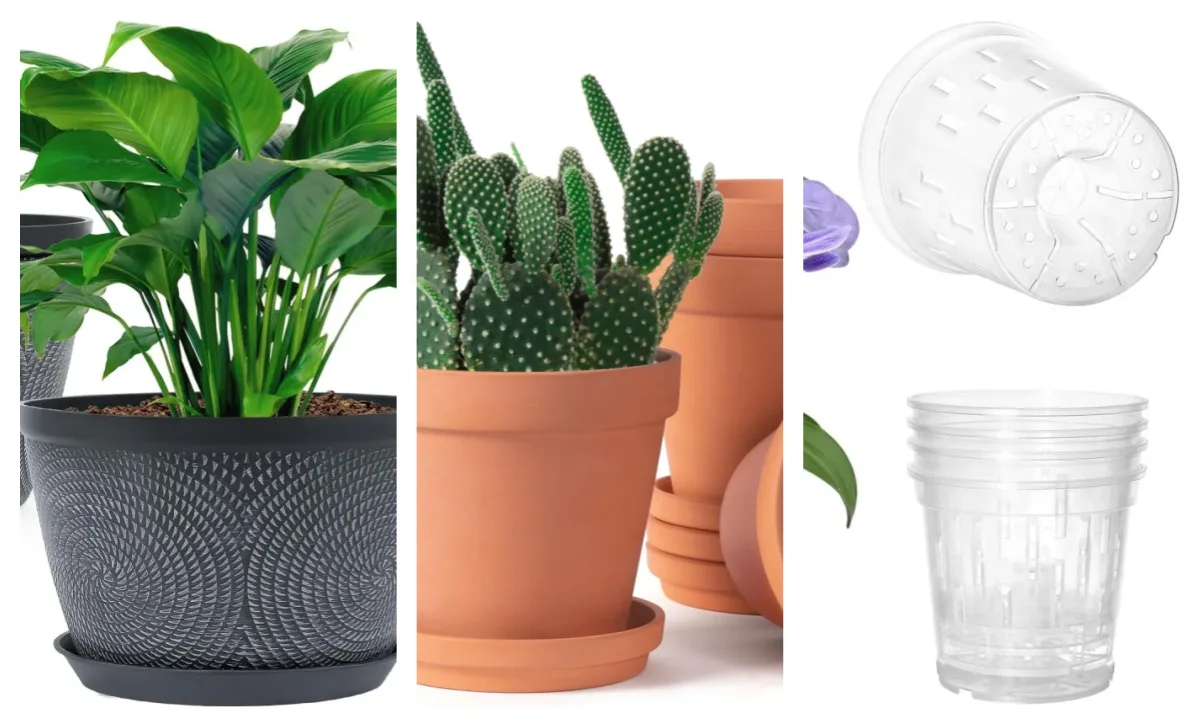
I do not think Pink Dragon responds well to rigid watering schedules. What matters much more is whether the root zone is active and whether the mix can breathe. I prefer a chunky, fast-draining Alocasia mix that still holds enough moisture to keep the plant from drying out too harshly between waterings. That balance matters much more than watering “every two days” or following any fixed calendar. I treat it more like an Alocasia watering rhythm that changes with warmth, light, and root activity.
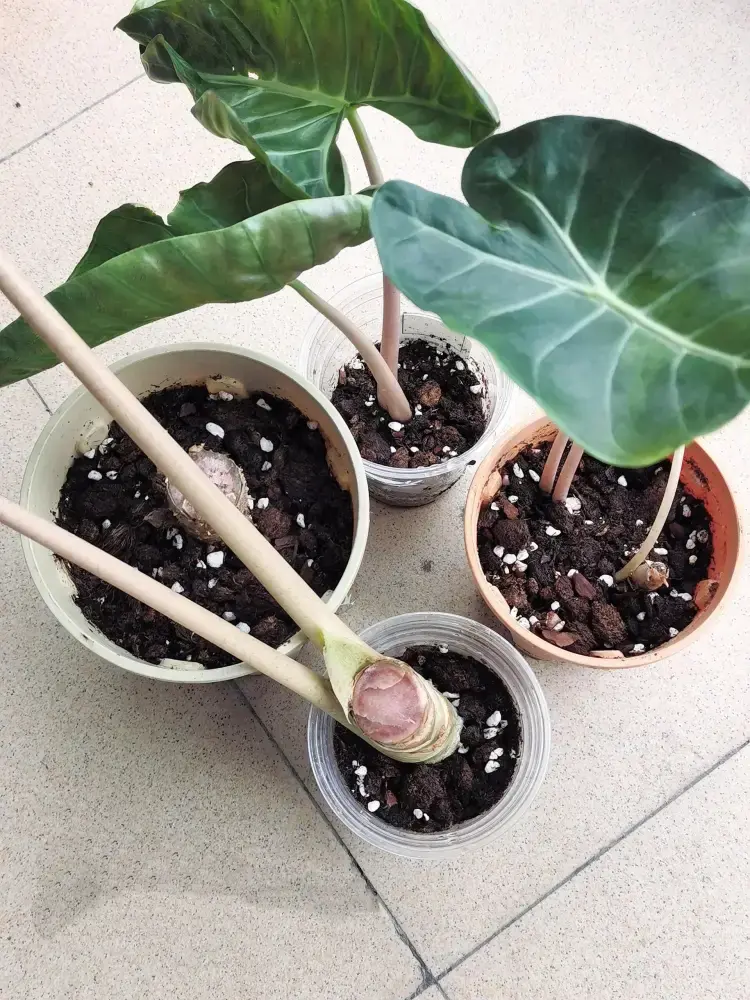
When the roots are healthy and the mix is airy, the plant can grow with much more consistency. When the mix stays dense, wet, and stagnant for too long, Pink Dragon tends to show it sooner or later. So instead of asking how many days to wait, I pay more attention to how the pot feels, how quickly it is drying, and whether the plant is actually in an active phase.
Airflow Is Part of Care, Not an Extra
With Pink Dragon, I do not see airflow as an optional bonus. I see it as part of basic care. This matters even more after watering, when a damp pot in still indoor air can turn into a much riskier setup than people realize. Good airflow helps the mix move in the right direction, reduces the chance of damp stagnation, and makes recovery from stress more realistic.
It also matters for pest pressure. A plant that sits in stale air for too long often feels harder to keep clean and harder to keep stable. I do not think airflow solves every problem, but I do think a lot of indoor Alocasia problems get worse when it is missing.
I Feed Lightly During Active Growth
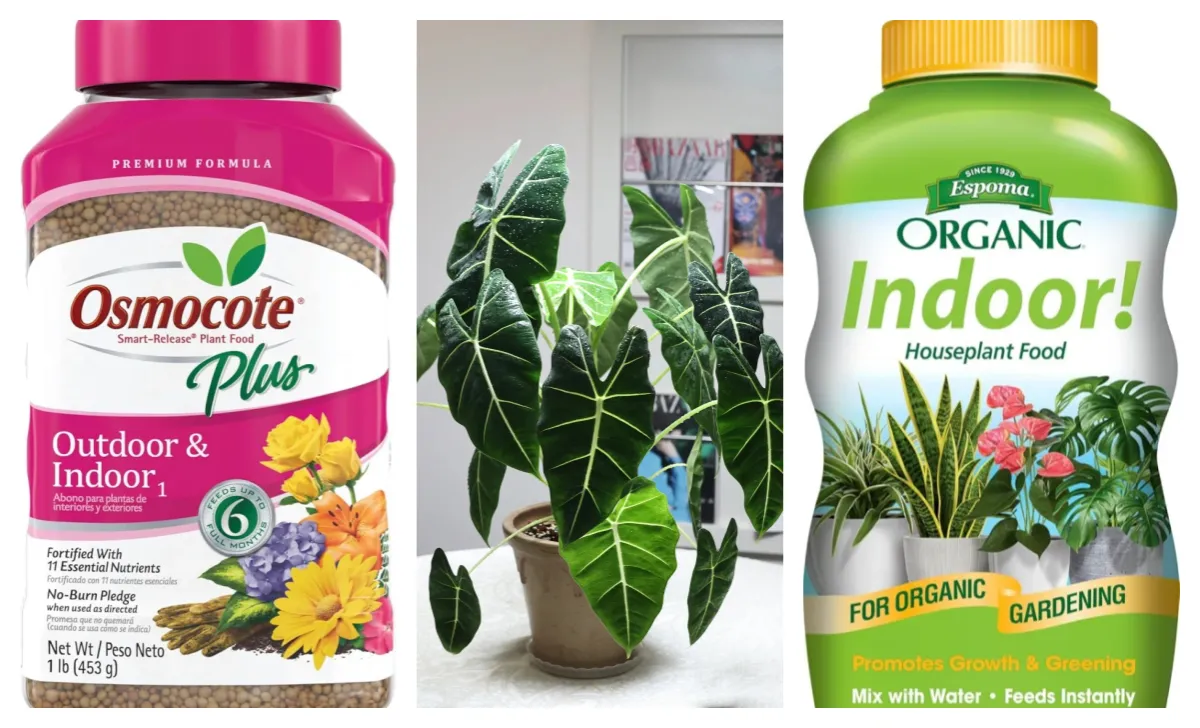
I feed Pink Dragon lightly when it is clearly in an active growing phase. I am not trying to force fast growth with heavy fertilizer. I just want to support the plant while it is actually using energy to push leaves and roots. Once growth slows down, especially in colder or duller periods, I back off.
This is not a plant I try to push all year. I would much rather match feeding to real activity than keep adding nutrients to a plant that is sitting still. With Pink Dragon, steady growth usually comes from the overall setup being right first — light, warmth, roots, airflow — and fertilizer works better as support than as the main strategy.
What Usually Goes Wrong First — and What I Watch Now
Spider Mites Can Escalate Fast
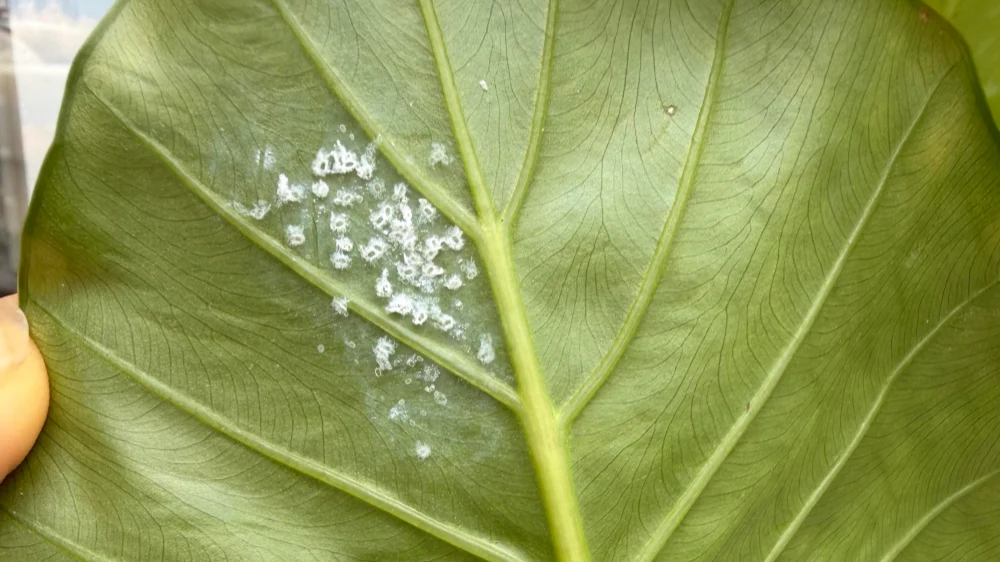
If Pink Dragon is going to go wrong quickly, spider mites are high on the list. Once they get established, they can spread faster than the plant’s elegant appearance makes you expect, and by the time the leaves look obviously damaged, the problem may already be well underway. That is why I pay much more attention to the backs of the leaves now, especially when the plant is actively growing or the indoor air is running dry.
I also do not treat misting as real pest control anymore. It may freshen the foliage for a moment, but it is not the same thing as actually staying ahead of a mite problem. What matters more to me now is earlier checking, cleaner foliage, steadier airflow, and acting before the damage becomes the main thing I notice.
A Stalled Plant Is Not Always a Dead Plant
One of the biggest mindset changes this plant gave me is that stalled growth is not the same thing as a finished plant. Pink Dragon can sit still for a while, especially in winter or after stress, and that pause can look discouraging if you are expecting constant movement. But quiet does not always mean decline.
I do not panic when growth pauses anymore. Instead, I ask a different question: is the plant actually deteriorating, or is it simply not moving yet? That shift matters. A plant that is not pushing a new leaf today may still be alive, stable, and waiting for warmth, better light, or time to recover.
Overwatering Often Looks Slow Before It Looks Serious
One thing I trust much less now is the idea that overwatering should always look dramatic right away. With Pink Dragon, it often starts slowly: the plant looks a little less responsive, a leaf seems slightly off, or the pot stays heavy longer than it should. The serious part usually comes later, after the root zone has already been under pressure for a while.
That is why I no longer water on a fixed schedule. I pay more attention to how fast the mix is drying, how active the plant actually is, and whether the pot still feels wet and stale from the last watering. Pink Dragon responds much better to an active root zone than to a routine that only looks consistent on paper.
Brown Edges and Tired Leaves Usually Come From Stacked Stress
Brown edges on Alocasia leaves, dull foliage, or leaves that just look tired do not usually come from one single cause in my experience. More often, Pink Dragon starts looking worn when several smaller stresses pile up together — light that is slightly off, humidity that drops too low, airflow that is weak, or watering that becomes uneven over time.
That is why I try not to chase one neat explanation too quickly. A tired-looking plant often makes more sense when I step back and look at the full setup: light, humidity, airflow, and watering rhythm together. Pink Dragon tends to reflect the whole environment, not just one mistake in isolation.
Pink Dragon Is Easiest in Homes That Already Suit Alocasias
Pink Dragon can feel easy or difficult depending on the room you put it in. In a warm, bright space with decent airflow, it often feels very manageable. The pink stems stay attractive, the plant is easier to read when it is actively growing, and even its slower phases make more sense once you get used to its rhythm.
That changes quickly when the setup works against it. In low light, stale damp air, or homes where watering follows a fixed schedule instead of the plant’s actual pace, Pink Dragon stops feeling graceful and starts feeling watchful. Add pests into that, and the gap between “beautiful plant” and “problem plant” gets small very fast.
So I do not think the real question is whether Pink Dragon is easy in some universal sense. The better question is whether your indoor setup already supports the kind of growth Alocasias like indoors. If it does, Pink Dragon can be very rewarding. If it does not, beauty alone will not carry the plant for long.
Why I Still Keep This One
I do not still keep Pink Dragon just because of the pink stems, even though that was what caught my attention first. What made it stay was its ability to restart after looking nearly finished. Once I had seen it go through a hard reset, sit almost still, and then begin again, it stopped feeling like just another pretty Alocasia.
It is not the most stable plant I grow, and it is certainly not effortless. But it is one of the clearest in the way it responds. You can usually tell when it is under stress, when it is holding still, and when it has decided to move again. For me, that is part of what makes it worth keeping.
FAQ
Love discovering new Alocasias?
If you like the pink stems and elegant shape of Alocasia Pink Dragon, browse my Alocasia Varieties Hub to compare it with darker, larger, variegated, and more dramatic types.
Go to Varieties Hub →