When an Alocasia pushes out a new leaf, it rarely looks perfect at first. Fresh leaves often emerge folded, creased, or slightly wrinkled before they fully expand.
Unfurling takes time. Depending on the plant’s strength and the environment, it can take several days for a new leaf to flatten and harden off.
The real question isn’t whether the leaf looks wrinkled on day one. What matters is how long it stays that way — and whether the plant is also showing other signs like soft petioles, yellowing older leaves, or stalled growth (a sign your Alocasia may be struggling overall).
In other words, you’re not just looking at the leaf. You’re trying to decide whether this is a temporary phase of development — or a sign of a deeper imbalance.
Case One: Normal Delayed Unfurling (No Action Needed)
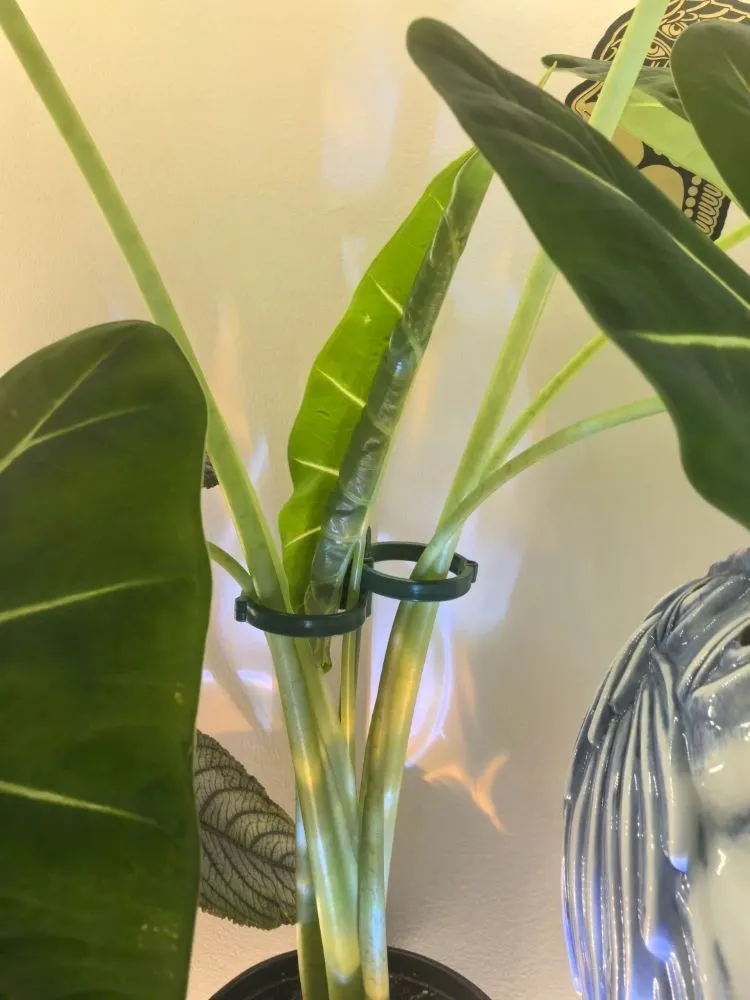
In many situations, a wrinkled or slightly folded leaf is simply part of the normal unfurling process. The color looks healthy, the veins are clear, and the surface feels firm rather than thin or limp.
The petiole should remain upright and stable. Even if the leaf is still partially curled, the overall structure of the plant looks strong and balanced.
Most healthy Alocasias will finish opening within 2–5 days. During this time, you may see gradual stretching and smoothing as the leaf fills with water and the tissue expands.
The key sign that this is normal is stability. Older leaves remain steady, nothing is yellowing rapidly, and the plant continues its regular growth rhythm. In this case, the best response is patience — not intervention.
Case Two: Mild Wrinkling (Humidity / Transpiration Imbalance)
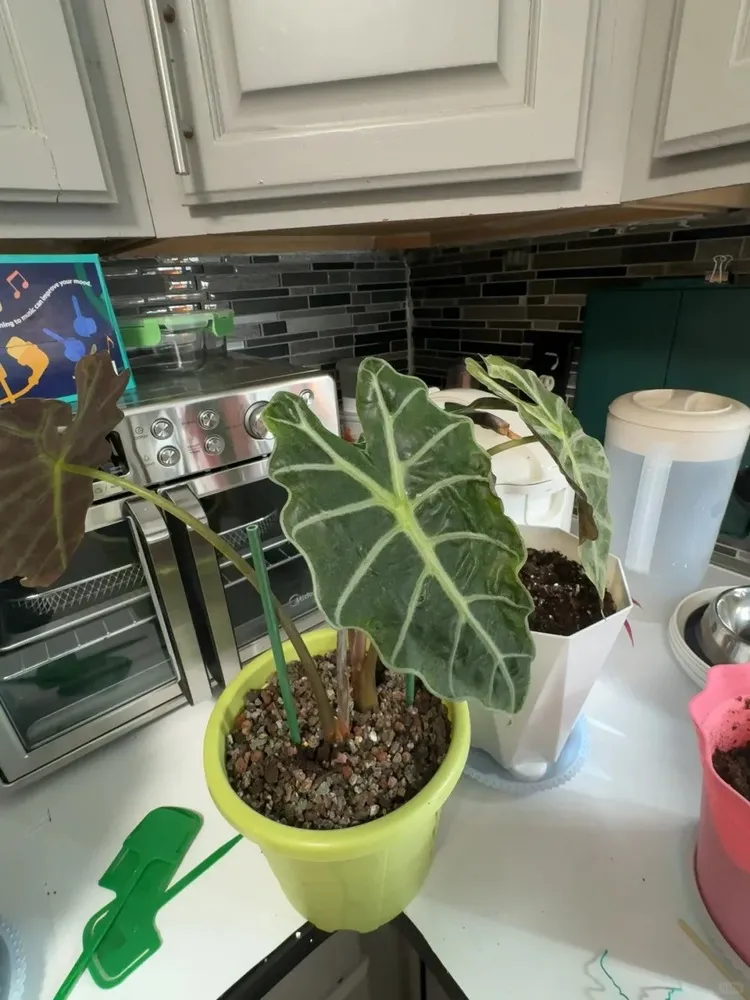
In this example, the new leaf is slightly curled along the edges. The texture looks tight, but the color remains healthy and the petiole is firm.
This usually happens when the leaf is expanding quickly and losing water through transpiration faster than the roots can supply it — especially when watering habits are inconsistent. The root system may be functioning, but the handoff between absorption and leaf expansion isn’t perfectly synchronized.
Low ambient humidity can make this more noticeable, especially if the plant is also sitting in brighter light than it’s used to. The leaf edges are often the first area to react because they are thinner and more sensitive to moisture fluctuations.
It’s important to understand what this is not. This is not root rot, and it’s not a fertilizer deficiency. In most cases, it’s a short-term environmental rhythm issue rather than structural damage.
The solution is simple and gentle. Slightly increase ambient humidity, avoid forcing the leaf open, and give it 3–5 days to adjust. If the plant is otherwise stable, the leaf will usually flatten as it finishes hardening.
Case Three: Severely Stuck Leaf (Root Absorption Issue)
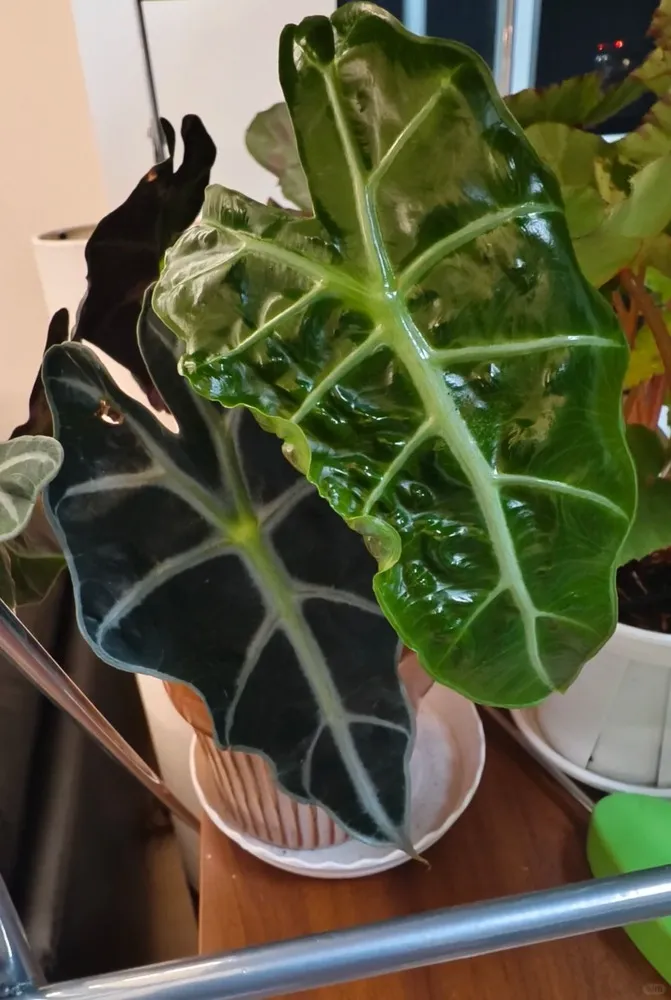
In this case, the new leaf remains tightly rolled and fails to fully unfurl. The structure looks compressed rather than simply delayed.
You’ll often notice that the leaf begins to open but stops halfway. At the same time, older leaves may start declining, and overall growth slows down noticeably.
This pattern usually points to reduced root absorption capacity. The plant doesn’t have enough functional roots to support the energy demand of a new expanding leaf.
Common causes include consistently wet soil, poor aeration, and early-stage root stress from overwatering. Over time, roots weaken even if they haven’t fully rotted.
This is no longer a “wait and see” situation. The right move is to check the roots — especially if you suspect early root rot, restore a proper dry-wet cycle, and avoid adding fertilizer until the root system stabilizes.
When roots are weak, feeding more won’t fix the problem. Oxygen and balance come first.
Case Four: Low Light Causing Stretching and Wrinkled Leaves
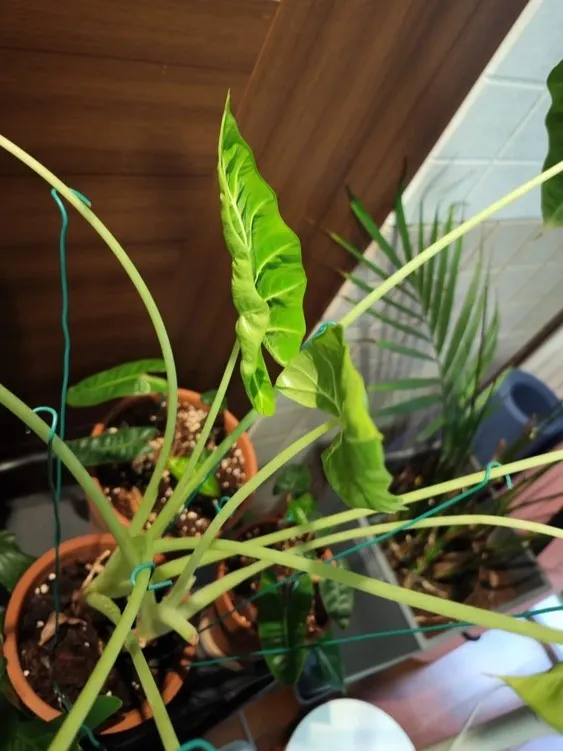
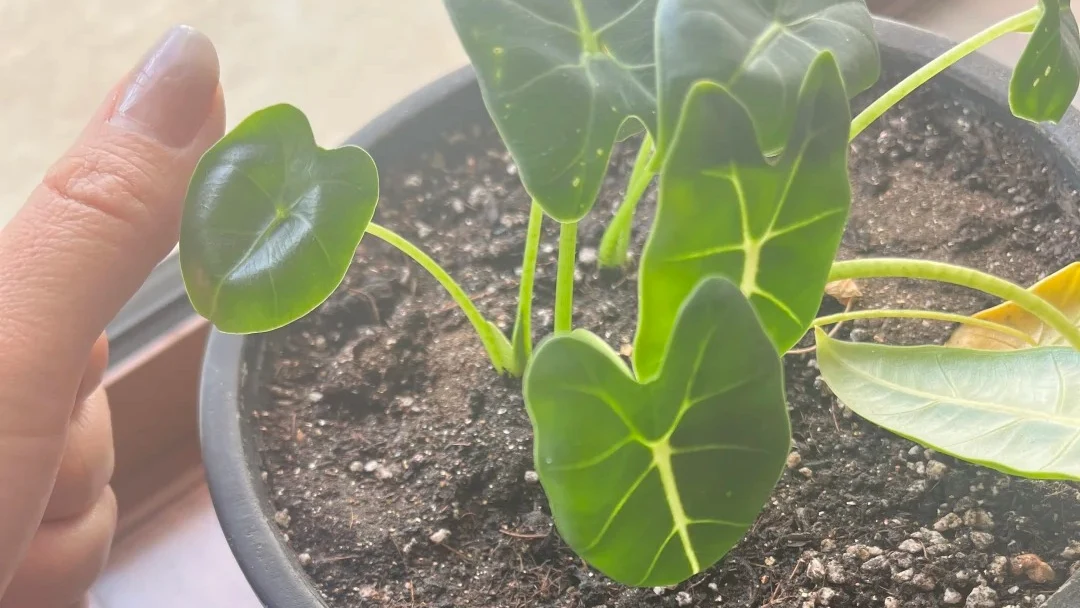
Notice the elongated petioles and stretched growth. The leaf appears thinner and less structured compared to mature foliage.
When light levels are insufficient, Alocasia begins to stretch toward the light source. Petioles grow longer, stems become weaker, and new leaves often look softer or slightly wrinkled because the plant doesn’t have enough energy to build thick, firm tissue.
Low light reduces photosynthesis. Reduced photosynthesis means lower energy production. With less energy available, both leaf structure and root performance decline.
This creates a slow feedback loop: low light leads to stretching, stretching weakens structure, weaker structure reduces efficiency, and reduced efficiency affects root absorption. Eventually, new leaves emerge thinner, softer, and less capable of fully expanding.
In this case, the issue is not water or humidity. It’s light.
The solution is to increase light intensity gradually. Move the plant to brighter indirect light, or supplement with a grow light based on these Alocasia light requirements. Avoid sudden exposure to harsh direct sun, as that can cause additional stress.
When light improves, leaf structure usually improves with the next growth cycle.
What Not to Do
When a new Alocasia leaf looks stuck or wrinkled, the worst response is panic intervention.
Do not force the leaf open. Manually pulling or peeling it apart can tear delicate tissue and leave permanent damage. Even if it opens faster, the structure may remain distorted.
Avoid spraying water directly into the leaf sheath or crown. Trapped moisture in that tight space increases the risk of rot, especially if airflow is limited.
Do not respond by suddenly increasing fertilizer — not until you’re sure the roots and soil conditions are stable. If the issue is related to weak roots or low light, extra nutrients will not solve it and may add stress.
Finally, don’t rush into heavy repotting before diagnosing the cause. Changing soil, container, and watering conditions all at once makes it harder to identify what actually went wrong.
Observation first. Adjustment second.
FAQ
Concern becomes reasonable when the leaf stays tightly rolled for over a week, especially if older leaves begin declining at the same time.
Forcing a leaf open can tear soft tissue and permanently distort the structure. Even if it looks like it helps in the moment, the leaf may never fully flatten afterward.
If the plant is healthy, the leaf will usually open on its own once hydration and internal pressure stabilize.
When a leaf expands quickly in low humidity, it may lose moisture slightly faster than the roots can supply it. The edges react first because they are thinner and more sensitive.
If the petiole is firm and older leaves remain stable, this usually corrects itself within a few days.
If root absorption is reduced — due to constantly wet soil or poor aeration — the plant may not have enough pressure to fully expand the new leaf.
In this case, you’ll often see slower growth and possible decline in older leaves as well. The issue isn’t the leaf itself, but the root system supporting it.
Insufficient light reduces photosynthesis, which lowers energy production. When energy supply is limited, new leaves may emerge thinner, softer, or slightly distorted.
If you also notice elongated petioles and stretching, light deficiency is likely part of the problem.
If the plant is struggling due to weak roots or low light, adding fertilizer can increase stress rather than fix the issue. Fertilizer supports growth only when the root system is functioning properly.
It’s better to diagnose light and watering conditions first before adjusting feeding levels.
Trouble with your Alocasia?
Find real fixes for yellow leaves, drooping stems, and root issues in our Problems Hub.
Go to Problems Hub →