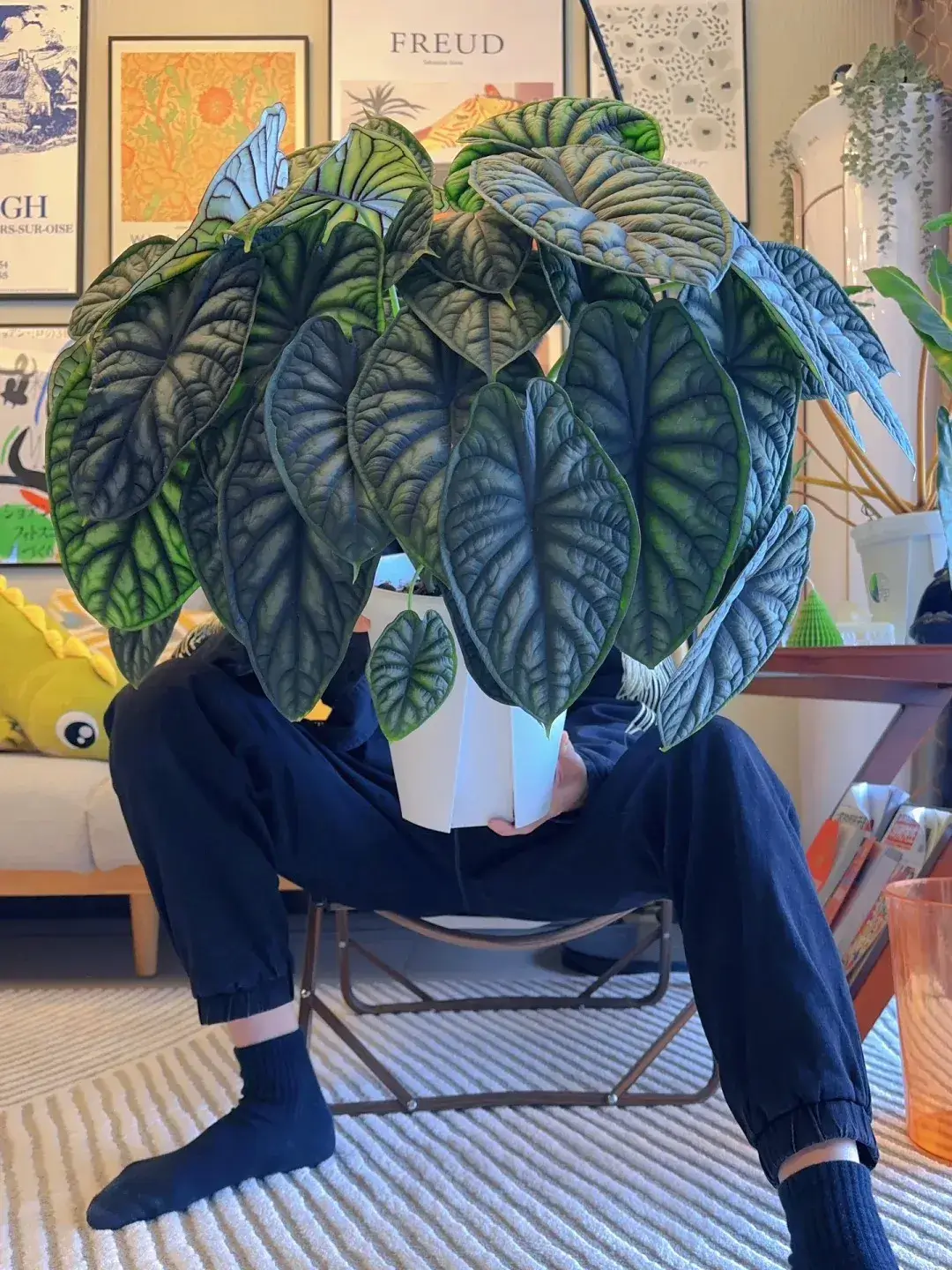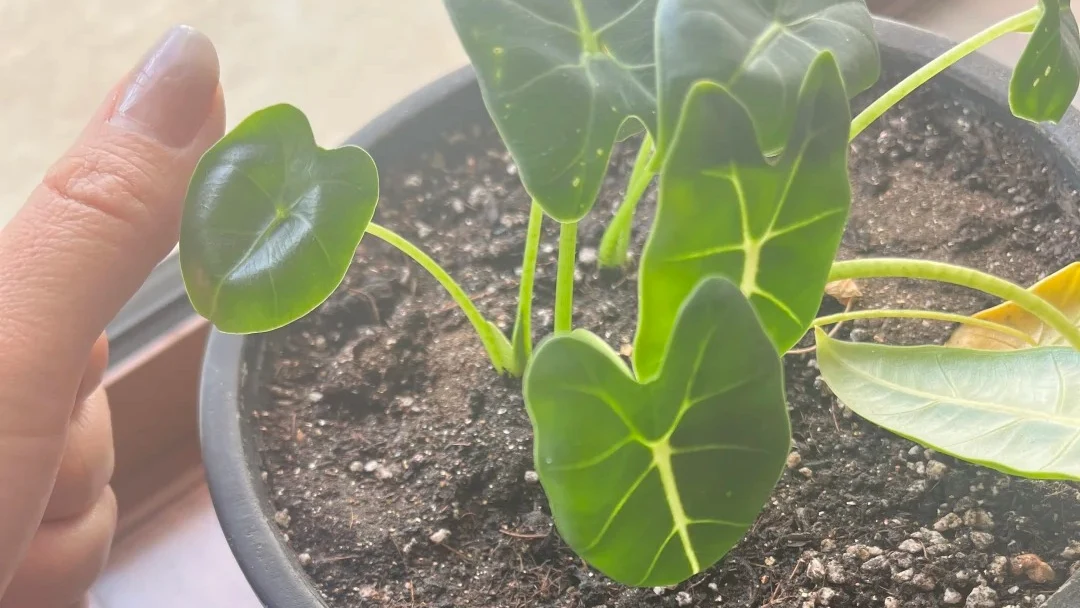
Every winter in Portland, I notice the same pattern with my Alocasias.
Once indoor heating turns on, the environment changes quickly. The air becomes dry, temperatures stay stable, and my care routine doesn’t shift much — yet growth slows almost immediately. New leaves stop unfurling, and weeks can pass without any visible change.
When I first encountered this, I assumed something was wrong. I checked soil moisture, adjusted watering, and reviewed light exposure, expecting to find a clear mistake.
What took time to understand was that this wasn’t a care failure at all.
The plants weren’t declining — they were responding to winter conditions by entering dormancy.
Recognizing that changed how I approach the season. Winter stopped being a time to “fix” my Alocasias, and became a time to maintain stability until active growth was ready to return.
How I Recognized Dormancy in My Alocasia
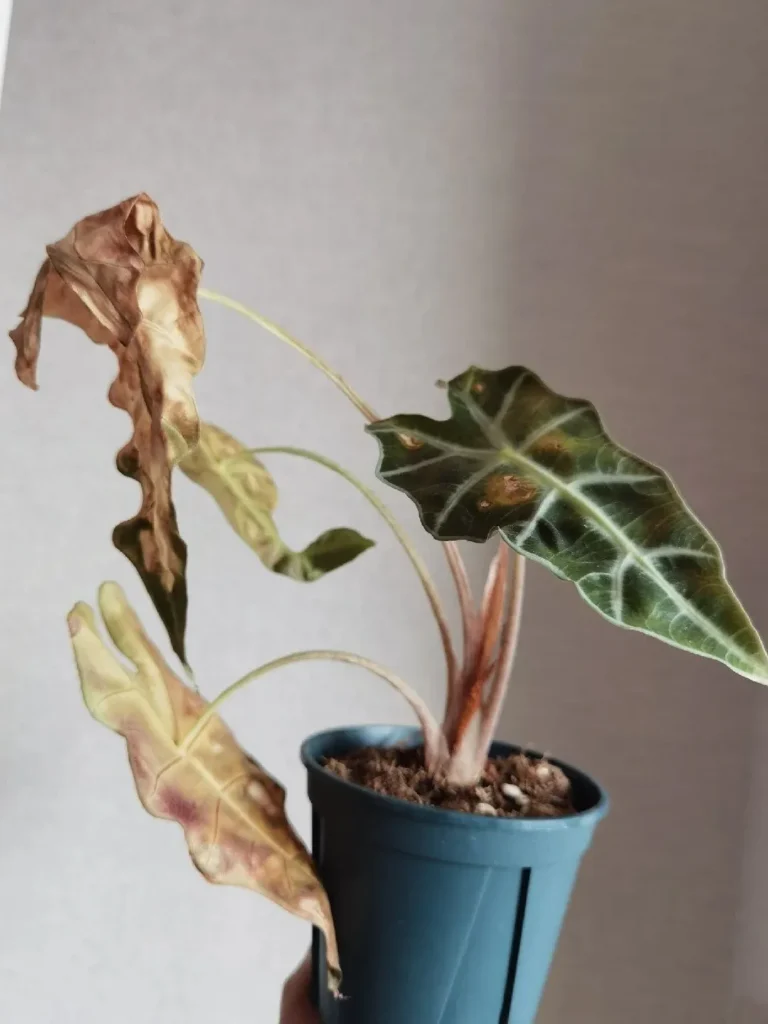
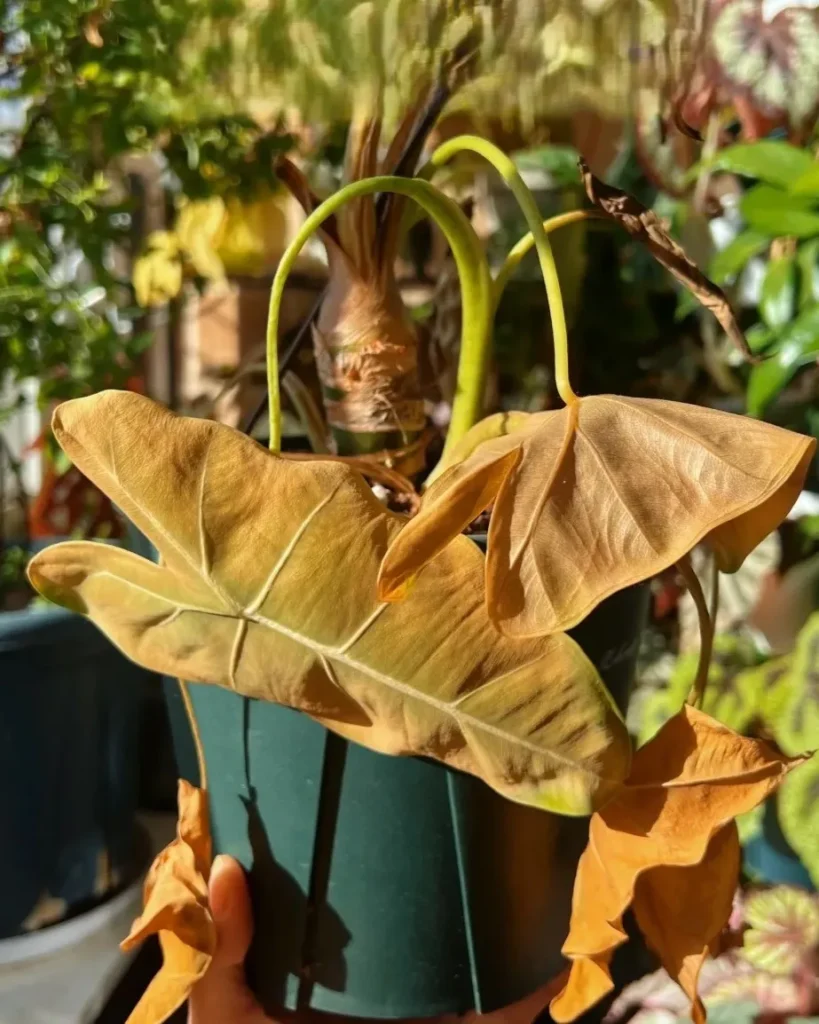
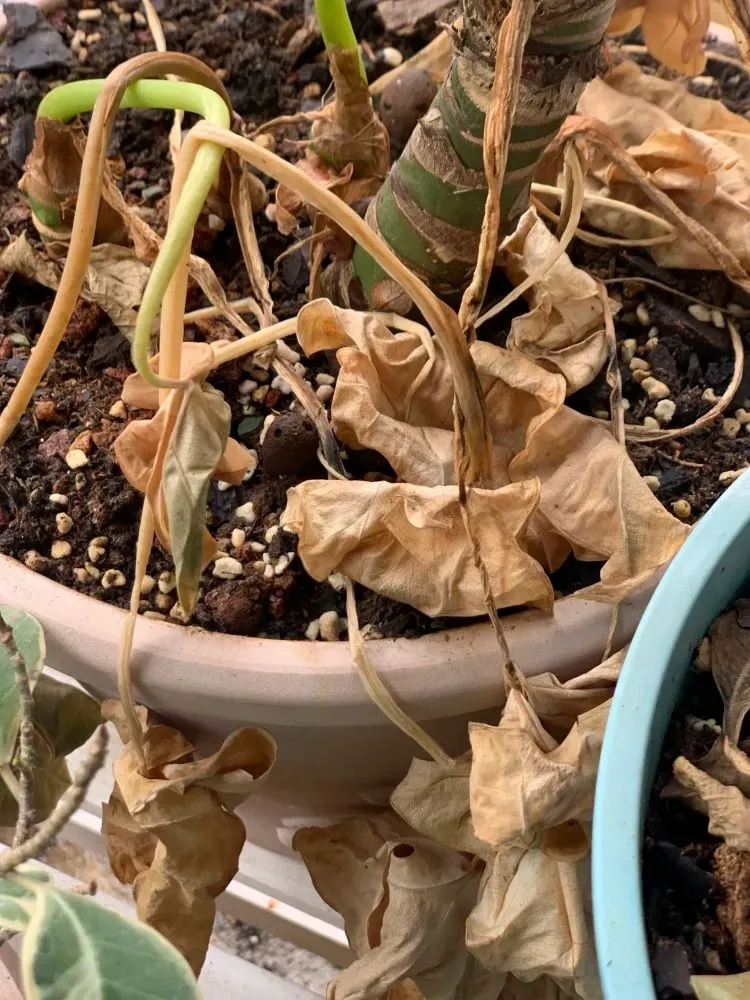
The clearest example of dormancy I’ve seen happened within a very short window.
I was growing a large Alocasia on a south-facing balcony. Throughout winter, the conditions appeared stable. Daytime temperatures regularly reached around 30°C in direct sun, while nighttime temperatures stayed above 15°C. The plant showed no signs of stress and had been growing normally.
That changed when a cold front passed through.
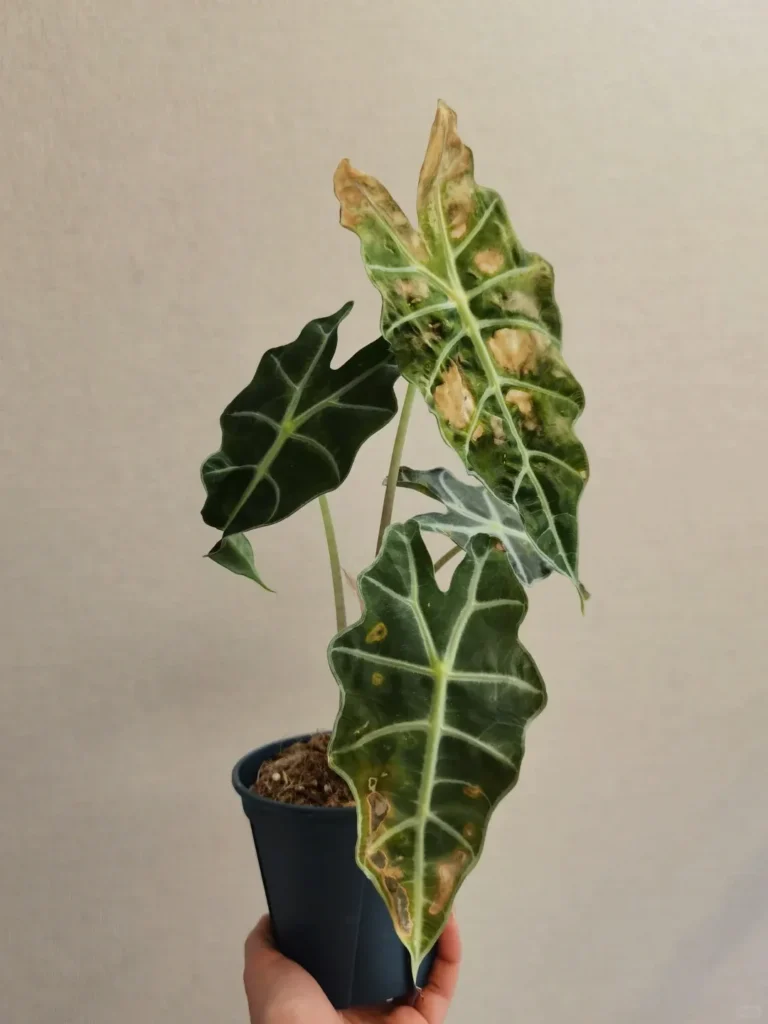
As soon as nighttime temperatures dropped below 15°C — specifically to around 14.9°C — the plant responded. The leaves did not collapse or soften, and there was no sudden loss of turgor. Instead, the color became duller and the leaf texture subtly shifted.
Over the following days, yellowing began and did not reverse. Once the process started, it continued steadily. Increased light, warmer daytime temperatures, and normal watering had no effect.
At that point, intervention was no longer the goal. I removed the damaged leaves and adjusted my expectations. The plant was not declining from disease or care failure. It had entered a temperature-induced pause.
There was no rot, no pest activity, and no systemic collapse — just a clear response to crossing a temperature threshold that this Alocasia was unwilling to grow beyond.
How I Help My Alocasia Get Through Winter
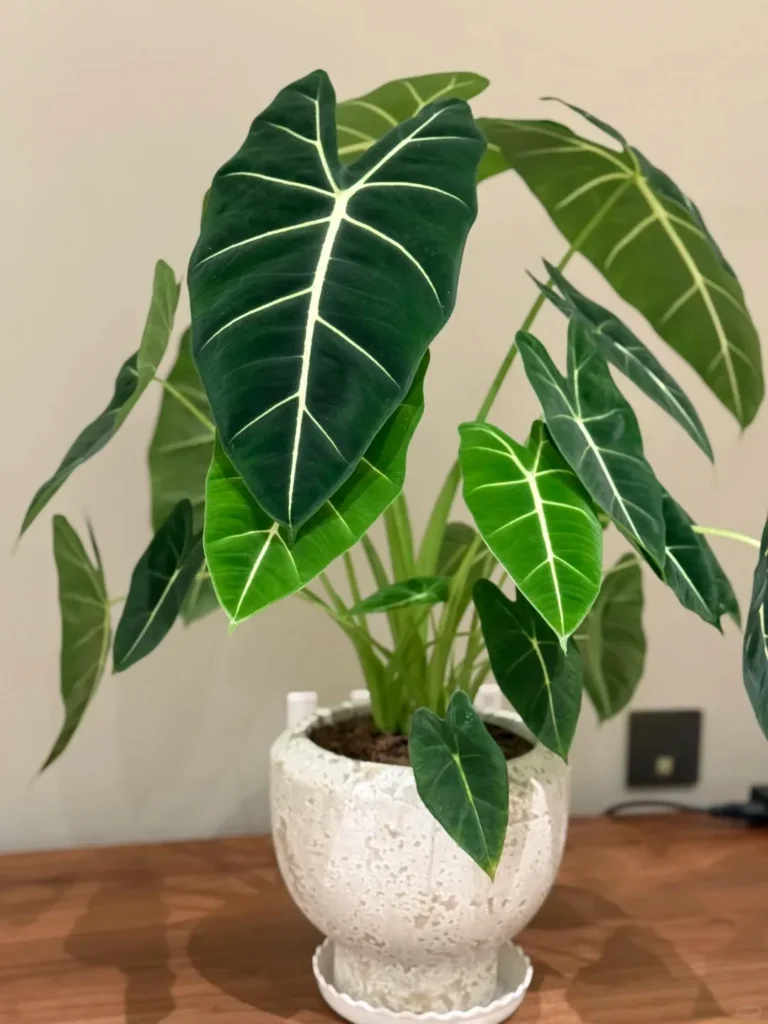
Light: Enough to Maintain, Not Push Growth
During winter, I don’t try to push new growth.
My Alocasias stay in a bright indoor spot rather than direct sun. This level of light has been enough to maintain leaf health without pushing active growth.
In the afternoon, sunlight does reach them, but I always filter it through a sheer curtain. The light isn’t intense, but it lasts for about three to four hours, which has proven sufficient to maintain healthy leaves without encouraging active growth.
As long as the petioles stay firm and leaf color remains stable, I don’t adjust light just because no new leaves are emerging.
Water: I Let the Plant Decide
In winter, I rarely decide when to water — the plant does.
Alocasias show clear signs when they need water. Once I see the leaves start to droop, I water thoroughly. I either water until it drains completely or let the pot absorb water from the bottom; both methods work well for me.
As temperatures drop, watering frequency naturally decreases. I don’t follow a schedule — I follow the plant’s signals.
Soil: Why I Never Had Winter Root Rot
I barely open windows during winter, yet I’ve never had root rot issues with my Alocasias.
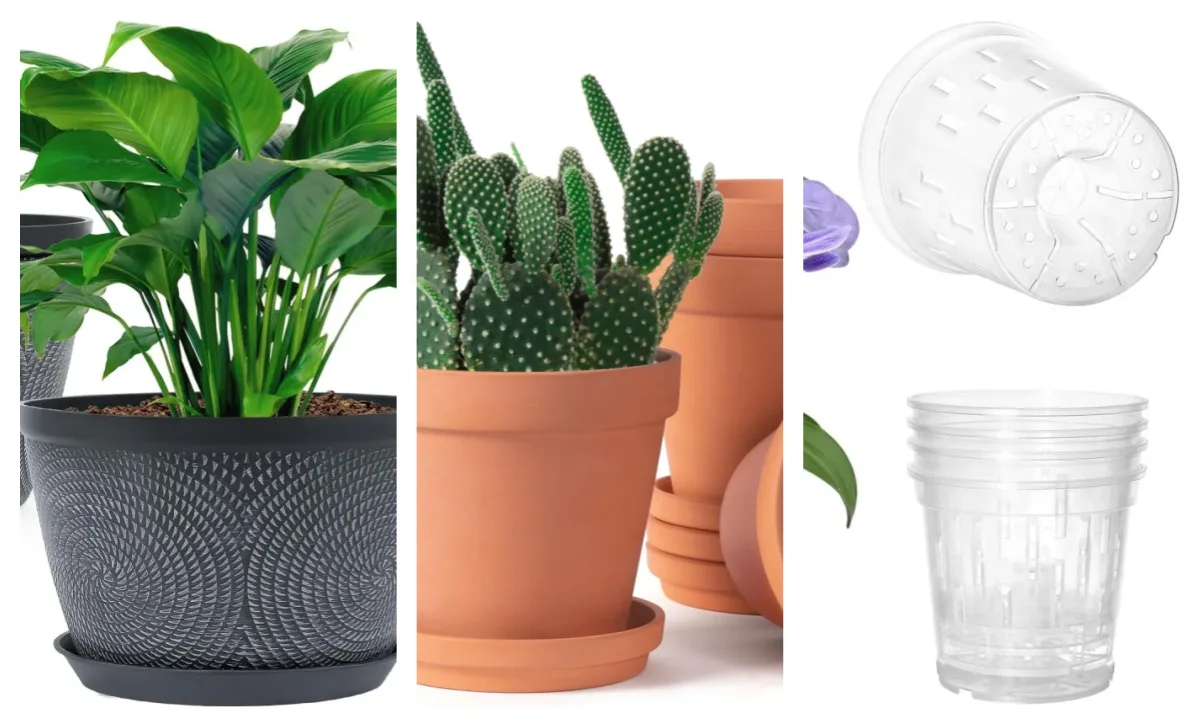
The reason isn’t airflow — it’s soil. I consistently use a loose, well-aerated commercial potting mix, and all of my aroids are planted in the same type of substrate.
Because the soil drains and breathes well, roots don’t suffocate even in a relatively closed indoor environment. Over time, I’ve learned that stable soil matters far more than constant adjustments.
Temperature: Accepting the Pause
Once temperatures drop below 15°C, I stop expecting growth. This is often when leaves begin to droop or decline.
If a leaf shows clear cold damage, I remove it without hesitation. I don’t try to recover it or stimulate new growth during this phase. My only goal is keeping the plant alive until conditions improve.
As long as the roots and corm remain healthy, everything else can wait.
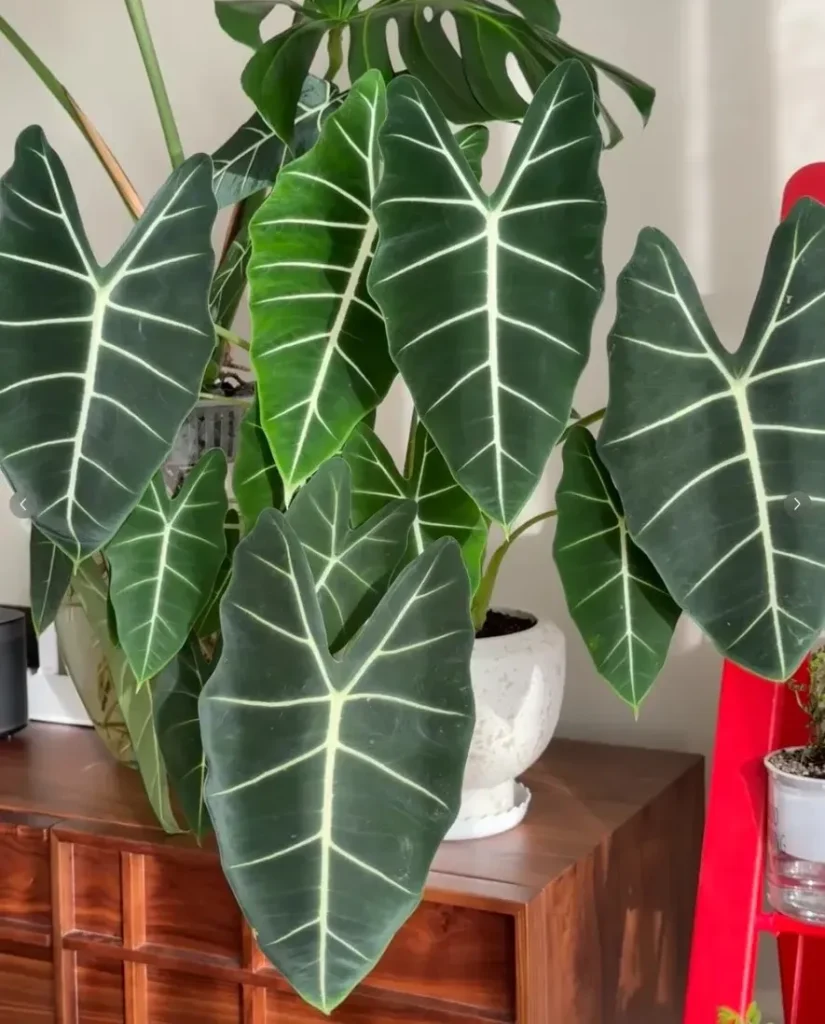
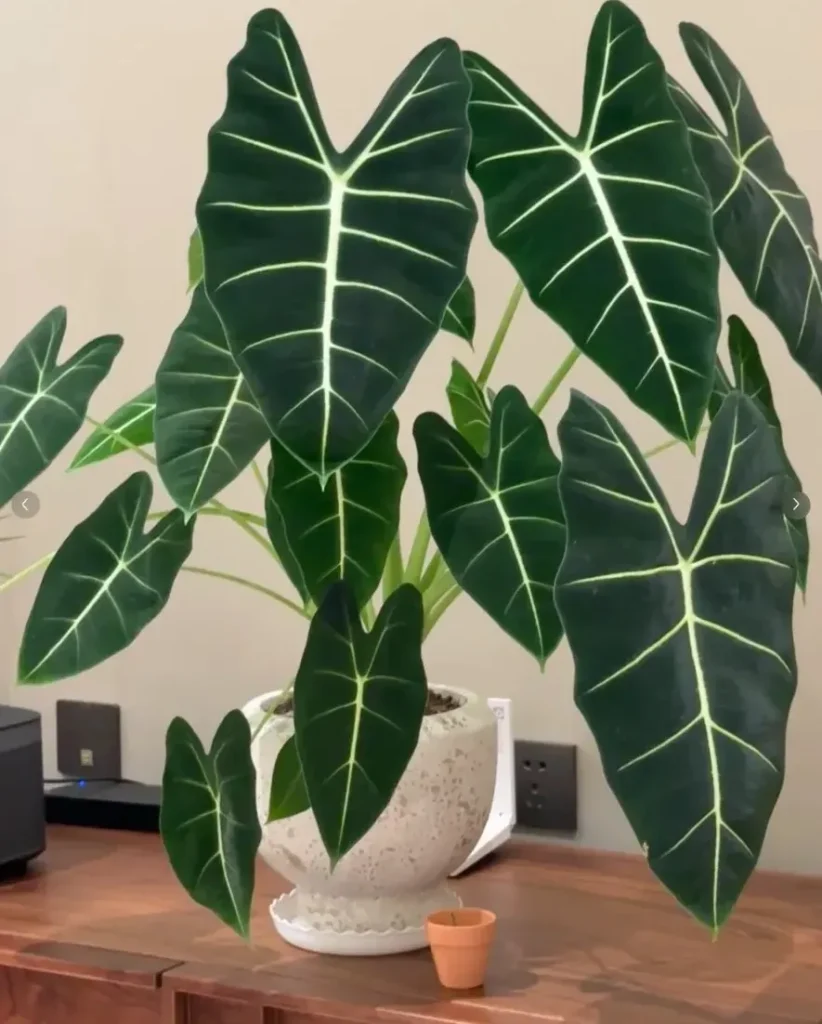
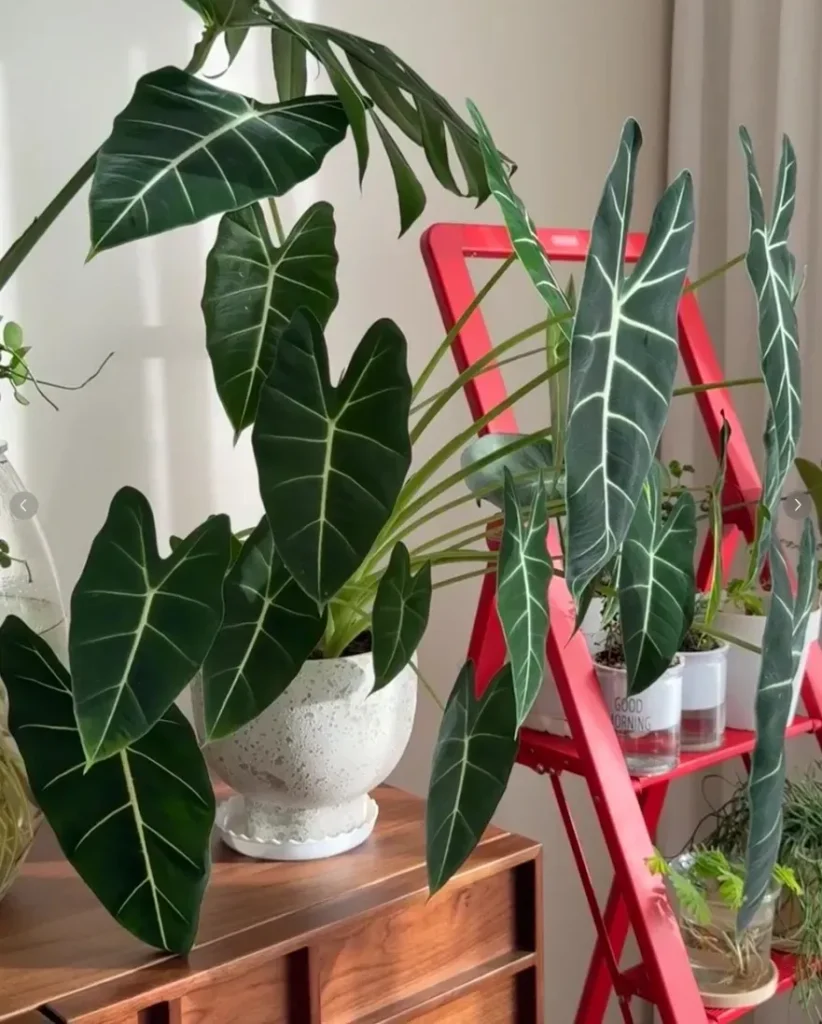
Winter isn’t a season for growth — it’s a season for survival.
For Alocasias, slowing down is not a sign of failure. It’s a protective response to colder temperatures, drier air, and reduced energy availability. When conditions are stable and the plant remains structurally sound, patience is often the best form of care.
As long as the plant is kept healthy through winter, active growth will return on its own when the environment allows it to.
FAQ
If your Alocasia’s leaves remain firm, the stem isn’t mushy, and there’s no spreading rot or collapse, a growth pause is often normal. Decline usually shows multiple warning signs at once — dormancy does not.
I don’t water on a schedule in winter. I wait for clear signs — such as slight drooping or lighter pots — and then water thoroughly. Dormant plants still need moisture, just not frequent stimulation.
If temperatures drop below the plant’s comfort range, older leaves may yellow and decline. This is especially common in larger Alocasia varieties. I remove damaged leaves once yellowing becomes irreversible and focus on keeping the plant stable.
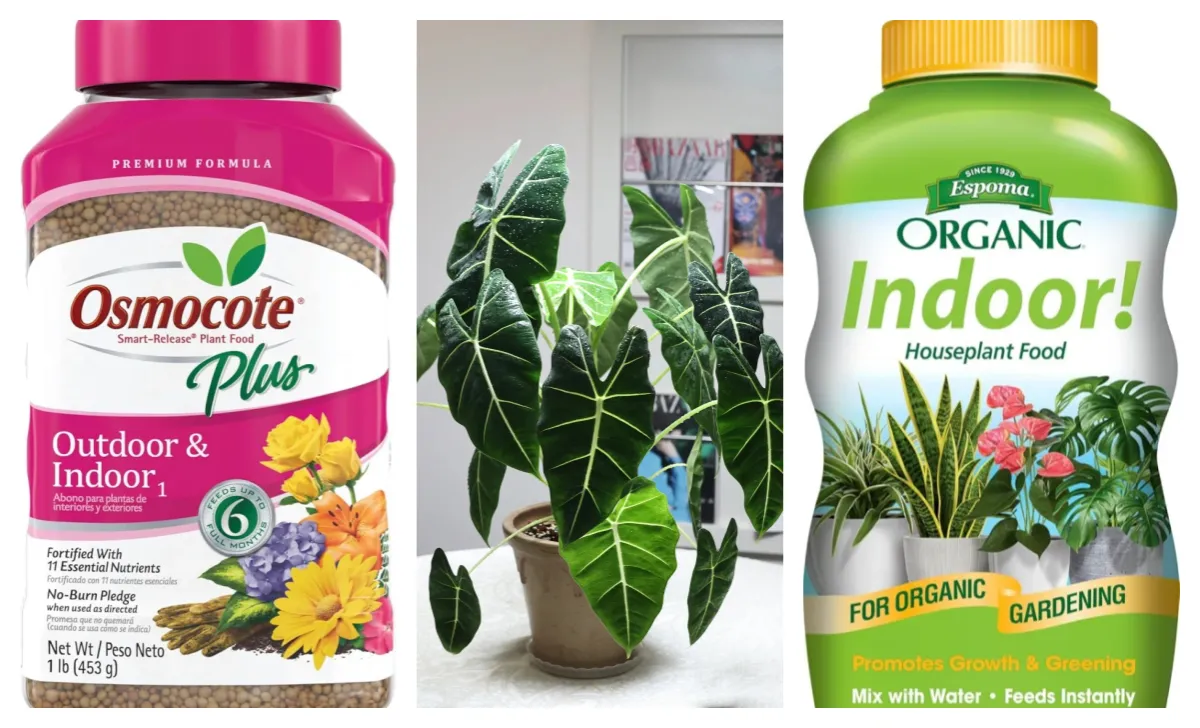
If the plant isn’t actively producing new leaves, fertilizer won’t restart growth and may stress the roots. I resume feeding only when consistent new growth returns in warmer conditions.
Dormancy is temporary. As long as the corm and roots remain healthy, growth typically resumes naturally when temperatures rise, light improves, and indoor conditions become more favorable.
Dormancy depends on temperature, light, humidity, and plant size. Larger varieties tend to respond more strongly to cold or dry conditions, while smaller ones may slow down rather than fully pause.
Trouble with your Alocasia?
Find real fixes for yellow leaves, drooping stems, and root issues in our Problems Hub.
Go to Problems Hub →