Temperature is the easiest factor to control when growing Alocasia — as long as it stays above 60°F (15°C), these tropical plants will thrive. But watering? That’s where most of us struggle.
Watering Alocasia isn’t about sticking to a fixed number of days; it’s about learning rhythm and balance. When I first started growing them, I couldn’t resist checking the soil every day — touching, misting, sometimes watering again, even when it didn’t need it. Of course, that led to overwatering and a few sad, yellowing leaves.
What helped me most was using a soil moisture meter to understand how long it actually takes for the soil to dry. Over time, that tool trained my instincts — now I can simply lift the pot and know when it’s time to water.
In this guide, we’ll break down how often to water Alocasia based on both plant type (rock-dwelling vs. non-rock-dwelling) and seasonal watering frequency, so you can find the perfect balance for your growing conditions.
The Two Watering Categories of Alocasia
Not all Alocasias drink the same way.
While every species loves moisture, their watering frequency depends on their native growth habits. Understanding whether your plant is a moisture-loving forest type or a rock-dwelling, rhizomatous type is the first step to getting watering right.
Non-Rhizomatous / Moisture-Loving Alocasias
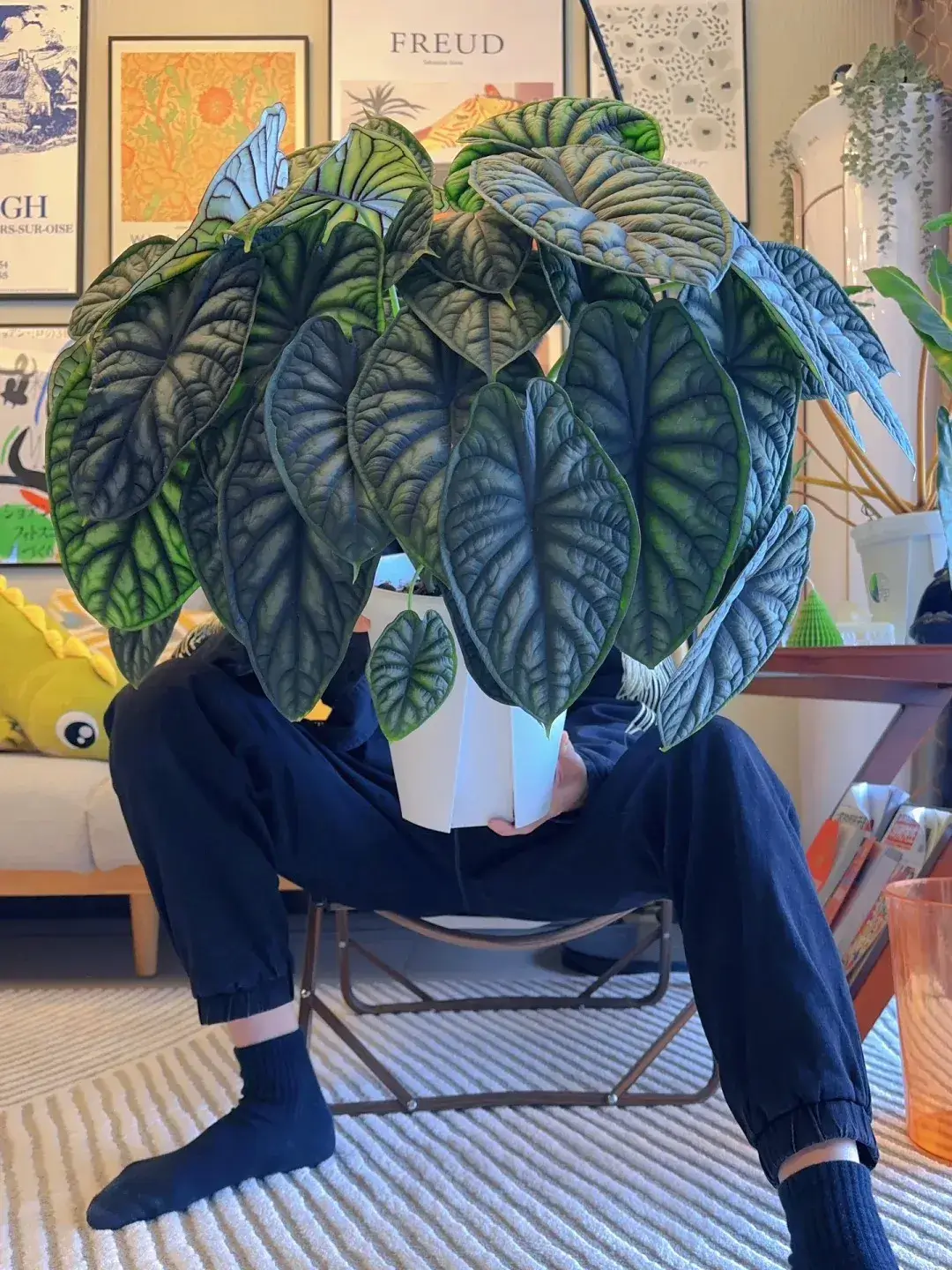
Examples: Alocasia Sarian, Green Shield, Pink Dragon, Arrow, Fairy (Large & Small)
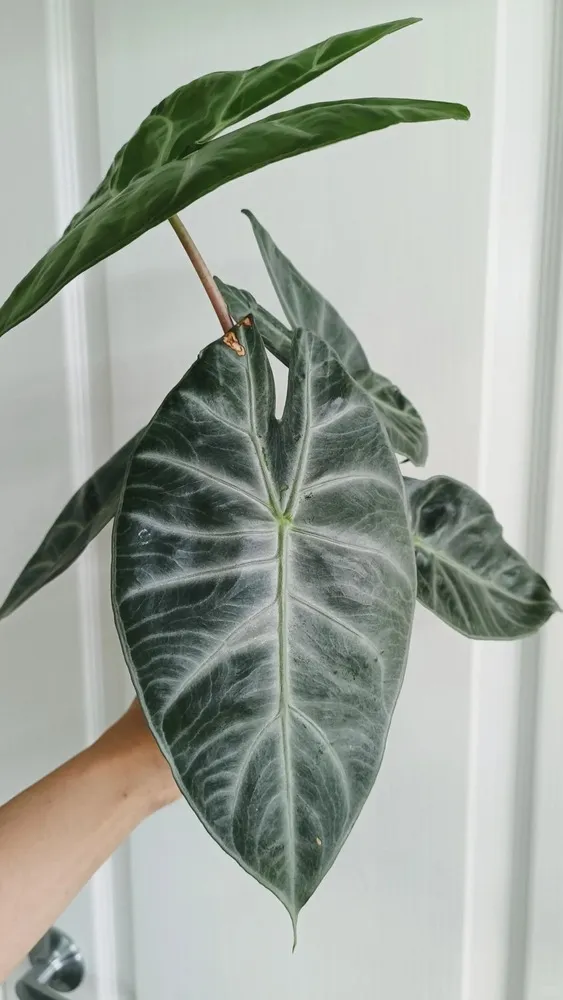
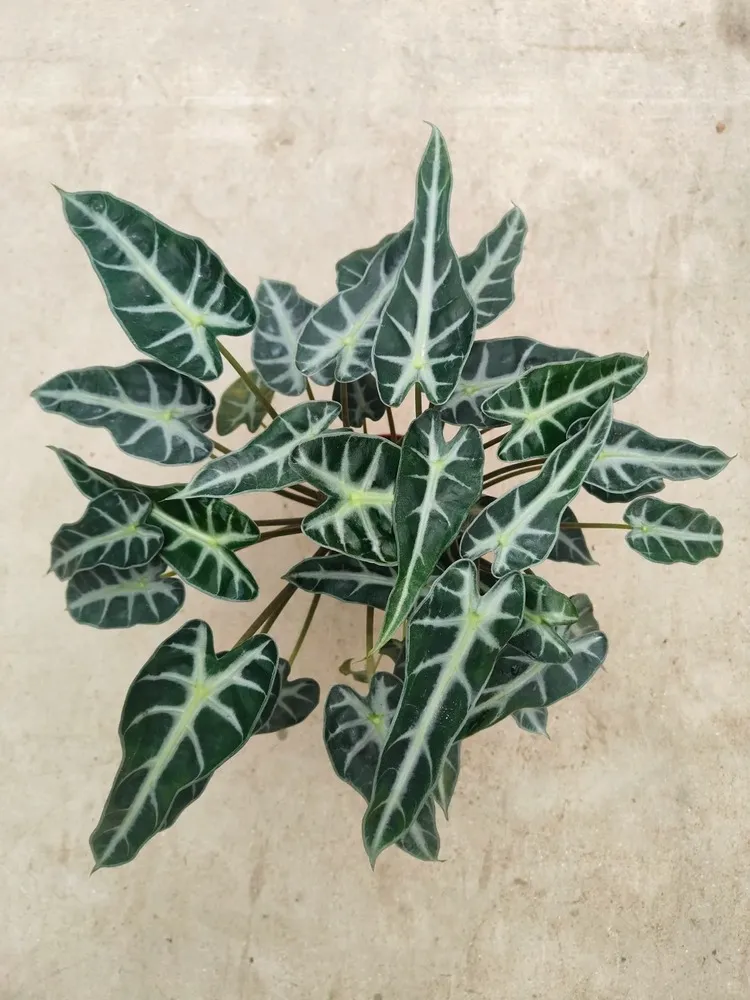
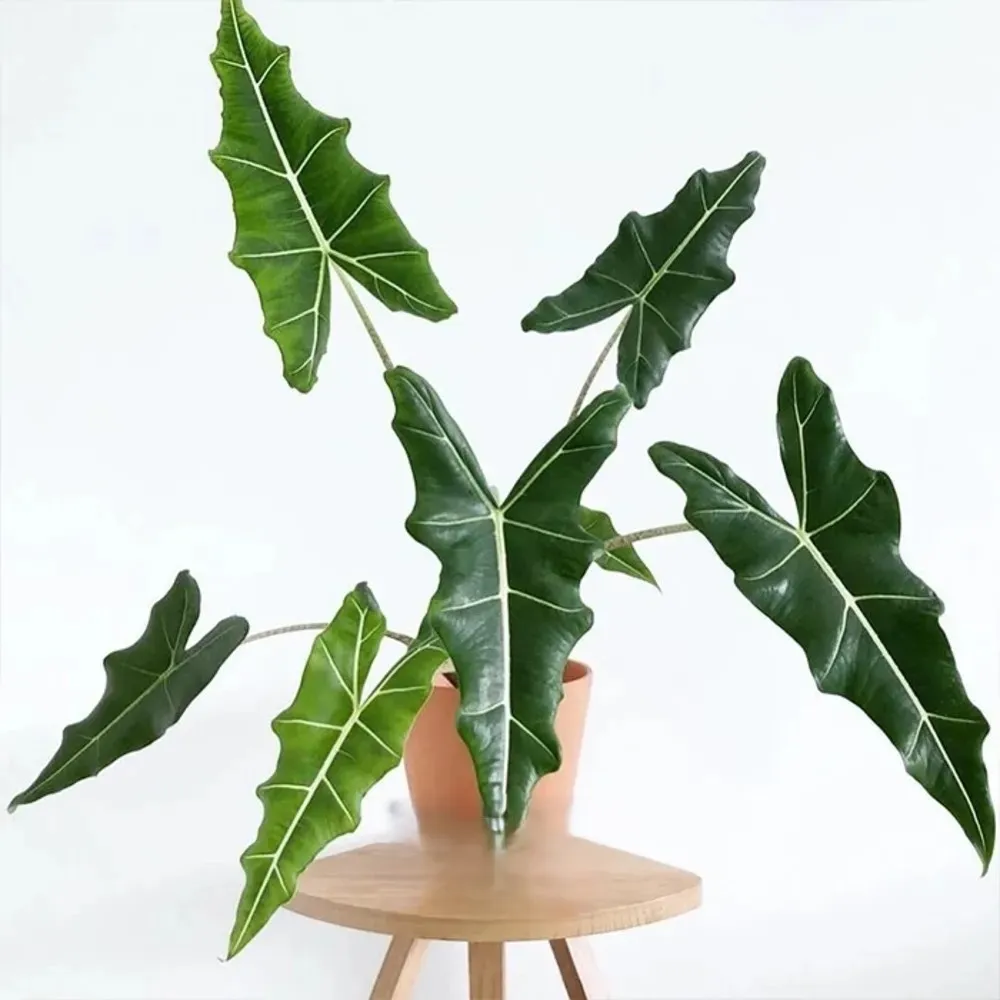
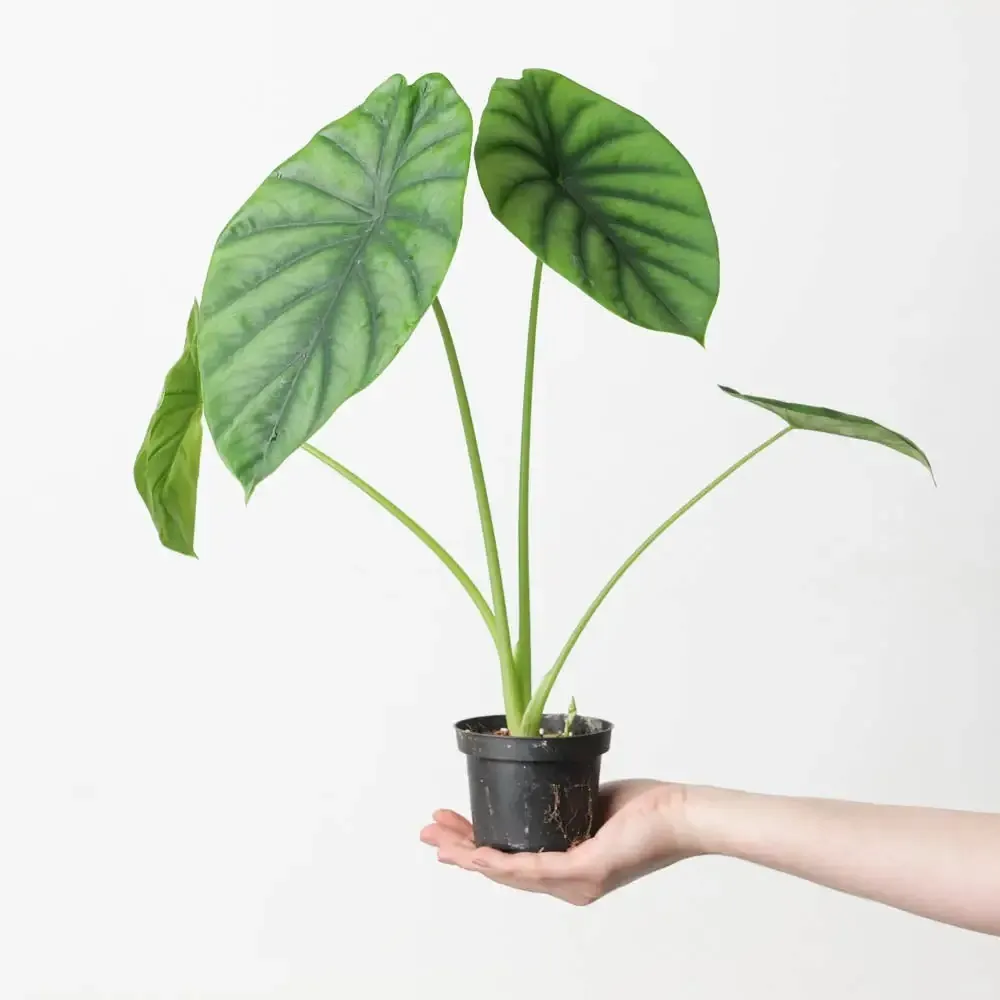
These Alocasias grow in naturally humid, shaded forest floors where the soil stays slightly damp year-round. They prefer a consistently moist environment but never soggy roots.
Recommended Methods:
- Edge Watering: Pour slowly along the edge of the pot until water runs out of the bottom, then stop immediately. Wait 15 minutes and repeat for the other half of the pot.
- Bottom Soaking: Place the pot in a shallow tray with 2–3 cm of water for about 30 minutes. Remove when the top layer feels evenly moist.
💡 Tip: These types appreciate humidity and airflow after watering. Use a small fan to keep air circulating and prevent over-saturation.
Rhizomatous/Rock-Dwelling Alocasias
Examples: Alocasia Dragon Scale, Melo, Jacklyn, Black Velvet
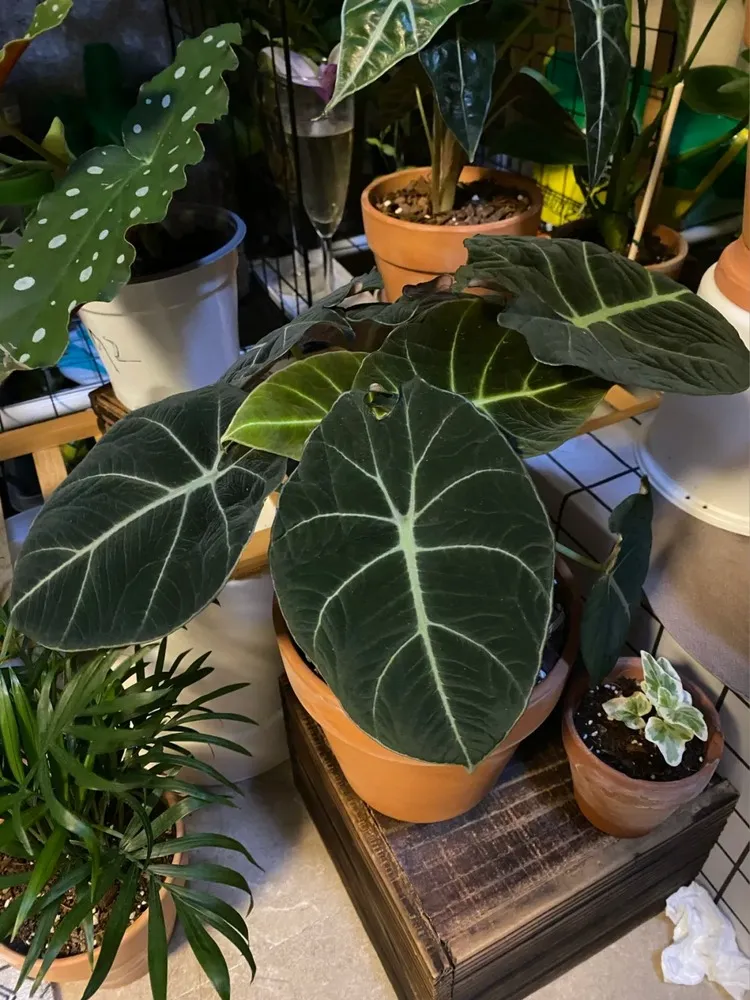
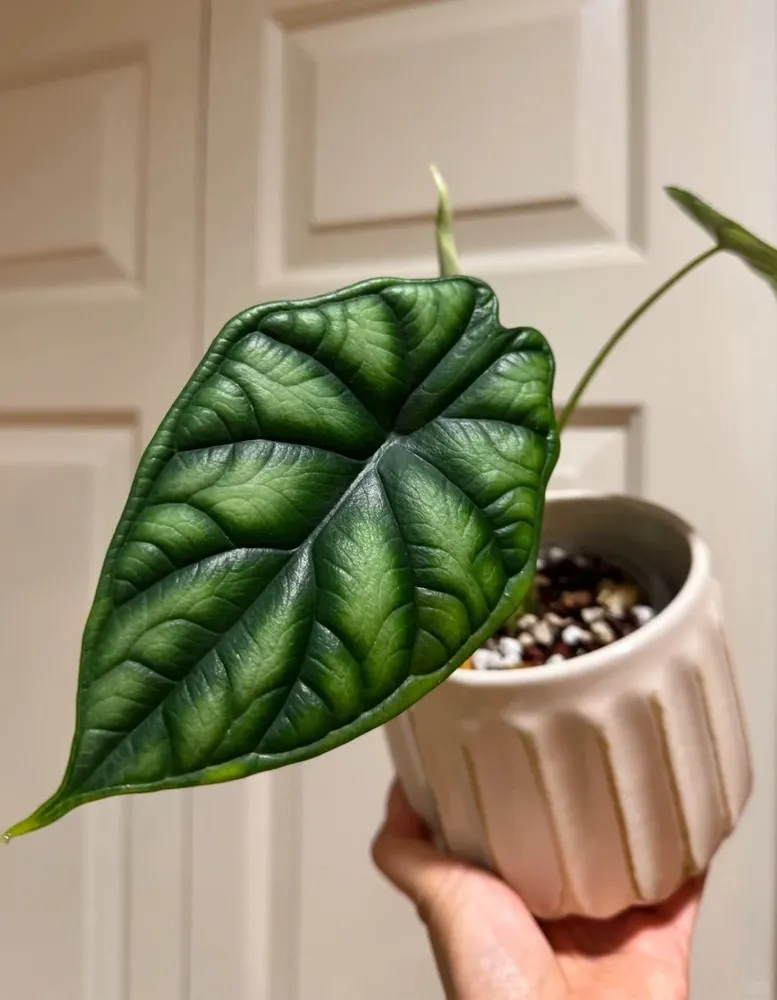
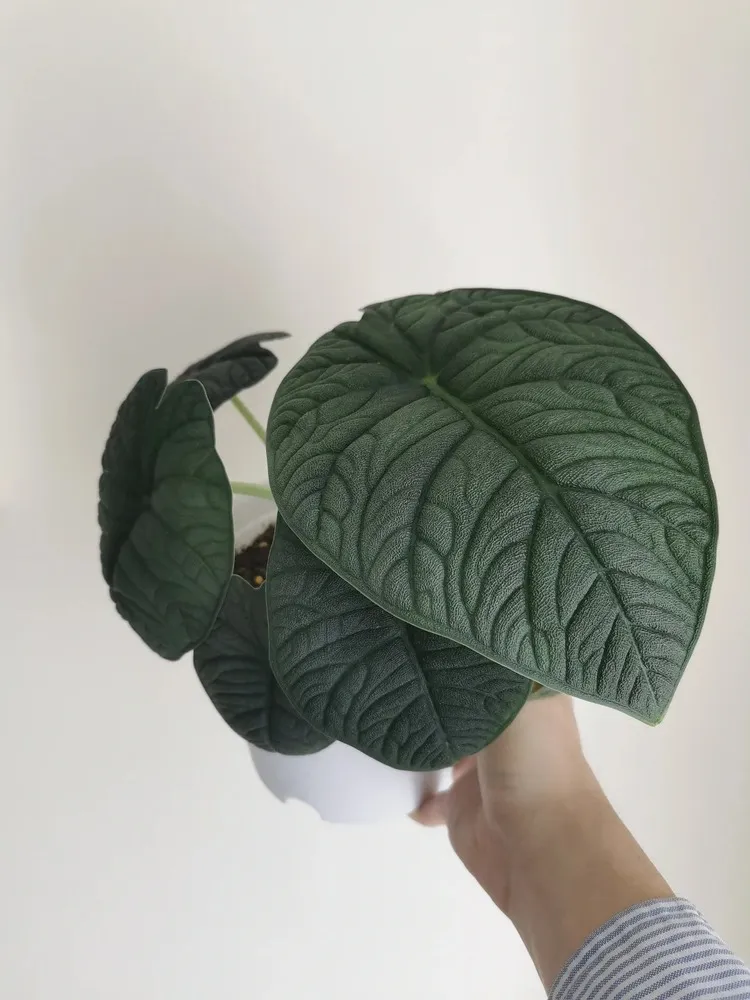
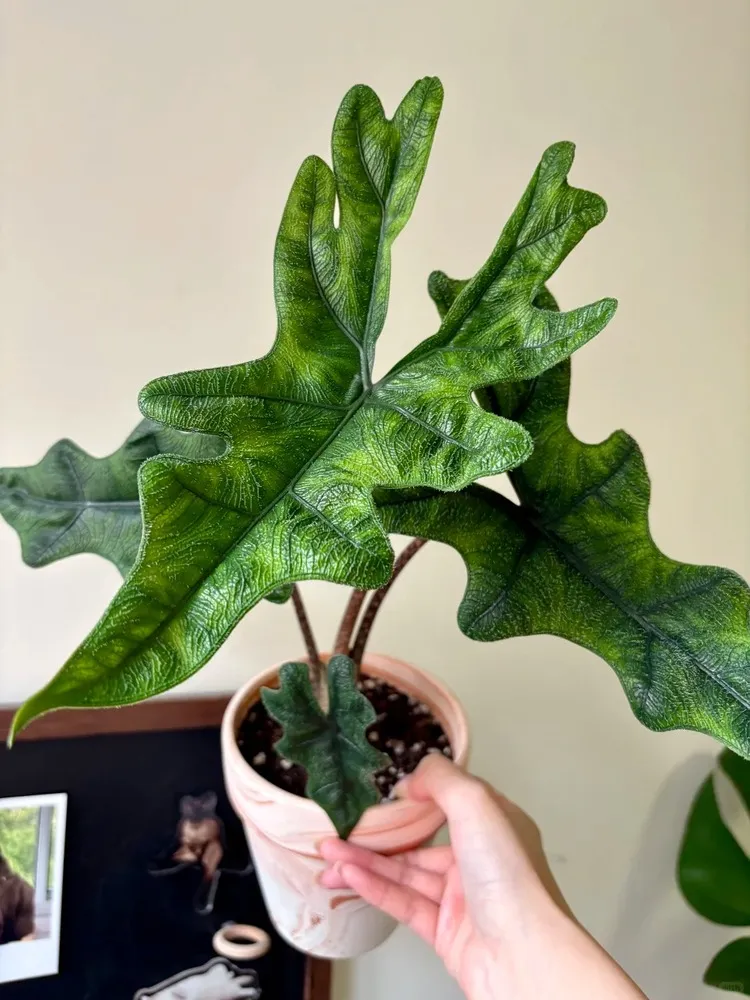
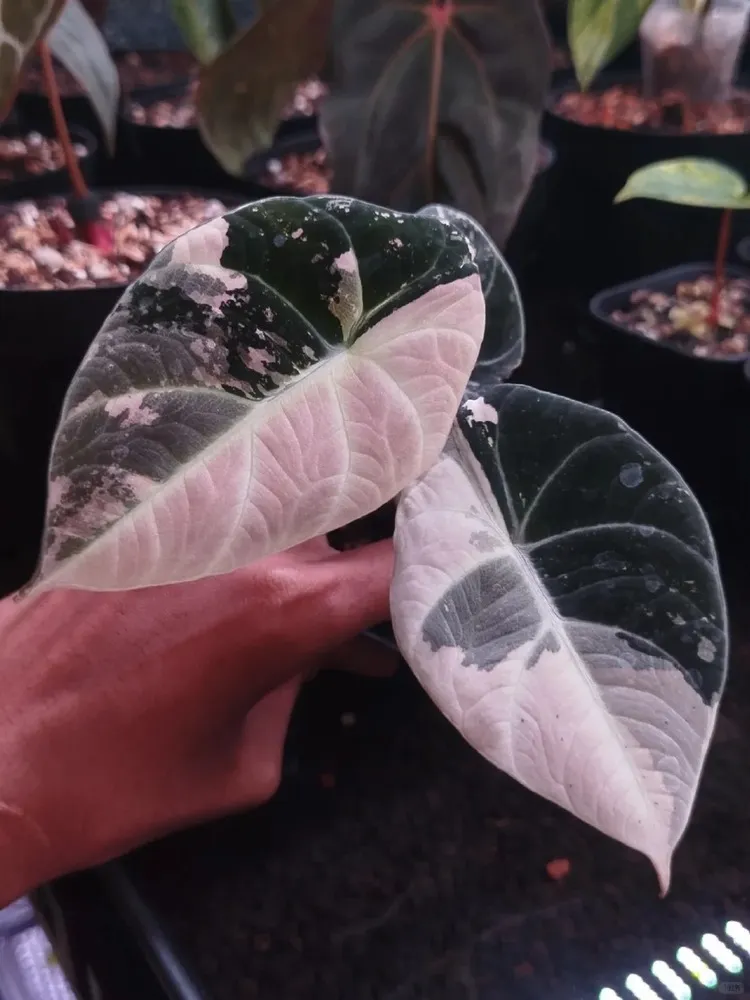
These species anchor themselves in rocky, fast-draining soil. Their thick rhizomes and leathery roots store water, making them far more drought-tolerant than their forest cousins.
Recommended Methods:
- Edge Watering as above, but only when the soil is fully dry.
- Dry-Down Technique: Allow the soil to dry completely between waterings to keep the rhizomes firm and healthy.
Golden Rule: When in doubt, keep it on the drier side.
These varieties thrive with strong airflow and good drainage—wet soil for too long can quickly lead to rot.
💡 Quick Note: Moisture-loving Alocasias generally need more frequent watering than rock-dwelling types.
Seasonal Watering Guide
Alocasia watering frequency changes dramatically throughout the year. Temperature, light, and humidity all affect how fast the soil dries out — and learning to adjust with the seasons is what keeps your plant healthy year-round.
Below is a practical watering guide I’ve developed after years of trial and error in Portland’s fluctuating climate. It works for both moisture-loving and rock-dwelling Alocasias — just adjust the frequency based on your plant type and environment.
| Season | Temperature Range | Method | When to Water | Extra Notes |
|---|---|---|---|---|
| 🌞 Summer (26–32 °C / 79–90 °F) | Active growth season | Bottom soaking / Edge watering | Water when the soil moisture meter reads 3 | Use a narrow-spout watering can for precision, then run a small fan afterward to prevent soggy soil. |
| 🔥 Hot Summer (> 32 °C / > 90 °F) | Heat stress risk | Delay watering slightly | Even if the moisture meter shows 2, wait until the temperature drops below 30 °C before watering | Prevent “boiled roots” — high soil temperature + water = root suffocation. Prioritize cooling over watering. |
| 🌸 Spring / 🍂 Autumn (15–26 °C / 59–79 °F) | Moderate growth | Same methods as summer | Water when the moisture meter shows 4 | Keep soil slightly moist. As light decreases, reduce watering frequency and increase ventilation. |
| ❄️ Winter (< 10 °C / < 50 °F) | Dormant period | Edge watering only | Every 2–4 weeks | Don’t water deeply — just moisten the surface edge. When the moisture meter shows 2–3/4, it’s time for a light drink. |
During winter, most Alocasias go semi-dormant or completely rest if temperatures fall below 15 °C. The goal isn’t to “feed” them water, but simply to keep the roots from drying out completely.
💡 My own winter routine: I water once every two to four weeks, only around the pot edge, and let the soil stay barely moist. When I see the moisture meter hovering around 2–3/4, that’s my cue to add a light circle of water — nothing more.
This rhythm prevents root rot while keeping the corms healthy and ready for spring growth.
Step-by-Step Watering Methods
There’s no single “right way” to water an Alocasia, but using the proper technique can make a huge difference in root health and soil balance.
Here are two reliable methods that I rotate between depending on the plant type and season.
Bottom Soak Method
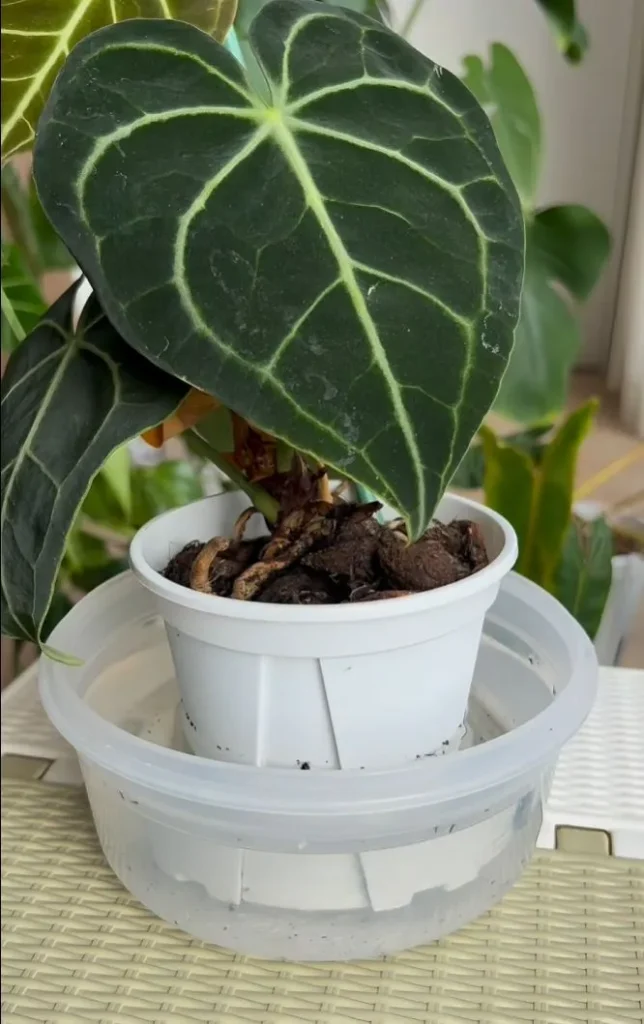
The bottom soak method is perfect for indoor setups or moisture-loving Alocasias that prefer even soil hydration without flooding the top layer.
How to do it:
- Pour 2–3 cm (about 1 inch) of water into a tray or saucer.
- Place the pot directly in the tray and let it soak for 25–30 minutes.
- When you notice the water level stops dropping, remove the pot and drain any excess water.
- Let it rest for 10–15 minutes before returning it to its usual spot.
✅ Best for: forest or non-rhizomatous types such as Sarian, Pink Dragon, and Green Shield.
✅ Goal: allow roots to absorb moisture evenly from below, promoting deeper root growth.
💡 Extra tip:
If your home’s humidity is low, this method works beautifully alongside a pebble tray or humidifier. It hydrates the roots while keeping the top layer breathable.
Edge Watering Method
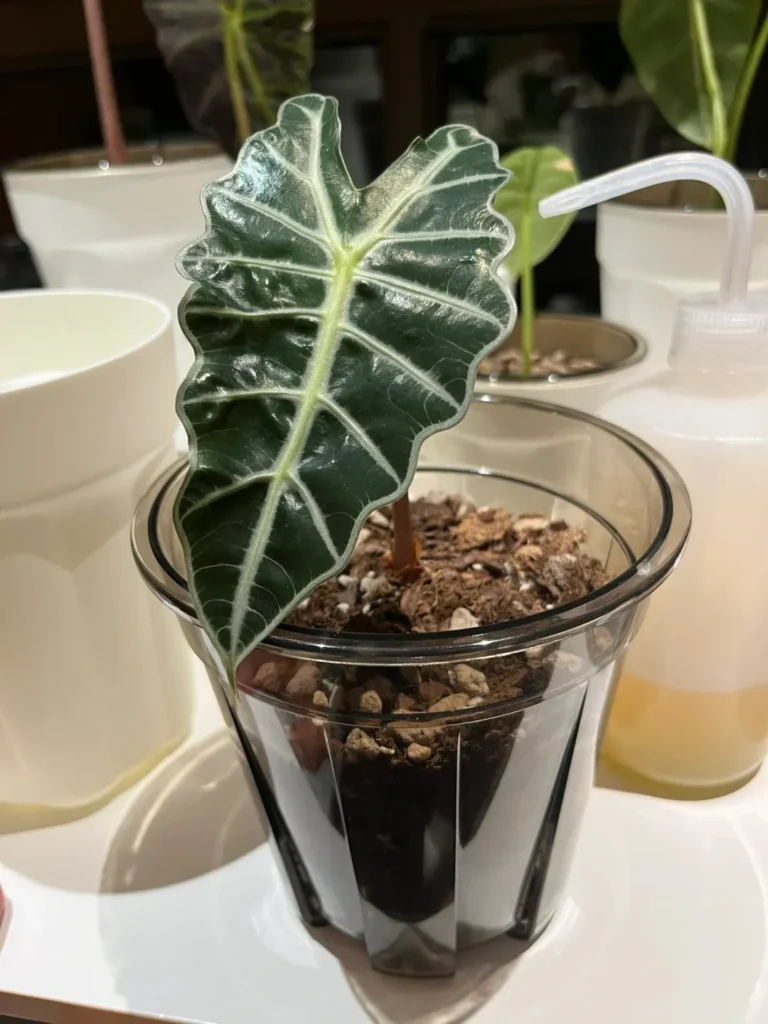
The edge watering method mimics natural rain and is safer for Alocasias that dislike having water trapped around their corms — especially rock-dwelling types like Dragon Scale or Melo.
How to do it:
- Use a narrow-spout watering can and pour slowly along half the edge of the pot in a semicircle.
- Stop watering as soon as you see water draining from the bottom holes.
- Let the pot rest for 15 minutes.
- Then water the other half of the edge in the same way.
This two-step process ensures the soil becomes evenly moist without saturating the center, reducing the risk of root rot or stagnant pockets.
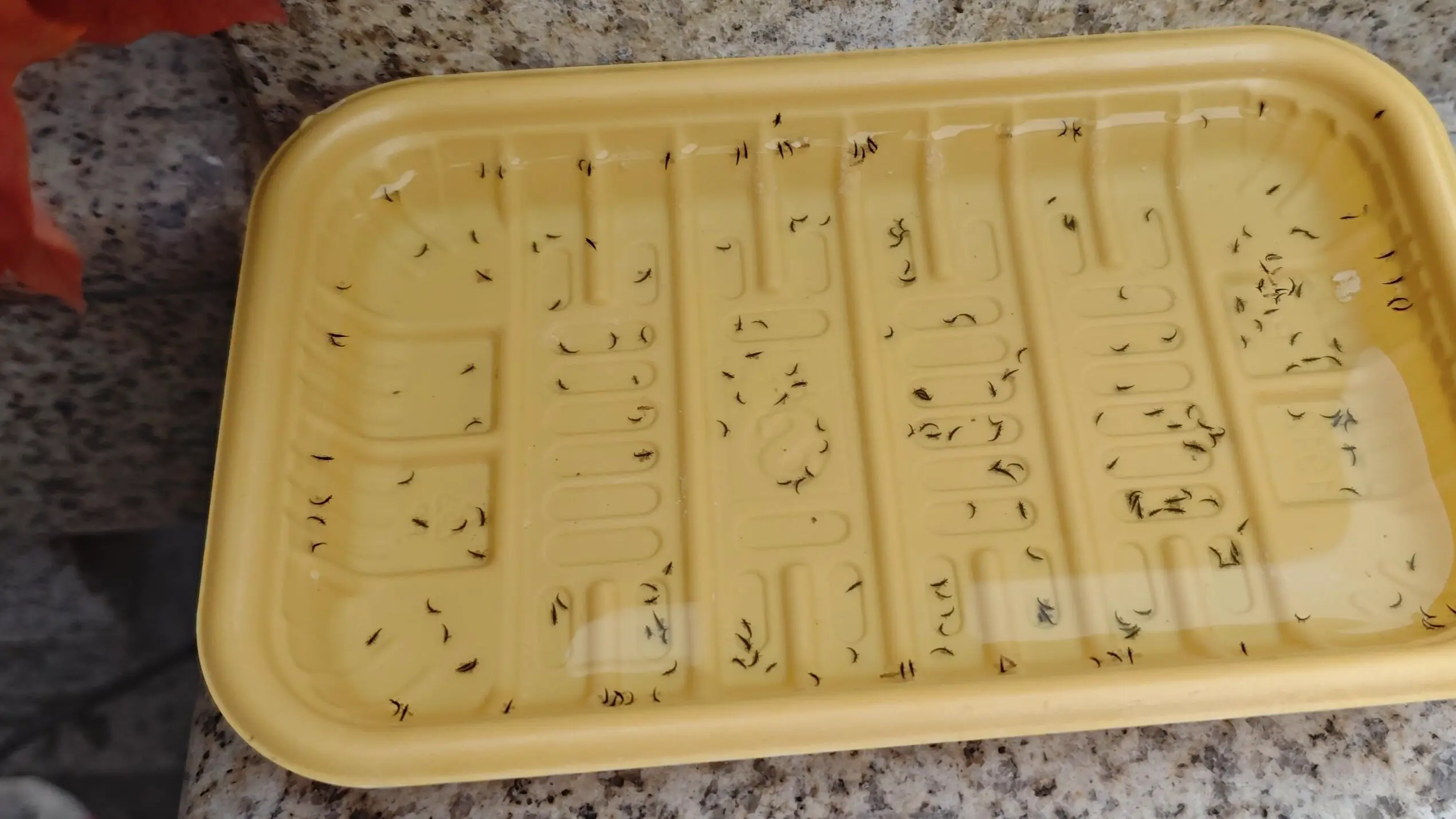
💡 My experience: After watering, I always set a small fan nearby for 20–30 minutes to keep airflow strong. It helps the top layer dry faster, prevents fungus gnats, and keeps the soil from staying soggy for too long.
Quick Takeaways:
- Bottom soak = gentle, even hydration.
- Edge watering = precision and safety for thick-rhizome varieties.
- Both methods rely on observation — not habit — and work best when paired with good ventilation.
Preventing Overwatering & Summer Root Suffocation
One of the easiest ways to harm an Alocasia during summer is by watering it at the wrong time.
When both soil and air temperatures are high, water trapped around the roots can quickly create a “boiled root” effect — what many growers call root suffocation.
Inside the pot, warm water replaces oxygen pockets, and the roots literally can’t breathe.
Instead of hydrating the plant, it leads to rot, yellowing leaves, and halted growth.
💡 In short: when it’s hot, cool the plant first — water later.
☀️ Smart Timing: Cool Before You Water
During heatwaves (above 32 °C / 90 °F), always focus on cooling the soil and the air before watering.
If your moisture meter shows “dry,” resist the urge to water immediately. Instead:
- Move the plant to a shaded, ventilated spot for a few hours.
- Let the soil temperature drop naturally below 30 °C.
- Then water using the edge or soak method once the pot feels cooler to touch.
This prevents the “hot water bath” effect that suffocates Alocasia roots.
🌙 Avoiding Nighttime Watering & Guttation Problems
Evening watering may seem harmless, but for Alocasia, it’s one of the most common causes of yellow tips and fungal spots.
When watered at night, the plant’s natural transpiration slows down, trapping excess moisture inside the leaves. The result is guttation — droplets forming at leaf tips that can’t evaporate.
Those droplets later dry into yellow or brown spots, especially in varieties like Dragon Scale or Black Velvet with thicker, less porous leaves.
⚠️ Never water Alocasia at night.
I learned this lesson with my Dragon Scale — every time I watered after sunset, it started “crying” water droplets and developed yellow tips the next morning.
Instead, water in the early morning or late afternoon, when airflow and temperature balance support natural evaporation.
Quick Takeaways:
- Always cool before watering during hot spells.
- Prioritize airflow and avoid enclosed, humid corners.
- Never water at night — it leads to guttation and yellow tips.
- “Less frequent but deeper” watering is safer than daily misting.
Smart Tools for Lazy or Busy Plant Lovers
Even if you’ve mastered watering by instinct, a few simple tools can make Alocasia care smoother — and save you from most watering mistakes.
Here are the ones I personally rely on all year round.
Soil Moisture Meter
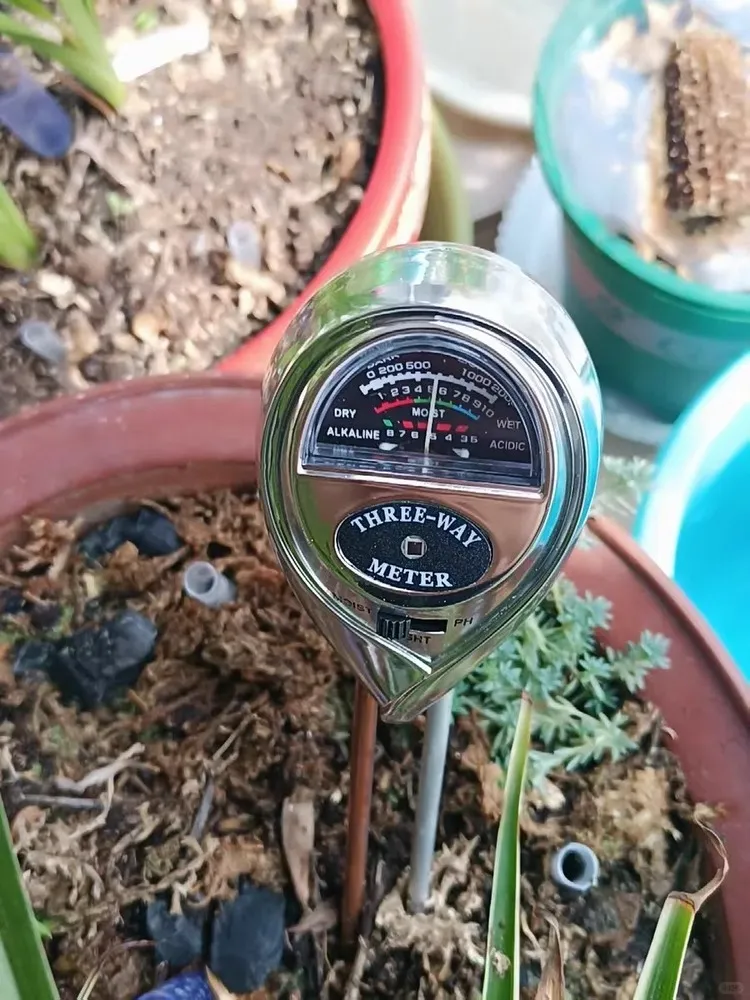
For beginners, a soil moisture meter is a total game-changer.
Instead of guessing when to water, you can simply read the numbers:
- 2–4 = Time to water
- 5–7 = Still moist — wait
- 8–10 = Too wet — improve drainage
This habit helps build “muscle memory.” Over time, you’ll start to feel when the soil is right just by lifting the pot.
💡 My tip: I always check several spots in the pot (edge, center, bottom) — Alocasias often dry unevenly.
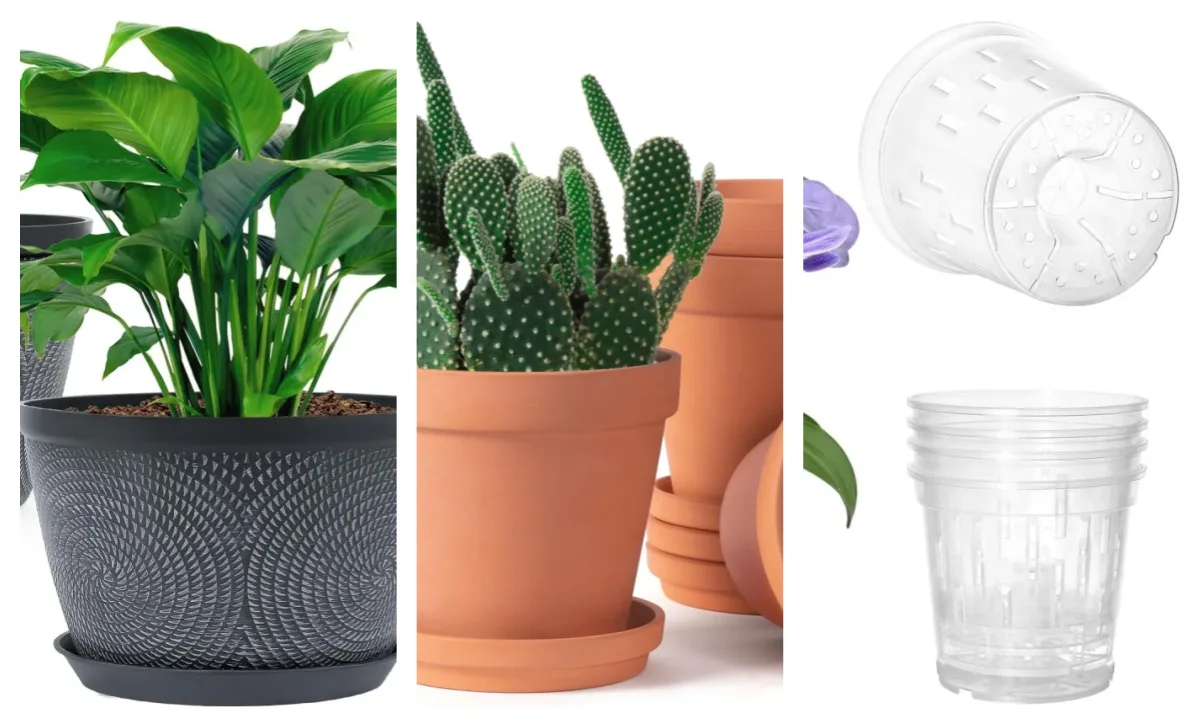
Self-Watering Pots
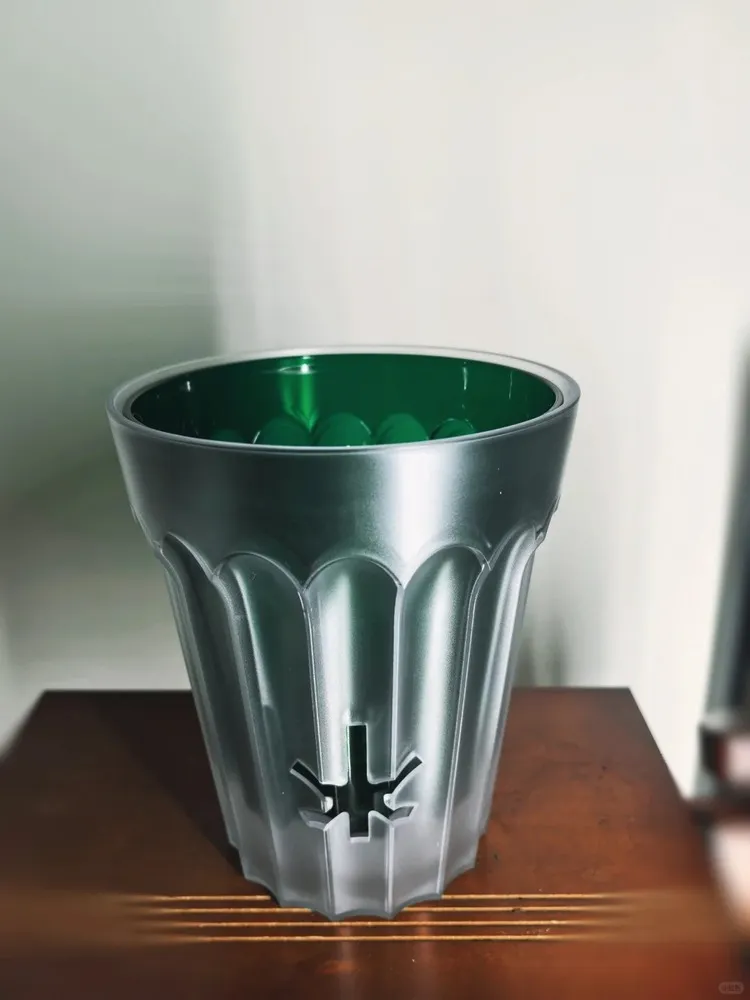
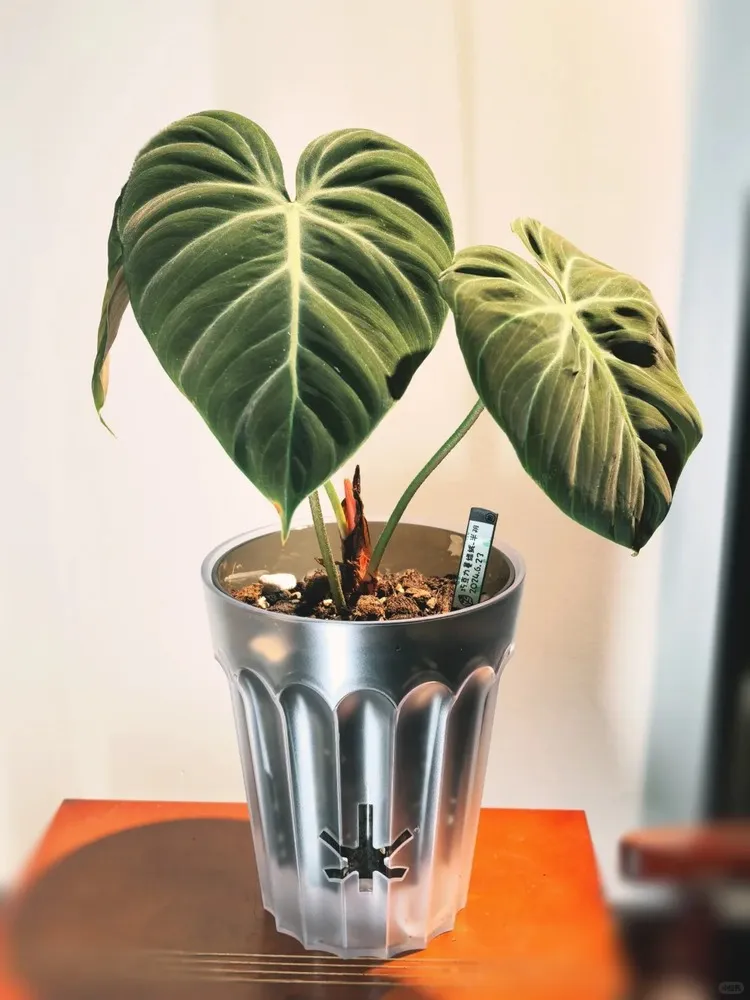
If you travel often or forget to water, a self-watering pot is your best ally.
It keeps the lower layer moist while allowing the upper soil to breathe — perfect for people who tend to overwater.
How I use it:
- Pour water directly into the bottom reservoir instead of from the top.
- Wait until the lower tray dries completely before refilling.
- Every few refills, add a bit of water-soluble fertilizer for steady feeding.
💡 Important: Choose models with side ventilation holes — they prevent stagnant water and help oxygen reach the roots.
This “lazy watering method” keeps the soil evenly moist without the risks of rot.
Small Fan & Humidifier
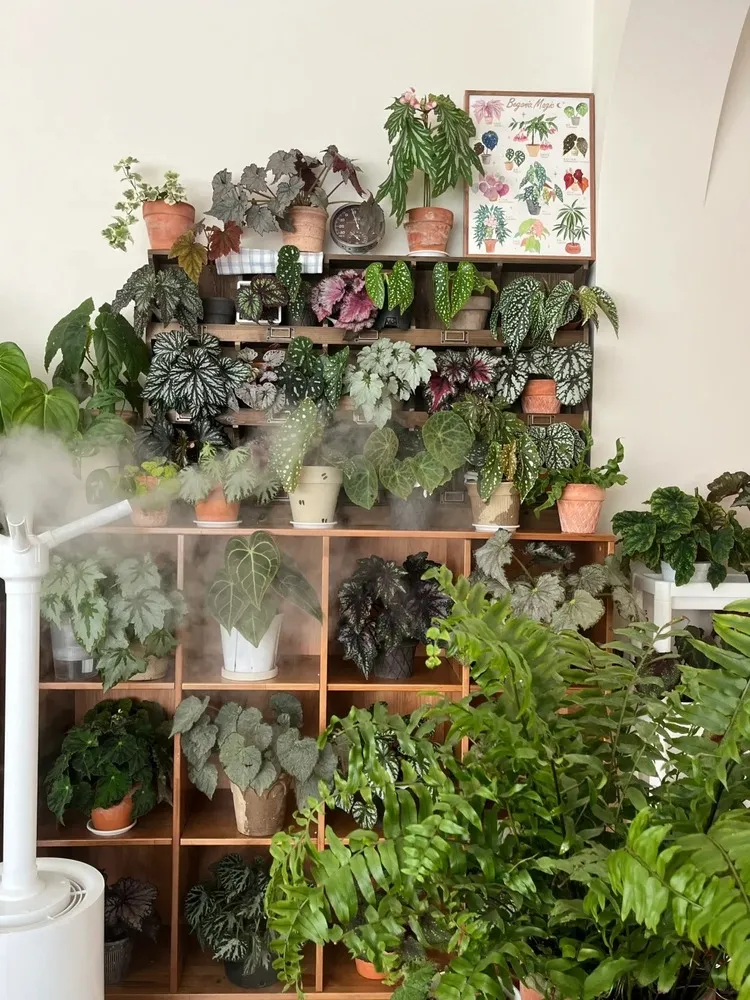
After watering, I always run a small desktop fan for 20–30 minutes to dry the soil surface quickly.
It mimics natural airflow and keeps roots healthy.
At night, when humidity drops, a humidifier for 1–2 hours helps the leaves stay plump and fresh — especially for thinner-leaf varieties like Pink Dragon or Sarian.
💨 Airflow after watering = fewer fungus gnats, less rot, and healthier leaves.
Summary:
- Moisture meter: know exactly when to water.
- Self-watering pot: low-maintenance hydration.
- Fan & humidifier: manage air balance after watering.
Together, these tools make Alocasia care almost effortless — so you can spend more time enjoying your plants instead of worrying about them.
My Watering Routine
Every grower eventually develops their own rhythm. Here’s a look at how I water two of my Alocasias in real life — not by schedule, but by observation, habit, and environment.
🪴 Alocasia Dragon Scale (Baginda)
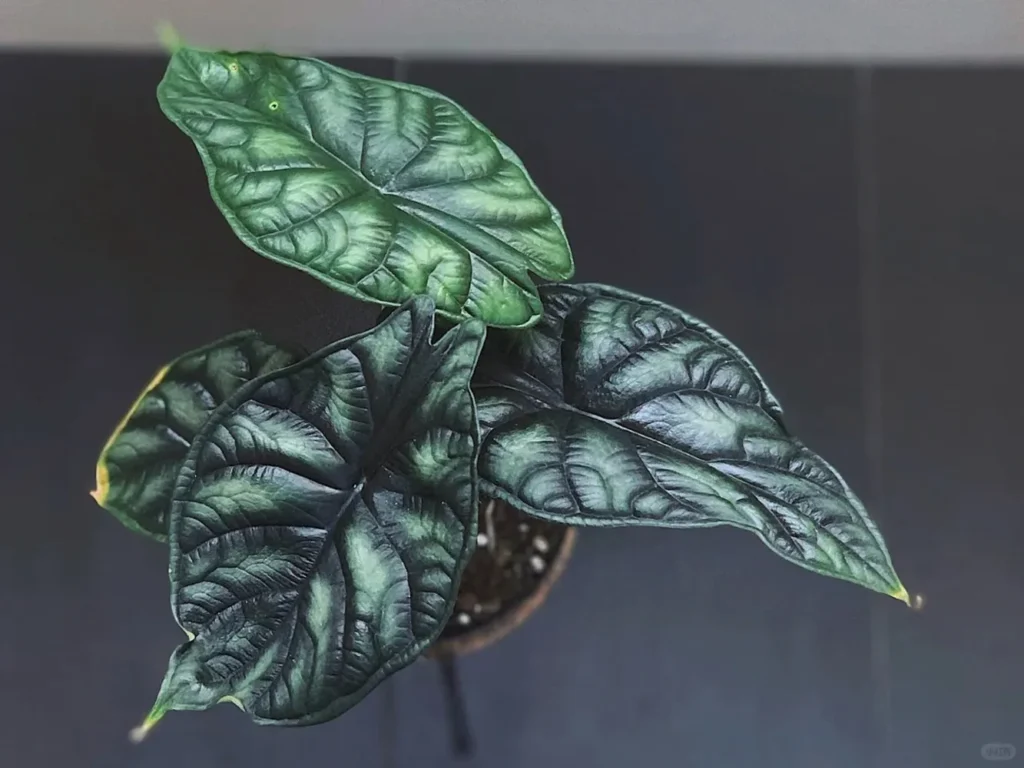
When I first got my Dragon Scale, it had only three leaves. After five months, it’s grown to more than ten — each one thicker, shinier, and more sculpted.
I keep it in a bright, well-ventilated corner where morning light hits the leaves directly for a short time each day. Under these conditions, I water once every 7–10 days, giving it a full soak.
If I skip deep watering once, I shorten the next interval — a rhythm that mimics natural wet and dry cycles.
After each watering, I raise the pot slightly on a stand to help the bottom drain faster and prevent soggy roots.
During the growing season, I feed lightly but regularly — alternating between different balanced liquid fertilizers, always diluted to about 1:2000.
This low-concentration, frequent feeding helps maintain the Dragon Scale’s deep green sheen without burning the roots.
💡 Key habits: strong airflow, good light, and patience.
I never water at night — this variety “weeps” easily and gets yellow tips if the soil stays warm and wet.
🪴 Alocasia Green Shield
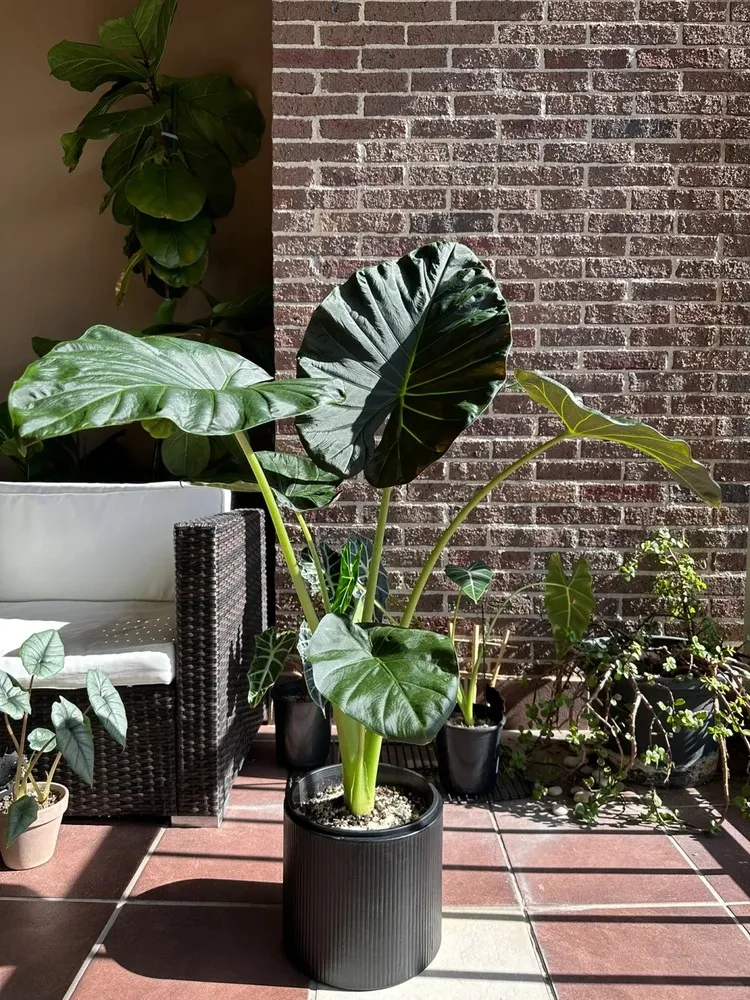
Portland summers can still get warm — around 30–35 °C (86–95 °F) indoors under glass — and that’s when watering control becomes tricky. My Green Shield has survived it all with what I call my lazy watering method.
Here’s how it goes:
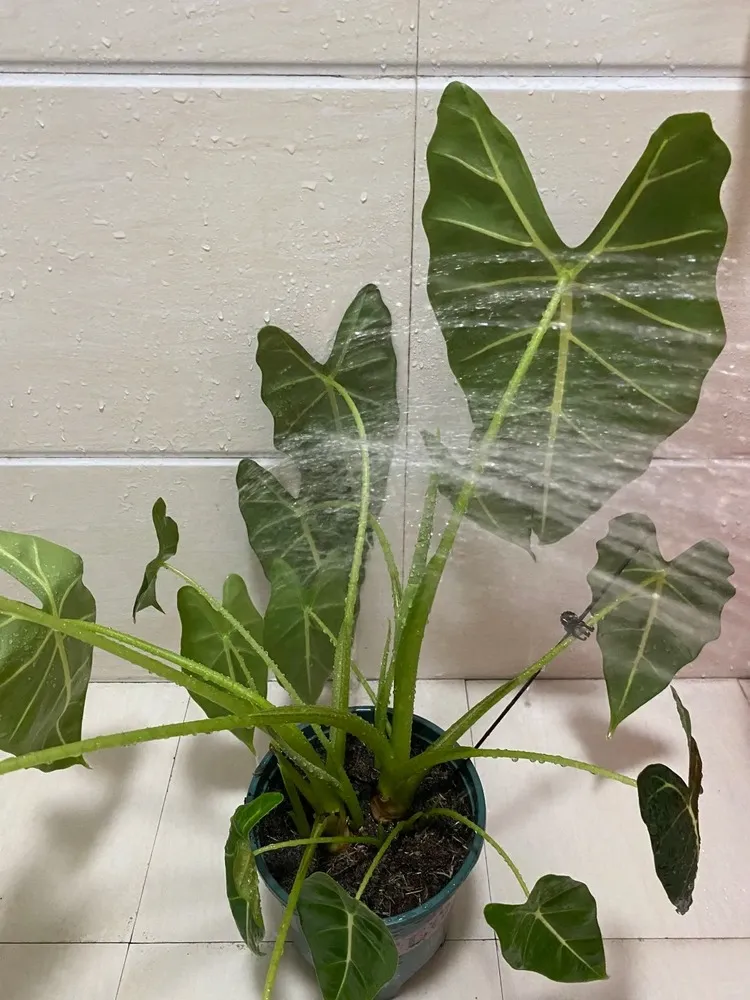
- Every five days, I give it a “shower day.” I take the pot to the sink and drench the soil and both sides of the leaves using a gentle shower spray.
- After watering, the plant gets a “steam session” — 20 minutes inside the bathroom with high humidity, like a mini tropical sauna.
- Once or twice a week, I run a humidifier for 1–2 hours at night to help the leaves rehydrate.
The key step? Airflow, airflow, airflow.
No matter how humid or warm it gets, I always open the window or run a fan afterward. Without ventilation, even a perfectly watered plant will suffocate in stagnant air.
This simple routine keeps the Green Shield lush and upright all summer long — no yellow tips, no rot, just firm, glowing leaves.
These two routines might sound different, but they follow the same philosophy:
💚 Water when needed, not by calendar; always prioritize oxygen over moisture.
Common Mistakes to Avoid & Final Takeaways
Even experienced growers slip up when it comes to watering Alocasia.
These tropical plants are both dramatic and sensitive — they’ll forgive a dry spell, but rarely an overwatered week.
Here are the mistakes I’ve learned to avoid (the hard way):
1. Watering by schedule, not observation.
No fixed “every 3 days” rule works for Alocasia.
Always check the soil — lift the pot, use a moisture meter, or simply look for dryness near the edges before watering again.
2. Ignoring airflow.
Still air is the silent killer.
Without good ventilation, moisture lingers in the soil and turns into rot.
A small fan after watering does more good than an extra round of misting.
3. Watering at night.
Nighttime watering traps humidity and slows evaporation, leading to guttation (those “crying” leaf tips).
Morning or late afternoon is always safer.
4. Overreacting to droopy leaves.
Not every droop means thirst — sometimes it’s just the plant adjusting to light or temperature.
Check the soil before reaching for the watering can.
My Core Watering Philosophy
💧 “Let the soil breathe before you feed.”
- When in doubt, stay on the dry side.
Alocasia roots need oxygen as much as they need moisture. - Ventilation is protection.
Airflow prevents both rot and pests. - Consistency beats frequency.
Plants don’t crave daily attention — they crave stable rhythms.
Over time, you’ll stop watering by habit and start watering by instinct.
That’s when your Alocasia truly thrives — not because it’s pampered, but because it’s understood.
FAQ
In warm months, water when the moisture meter reads 3–4, usually every 7–10 days indoors.
In winter, reduce to every 2–4 weeks or when the top 2 inches of soil are dry.
Let the soil dry out completely before watering again, check for compacted soil, and ensure your pot has drainage holes.
Instead, use a humidifier for 1–2 hours in the evening or place the pot on a pebble tray for steady moisture.
Avoid nighttime watering — moisture won’t evaporate well, which can lead to guttation and yellow tips.
During dormancy (below 15 °C / 59 °F), Alocasia slows its growth.
Water only around the pot edges every 2–4 weeks, keeping the soil barely moist.
A soil moisture meter takes the guesswork out of watering and helps prevent both over- and under-watering.
Once you gain experience, you can rely on touch or “pot weight” instead.
Still struggling with your Alocasia?
Learn how to fix common issues in our full Alocasia Care Hub, from watering balance to root health.
Go to Care Hub →