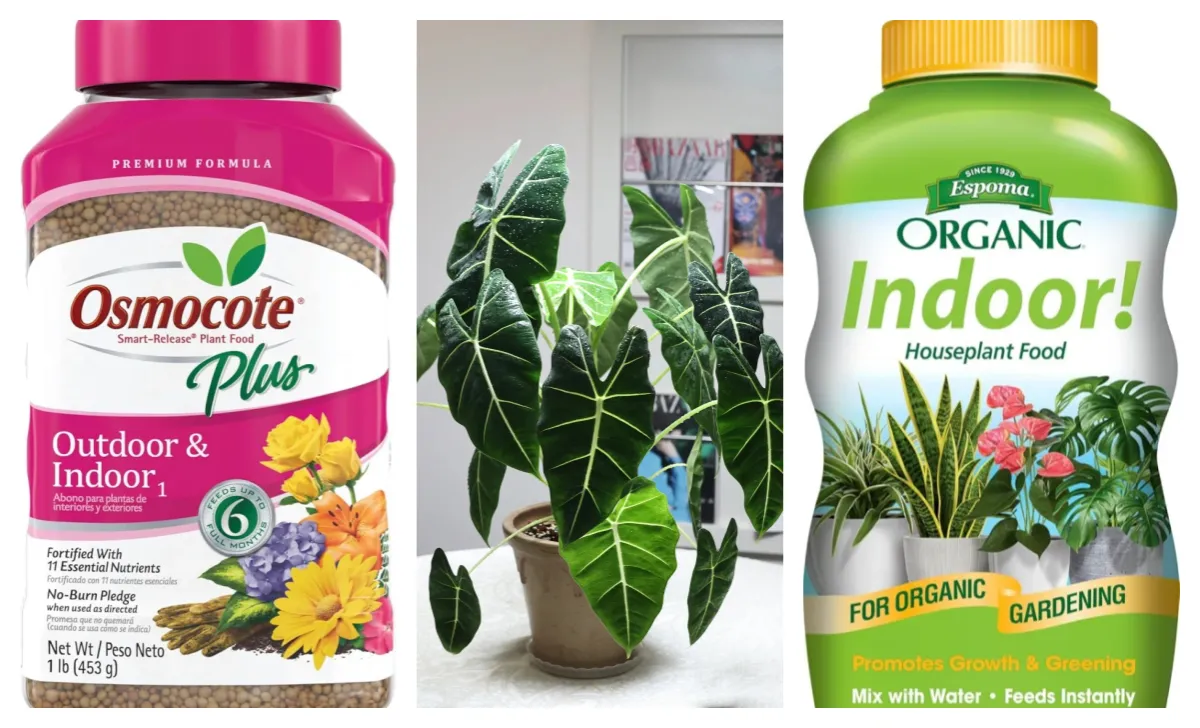
Alocasia lauterbachiana, often sold as Purple Sword Alocasia, does not look like the usual broad, heart-shaped Alocasias. Its leaves are long, narrow, and slightly wavy along the edges, with purple undersides that make the whole plant feel sharper and more upright.
When I first started growing it, I thought the care would mostly be about light, water, and humidity. Those things do matter, but my biggest lessons came from the roots. This plant can grow into a tall, striking specimen, and the root system needs enough space, oxygen, and proper contact with the potting mix to support that growth.
I learned this during repotting. After removing one from its nursery pot, I noticed the roots had started circling inside the container. I tried cleaning off more of the old soil than I probably should have, and the root ball began folding inward, leaving empty spaces inside. That experience changed how I repot Alocasia lauterbachiana now: I do not fully bare-root it unless there is a real reason.
This guide is based on my own growing notes, including how I care for Purple Sword Alocasia indoors, what I watch for when repotting, why I let offsets grow stronger before dividing them, and how I handle small surprises like winter new growth, flower buds, and one unusual variegated-looking leaf. If you are still learning the general care pattern for this genus, my Alocasia care guide is a good place to start before focusing on this plant’s root and repotting details.
Quick Answer: What Helped My Alocasia Lauterbachiana Grow Better
What helped my Alocasia lauterbachiana grow better was bright indirect light, a chunky airy mix, careful watering, and a more cautious approach to the roots during repotting. It is not a plant I keep constantly wet, and I do not fully bare-root it unless there is a real reason.
I keep Purple Sword Alocasia in bright filtered light and let the mix dry down partly before watering again. The plant appreciates humidity, but root aeration matters more than simply adding more moisture. Stale wet soil is a bigger risk than slight dryness.
My biggest repotting lesson is to keep root contact in mind. If the root ball is broken apart too much, the roots can fold inward and leave air pockets. When I repot now, I gently fill gaps around the roots without compacting the mix.
I also wait before separating offsets. Very small pups can struggle when divided too early, while pups that stay with the mother plant longer usually have stronger roots and are easier to move into their own pots later.
What Makes Alocasia Lauterbachiana Different
Alocasia lauterbachiana stands out because it does not have the broad, shield-like leaves many people expect from an Alocasia. The leaves are long, narrow, and upright, with slightly wavy edges that give the plant a sharper, more architectural shape.
The purple undersides are another reason people notice this plant. From the front, the leaves look deep green and narrow; from the back or side, the purple tone adds more contrast. That is why it is often sold as Purple Sword Alocasia.
In my experience, this upright shape also changes how I care for the plant. It can grow taller than it looks when young, and once the leaves start stacking upward, the root system needs enough room and stability to support that vertical growth.
I would not treat it exactly like a small jewel Alocasia. Lauterbachiana can become a much larger, more structural plant over time. The leaves may look slim, but the plant still needs a healthy root system, breathable soil, and enough light to keep its shape strong.
My Basic Care Setup
My basic care for Alocasia lauterbachiana is not complicated, but I try to keep the root zone stable. This plant does best for me when it has enough light, a loose mix, careful watering, and humidity without sitting in stale wet soil.
Light
I keep my Purple Sword Alocasia in bright indirect light. It does not look its best in a dark corner, especially because the plant has an upright shape and needs enough energy to hold that vertical growth.
I would avoid harsh direct sun unless the plant has been gradually acclimated. The leaves are narrower than many Alocasias, but they can still scorch if the light suddenly becomes too strong. For indoor care, a bright window with filtered light is usually safer than direct afternoon sun.
Watering
For watering, I stay on the careful side. Alocasia lauterbachiana does not like sitting in wet soil for too long, so I let the mix dry down partly before watering again. For beginners, I think it is safer to water after the upper part of the mix has dried rather than keeping the pot constantly moist.
If the plant is growing actively and the room is warm, it may need water more often. If the room is cooler, darker, or the pot is large, I wait longer. I would rather check the pot weight and soil moisture than follow a fixed schedule. I explain this seasonal rhythm more in my Alocasia watering guide.
Soil and Humidity
The soil mix matters a lot for this plant. I use a chunky, airy aroid mix that drains well but still holds a little moisture. The roots need contact with the mix, but they also need oxygen. Dense soil that stays wet for too long can cause root stress very quickly.
Humidity also helps, especially if your home is dry. Higher humidity can keep the leaves looking better, but I do not use humidity as an excuse to keep the soil wet. For me, root aeration is more important than simply giving the plant more moisture.
Fertilizer
I keep fertilizer simple. If I want an easy routine, I use a small amount of slow-release fertilizer during active growth. When the plant is growing well and the roots are healthy, light feeding can support stronger foliage.
I do not push heavy fertilizer on a newly repotted, stressed, or slow-growing plant. If the roots are not settled, fertilizer will not fix the problem. With Purple Sword Alocasia, I prefer stable roots first, then gentle feeding later.
Repotting Lesson: Roots Matter More Than the Leaves
The biggest lesson I learned with Alocasia lauterbachiana came from repotting. This plant can grow tall and upright, but that top growth depends heavily on what is happening below the soil. If the roots do not settle well after repotting, the leaves may look fine for a while, but the plant can stall, yellow, or recover much more slowly.
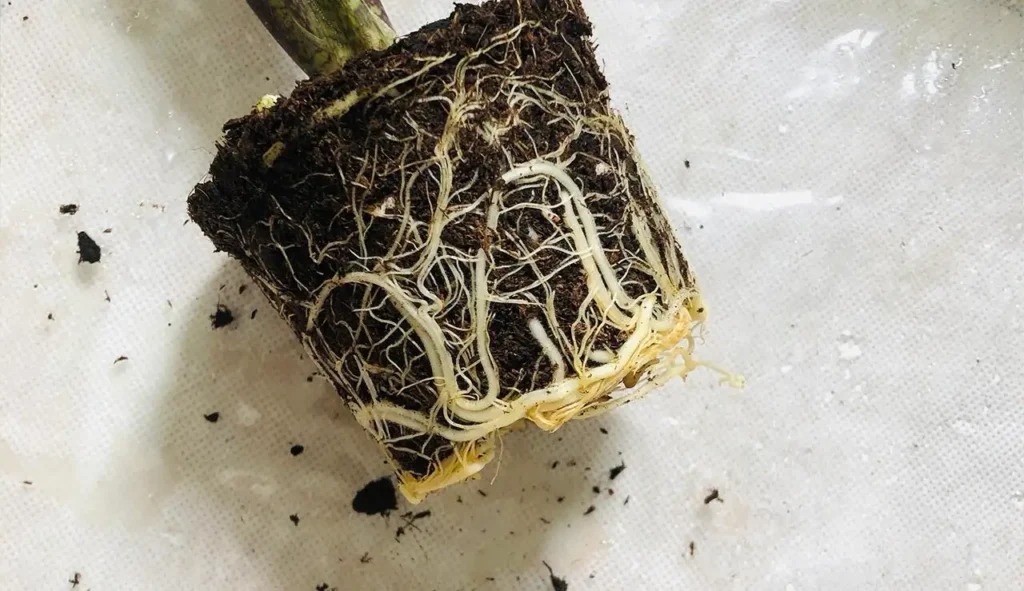
When I removed one from its nursery pot, I noticed some circling roots. That part was not surprising. Purple Sword Alocasia can develop a fairly long root system as it grows, so a small nursery pot may not give the roots much room. What surprised me more was what happened after I disturbed the root ball too much.
Why I Avoid Fully Washing the Roots
I once tried cleaning off more of the old soil than I probably should have. I would not recommend this for beginners unless there is a real problem, such as root rot, pests, or soil that stays wet for too long.
Once the original root ball was broken apart, the roots did not spread out neatly on their own. Instead, they started folding inward, almost like a loose fist. That can create empty spaces inside the root ball when the plant goes back into a pot.
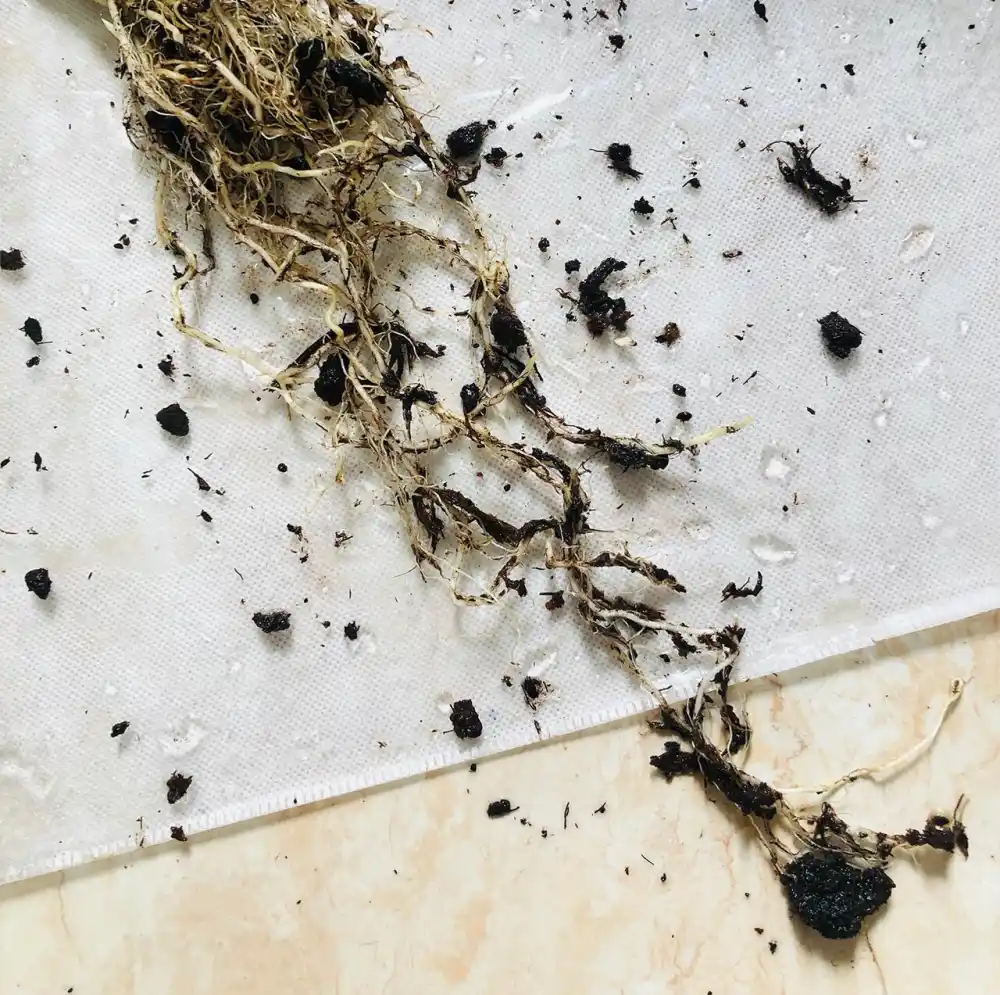
The problem is not just that the plant looks messy during repotting. If some roots are sitting in air pockets instead of touching fresh mix, they cannot take up moisture properly. The plant may take longer to settle, and the new potting mix may not connect evenly with the old root structure.
Now, if the plant is healthy, I prefer to keep part of the original root ball intact. I gently loosen only what needs loosening, remove loose or poor-quality soil from the outside, and avoid tearing the whole root system apart just to make it look clean.
Fill the Gaps Around the Root Ball
If I do need to loosen the roots, I pay much more attention to filling the gaps when I repot. I do not just place the plant in the pot and pour soil around the outside. I gently work the mix into the spaces around and under the roots so the root ball has real contact with the fresh soil.
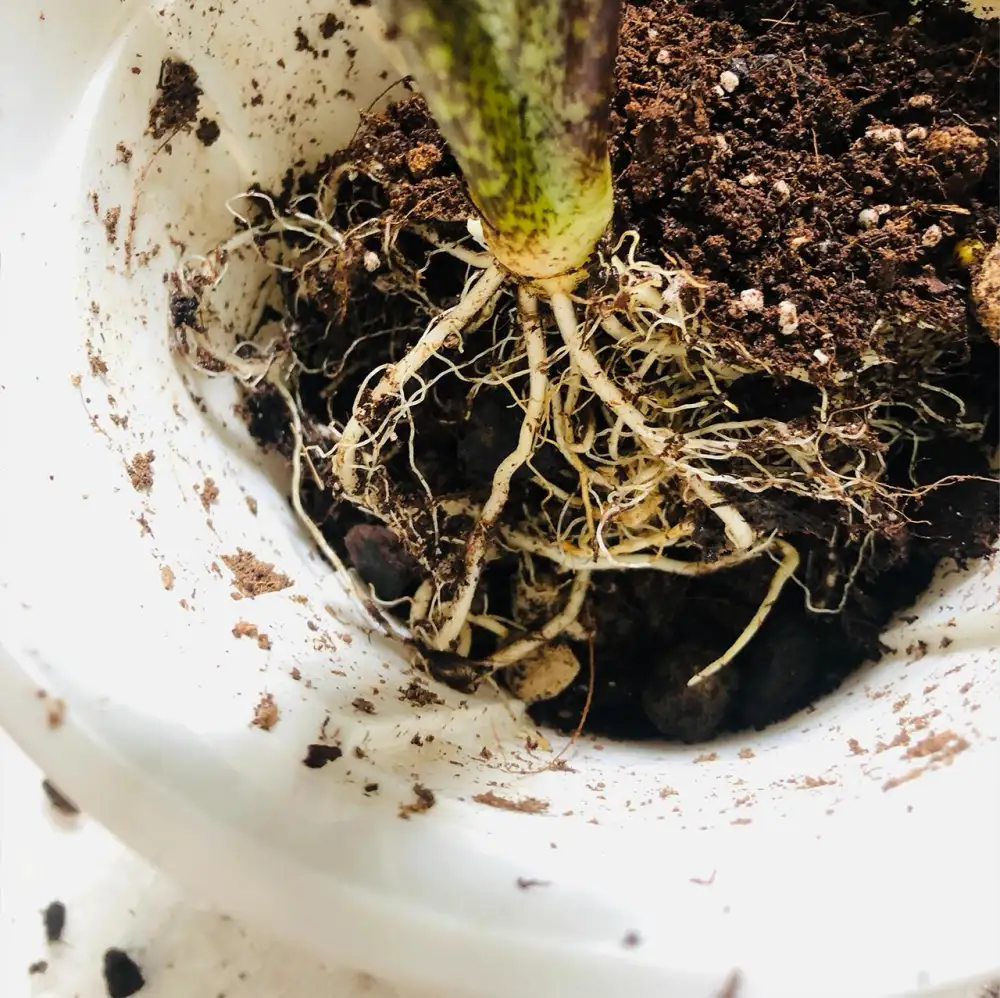
This does not mean packing the mix tightly. Alocasia lauterbachiana still needs air around the roots. The goal is contact without compaction. I want the roots to touch the mix, but I do not want to crush the air spaces that help the pot drain and breathe.
After repotting, I keep the plant stable instead of changing too many things at once. Bright indirect light, gentle warmth, and careful watering help the plant settle into the new pot. I do not fertilize heavily right after a stressful repot, because unsettled roots are not ready to use strong feeding well.
When I Would Remove Old Soil
I do not treat old soil as something that must always be removed completely. If the plant is healthy and the old mix is not causing problems, keeping part of the root ball together is often safer.
I would remove more old soil only if I had a clear reason. For example, if the mix is badly compacted, smells sour, stays wet for too long, has pest issues, or the roots show signs of rot, then cleaning the root system makes more sense. In that case, I would rather deal with the problem directly than keep unhealthy soil around the roots.
For a normal repot, though, I choose a gentler approach. I size up carefully, use a chunky mix, keep the plant at a similar planting depth, and avoid turning a simple repot into a full root disturbance.
Yellow Old Leaves After Repotting
I have also seen older leaves yellow after repotting. At first, it is easy to assume this is just normal old leaf loss, and sometimes it is. Alocasias often redirect energy from older leaves when they are adjusting or pushing new growth.
But I do not ignore yellowing completely. In one case, after the older leaves started yellowing, I checked the plant more carefully and realized the pot had become too small again. The roots were crowded, and the plant needed more space than I expected.
After moving it into a more suitable pot, the plant recovered and later even produced several flower buds. That experience reminded me not to judge repotting only by the leaves. Yellowing can be normal, but it can also be a sign that the roots need more space, better contact with the mix, or a more stable setup.
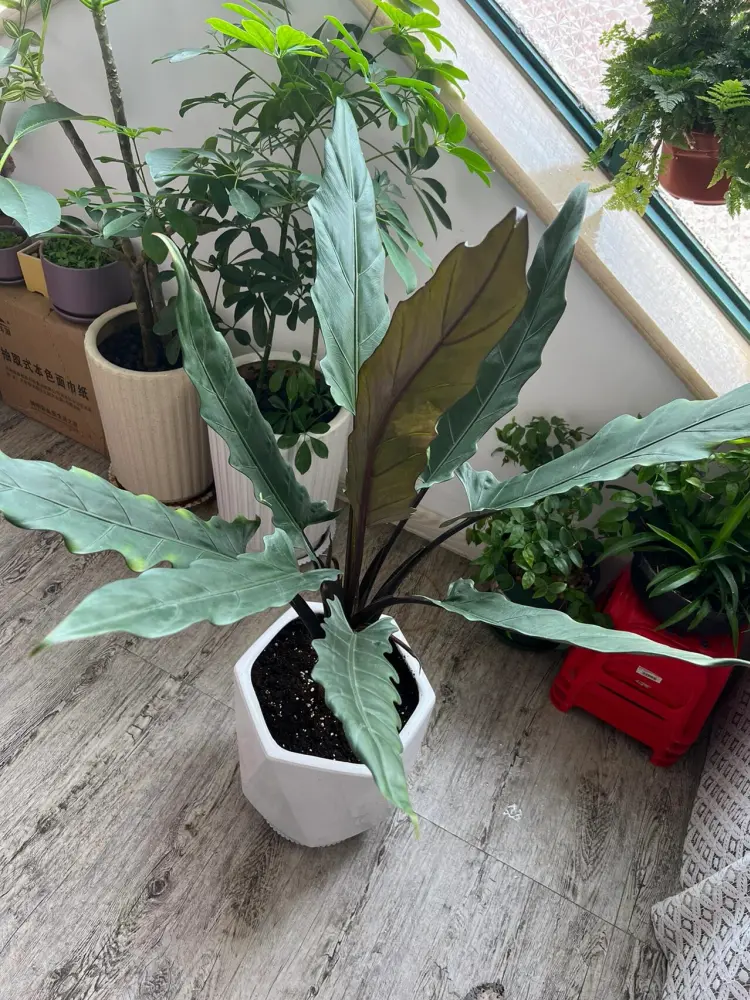
My rule now is simple: one older yellow leaf does not make me panic, but several yellowing leaves, stalled growth, or a plant that looks unstable after repotting makes me check the roots and pot size first.
New Growth, Flower Buds, and One Strange Leaf
Alocasia lauterbachiana has given me a few small surprises while growing it. Some of them made me excited, and some of them reminded me not to overreact too quickly. New growth, flower buds, and unusual leaf markings can all happen, but I try to read them in the context of the whole plant rather than changing care immediately.
My Winter Plant Looked Quiet, Then Pushed a New Leaf Fast
One of my Purple Sword Alocasias came home in winter. At first, it looked fine, but it stayed quiet for a while and did not push any new growth. I started wondering whether the older leaves would slowly fade before the plant had enough energy to replace them.
Then, almost suddenly, I noticed a tiny new shoot. What surprised me was how fast it changed. One day it was just a small point of growth, and very soon after, the new leaf had already started to take shape.
That experience reminded me that a quiet Alocasia is not always a failing Alocasia. Sometimes the plant is still adjusting below the surface. If the base is firm, the roots are healthy, and the care conditions are stable, I try to give it time before assuming something is wrong.
Flower Buds Are Interesting, But I Watch the Plant First
After one repotting and recovery period, my Alocasia lauterbachiana started producing several flower buds. I was curious to see what the flowers would look like, because this plant is usually grown for its narrow leaves and purple undersides, not for its blooms.
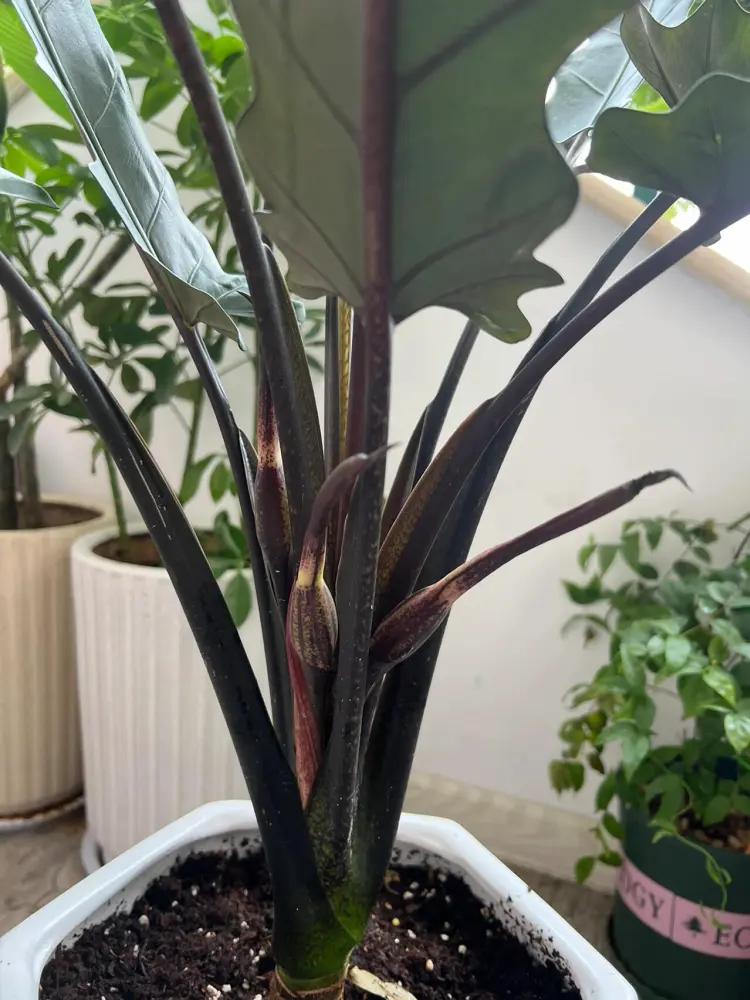
Still, I do not treat flower buds as automatically good or bad. If the plant has enough leaves, a stable root system, and is growing well, I may let it bloom just to observe it. But if the plant is weak, recently repotted, or holding only a few leaves, I would rather the energy go into roots and foliage first.
For me, the flowers are interesting, but they are not the goal. A healthy root system and steady leaf growth matter more than keeping every bloom.
A Variegated-Looking Leaf Appeared, But I Do Not Chase It
One of the most unexpected things I saw was a new leaf with a variegated-looking section. At first, I wondered if soil acidity or another care factor had triggered it. But after watching the plant longer, I would not assume that one unusual leaf means the plant has stable variegation.
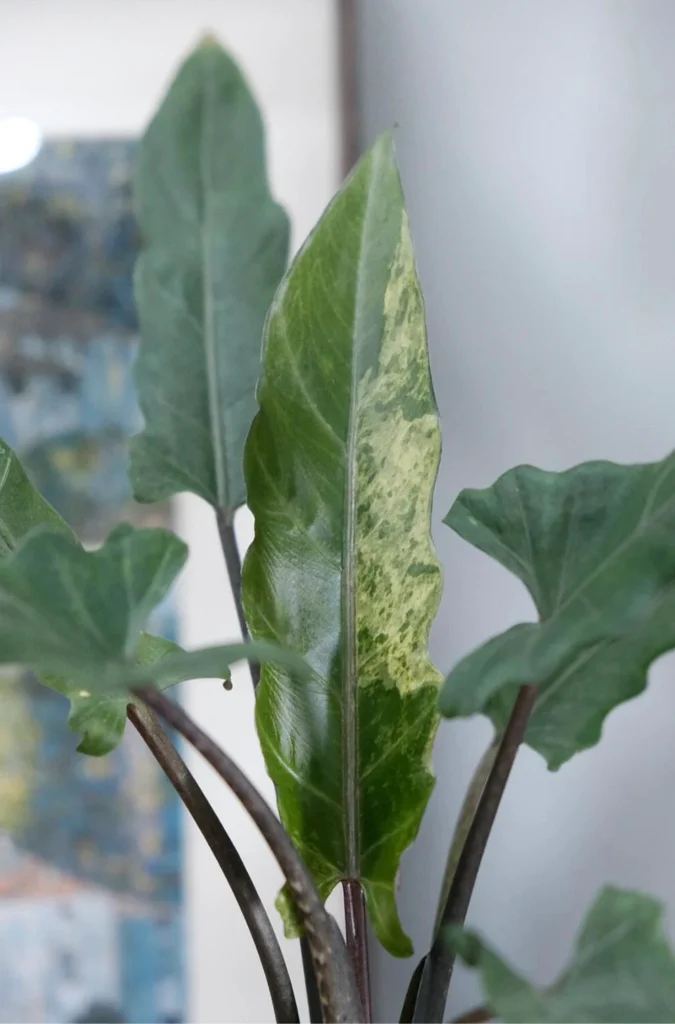
Variegation-like markings can appear for different reasons, and not all of them are predictable or repeatable. I would not change the soil, add fertilizer, or adjust the whole care routine just because one leaf looks unusual.
My approach now is simple: I watch the next few leaves. If the pattern repeats consistently, then it may be worth paying closer attention. If it only appears once, I treat it as an interesting surprise rather than something I can control.
Offsets and Division: Why I Wait Before Separating Pups
One thing I noticed with Alocasia lauterbachiana is that the small offsets did better when I let them stay with the mother plant for a while. When I tried starting very young pups separately, they were not always easy to keep alive. But when the pups sprouted and grew inside the mother plant’s pot first, they seemed much stronger by the time I divided them.
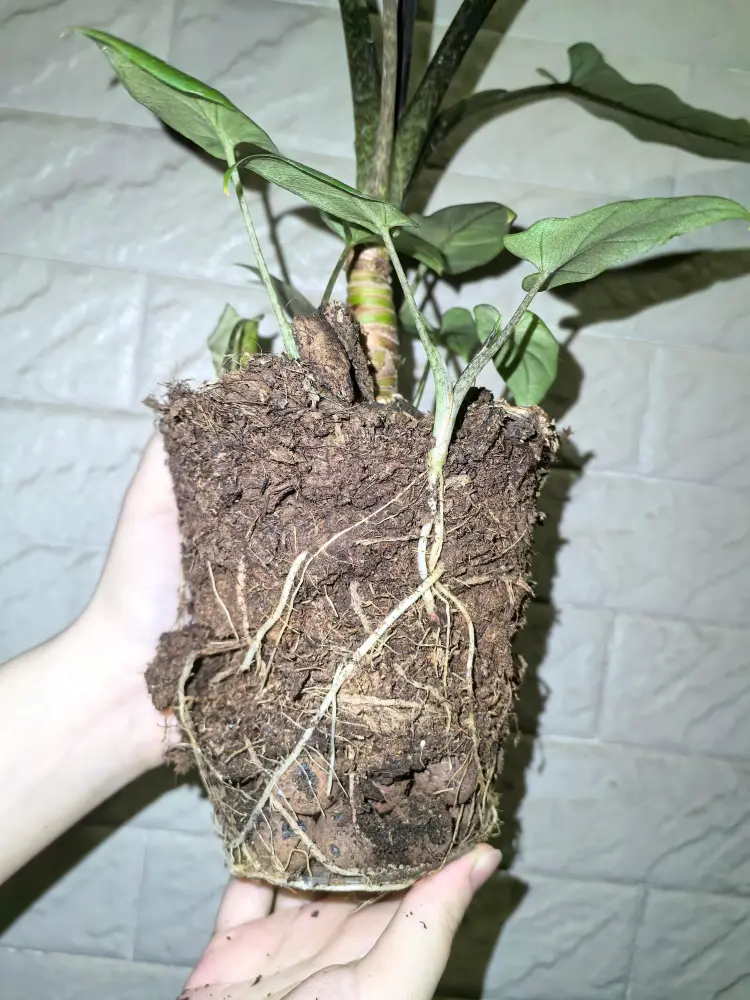
That changed how I handle division now. I do not rush to separate every small shoot as soon as I see it. A tiny pup may look exciting, but if it does not have enough roots of its own, separating it too early can set it back or cause it to fail completely.
When a pup stays with the mother plant longer, it has more time to build its own root system while still growing in a stable environment. Once it has a few leaves and feels better anchored in the pot, division becomes much less risky.
When I do separate offsets, I try to keep as many roots attached as possible. I do not pull the pup away roughly. I loosen the mix carefully, find where the pup connects to the main plant, and separate it only when I can do it without tearing too much root tissue. For a broader step-by-step overview, see my Alocasia propagation guide.
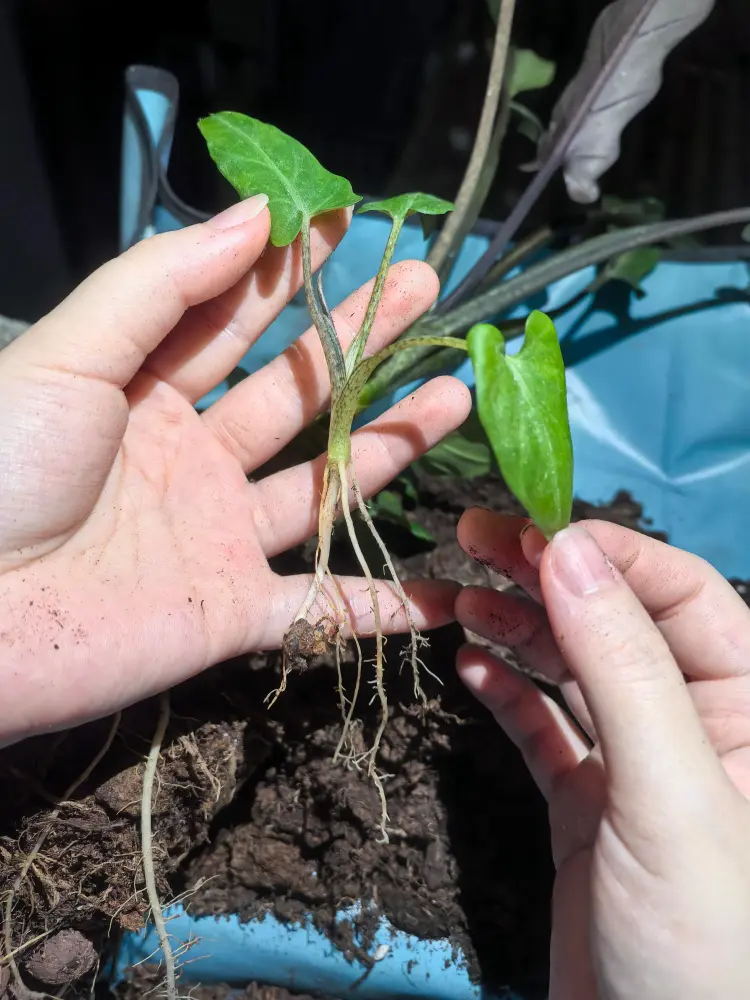
After division, I keep the young plant in bright indirect light, a small breathable pot, and a loose mix that does not stay wet for too long. I water carefully at first because a newly separated pup has fewer roots and cannot handle the same amount of moisture as a mature plant.
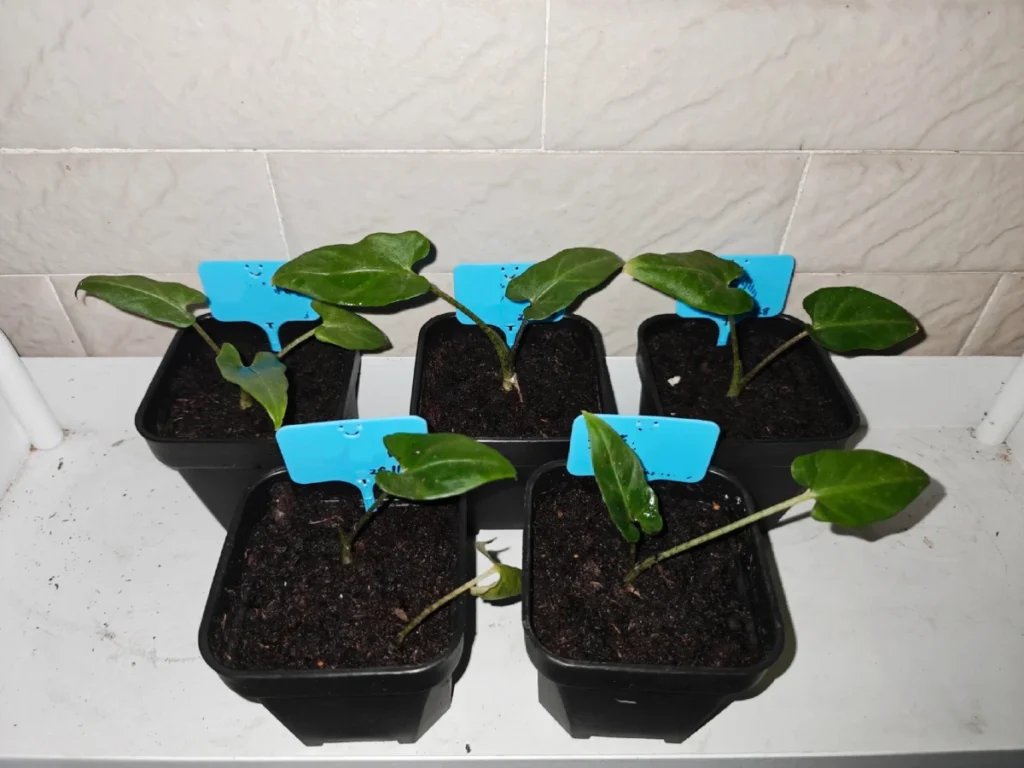
My rule now is simple: if the pup still looks small, weak, or barely rooted, I leave it with the mother plant. Waiting longer has given me better results than separating too early just because I wanted another pot.
Common Problems I Watch For
With Alocasia lauterbachiana, I try not to judge the plant from one leaf alone. I look at the roots, the pot size, the soil texture, and whether the plant has recently been repotted or divided. These are the problems I watch for most often.
| What I See | What I Suspect First | What I Do |
|---|---|---|
| Yellowing old leaves | Normal old leaf loss, root stress, or a pot that has become too small | I check whether it is only one older leaf or several leaves yellowing after repotting |
| Slow or no new growth | Settling-in period, low light, weak roots, or poor root contact after repotting | I keep care stable and check whether the root ball has enough space and contact with the mix |
| Roots curled tightly in the pot | The nursery pot was too small or the plant has outgrown its container | I repot carefully without fully tearing the root ball apart unless there is a real problem |
| Plant stalls after repotting | Air pockets inside or around the root ball | I gently fill gaps with fresh mix so the roots touch soil without compacting the whole pot |
| Small pups fail after division | The offsets were separated too early | I let pups stay with the mother plant longer until they have stronger roots and a few leaves |
| One unusual variegated-looking leaf | Random or unstable leaf variation | I observe the next few leaves before changing soil, fertilizer, or light |
| Wet soil and soft growth | Poor drainage, dense mix, or root rot beginning | I reduce watering, improve airflow, and check the roots if the plant keeps declining |
The main pattern I have noticed is that many problems trace back to the roots. If the plant is yellowing, stalling, or struggling after repotting, I do not immediately add fertilizer. I check whether the roots have enough room, enough oxygen, and enough contact with the fresh mix.
My Take After Growing Alocasia Lauterbachiana
After growing Alocasia lauterbachiana, I would not call it the hardest Alocasia, but I also would not treat it casually. It is a plant that rewards stable care, especially around the roots. The long leaves and purple undersides are what make it beautiful, but the root system is what decides whether it keeps growing well.
My biggest lesson is simple: do not rush the roots. I avoid fully bare-rooting the plant unless there is a clear reason, and I pay close attention to filling the gaps around the root ball when I repot. Good root contact matters more than making the root system look perfectly clean.
I also try not to rush division. Offsets may look exciting when they first appear, but very small pups are easier to lose if they are separated too early. Letting them grow stronger with the mother plant first has worked better for me.
For everyday care, I keep it in bright indirect light, use a chunky mix, avoid keeping the pot constantly wet, and feed lightly only when the plant is actively growing. If one leaf yellows or one strange leaf appears, I watch the next few leaves before changing everything.
That is the way I understand Purple Sword Alocasia now: it is not a plant that needs constant intervention. It needs enough light, breathable soil, careful watering, and a little patience with its roots. When those things are right, it can grow into a tall, distinctive Alocasia with a shape very different from the usual broad-leaf types.
FAQ
Love discovering new Alocasias?
If you like upright, unusual Alocasias with narrow leaves and a more architectural shape, browse my Alocasia Varieties Hub to compare Purple Sword Alocasia with other indoor types.
Go to Varieties Hub →