Brown tips on Alocasia leaves are one of those problems that feel obvious — until they aren’t. The plant looks healthy, the leaf is still green, yet the very edge starts turning brown, soft, or slightly yellow. It’s easy to assume the air is too dry or the light is too strong. That’s what I thought at first.
What I eventually learned is that brown tips don’t point to a single issue. They’re a result of how water, airflow, and timing interact — especially indoors. This article isn’t about quick fixes. It’s about how I learned to read brown tips more accurately before changing anything.
What Brown Tips Usually Look Like on Alocasia
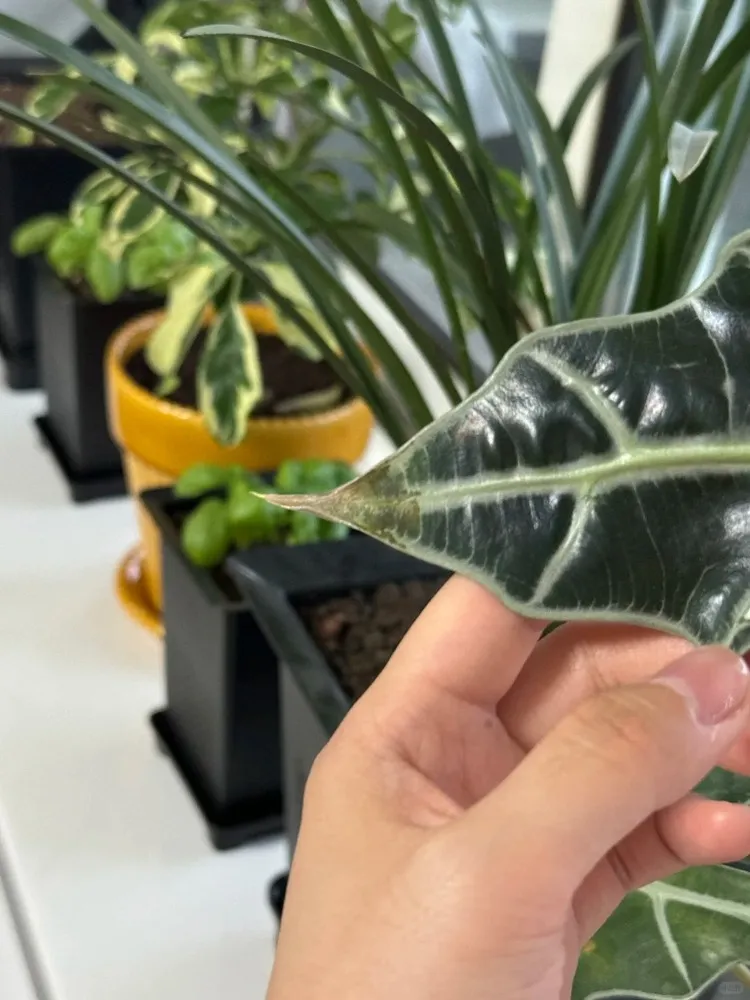
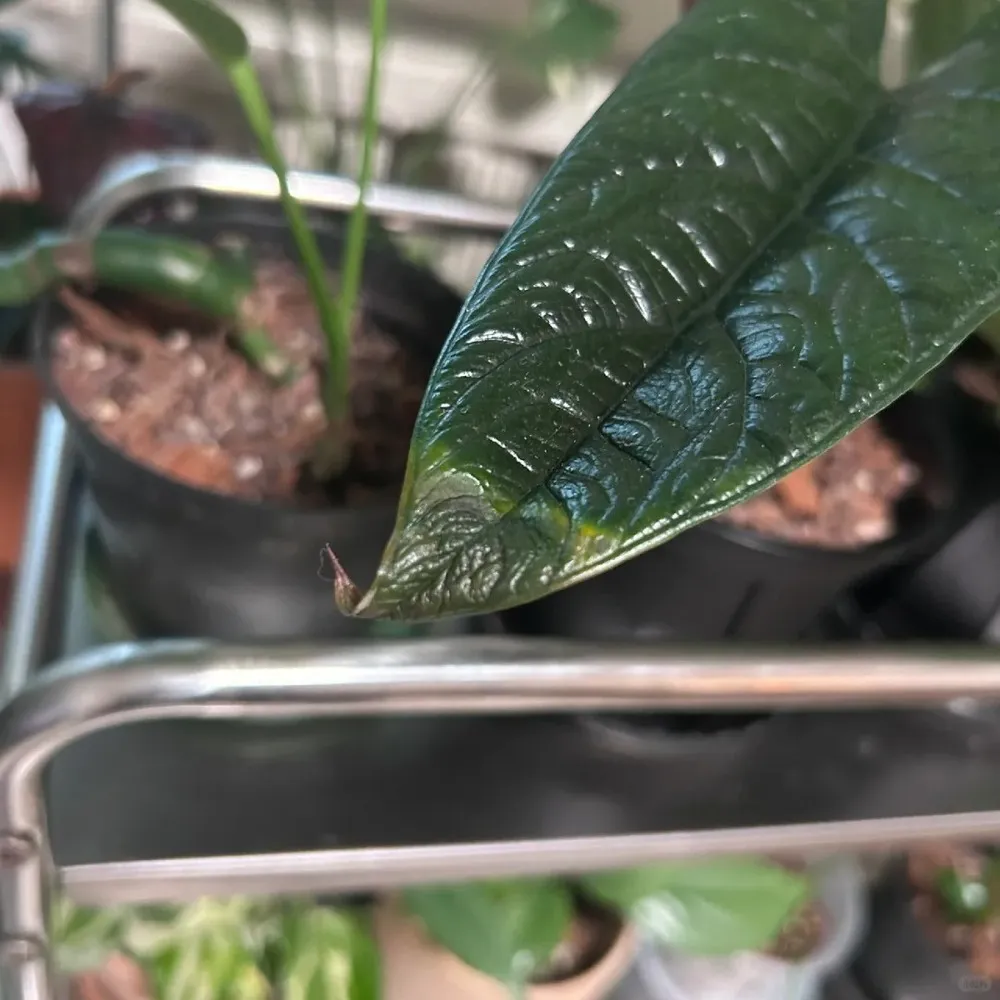
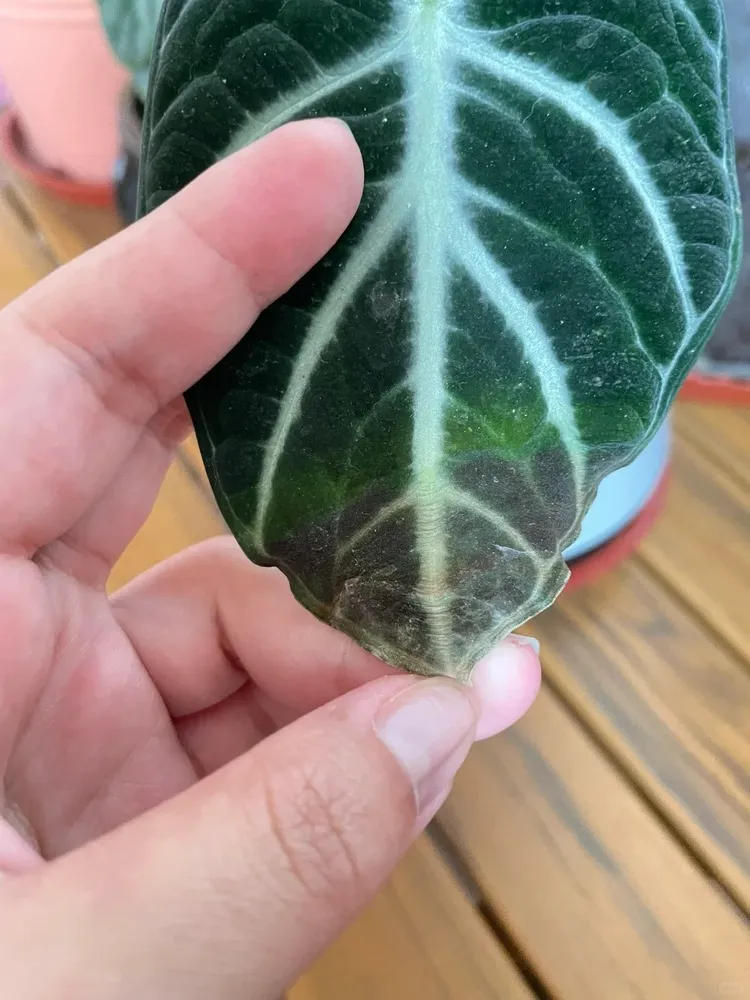
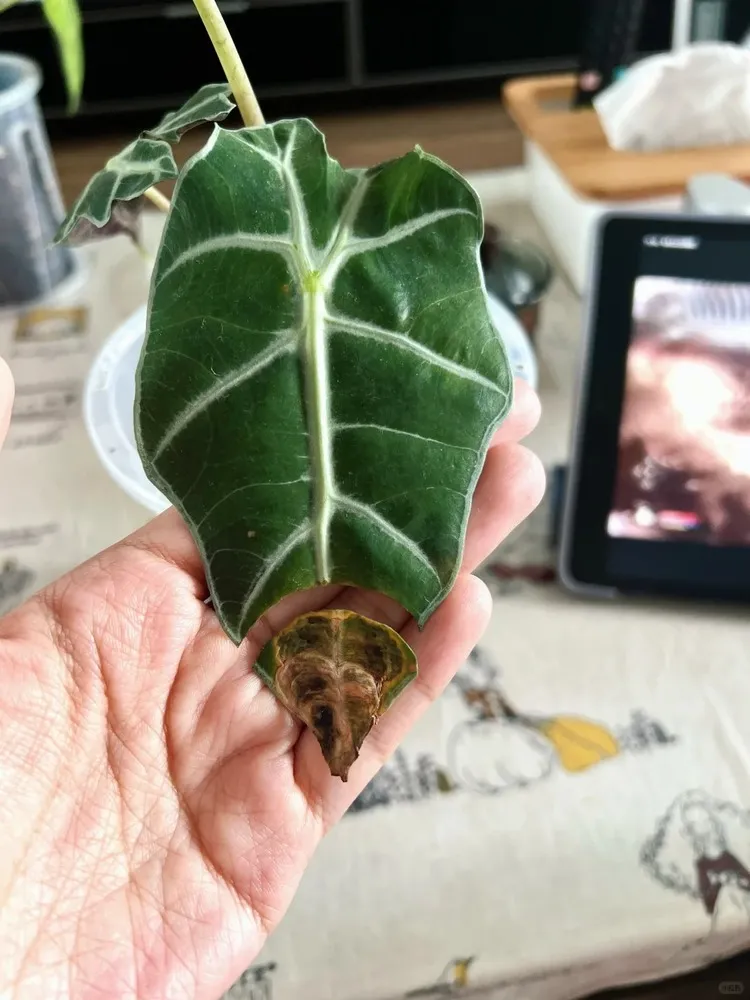
In most cases, brown tips on Alocasia don’t start as dry, crispy damage. The change is subtle at first. The very edge of the leaf darkens slightly, sometimes turning pale yellow before shifting to brown. The rest of the leaf often stays firm and green, which makes the damage feel confusing rather than dramatic.
Another common sign is texture. The affected tip may feel soft or slightly water-logged instead of brittle. In some cases, the edge looks translucent or bruised, as if the tissue collapsed rather than dried out. This is very different from sun scorch or fertilizer burn, which tend to create sharper, drier edges.
Brown tips also tend to appear suddenly. A leaf that looked fine during the day can show visible damage the next morning, often without any gradual warning. When that happens, it’s a sign that something changed quickly — not that the leaf slowly ran out of moisture.
If this description matches what you’re seeing, the issue is usually not just “low humidity.” It’s worth slowing down and looking at timing, texture, and how the leaf edge actually failed before jumping to a fix.
My Experience: When Brown Tips Were Caused by Too Much Water
For a long time, I didn’t think water was the problem. The soil wasn’t swampy, the leaves weren’t drooping, and everything looked fine during the day. The brown tips kept appearing anyway — usually overnight — which made the cause even harder to pin down.
What I Noticed After Watering
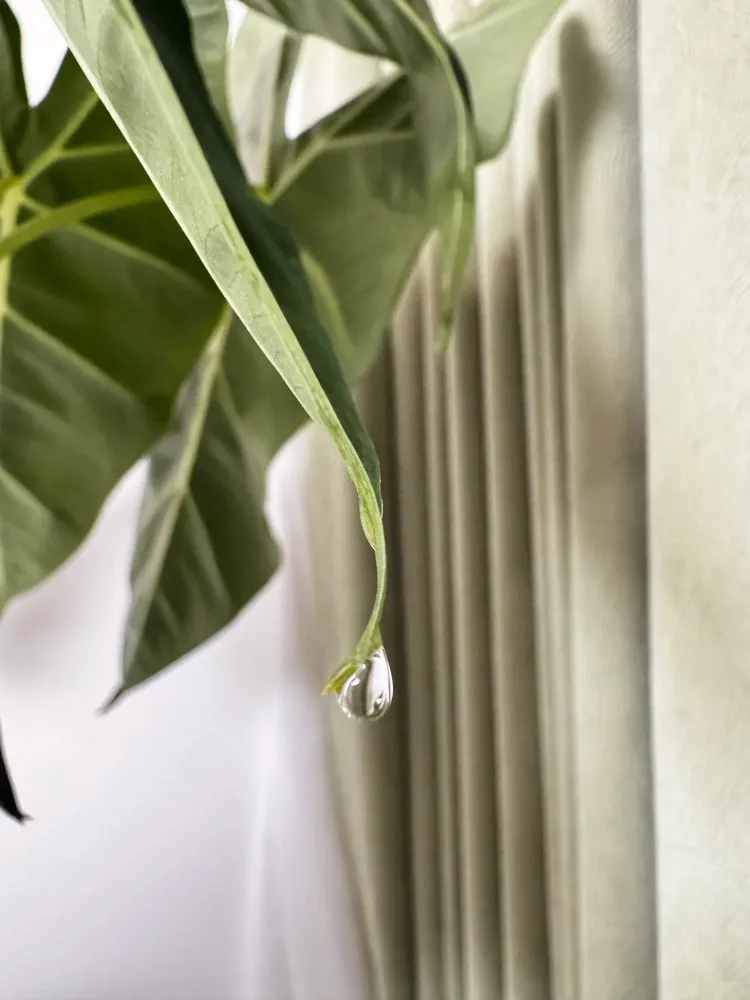
After a thorough watering, I started paying closer attention at night. That’s when I noticed the leaves actively pushing out water from the tips — classic guttation. Small droplets would form along the edges, especially on newer leaves. On their own, those droplets didn’t seem dangerous.
The problem was what happened next. With poor airflow, the moisture stayed on the leaf tips for hours. By morning, the droplets were gone, but the tips felt soft, slightly translucent, or already turning brown. The damage didn’t look like drying — it looked like tissue that had broken down after staying wet too long.
The Key Trigger: Night Watering + No Air Movement
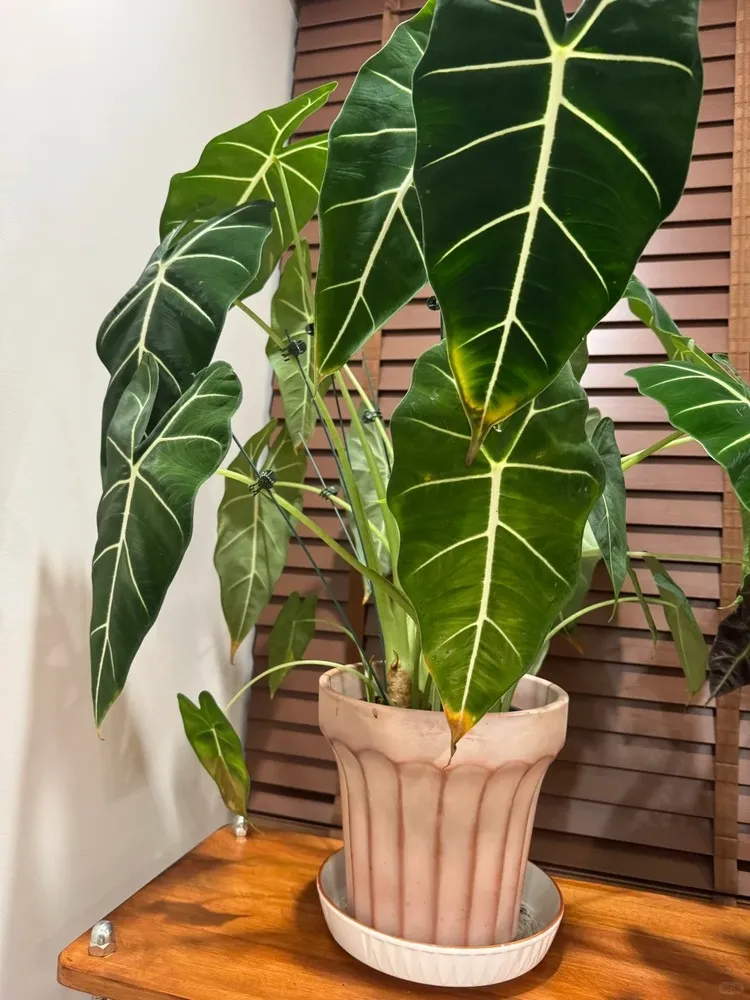
The pattern became clear once I stopped looking at water volume alone. I later realized this was closely tied to how often and when I watered. Brown tips showed up most often when I watered in the evening and the plant sat in still air overnight. Wet soil increased guttation, and without airflow, the leaf tips couldn’t dry.
In other words, it wasn’t just “too much water.” It was when I watered and how long moisture lingered on the leaves. Once I recognized that combination — night watering plus no air movement — the cause of the brown tips finally made sense.
Why This Happens: Moisture Stays Where It Shouldn’t
Brown tips form not because Alocasia dislike moisture, but because moisture ends up in the wrong place for too long. When water builds up faster than the plant can regulate it, the excess has to go somewhere — and leaf tips are often where that stress shows first.
Roots Hold Too Much Water
When the soil stays heavily saturated, Alocasia roots absorb more water than the plant can actively use. At night, when transpiration slows, that excess pressure gets released through the leaf tips. This is why guttation often appears after watering, especially in the evening.
On its own, guttation isn’t harmful. It’s simply how the plant relieves internal water pressure. The problem starts when this happens repeatedly and in an environment where the moisture has nowhere to go.
Leaves Like Humidity, Not Wet Surfaces
Alocasia leaves respond well to humid air, but they don’t tolerate constant surface wetness. High humidity supports healthy leaf tissue. Water sitting on the leaf edge does the opposite.
When droplets remain on the tips for extended periods — especially overnight — the cells at the edge begin to soften. Instead of drying cleanly, the tissue breaks down, turning translucent, brown, or mushy. This is why brown tips caused by moisture often look collapsed rather than crisp.
In short, the issue isn’t moisture itself. It’s how long water stays in contact with the leaf surface, and whether the plant has enough airflow to let that moisture disappear naturally.
What I Changed That Stopped the Brown Tips
I didn’t fix the brown tips by chasing perfect humidity or cutting back water aggressively. What made the difference was changing how long moisture stayed around the plant, both in the soil and on the leaves.
First, I let the soil dry slightly more between waterings. Not dry to the point of stress, but no longer kept consistently wet. That alone reduced how much excess water the plant had to push out through its leaves.
I also stopped watering in the evening. Watering during the day gave the plant time to move and release moisture while light and temperature were still working in its favor. Overnight guttation became far less intense once watering was limited to daytime.
Finally, I added gentle airflow after thorough watering. Nothing strong — just enough movement to help moisture evaporate instead of sitting on the leaf tips. That small change mattered more than I expected.
Together, these adjustments didn’t eliminate moisture. They simply kept it from lingering too long in places where Alocasia leaves struggle to recover.
When Brown Tips Are Not a Water Issue
Not every brown tip comes from moisture problems. In my experience, some cases had nothing to do with watering timing or airflow at all.
If the leaf edges are dry, sharply browned, and spread evenly, fertilizer buildup is often a better explanation. Sudden exposure to stronger light can also cause tip damage that looks similar but develops much faster. And on older leaves, browning at the tips can simply be part of the leaf’s natural decline.
If adjusting watering habits doesn’t change anything, it’s worth checking these other possibilities before assuming the problem is still moisture-related.
You can explore those causes in more detail in my guides on Alocasia yellowing leaves, light stress, and root-related issues.
FAQ
Trouble with your Alocasia?
Find real fixes for yellow leaves, drooping stems, and root issues in our Problems Hub.
Go to Problems Hub →