When my Alocasia macrorrhizos first arrived, it looked like the kind of plant that could handle anything. It was full, leafy, and impressive right from the start. I thought the hardest part was already over. But after I repotted it and removed the original soil, things went downhill fast. One leaf turned yellow, then another, then another, until the whole plant collapsed into a bare stump.
I eventually unpotted it to check what was left, and that was the moment I realized it might still be worth saving. The roots were not in good shape, but the corm was still there and still firm. I moved it to water, waited far longer than I wanted to, and spent nearly two months wondering whether it was actually recovering or just slowly fading. Then finally, a new leaf appeared.
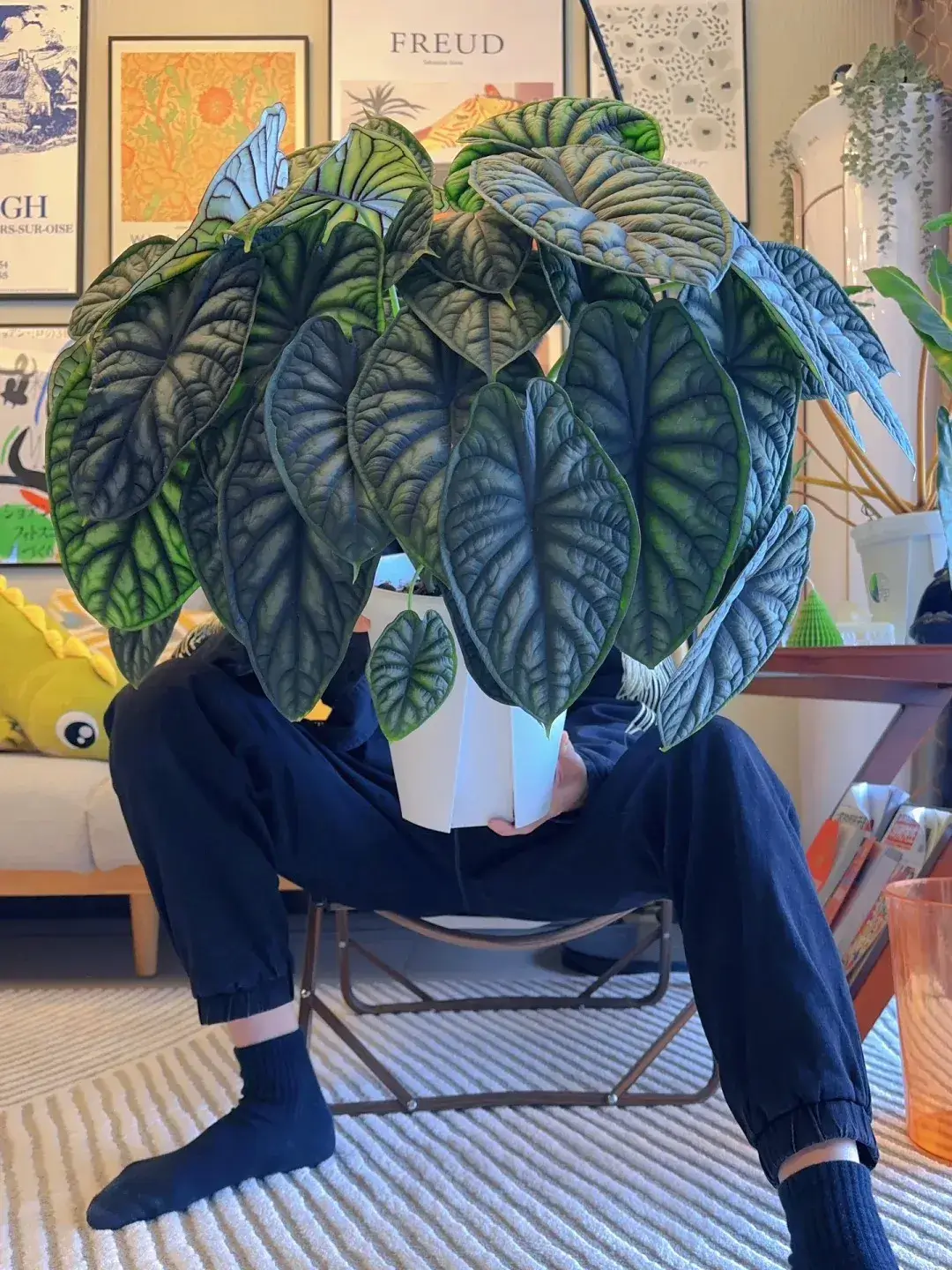
Since then, this plant has entered a completely different phase. It got so big I had to move it into the bathroom, started pushing out around two large leaves a month in my conditions, and later surprised me again by producing a huge number of little corms at the base. So this is not a general care guide built from theory. It is my real experience with a plant that looked finished, came back anyway, and turned out to be far more vigorous — and far larger — than I expected.
Why Alocasia macrorrhizos Can Fool You at First
Alocasia macrorrhizos has the kind of size that makes people assume it is tougher than it really is. When a plant arrives with huge leaves, thick stems, and heavy top growth, it is easy to believe it will handle a basic repot without much trouble. That was exactly the impression mine gave at first.
But size and stability are not the same thing. Once the roots are disturbed, this plant can decline much faster above the soil than you expect. That is why I pay much less attention to the foliage alone now, and much more attention to what is happening below the surface — especially the condition of the roots and whether the corm is still firm and alive.
My Recovery Timeline: From Leaf Loss to New Growth
The Decline Started Right After Repotting
The trouble started not long after I repotted my Alocasia macrorrhizos and removed the original soil. At first, I thought it was just normal adjustment stress and expected it to settle in after a short pause. But the yellowing did not stop at one older leaf, and it quickly stopped looking like the kind of old leaf loss I would normally ignore. It kept moving from leaf to leaf, and that was when I realized this was not ordinary post-repot adjustment.
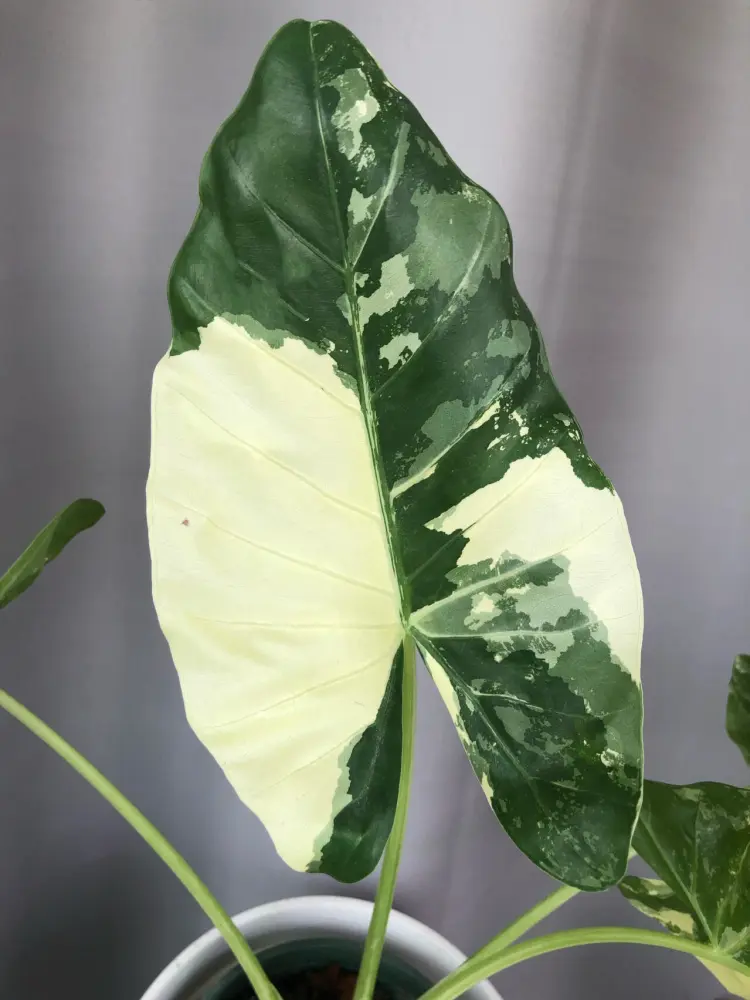
What made it more unsettling was how quickly the plant lost its strong, established look. This was not a small plant sulking after being moved. It had arrived looking full and vigorous, so I assumed it would handle a soil change without too much trouble. Instead, the decline kept building, and the pattern clearly looked more like root stress than ordinary leaf turnover.
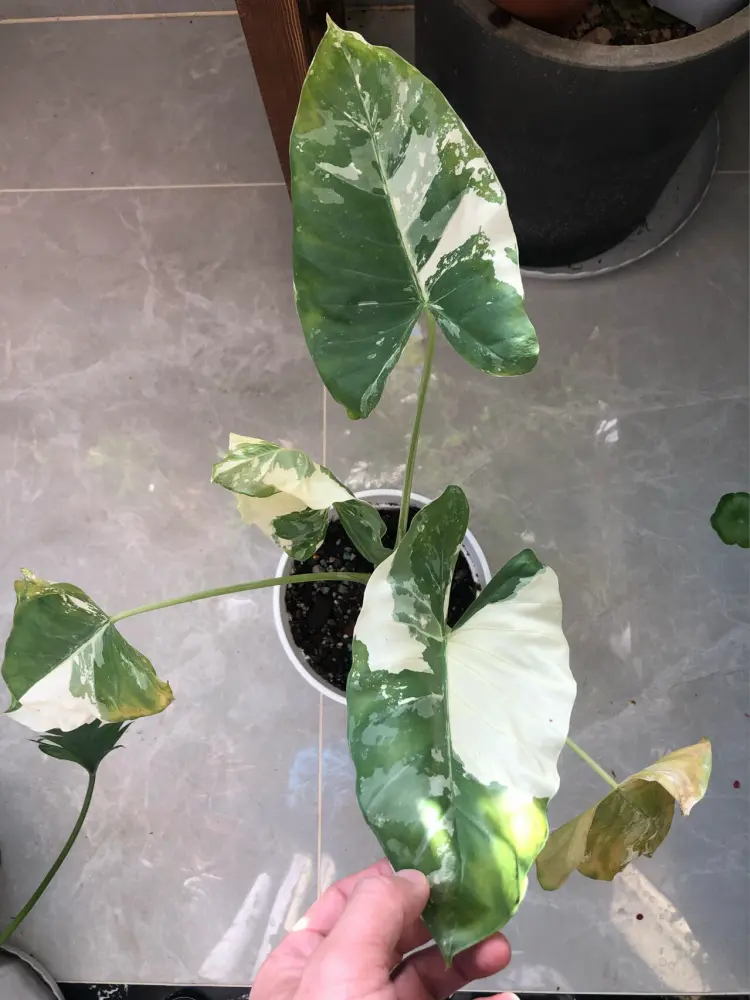
It Eventually Collapsed Into a Bare Stump
Over time, the plant lost so much top growth that it was reduced to little more than a bare stump. At that stage, it would have been very easy to throw it out and assume it was finished. Once a large alocasia loses all of its visual presence, it stops looking like a plant in recovery and starts looking like a plant that is not coming back.
That is also the point where I think many growers give up too early. When all the leaves are gone, the plant looks dead above the surface, but that is not always the same as being dead at the base. I did not like how it looked, but I still was not ready to write it off without checking what was happening underneath.
The Corm Was Still Firm, So I Switched It to Water
When I finally took it out and inspected it properly, the roots were clearly not in a state that made me want to put it straight back into a dense or unstable soil mix and hope for the best. But the corm was still there, and more importantly, it was still firm. That was the sign that made me keep going.
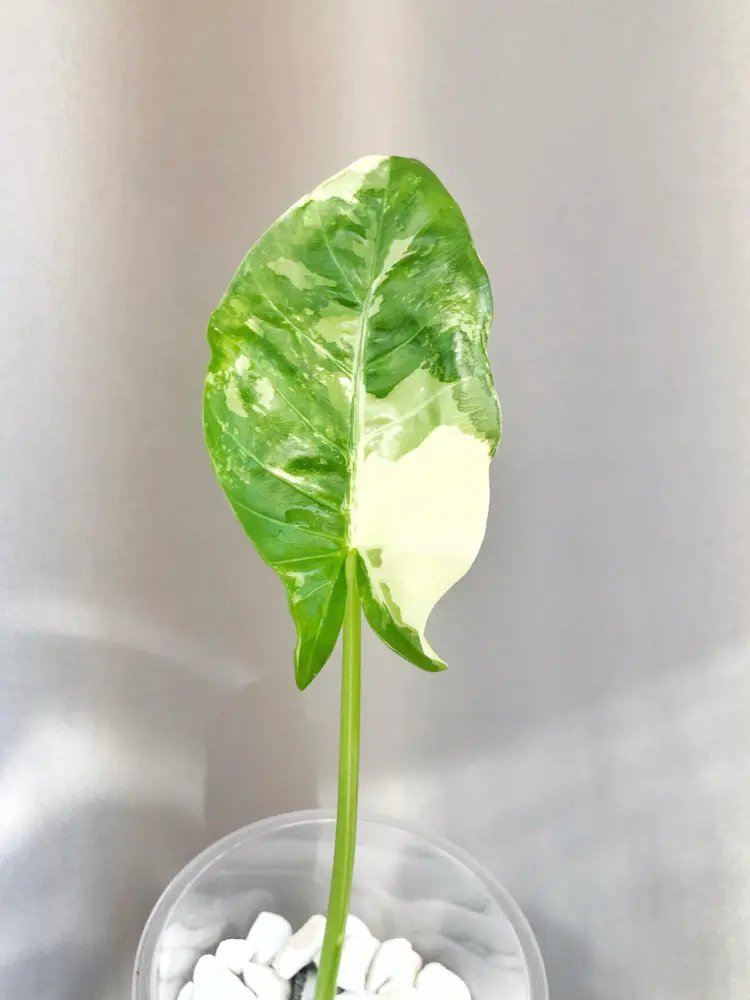
I moved it into water as a recovery step, not because I think semi-hydro is automatically the answer for every struggling alocasia, but because I no longer trusted the potting setup. I wanted a cleaner way to monitor the base, reduce the guesswork, and watch whether the corm stayed firm or continued to decline. At that point, my goal was not fast growth. It was stability.
The Recovery Was Slow, But the New Leaf Changed Everything
The hardest part was how slow the recovery felt. For nearly two months, there was no dramatic improvement, no instant comeback, and nothing that made me feel especially confident from week to week. It was one of those recovery periods where the plant does not look actively worse, but it also does not reward your patience very quickly.
That is why the new leaf mattered so much. For me, that was the moment the plant shifted from merely surviving to actually restarting. A leafless corm that stays firm may still be alive, but a new leaf is a different kind of signal. It means the plant has enough stored energy and enough internal momentum to push forward again. Once that happened, I felt like the recovery had truly begun rather than just being delayed.
What Happened After It Finally Settled In
It Outgrew My Original Spot
Once my Alocasia macrorrhizos stopped declining and started growing again, the next problem was no longer survival. It was size. The plant quickly became too large for the spot I had originally planned for it, and I eventually had to move it into the bathroom just to give it enough space.
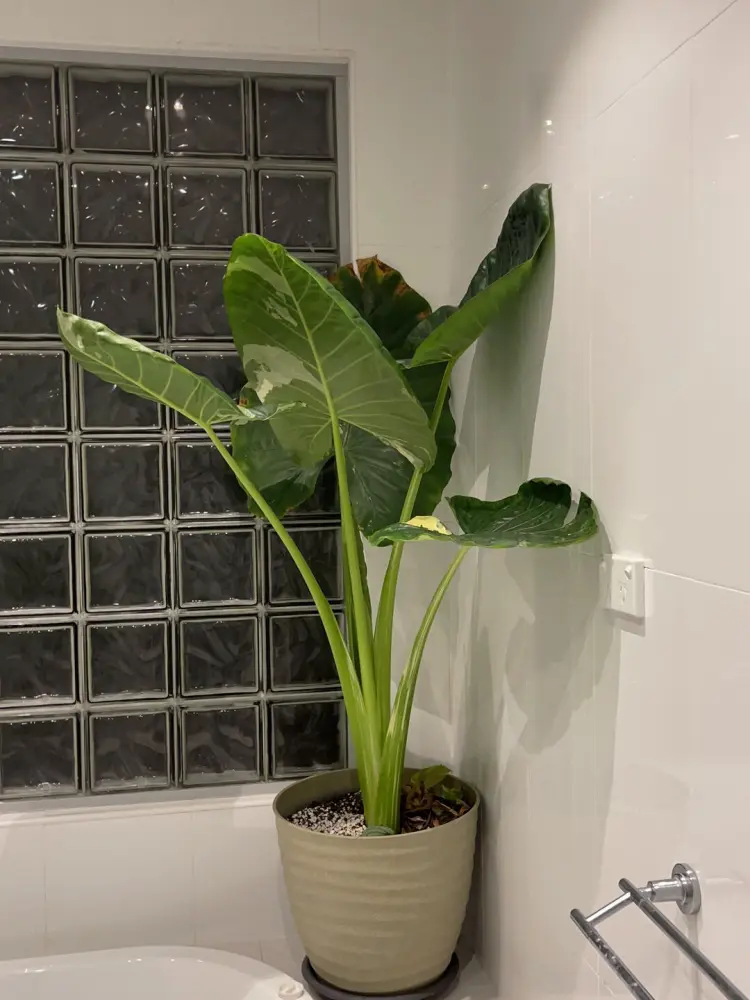
That shift changed the way I saw this plant. During the recovery phase, I was focused entirely on whether it would live. But once it settled in, it became obvious that this belonged much closer to the large elephant-ear end of alocasia growing than to the smaller types people keep on shelves.It has too much physical presence for that. The leaves get large, the overall spread increases fast, and the plant starts demanding not just care, but room.
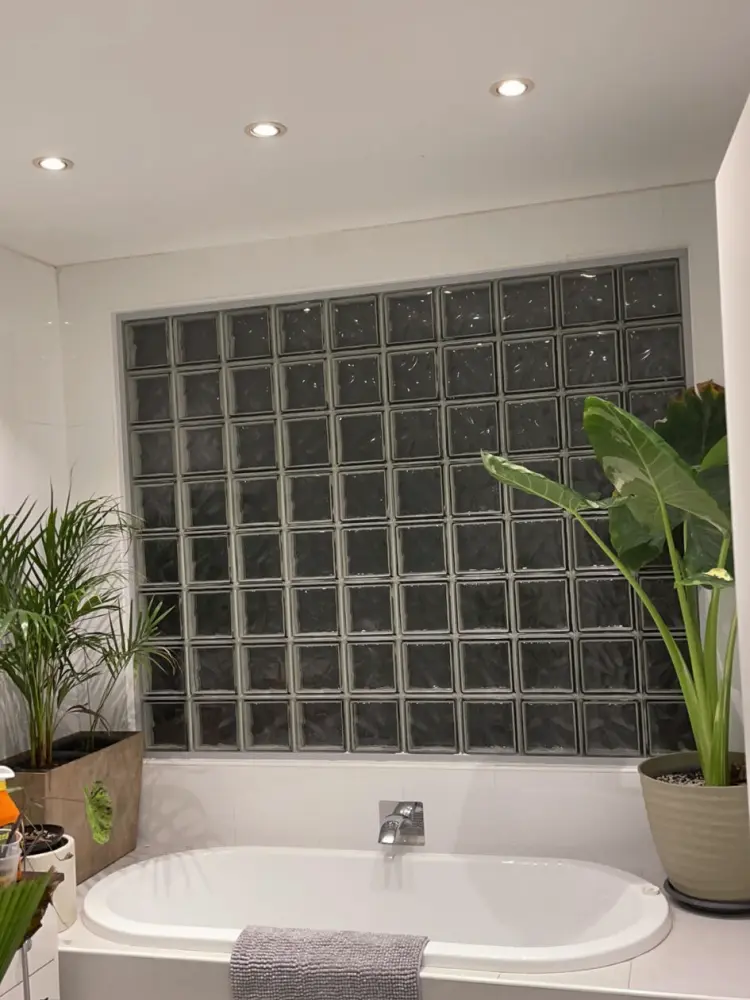
It Started Growing Fast
What surprised me most was how different the plant looked once it regained momentum. After spending so long in a stalled, uncertain state, it moved into a much stronger rhythm and started producing around two large leaves a month in my conditions. At that point, it was clearly no longer just recovering. It was growing with real force again.
That contrast stayed with me. A large alocasia can look painfully slow and fragile when the roots are compromised, then suddenly feel almost excessive once it is settled, warm, and active again.
It Also Started Producing a Huge Number of Corms
As if the faster leaf growth was not enough, the plant also started producing an unexpected number of corms. When I checked around the base, I ended up with around 50 little corms, which was far more than I expected from a plant that had looked nearly finished not that long before.
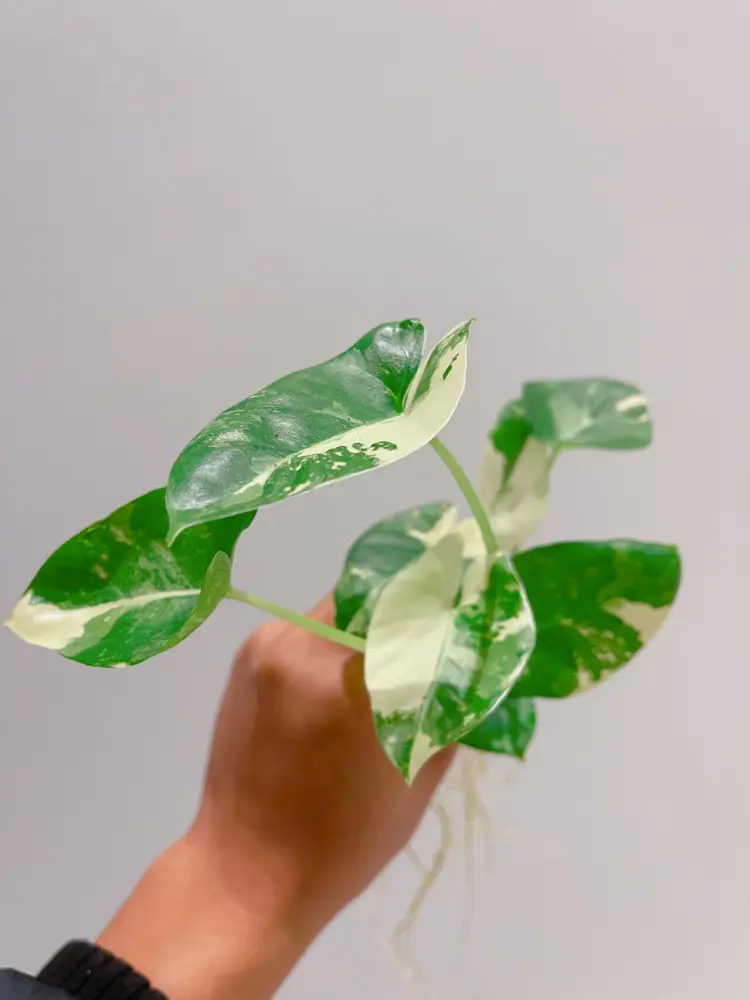
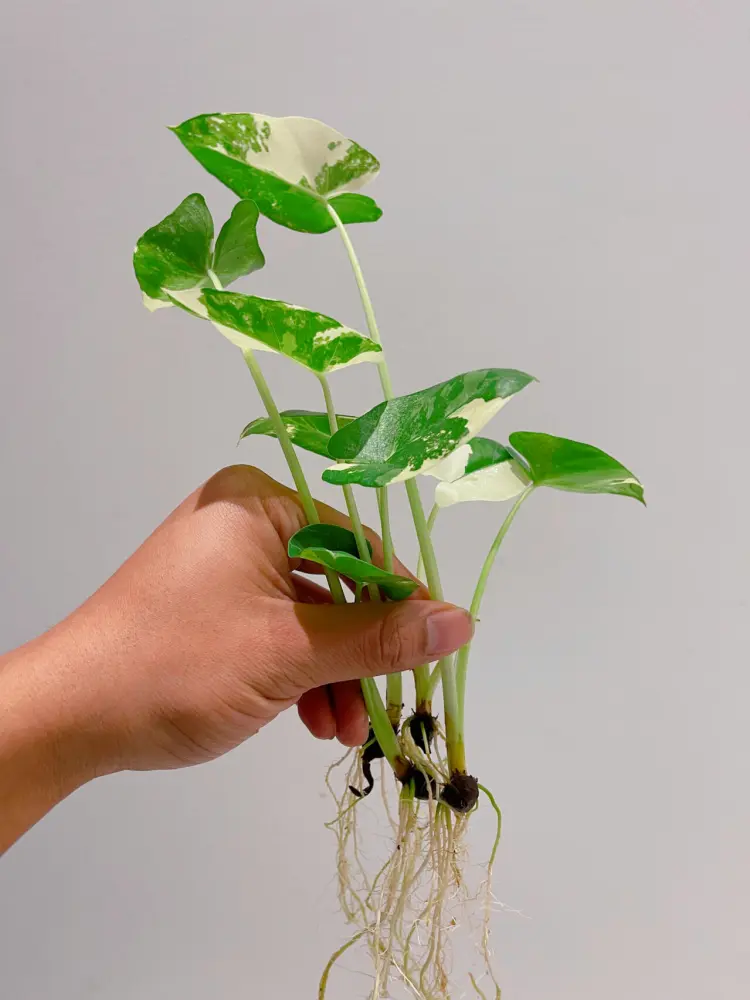
To me, that was the clearest sign that it had moved into a completely different phase. At that point, the question was no longer whether the plant would make it. The question became how to manage what it was doing next, especially if I wanted to propagate the corms without overcrowding the pot. A plant that starts producing that many corms is not just surviving. It is building energy, expanding, and creating more future decisions around space, pot size, propagation, and whether you want to let it keep multiplying. That is why I do not see this stage as a simple happy ending. It is really the start of a new management phase.
Is Alocasia macrorrhizos Actually a Good Plant for Most Homes?
Good for
I think Alocasia macrorrhizos can be a very rewarding plant in the right home, but the right home matters a lot. It makes sense for growers who have enough space to let a plant become physically dominant without feeling annoyed by it. This is not the kind of alocasia that quietly fills a shelf. It wants room, and when it is doing well, it tends to look bigger, broader, and more commanding much faster than people expect.
It also suits people who genuinely enjoy large foliage and do not mind a plant that brings a strong visual presence into the room. If you like bold tropical plants and want something that feels substantial rather than delicate, this one can be very satisfying. I also think it is better suited to growers who can stay calm through an uneven phase. This is not the best choice for someone who panics as soon as a plant starts dropping leaves, because with this one, the story can look very bad before it looks good again.
Not Ideal for
I would not call Alocasia macrorrhizos a good fit for small spaces, neat minimalist corners, or homes where every plant needs to stay compact and predictable. Once it recovers and starts growing properly, it can outgrow its original place surprisingly fast. If you want something tidy, restrained, or easy to keep visually controlled, this plant will probably become frustrating. If you prefer compact plants that stay much easier to place indoors, something like Alocasia Maharani or Alocasia Melo usually makes more sense.
I also do not think it is ideal for growers who like to repot often, keep adjusting setups, or frequently disturb the root zone just to “improve” things. My own experience made me much more cautious about that. And if your indoor conditions stay cool for long stretches, this may not be the easiest large alocasia to manage. I would recommend it less for people who want a polished, compact houseplant, and more for people who are prepared for a plant with real bulk and very little interest in staying small.
Bigger Than It Looks, Slower Than You Want, Stronger Than You Think
Alocasia macrorrhizos ended up being much less straightforward than its size suggested at the beginning. It looked like a plant that would handle a basic repot without much trouble, then collapsed so badly that it was reduced to a stump. That alone changed the way I judge large alocasias.
What stayed with me most was not just that it survived, but how differently it behaved once it recovered. It asked for patience first, then space. If you have room for a plant with real bulk and you do not give up too early when it looks rough, it can be an extremely satisfying one to grow.
FAQ
Love discovering new Alocasias?
Explore more velvet, variegated, and large-leaf varieties in our Alocasia Varieties Hub.
Go to Varieties Hub →